5 factors for printing cannabis labels with THC and CBD content
29th Oct 2026
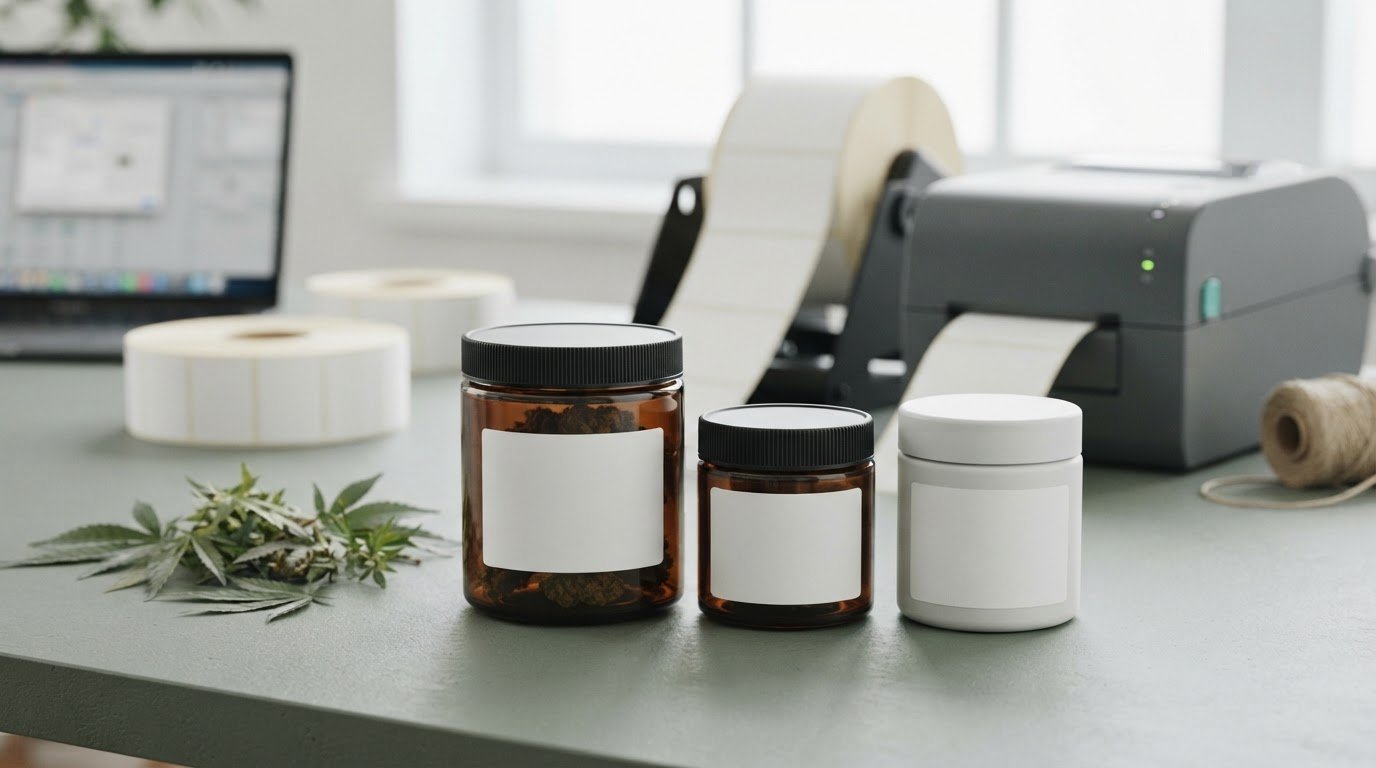
There isn’t one cannabis label checklist for every U.S. state. Requirements vary by jurisdiction, and labels may need to show THC and CBD content, net weight or volume, warnings, and other product details. Printing cannabis labels with THC and CBD content starts with matching the potency information and the rest of the label to the rules that apply where the product is sold.
Putting the numbers on the package is only part of the job. They also need to be clear and readable alongside required warnings, batch details, and state-specific symbols. This guide covers five practical factors: label information, material choice, variable data, label size and durability, and presenting THC and CBD content so shoppers can read it easily.
Key Takeaways
- Choose label stock and adhesive to suit where the product will be stored and handled, rather than choosing by appearance alone.
- Plan how batch numbers, dates, barcodes, and other changing details will be printed so each label stays clear and traceable.
- Match label dimensions to the container, leaving enough room for readable text and required details.
- Consider how oils, moisture, and the container’s shape may affect label performance over time.
- Present THC and CBD amounts clearly, with a layout that makes potency information easy to find and read.
1. What label material is best for cannabis and CBD product labels?
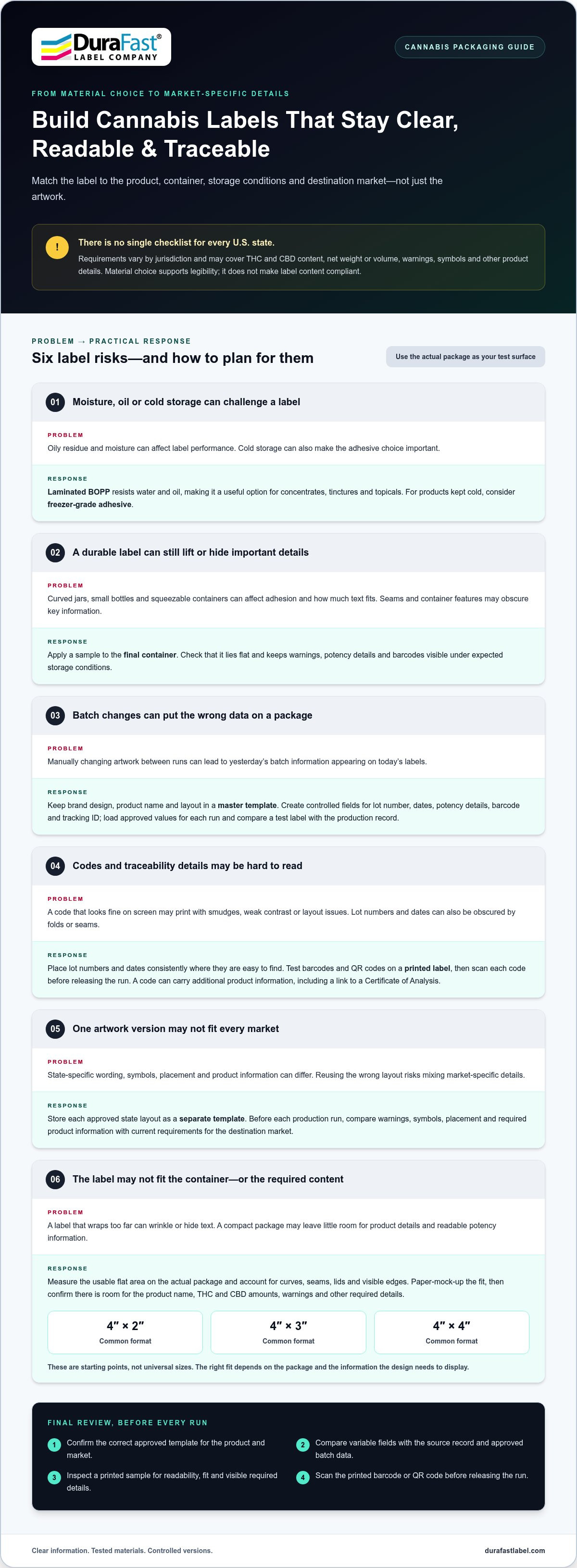
Choose label material for the product’s storage and handling conditions, then confirm that the finished design meets applicable rules. Cannabis label requirements vary by state and jurisdiction. They may cover warnings, cannabinoid content, net weight or volume, and required symbols. A white die-cut label with a matte finish can provide a clear background for dense text and scannable codes. Material choice supports legibility, but it doesn’t make label content compliant.
Match the label surface to what the package may encounter. Laminated BOPP labels resist water and oil, making them a useful option for products exposed to moisture or oily residue. That durability can matter for concentrates, tinctures, and topicals. For products kept cold, freezer-grade adhesive is recommended. Consider both the label face and the adhesive: a durable surface won’t help if the label lifts from the container during storage.
Test the material on the actual packaging before committing to a production run. Apply a sample to the container and check that it lies flat and keeps the warning, potency details, and barcode visible. A curved jar, small bottle, or squeezable container can affect both label adhesion and how much text fits. Test it on the final container and under expected storage conditions, not just as a flat sample on a desk.
Supplier reliability matters because changes in stock or adhesive can affect the appearance and performance of repeat orders. Record the selected label material, finish, adhesive, container, and artwork version, then compare each new batch against that reference. A supplier’s familiarity with cannabis packaging can help with production details, but it doesn’t transfer responsibility for label claims or jurisdiction-specific requirements. Keep content review and final approval within your business.
Build state-specific warnings and updates into the artwork review process. Before each production run, compare the label with current requirements for the place where the product will be sold. Check warning wording, symbols, placement, and required product information, since these can differ by jurisdiction. Organize approved artwork versions by product and market to make it easier to identify when a state-specific warning or other required detail needs updating.
What are the risks and penalties for inaccurate THC or CBD label claims? Inaccurate labeling can lead to regulatory action and interrupted sales. In Ohio, regulators stopped sales of a medical marijuana brand’s vaping oils at 13 of its 15 retail shops after a labeling error.
2. Printing barcodes, lot numbers, and variable data
Separate fixed artwork from information that changes between batches. Keep the brand design, product name, and layout in a master template. Create fields for the lot number, packaging or expiration date, potency details, barcode, and tracking ID. Before printing, load the approved values for that product run and compare a test label with the production record. This helps prevent yesterday’s batch data from appearing on today’s packaging.
Lot numbers and dates support traceability, so make them easy to find and read. Place them consistently, away from folds, seams, or container features that could obscure them. A barcode or QR code can carry additional product information, including a link to a Certificate of Analysis. Test each code on a printed label, not just on a computer screen, to catch smudges, weak contrast, or layout problems before the run.
State-specific labels need controlled versions. Requirements can differ by jurisdiction, including wording, symbols, placement, and product information. Store each approved state layout as a separate template, then select the correct version for the destination market. For example, a product shipping to two states may use the same strain artwork but different warning or symbol fields. This keeps a custom design flexible without mixing market-specific details.
Strain templates can also reduce repetitive setup. Build a base layout for each product format, then create variable fields for the strain name, batch details, and cannabinoid values. Use a clear data source for every field, and have a reviewer compare the printed label with that source. If potency information changes by batch, update the variable record rather than manually editing text across multiple artwork files.
On-demand digital printing suits shorter runs, frequent strain changes, and variable information such as batch numbers or QR codes. It can help match label volume to demand without creating a separate fixed design for every variation. Still, a printer only reproduces the data it receives. Check the file, inspect a printed sample, and scan the barcode before releasing each run. Keep an approved copy of the final template and batch data for later comparison.
For a practical workflow, define which fields stay fixed and which change, assign someone to enter batch data, and add a final review before printing. This sequence connects product records to the label on each package and makes state-specific versions easier to manage as products and markets change.
3. Cannabis label sizes and roll prices
Choose dimensions by starting with the container. Measure the flat label area on the actual package, then account for curves, seams, lids, and visible edges. A label that wraps too far around a jar can wrinkle or hide text. A small bottle may need a compact format, while a wider carton can provide more room for product details. Test a paper mock-up on each container shape before finalizing the artwork.
Common cannabis label formats include 4″ x 2″, 4″ x 3″, and 4″ x 4″. These are starting points, not universal sizes. The right fit depends on the package and the information the design needs to display. A 4″ x 2″ label offers a different layout from a 4″ x 4″ square. Check the usable area for the product name, potency details, warnings, and other required content.
Small containers need careful layout decisions. Some designs may need to fit labels under 1 inch while keeping text clear. Don’t shrink every element until it fits. First remove unnecessary decorative space, organize information by importance, and test the printed result at its actual size. Review the smallest wording and any barcode on the package itself. A screen preview can make fine text appear more readable than it is on a small bottle.
How much does printing compliant cannabis labels cost? Cost depends on label dimensions, material, order quantity, and printing method. Compare the total order cost with the number of usable labels, rather than judging by roll size alone.
For accurate comparisons, request the same format and material across order estimates. A 4″ x 3″ roll and a 4″ x 4″ roll aren’t equivalent simply because both arrive on rolls. Account for the amount of label surface, the number of designs, and any separate versions needed for different products. If a strain or state-specific detail changes, more artwork versions may affect how an order is planned.
Before placing an order, match the physical label size to the packaging format and applicable state regulations. Cannabis packaging and label requirements can vary by jurisdiction and product format, so reserve space for the information required in each market. Keep separate artwork files where details differ. This avoids having to squeeze an additional warning or symbol into a layout after the dimensions are set.
Use this practical sequence: measure the package’s label area, draft the layout at full size, print a sample, and apply it to the container. Check readability from a normal viewing distance and make sure no text crosses a seam or curved edge. Then finalize the dimensions and order quantity. Repeat the fit test for every distinct package, such as a tincture bottle and a carton.
4. Container type and label durability
Start with the container, not the label design. A glass tincture bottle, plastic jar, and flexible pouch each have different surfaces and handling conditions. Check the label area, curvature, and closure before choosing stock. A label that bridges a jar’s shoulder may lift or wrinkle, while a pouch can flex during handling. Apply a sample to the actual package, then inspect the edges and text after routine handling. This test helps match the material and adhesive to the container.
Consider what the package may contact during storage and use. Laminated BOPP labels resist water and oil, which can suit cannabis products exposed to spills or oily residue. Concentrates and topicals may need those properties more than a dry product carton. For products stored cold, freezer-grade adhesive is recommended. Test the label under expected product conditions, since the face material may remain intact while the adhesive loses its hold.
Container shape also affects readability. A small round bottle has less uninterrupted space than a flat carton, so position warnings and product details away from seams and curved edges. Check the label from more than one angle. A test label should lie flat and keep key text visible after application. If the package includes a lid or tamper feature, make sure the label doesn’t interfere with opening or obscure package information.
Include durability in the artwork review. Compare the printed label before and after handling, looking for lifting corners, smears, fading, or text that becomes hard to read. Record the container, label stock, adhesive, and storage conditions used in each test. This gives the team a consistent reference when packaging or materials change, and helps distinguish a design problem from a surface or adhesion problem.
Durability doesn’t replace compliance. Cannabis packaging must follow applicable federal, state, and local labeling policies and regulations. State requirements may differ by product format, so review the product container and label together. Keep variable data, such as batch details, in a layout area that remains legible on the chosen surface. Before a production run, apply a printed sample to every package type and check that required information stays visible, securely attached, and unobstructed.
5. Including THC and CBD content on cannabis labels
Make potency information easy to find, read, and compare. Cannabis labels may show THC and CBD as percentages or milligrams per dose or serving, depending on local requirements. A clear design distinguishes the two values and states what each number describes. For example, separate per-serving information from the total amount per package instead of combining the figures in one crowded line.
Use a consistent content hierarchy. Give THC and CBD clear labels, use readable type, and keep the figures together in a dedicated area. A shopper in a dispensary should be able to spot each value without mistaking THC for CBD or a per-serving amount for a package total. Keep warnings and other required details visible too. Branding can support recognition, but it shouldn’t compete with potency information.
Before printing, compare the potency fields with the approved product records for that batch. Check the number, unit, product name, and serving reference in the final artwork. If a new batch has different cannabinoid content, update the variable field and review a printed sample. A reliable workflow for printing cannabis labels with THC and CBD content connects approved values to the correct product and package.
Keep source records aligned with the label. Where product testing information appears, the label may identify the laboratory, test number, and date tested. Some states require a Certificate of Analysis for cannabis products. A QR code can help shoppers reach test information, but the printed potency statement still needs to be clear on the package itself.
Product format shapes how information is presented. An edible, tincture, concentrate, or other product may use different serving information and packaging space. Arrange the values for the actual product, not a generic template. For example, an edible label can distinguish the amount per serving from the amount in the full package. Keep state-specific label versions separate when wording or required information differs.
Review potency text at its actual printed size, especially on small containers. Check contrast, spacing, punctuation, units, and whether nearby design elements distract from the values. Then compare the print with the approved batch record before releasing the run. This final review helps maintain accuracy as a cannabis business grows, adds product variations, or serves markets with different labeling requirements.
For a focused review of your THC and CBD label-printing setup, contact the label team.
DuraFast Label Company: Epson ColorWorks C6000A
DuraFast Label Company offers the Epson ColorWorks C6000A for businesses printing product labels in-house. It can be a practical next step when you’re choosing equipment for label production and want to compare printer options with your label format and workflow.
Pair printer selection with the label stock and artwork you’ve settled on. For example, review whether your design keeps THC and CBD details readable and accommodates the variable information used across batches. DuraFast also offers a wide range of reliable color label printers, matte chemical labels, and thermal transfer printers, giving you related equipment and label options to consider.
Contact DuraFast Label Company or visit durafastlabel.com to explore the available options.
Build a Repeatable Labeling Workflow
Make your next step a repeatable process, not a one-time design decision. Create a clear handoff from approved potency data to artwork, then from a reviewed sample to the production run. That workflow helps keep printing cannabis labels with THC and CBD content consistent as products and packaging evolve.
Match the setup to your in-house needs. DuraFast Label Company offers the Epson ColorWorks C6000A, Afinia L801 Color Label Printer, and DuraFast Matte Chemical Labels. These options can help you consider both printing equipment and label stock within one purchasing decision.
Before committing to a setup, identify your container types, label formats, and changing product information. Then compare those needs with the equipment and materials you plan to use. A focused review can clarify the next practical step for your operation.
Contact DuraFast Label Company to discuss label printing options and move your in-house workflow forward.
Frequently Asked Questions
What information is required on a cannabis label?
Required details depend on the product and where it’s sold. A label may need the product or strain name, THC and CBD content, net weight or volume, batch number, dates, warnings, and business information. Some products also need ingredients, allergen details, serving size, or test references. Treat this as a planning list, not a universal checklist. Compare each product’s label with the rules for its sales jurisdiction.
What label material is best for cannabis and CBD product labels?
The best material is the one that suits the package surface and storage conditions. For example, a bottle kept cold may need an adhesive designed for freezer conditions, while a container exposed to oils benefits from oil-resistant stock. Test the label on the actual package to reveal lifting, wrinkling, or poor text visibility before printing a full run.
What type of label should be used for cannabis packaging?
Choose a label format that fits the container and stays legible after application. A flat carton offers a different surface from a narrow tincture bottle, so use a separate layout if one design cannot fit both cleanly. Consider a matte surface where contrast matters, and select stock based on expected contact with moisture or oils. A physical sample shows whether the format works.
What resolution is best for printing small cannabis labels?
A resolution of at least 300 DPI is recommended for small labels with dense information. It helps keep fine text and compact graphics clear, but resolution alone can’t fix crowded artwork. Print a sample at final size and inspect the smallest wording, potency figures, and barcode. If those elements look cramped, revise spacing or simplify decorative details before adjusting the printer settings.
Can I print batch codes, expiration dates, and CBD percentages as variable data?
Yes. Set up fields for changing details, such as batch codes, dates, and CBD values, while keeping the rest of the artwork fixed. For a new production batch, load its approved data, print a sample, and compare the result with the source record. This approach helps prevent manual edits across repeated artwork files and supports short runs with changing product details.
Can I use one template for multiple strains?
Yes, if the template has distinct fields for strain-specific details and each version receives a careful review. Keep shared design elements consistent, then update the strain name, potency, and other product-dependent information. For example, use a separate approved record for each strain rather than relying on memory when duplicating a file. Check the printed sample against that record before releasing the batch.
Does the ink cost a lot per label?
Ink use depends on the printer, label coverage, artwork, and the amount of color each design uses. A mostly white label with small color accents uses a different amount of ink than a full-color background. To understand your usage, print representative designs and track consumption across a production run. Include test prints and reprints in your internal estimate, since they also use supplies.
What information must cannabis product labels include in the United States?
The United States doesn’t have one universal state-level cannabis label checklist. Requirements vary by jurisdiction and product type, including possible differences in warnings, symbols, wording, and placement. A label for an edible may need different details from one for a topical. Organize artwork by product and sales market, then use the relevant jurisdiction’s requirements to review each version before printing.