Best Barcode Scanner for Warehouse Operations: The 2026 Buying Guide
15th Jul 2026
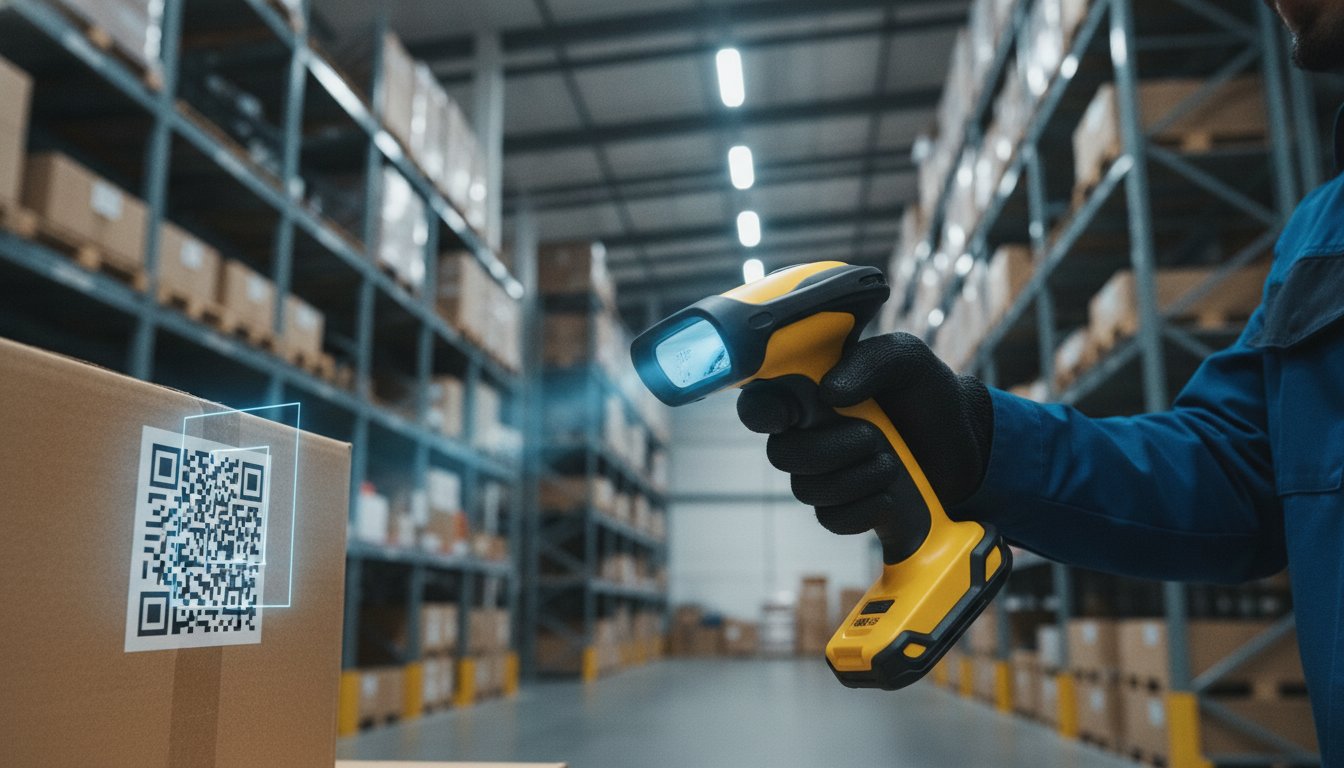
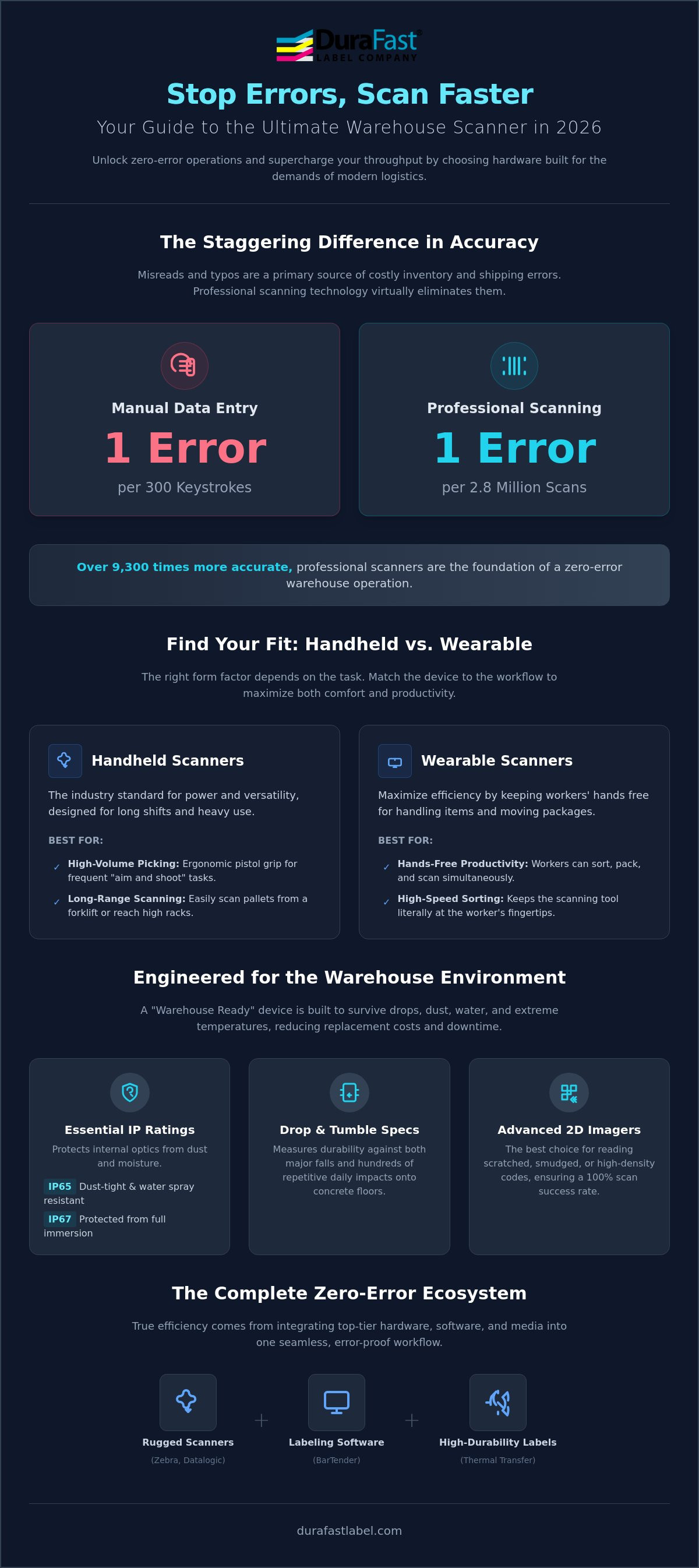
Did you know that manual data entry leads to one error every 300 keystrokes, while using a professional barcode scanner for warehouse operations reduces that risk to just one in 2.8 million scans? It's a staggering difference that directly impacts your bottom line. You likely already know the frustration of a scanner battery failing mid-shift or a device shattering after a single drop onto the concrete. These disruptions slow down your picking speed and drive up hardware replacement costs every single year.
We're here to help you stop the cycle of equipment failure and inventory inaccuracy. This guide reveals how to select the perfect scanning solution to eliminate errors and significantly accelerate your warehouse throughput in 2026. We've done the heavy lifting by vetting the latest rugged hardware so you don't have to worry about technical compatibility. You'll discover the top-performing 2D imagers from brands like Zebra and Datalogic, learn why IP65 ratings are essential for your environment, and see how the right combination of scanners and high-durability labels can transform your entire workflow into a zero-error operation.
Key Takeaways
- Learn how to meet 2026 supply chain speeds by prioritizing sub-second scan latency in your next hardware upgrade.
- Choose between handheld and wearable scanners to balance long-range picking power with hands-free sorting efficiency.
- Identify why a 2D area imager is the best barcode scanner for warehouse environments where damaged codes or high-density labels are common.
- See how integrating BarTender software with high-durability thermal transfer labels creates a unified system that prevents inventory errors.
- Compare the latest ruggedized models from Datalogic and Zebra to find hardware that's built to survive drops and reduce your replacement costs.
Why Your Barcode Scanner for Warehouse Success Matters in 2026
In 2026, the humble barcode scanner for warehouse use has evolved. It's no longer just a peripheral device; it's a mission-critical data entry terminal. Modern barcode reader technology connects your floor workers directly to your cloud-based inventory system in real-time. If your scanner lags for even a second, your entire throughput suffers. High-speed logistics require sub-second scan latency to keep up with consumer demands. When your team is processing thousands of items, a half-second delay per scan adds up to hours of lost productivity every week.
Choosing "cheap" hardware often leads to a cycle of frustration. Dropped devices break; batteries die before lunch; poor optics struggle with smudged or faded labels. A truly "Warehouse Ready" device must meet high durability standards, such as a minimum IP65 rating for dust and water protection, to survive the rigors of industrial life. We've seen how investing in the right hardware from the start reduces long-term replacement costs and keeps your operations moving without interruption. It's about finding a partner in your hardware that works as hard as your crew does.
The Impact of Scan Accuracy on ROI
Misreads are expensive. In a high-volume facility, a single shipping error can cost hundreds of dollars in return freight and customer service time. Research shows manual entry errors occur once every 300 keystrokes. In contrast, professional scanning brings that error rate down to one in 2.8 million. High-performance scanners can even read thermal transfer labels that have been scratched or exposed to moisture. Beyond the data, ergonomics play a huge role in employee retention. A lightweight, well-balanced scanner prevents repetitive strain, making the workday easier for your staff and reducing turnover.
Inventory Management in the High-Speed Era
We've moved past the days of batch processing. Today's warehouses require real-time WMS updates. This ensures that when an item is scanned, it's instantly visible in your system across all departments. This level of precision is vital for automated sorting and prevents the costly "ghost inventory" that plagues facilities still relying on manual entry. Achieving a 100% scan success rate isn't just a goal; it's a requirement for staying competitive in 2026. When your hardware and media work together perfectly, you eliminate the bottlenecks that slow down your growth and impact your customer satisfaction.
Handheld vs. Wearable: Choosing the Right Form Factor
Selecting the right hardware isn't just about the technology inside; it's about how your team interacts with the device. The pistol grip scanner remains the industry standard for high-volume picking. These units are ergonomically balanced for long shifts and provide the physical leverage needed for frequent "aim and shoot" tasks. If your operators need to scan pallets from a forklift or reach high racks, an extended-range handheld is the most effective tool for the job. These devices are built to handle the heavy-duty demands of a fast-paced environment.
For facilities focused on small-item sorting or high-speed packing, wearable ring scanners are a superior choice. They enable "hands-free" productivity, allowing workers to handle inventory and move boxes without constantly setting their equipment down. This shift in form factor significantly boosts warehouse accuracy and efficiency by keeping the scanning tool literally at the worker's fingertips. When your workflow requires more than just a scan, rugged mobile computers like the Zebra MC9400 offer a full Android 13 interface. This lets your team run your Warehouse Management System (WMS) directly on the floor without returning to a workstation.
When to Go Rugged: Evaluating Your Environment
Your environment dictates your hardware needs. If you manage cold storage or high-heat zones, you need a specialized barcode scanner for warehouse use that's rated for extreme temperature swings. Standard scanners often fail when condensation builds up on internal optics. We recommend checking the IP (Ingress Protection) ratings closely. An IP65 rating ensures the device is dust-tight and handles water spray, while an IP67 rating protects against full immersion. Beyond the single-drop height, pay attention to the "tumble spec." This measures how many hundreds of smaller, repetitive impacts a device can survive during daily use.
Ergonomics and Worker Fatigue
If you're ready to upgrade your fleet, our team can help you identify the best rugged scanner for your specific warehouse layout.
1D, 2D, or RFID? Decoding Scanning Technology
While the physical design of your device matters, the internal "engine" determines how fast your data moves. 1D laser scanners are the reliable veterans of the industry. They're excellent for reading traditional linear UPCs but have significant limitations. They require a steady hand and a perfect horizontal line of sight to work. If a label is wrinkled, smudged, or oriented vertically, a 1D scanner often fails to get a read. This leads to the exact manual entry errors we're trying to avoid.
By 2026, 2D area imagers have become the standard barcode scanner for warehouse environments. Instead of using a laser beam, these devices take a high-speed digital photograph of the code. This technology allows them to decipher complex DataMatrix and QR codes even if they're partially torn or poorly printed. To maximize this efficiency, you must pair your hardware with high-performance industrial barcode printers. When your printer produces crisp, high-density 2D symbols, your scanners can capture data in sub-second intervals, regardless of the lighting conditions.
The Rise of 2D Barcodes in Logistics
Why is everyone switching to 2D? Global GS1 standards now push for more data in smaller spaces. A 2D DataMatrix code can store lot numbers, expiration dates, and serial numbers that a 1D barcode simply can't hold. Because imagers are omnidirectional, workers don't need to align the scanner perfectly. They can scan from any angle, which significantly increases picking speed and reduces wrist strain. Modern imagers also have the unique ability to read codes from digital screens, making them perfect for warehouses using tablet-based picking systems.
RFID: The Next Frontier of Warehouse Efficiency
Sometimes, even the best 2D scanner isn't fast enough for bulk operations. This is where RFID integration changes the game. Unlike traditional barcodes, RFID doesn't require a direct line of sight. You can use a hybrid barcode scanner for warehouse tasks to read a traditional label or capture an entire pallet's worth of RFID labels in seconds. This allows you to verify a shipment without ever opening a box. It's the ultimate solution for high-value asset tracking and high-velocity receiving docks where every second counts toward your ROI.
Integrating Your Scanner with Software and Media
A premium barcode scanner for warehouse operations is a powerful tool, but it doesn't work in a vacuum. To achieve the zero-error inventory tracking discussed earlier, your hardware must seamlessly communicate with your Warehouse Management System (WMS) and your label production software. In 2026, this requires utilizing Wi-Fi 6 and Bluetooth 5.0 protocols to ensure your data reaches the server without dropped packets or interference. If your scanner fleet and ERP aren't perfectly in sync, even the most expensive Datalogic or Zebra unit becomes a bottleneck rather than a solution.
Managing a fleet of devices also requires centralized configuration tools. Modern software allows you to push updates to every barcode scanner for warehouse use across multiple locations simultaneously. This prevents the "rogue device" problem where one scanner runs outdated firmware and causes system-wide errors. We focus on helping you build a unified ecosystem where the hardware, software, and media work as one cohesive unit. This approach reduces downtime and ensures that every scan contributes to your warehouse throughput goals.
The Software Backbone: BarTender and Beyond
The secret to high-speed scanning often starts at the printer. Using BarTender label software ensures your barcodes are designed to exact industry specifications. This software handles the complex math of barcode density and quiet zones so your scanners get a "good read" on the first try. You can even automate the entire data flow. When a worker scans a shelf location, the software can trigger a new shipping label to print instantly. This eliminates the need for manual data entry and drastically reduces the number of steps in your picking process.
Media Matters: Labels That Scanners Love
We often see businesses invest in top-tier hardware only to pair it with low-quality paper. Your scanner relies on visual contrast to identify the bars and spaces in a code. High-durability thermal transfer labels provide the crisp edges necessary for the sub-second latency required in 2026. For long-range scanning up to 70 feet, matte labels are generally superior to gloss because they don't produce the glare that blinds optical sensors. To keep those barcodes from smudging in high-traffic areas, always use matching thermal transfer ribbons. This combination creates a permanent bond that withstands the friction of conveyor belts and heavy manual handling.
If you need help mapping out your software and media ecosystem to ensure total compatibility, talk to our integration specialists today for a customized recommendation.
Warehouse Ready: Datalogic and Zebra Solutions at DuraFast
Choosing the right hardware is the final step in building a high-efficiency logistics chain. At DuraFast, we've done the heavy lifting by vetting the most reliable brands on the market today. Finding the best barcode scanner for warehouse use is much simpler when you're choosing from industry leaders like Datalogic and Zebra. These brands don't just provide hardware; they offer integrated systems designed to work with your existing printers and labels. We focus on providing a curated selection so you can spend less time comparing spec sheets and more time moving inventory.
Our commitment to your success goes beyond just the device in your hand. We understand that a scanner is only as effective as the media it reads. By sourcing your hardware through us, you ensure total compatibility with your thermal ribbons and label stock. This unified approach prevents the common "hardware vs. media" conflicts that lead to downtime. Whether you're managing a small local facility or a massive distribution center, our team provides the expert support needed to select the exact model for your specific warehouse layout.
Datalogic: High Performance Handhelds
Datalogic scanners are world-renowned for their precision engineering in high-volume environments. One of their standout features is the patented "Green Spot" technology. This provides a visual green light directly on the barcode once a scan is successful. It's an essential tool for noisy receiving and shipping docks where workers might not hear an audio beep. Datalogic's advanced imaging also excels at reading poorly printed or damaged barcodes that other devices might reject. If your incoming shipments often arrive with smudged labels, these scanners will keep your lines moving without the need for manual overrides.
Zebra: The Ultra-Rugged Choice
When it comes to pure durability, the Zebra 3600 Series is the industry benchmark. These scanners are built for the toughest warehouse conditions on earth, from freezing cold storage to dusty outdoor loading zones. Beyond their physical toughness, Zebra devices feature "Zebra DNA" software that simplifies everything from deployment to battery management. A major time-saver is the multi-code feature, which allows an operator to scan multiple labels on a single package with just one trigger pull. This level of efficiency is why Zebra remains the dominant force in modern logistics.
Ready to eliminate errors and boost your picking speed? Shop our full range of Datalogic and Zebra scanners today and find the perfect fit for your 2026 operations.
Ready to Future-Proof Your Inventory Management?
Selecting the right barcode scanner for warehouse success in 2026 is about more than just reading codes. It's about building a unified system where rugged hardware, smart software, and high-quality media work in perfect harmony. You've seen how the right form factor reduces worker fatigue and how 2D technology ensures accuracy even with damaged labels. These technical choices lead to significant gains in your daily throughput and long-term hardware savings.
As an authorized Zebra and Datalogic partner, we've already done the hard work of vetting the best industrial equipment for you. We provide the expert in-house printing guidance and full stock of compatible thermal labels needed to keep your operations running without a hitch. Don't settle for a fragmented system that leads to errors and downtime. It's time to equip your team with tools that are as dependable as they are.
Browse Our Curated Selection of Industrial Barcode Scanners
We're here to help you simplify your decision-making process and transform your warehouse into a high-speed, zero-error facility. Let's get started on optimizing your operations today.
Frequently Asked Questions
What is the difference between a 1D and 2D barcode scanner for warehouse use?
The primary difference lies in the type of data they can read and their physical scanning method. 1D scanners use a laser to read traditional linear barcodes like standard UPCs. 2D scanners use an area imager to take a digital picture of the code. This allows 2D models to read complex patterns like QR codes and DataMatrix symbols even if they're oriented at odd angles or partially damaged.
Can I use a standard Bluetooth scanner in a large industrial warehouse?
Standard consumer Bluetooth scanners often struggle with range and signal interference from metal racking. For large facilities, you need an industrial-grade barcode scanner for warehouse environments that utilizes Bluetooth 5.0 or Wi-Fi 6. These protocols provide a more stable connection and an extended range of up to 100 meters, ensuring your data reaches the system from the furthest corners of the floor.
How do I know if a scanner is 'rugged' enough for my facility?
You should evaluate the drop rating and the tumble specification. A truly rugged scanner is designed to survive multiple 6-foot drops to concrete without internal damage. The tumble spec is equally important; it measures how many hundreds of smaller impacts a device can survive during daily use. If your team works on concrete floors, these durability standards are non-negotiable for reducing your replacement costs.
What is an IP rating, and why does it matter for warehouse scanners?
An IP (Ingress Protection) rating tells you how well a device is sealed against dust and moisture. The first digit represents dust protection, while the second represents water resistance. For most warehouses, an IP65 rating is the minimum requirement to keep fine dust and water spray from ruining the internal electronics. This rating ensures your equipment remains reliable in harsh, non-climate-controlled zones.
Do I need special software like BarTender to use a barcode scanner?
While a scanner functions as a data entry tool, you need professional software like BarTender to design and print the barcodes it reads. Using BarTender Professional ensures your labels meet global GS1 standards for clarity and density. This synergy prevents "no-read" errors and ensures your barcode scanner for warehouse tasks captures data instantly on the first pull of the trigger.
Can warehouse scanners read barcodes on mobile phone screens?
Yes, but only if you are using a 2D area imager. Traditional 1D laser scanners rely on reflected light and cannot read codes from backlit digital screens. 2D imagers take a high-speed digital photograph, which allows them to capture data from smartphones and tablets. This is increasingly useful for warehouses that use digital picking lists or mobile-based inventory tracking.
How long do the batteries last on industrial cordless scanners?
Modern industrial scanners are engineered to last through an entire eight-hour shift and beyond. Most high-performance models provide between 14 and 24 hours of continuous use on a single charge. For 24/7 operations, we recommend choosing models with removable batteries so your team can swap a fresh pack in seconds rather than waiting for the device to charge.
Will these scanners work with my existing Zebra thermal printer?
They are fully compatible with any professional thermal printer. Scanners are designed to read the symbology of the barcode itself, not the brand of the printer that produced it. As long as your Zebra printer is loaded with high-quality ribbons and labels to produce a crisp image, any Datalogic or Zebra scanner will capture that data without any technical conflict.