BOPP Labels for Freezer Use: Choosing the Right Material and Adhesive
28th Oct 2026
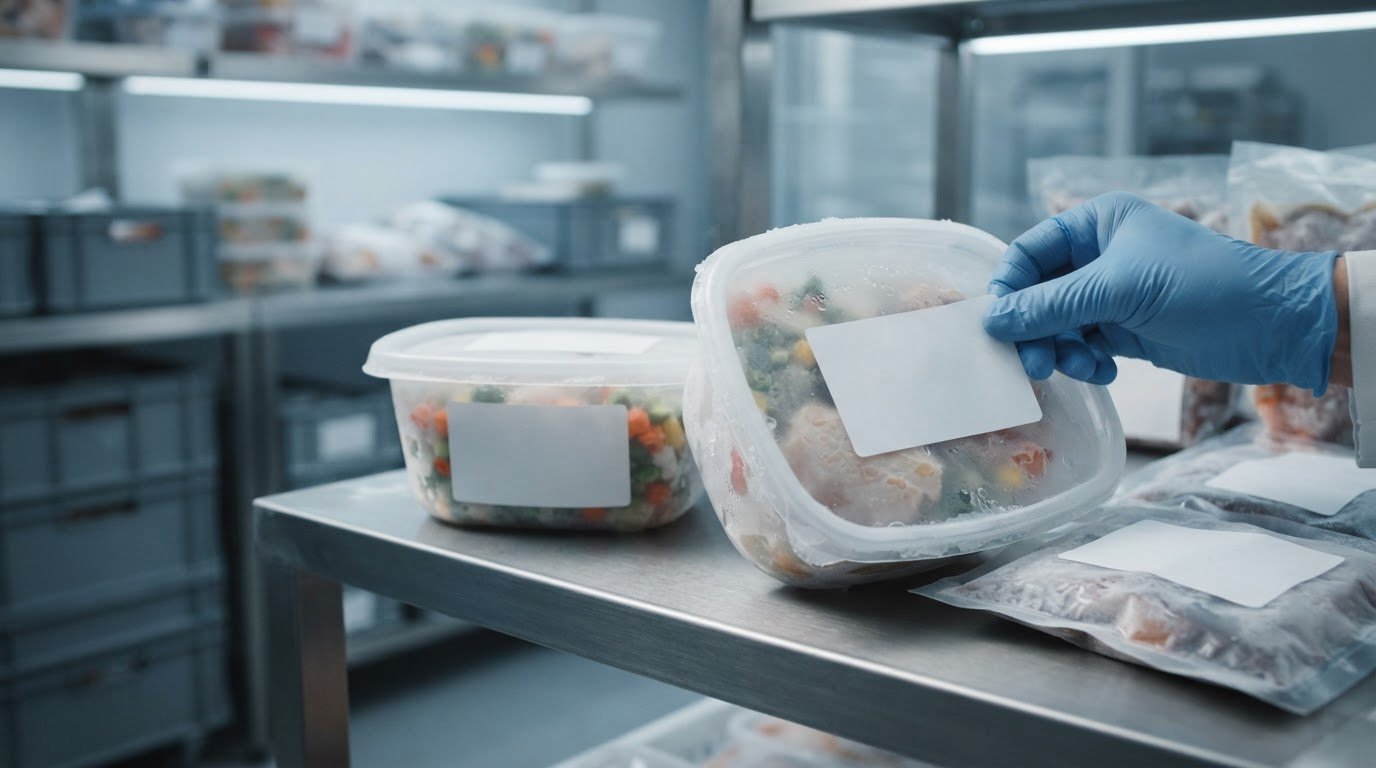
BOPP labels can work in freezers, but the adhesive and application temperature determine whether they stay attached. BOPP labels for freezer application should use an adhesive suited to the coldest conditions they’ll face. Labels applied before freezing need materials and adhesives that can bond at 35°F or higher; for products that are already frozen, the adhesive should be rated to -20°F or lower.
It’s easy to focus on the label material and overlook when it’s applied. Even a moisture-resistant film can lift if the surface is cold, wet, or frosty, or if the adhesive isn’t designed for those conditions.
This guide explains how BOPP performs in freezer environments and how to match the adhesive to your packaging and application process. You’ll learn why frost and condensation matter, how application temperature differs from storage temperature, and what to consider when labeling products before or after freezing.
Key Takeaways
- Match the adhesive to the coldest conditions and whether the product is labeled before or after freezing.
- Keep the label surface clean and dry; condensation, frost, and residue can interfere with adhesion.
- Choose BOPP for moisture resistance and flexibility on suitable containers, but compare other materials for highly flexible or heavily handled packaging.
- Consider the container material and shape, since some plastics and curved surfaces need adhesives designed for better contact.
- Explore DuraFast Label Company’s Epson ColorWorks C6000A and other listed label printing options when selecting equipment for your label workflow.
Can BOPP Labels Be Used in Freezer Environments?
Yes, BOPP labels can suit freezer packaging when the adhesive is appropriate for cold conditions. BOPP is a polypropylene film that resists moisture and tearing. Unlike paper, it doesn’t absorb water or swell when condensation forms, helping the label keep its shape as a product moves from a freezer to a refrigerator.
Moisture resistance doesn’t make every label waterproof. BOPP is water resistant, but prolonged exposure and the complete label construction still matter. For example, a label on an ice cream tub may encounter condensation during handling. Rounded corners can help reduce edge peeling when moisture gathers around the container.
BOPP is also described as oil resistant, which can help with food jars or packages that have greasy surfaces. The material resists moisture without swelling or distorting, but the adhesive still needs to suit the surface and cold conditions. A moisture-resistant face stock cannot make up for an adhesive that loses grip.
The film is flexible and tear resistant, so it can conform to slightly curved bottles, jars, and pouches. That flexibility can be useful for labels wrapped around an ice cream container. It doesn’t mean BOPP suits every flexible package: a pouch that bends or squeezes repeatedly may need a material designed for that movement.
Polypropylene labels typically perform between -20 and 200°F, depending on adhesive type. That range describes typical label performance, not a guarantee for every construction. The adhesive, application conditions, and container surface all affect results. Match the label to the lowest temperature it will encounter in storage.
Heat resistance also needs context. BOPP film softens at approximately 250°F, but that figure is not the working limit of the adhesive or printed label. A freezer label may encounter warmth during filling or handling before storage. Consider the whole temperature cycle, not only the freezer temperature.
Weatherproof performance depends on the complete label system. The label’s ability to protect graphics depends on its materials and exposure conditions. A laminate can add moisture and scuff resistance when labels face repeated handling. Clear BOPP also resists moisture, and a white ink underlay can help artwork stay vivid.
Don’t assume BOPP resists every chemical. Chemical compatibility depends on the substance and the label’s face material, ink, adhesive, and any laminate. For containers exposed to cleaning agents or product residue, assess the complete label construction for those conditions. Water and oil resistance alone don’t establish chemical compatibility.
For freezer use, consider three factors: the container surface, exposure, and adhesive rating. BOPP can be a practical choice for rigid containers exposed to moisture, including curved jars. In freezer applications, adhesive selection matters as much as the film’s flexibility and resistance.
Freezer-grade BOPP adhesive for cold, condensation, and frost
Choose an adhesive based on the product’s temperature during application and storage. BOPP labels can peel if the adhesive meets a cold, wet, frosted, or otherwise unsuitable surface and cannot form a strong bond.
Adhesion in Cold and Frost
Adhesive performance in freezer conditions depends on the formulation and the surface. It matters because ordinary adhesive may not bond well when a container is already chilled or wet. For frozen goods labeled in those conditions, use adhesive designed for cold-temperature application. It’s intended to grab a surface that is already cold and wet, rather than relying on the container warming first.
Application conditions still matter. A freezer-rated adhesive doesn’t make heavy frost or surface moisture irrelevant. Moisture can interfere with contact between the adhesive and container, while frost creates a barrier. A clean, dry surface helps the adhesive make better contact. For glass bottles exposed to condensation in an upright freezer, high-tack adhesive can help maintain adhesion.
Match the adhesive to the packaging surface, too. A smooth glass bottle presents a different bonding challenge from a curved or rough container. A thicker adhesive coating can help a label make contact with rough or curved surfaces. The right combination supports adhesion without relying on the BOPP film alone.
Temperature Stability and Bond Development
Temperature stability describes an adhesive’s ability to maintain its bond through the product’s cold conditions. The minimum application temperature is a separate limit: apply labels at or above the adhesive’s specified minimum. This distinction matters when packaging is labeled before freezing versus after it is already frozen.
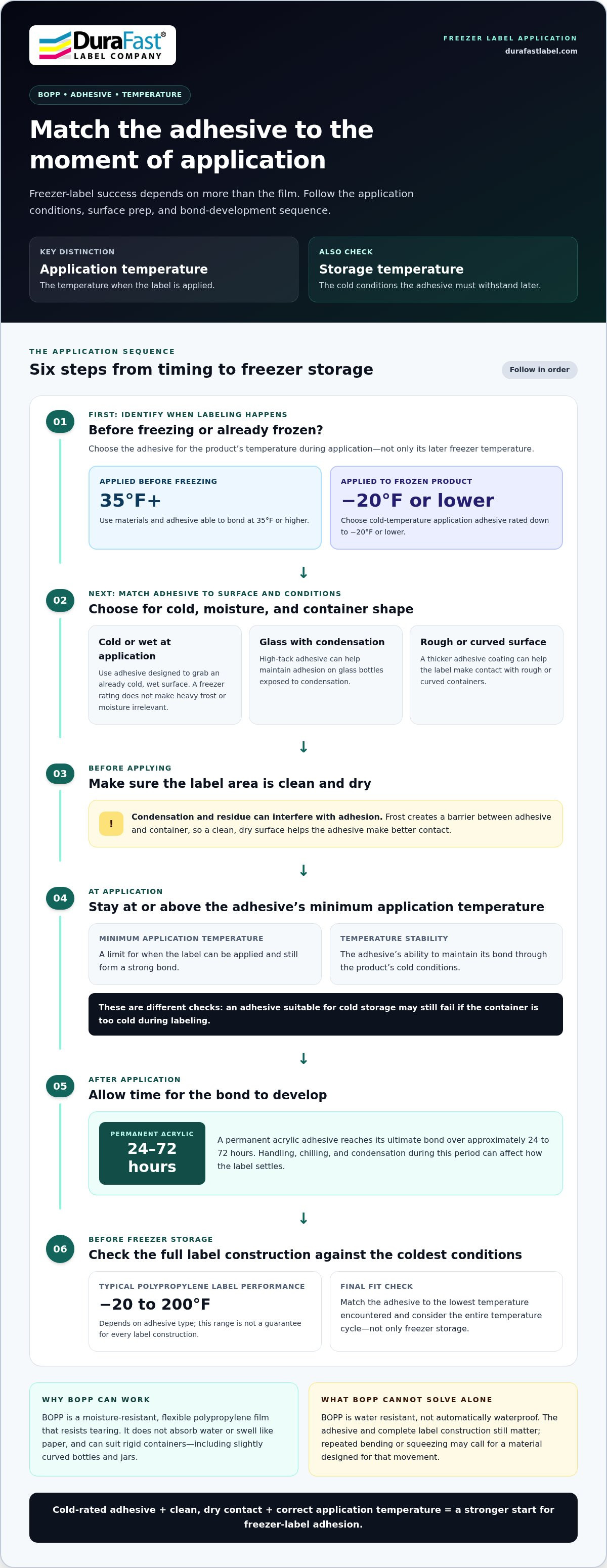
Labels applied before freezing need materials and adhesive able to bond at 35°F or higher. For already frozen products, choose cold-temperature application adhesive rated down to -20°F or lower. These thresholds address application, not just later storage. An adhesive that suits cold storage may still fail if the container is too cold during labeling.
Bond strength also develops over time. A permanent acrylic adhesive reaches its ultimate bond over approximately 24 to 72 hours. During that period, handling, chilling, and condensation can affect how the label settles. Plan application and movement around this development window, especially when finished packages head quickly into freezer storage. Label finishes may change appearance, but they don’t replace the adhesive’s required bonding conditions.
Causes of Freezer Label Failure
Freezer-label failure usually starts with a mismatch between the adhesive and application conditions. A label applied below its minimum temperature may not establish contact. Condensation or frost can separate adhesive from the container. That’s why BOPP film can remain flexible while its edges lift: the face material and adhesive do different jobs.
Surface condition and container shape also affect adhesion. Residue, moisture, or frost can block adhesive contact. Curved bottles and rough surfaces need closer contact than a flat panel. A thicker adhesive coating may help with roughness or curvature, while high-tack adhesive can suit glass bottles exposed to condensation. Neither removes the need for an appropriate application temperature.
Look for edge lift first. It can signal moisture, a cold surface, poor contact, or adhesive unsuited to the container. Match adhesive to the coldest application conditions, then account for the product’s storage environment and surface. For help aligning label needs with a printing workflow, contact DuraFast Label Company.
Summary: What’s the Right Material for Your Freezer Packaging?
Choose freezer-label material by weighing durability, moisture exposure, package movement, and cost. For rigid tubs or jars, BOPP balances moisture resistance with flexibility. For pouches that bend or squeeze, MDO may suit the package better. PET offers a durable option when tear and scratch resistance matter more than flexibility.
What BOPP label thickness and finish are best for freezer use? BOPP label film is approximately 2 mil thick. Choose gloss or matte based on package appearance and handling needs; a laminate can add moisture and scuff resistance.
BOPP is a polypropylene film stretched in two directions during manufacturing. That structure gives the material strength while retaining flexibility for flat and slightly curved containers. White BOPP resists moisture and oil, making it useful for food jars and ice cream tubs. It’s also described as a lower-cost freezer label material than other materials, though BOPP labels typically cost 2 to 3 times as much as paper labels.
Frozen-food packaging needs depend on how the package moves. For a rigid ice cream tub, white BOPP provides a stable label face and a clear background for printed information. For a frozen-food pouch, MDO is highly flexible and handles bending or squeezing without lifting. BOPP can also suit some pouches, especially with high-tack adhesive for LDPE or HDPE packaging.
PET is another option for labels exposed to heavy handling. It resists tearing and scratches, and withstands moisture and product contents. However, PET isn’t ideal for curved or flexible surfaces. A glass bottle handled frequently may benefit from PET with an overlaminate, while BOPP is more adaptable for a slightly curved container.
White BOPP supports readable graphics on small packages. Gloss and matte finishes create different appearances, while a laminate adds protection against scuffs and moisture. Clear BOPP suits designs that call for a transparent label. For clear artwork, a white ink underlay helps keep colors from appearing washed out.
The printing method also affects material choice. Thermal transfer BOPP requires a ribbon formulated for the label. Thermal transfer film labels use a wax/resin ribbon, so match the ribbon to the face stock. Direct thermal BOPP doesn’t require a ribbon, but it’s more likely to scuff than thermal transfer BOPP.
For a practical selection, start with the package surface and how it moves. Choose BOPP for rigid or slightly curved containers that need moisture resistance. Consider MDO for flexible pouches and PET for tougher handling on rigid surfaces. Then match the finish, laminate, and printing method to the label’s use. This combination helps balance durability, clarity, flexibility, and material cost.
Where Do Polypropylene Labels Work Best?
Polypropylene labels suit packaging that needs a durable film face and moisture resistance. The best fit depends on the container shape, surface exposure, and printing method.
BOPP Meaning and Film Properties
BOPP means biaxially oriented polypropylene, a film stretched in two directions during manufacture. This process gives the material strength while keeping it flexible, which matters for packages exposed to handling, moisture, or condensation. For example, a label on a food jar can stay intact where paper may absorb water and distort.
BOPP film softens at approximately 250°F, so consider heat exposure during filling or storage. This is a property of the film, not a complete temperature rating for the adhesive or printed label. The adhesive and surface still determine whether the label bonds and performs as intended.
Durability and Flexibility of BOPP Film
BOPP combines tear resistance with flexibility for flat and slightly curved surfaces. It can suit rigid containers such as supplement bottles, food jars, and ice cream tubs. A flexible face stock can conform to a modest curve without behaving like paper. Its strength helps the label resist tearing during routine use.
Polypropylene labels are also described as resistant to moisture and UV exposure. That can help on packages exposed to condensation or light during display. Outdoor exposure involves other conditions, so match the label construction to its use. The edges, adhesive, printing, and any laminate all affect the finished label’s durability.
White and Clear BOPP Labels
White BOPP provides an opaque background for product information and graphics. It works well on food jars, supplements, and general packaging where legibility matters. Clear BOPP offers a transparent look while resisting moisture, making it useful when the container should remain visible. For clear artwork, a white ink underlay can help colors stay clear.
BOPP label film is approximately 2 mil thick. This gives a useful reference when comparing film options, but thickness alone doesn’t establish freezer performance. Adhesive choice and container surface remain important. For example, a clear label on a curved bottle needs suitable adhesion as well as the desired appearance.
Choose by package shape first. Use BOPP for rigid or slightly curved containers, and consider a more flexible material for packaging that bends or squeezes repeatedly. Match white or clear film to the desired presentation, then account for moisture, condensation, and light exposure. For thermal transfer printing, the BOPP label needs a ribbon formulated for that face stock.
Freezer label application temperatures
Application temperature and storage temperature are separate considerations. Match the adhesive to both the labeling point and the freezer environment.
Temperature Range for Freezer Labels
Polypropylene labels typically perform between -20 and 200°F, depending on adhesive type. This range helps frame material selection, but it doesn’t mean every label construction suits every temperature. The adhesive rating and application conditions determine whether the label bonds and remains attached.
For products labeled before freezing, choose materials and adhesive that bond at 35°F or higher. For already frozen products, use cold-temperature application adhesive rated down to -20°F or lower. These figures address application conditions, not just the later storage environment.
Consider the full temperature path. A printed label might be applied in a chilled area, moved through handling, and then stored frozen. The label material, adhesive, and printed artwork all need to suit that sequence. A film’s temperature performance alone doesn’t establish the adhesive’s application limit.
Applying Labels to Frozen or Wet Containers
Labels can be applied to already frozen containers when the adhesive is rated for that application temperature. Freezer-grade adhesive is designed to grip cold surfaces, including those with condensation. For a frozen plastic container, compare its surface condition and temperature with the adhesive’s application rating.
Wet isn’t the same as cold. Moisture between the adhesive and container can interfere with bonding, so freezer labels should generally be applied to clean, dry surfaces. If condensation is present, dry the container before applying the label. Freezer-grade adhesive helps in cold conditions, but standing water or frost can still block direct contact.
Consider the package surface as part of the decision. HDPE or LDPE containers may need adhesive formulated for those plastics. Remove mold-release residue from injection-molded plastic before labeling. These steps support label contact alongside the correct temperature rating.
Storage and Application for Reliable Adhesion
Store polypropylene labels in a cool, dry environment to help prevent curling. Keep the stock away from damp conditions before use. Curling can complicate application, especially when labels need to lie flat on a container or pass through an automated labeling process.
Before labeling, confirm that the application temperature meets the adhesive’s minimum rating. Clean and dry the surface, then apply the label with firm contact across its face and edges. On curved bottles, check that the edges lie flat rather than bridging the curve.
A permanent acrylic adhesive reaches its ultimate bond over approximately 24 to 72 hours. Account for that development period when planning handling and freezer placement. For example, moving freshly labeled packages directly into cold storage may challenge a bond that hasn’t fully developed. Match storage timing to the adhesive’s bonding conditions.
For help aligning label materials and printing needs with your freezer workflow, discuss your label application requirements.
DuraFast Label Company: Epson ColorWorks C6000A
DuraFast Label Company offers label printers and supplies to support in-house labeling workflows. If you’re choosing equipment after selecting freezer-suitable label material and adhesive, consider the Epson ColorWorks C6000A for color label printing or the Zebra ZT411 Thermal Transfer Printer for thermal transfer workflows.
Printer choice should follow the label stock and printing method. Thermal transfer BOPP labels require a ribbon formulated for the material, so pair the printer workflow with compatible labels and ribbons. The Epson ColorWorks C6000A is an excellent option for on-demand color label printing. No printer choice replaces the need to select an adhesive rated for your application temperature and packaging surface.
Review your freezer-label workflow and available equipment at DuraFast Label Company. Contact DuraFast Label Company to discuss your label printing needs.
Put Your Freezer Label Plan Into Practice
Turn your packaging requirements into a clear production plan. Record the container material, labeling point, freezer conditions, and print method together. This gives your team a practical reference for choosing supplies and establishing a consistent workflow.
For the next step with BOPP labels for freezer application, align the label construction with the equipment and materials used to produce it. DuraFast Label Company offers the Epson ColorWorks C6000A, Afinia L801 Color Label Printer, and DuraFast Matte Chemical Labels. These offerings can help you consider printing equipment and label stock as connected parts of your labeling setup.
If you’re refining a new workflow or reviewing an existing one, bring those requirements together before selecting your next supplies. Contact DuraFast Label Company to discuss your label and printing needs. A thoughtful plan can make your next freezer-labeling decision easier and more confident.
Frequently Asked Questions
Are There Different Types of Polypropylene (BOPP) Labels?
Yes, BOPP labels come in different face colors, finishes, and printing constructions. White BOPP gives artwork an opaque background, while clear BOPP lets the container show through. Gloss and matte finishes change the label’s appearance, and a laminate can add scuff resistance. Printing matters, too: thermal transfer BOPP needs a compatible ribbon, while direct thermal BOPP prints without one but can scuff more easily.
What Label Materials Work Best in Freezer Storage?
BOPP is a useful option for rigid containers, such as an ice cream tub, where moisture resistance and a slightly curved fit matter. For pouches that bend or squeeze, MDO offers greater flexibility. PET suits labels that need tear and scratch resistance on rigid packaging. Choose based on package movement, surface, moisture exposure, and application conditions, then match the adhesive to the coldest point in the product’s journey.
What is BOPP label material and is it suitable for freezer applications?
BOPP is biaxially oriented polypropylene film, stretched in two directions during manufacturing. It can suit freezer packaging because it resists moisture and tearing, and doesn’t swell like paper when exposed to water. For BOPP labels for freezer application, the adhesive must also suit cold conditions. A strong film face won’t prevent lifting if the adhesive is applied below its minimum temperature or onto frost.
Which adhesive works best for BOPP labels on frozen or cold products?
Use freezer-grade adhesive selected for the product’s temperature during labeling and storage. Acrylic adhesives designed for freezer use are one option; high-tack adhesive can help on surfaces such as glass bottles exposed to condensation. For an already frozen item, choose adhesive rated for cold application. For HDPE or LDPE containers, the adhesive formulation should suit the plastic surface.
How do BOPP labels perform with condensation, moisture, and ice?
BOPP film resists moisture, so it won’t absorb water and distort like paper. Condensation can still undermine adhesion, and ice or frost can block contact between the adhesive and container. For example, a chilled jar moving into warmer air may collect condensation. Freezer-grade adhesive helps with cold conditions, but applying labels to clean, dry surfaces supports better contact.
Are BOPP labels suitable for frozen food packaging and direct food contact?
BOPP labels can be used on frozen-food packaging, including rigid containers such as ice cream tubs and some pouches. That doesn’t automatically make the label suitable for direct food contact. Keep labels on the package exterior unless the complete label construction is intended for direct food contact. Consider the face material, inks, adhesive, and any coating together for the intended packaging use.
How do BOPP freezer labels compare with paper, PE, and vinyl labels?
BOPP generally handles moisture better than paper, which can absorb water and lose its shape. For flexible pouches, MDO is a documented alternative because it can bend and squeeze without lifting. PE and vinyl constructions vary, so compare the face stock and adhesive with the package surface and conditions. A practical test is to assess the label on the actual container through handling and freezer-to-refrigerator movement.
What are typical prices for custom BOPP freezer labels in the United States?
There isn’t one typical price for every BOPP freezer-label order. Total cost depends on label dimensions, quantity, shape, white or clear stock, finish, laminate, and printing method. Adhesive requirements and artwork setup can also affect the specification. Compare quotes using identical construction details, including face material, adhesive, finish, roll format, and print process, so you’re comparing equivalent labels rather than different builds.