Durable 4x6 Tire Shipping Labels for UPS and FedEx
23rd Jul 2026
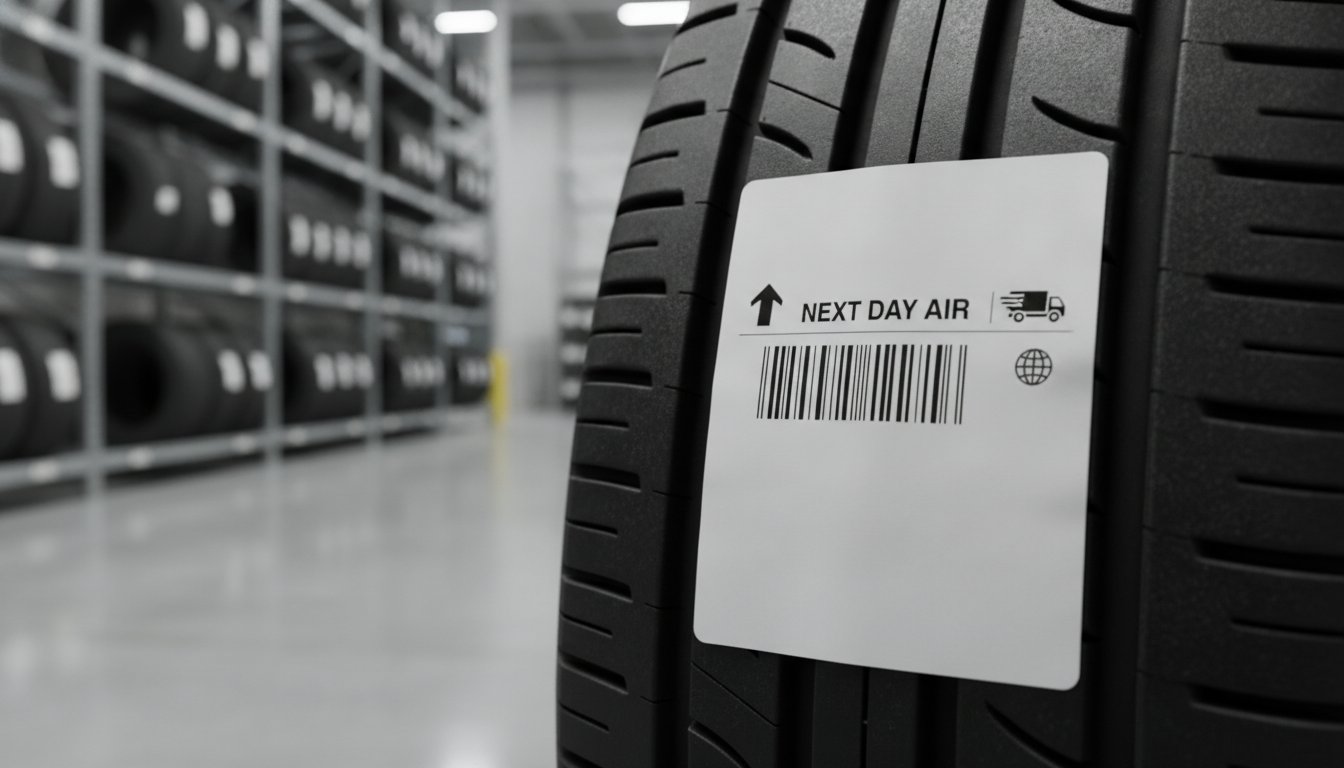
Your standard shipping labels are designed for cardboard, not the oily, porous surface of a vulcanized tire. If you're relying on generic ups and fedex 4x6 tire shipping labels, you've likely dealt with the headache of barcodes peeling off in a hot warehouse or during transit. It's a common problem that leads to more than just frustration. With UPS and FedEx applying additional handling surcharges between $15.90 and $33.75 for unboxed items in 2026, a lost label is a direct hit to your bottom line.
We understand that you need a solution that works the first time, every time. You'll learn how to choose and print high-adhesion 4x6 labels that stay secured to rubber throughout the demanding UPS and FedEx supply chains. We'll explore the critical differences between standard and tire-grade adhesives, explain how to avoid "lost in transit" claims, and provide a roadmap for streamlining your in-house printing. By the end of this article, you'll have the confidence to ship tires without worrying about label failure or unreadable barcodes. We've done the heavy lifting to find the right materials so you can focus on moving your inventory.
Key Takeaways
- Understand why standard adhesives fail on rubber surfaces and how high-tack formulations keep your shipments secure.
- Discover how to choose between ups and fedex 4x6 tire shipping labels and larger formats based on your specific tracking and data requirements.
- Learn the proper label placement techniques to ensure barcode scannability and maintain compliance with major carrier standards.
- Find the ideal hardware and software settings, such as using a Zebra ZT411, to produce durable labels in-house without smudging or peeling.
- Reduce lost-shipment claims by implementing specialized tire-grade labels designed to survive temperature fluctuations and oily rubber surfaces.
Why Standard 4x6 Labels Fail on Tire Shipments
Cardboard is easy to label; rubber is a nightmare. Most businesses assume that any adhesive will work if it feels sticky to the touch. This is a costly mistake. Rubber is a low surface energy (LSE) material, which means it naturally repels standard adhesives. Think of it like water on a freshly waxed car; the liquid beads up because it cannot grip the surface. Standard shipping labels behave the same way on a tire sidewall. They might stay attached for an hour, but they will likely flag or peel as soon as the tire is moved.
Tire-grade adhesive is a specialized rubber-based glue designed to flow into the porous surface of a tire. This high-tack chemistry is non-negotiable for unboxed shipments. Unlike standard permanent adhesives, tire-grade options are formulated to overcome the unique chemical challenges of vulcanized rubber. This specialized bond is essential because UPS and FedEx sorting facilities are not climate-controlled. Your ups and fedex 4x6 tire shipping labels must endure sweltering summer heat and freezing winter temperatures without losing their grip. If the adhesive becomes brittle in the cold or turns to liquid in the heat, your shipment is as good as lost.
The Problem with Porous Rubber and Oils
New tires are not just raw rubber. They are coated in mold release agents and paraffin waxes used during the manufacturing process. These oils constantly migrate to the surface, creating a slick barrier that prevents standard glue from bonding. You need a "cold flow" adhesive that remains aggressive and pliable. While standard paper labels often absorb these oils and become unreadable, specialized film or aluminized paper constructions provide a functional barrier. This ensures the barcode remains crisp and scannable regardless of how much oil the tire "breathes" during its journey.
Cost of Failure: Lost Shipments and Carrier Fines
The price of a cheap label is much higher than the few cents you save upfront. In 2026, UPS applies an additional handling surcharge of $15.90 for unboxed tires. FedEx charges between $26.50 and $33.75 depending on the shipping zone. If your label detaches, the tire becomes "overgoods" in a carrier warehouse. It is effectively lost in a sea of thousands of other unidentified items. You are then responsible for the cost of a replacement tire, the original shipping fees, and the damage to your brand's reputation. Investing in high-quality direct thermal tire labels is a simple insurance policy that protects your bottom line from these avoidable logistical disasters.
Choosing Between 4x6 and 4x8 Tire Shipping Labels
Deciding on the right dimensions for your ups and fedex 4x6 tire shipping labels depends on more than just carrier preference. While the 4x6 format is the industry standard for general logistics, the unique shape and tracking requirements of tires often make the larger 4x8 format a better investment. You need to balance the space required for barcodes with the physical surface area available on the tire sidewall or tread. Following GS1 logistics label standards ensures that your barcodes remain scannable across different carrier networks, even when the label is subjected to the friction of a typical sorting facility.
Software setup is a critical part of this decision. Most legacy shipping platforms are hard-coded for 4x6 output, but modern tools like BarTender Professional Software allow you to easily adjust templates for the extended 4x8 dimensions. You also need to choose between direct thermal and thermal transfer technology. Direct thermal is excellent for rapid shipping because it doesn't require a ribbon, but thermal transfer provides the extra durability needed if tires will sit in outdoor inventory for several months before reaching the customer.
When 4x6 is the Right Choice
The 4x6 format is the path of least resistance for many logistics teams. It's fully compatible with standard UPS WorldShip and FedEx Ship Manager settings without requiring custom configuration. These labels are particularly useful for low-profile performance tires. On these models, the sidewall height is limited, and a 4x8 label might wrap too far around the shoulder of the tire, making the barcode difficult to scan. Sticking with 4x6 helps high-volume distributors reduce media waste and keeps the printing process moving at maximum speed.
The 4x8 Advantage for Industrial Tracking
The 4x8 format is often the preferred choice for industrial applications because it provides essential extra real estate. This additional length allows you to print SKU numbers, batch codes, and DOT information alongside the carrier's tracking data. You don't have to sacrifice the size of the barcode to fit your internal inventory details. This extra height also makes the label much easier for warehouse scanners to pick up in low-light environments. To handle these larger, heavier rolls of high-tack media, you'll want to use industrial barcode printers that are built for 24/7 duty cycles. If you're struggling to decide which format fits your specific tire line, you can consult with a labeling specialist to review your application.
Carrier Compliance for UPS and FedEx Tire Shipments
Shipping an unboxed tire is significantly more complex than shipping a standard corrugated box. Carriers like UPS and FedEx rely on automated sorting systems that use high-speed scanners to read barcodes as they move along conveyor belts. If your label is wrinkled, smudged, or improperly placed on a curved surface, the system will fail to read it. This usually results in manual handling delays and potential surcharges. Before you apply your label, you should also ensure it doesn't obscure the DOT tire identification requirements that are molded into the sidewall for safety and regulatory tracking.
Proper placement is the first step toward compliance. While it might seem intuitive to stick a label on the sidewall, the tread is often the superior choice for scannability. The tread provides a flatter surface area, which reduces the "parallax error" that occurs when a scanner tries to read a barcode wrapped around a tight curve. However, if you're shipping low-profile tires, the sidewall may be your only option. In these cases, you must ensure the label is applied vertically to minimize the degree of curvature. FedEx requires barcodes to be readable even after significant abrasion during sorting, so the durability of your print is just as important as where you stick it.
In addition to automated labeling, if your team needs to apply manual inventory codes or inspection marks that stay permanent on rubber, you can discover PoscART for specialized marking solutions that resist fading and smudging.
UPS WorldShip Label Specifications
To remain compliant with UPS WorldShip, your 4x6 labels must be printed with enough contrast to satisfy their "Grade A" barcode requirements. We recommend using thermal transfer technology for this carrier. While direct thermal is convenient, it can fade if exposed to high friction or heat during the long-haul journey. Wax-resin ribbons are the gold standard for this application. They provide a smear-resistant finish that bonds deeply with the label face. If you're using Zebra hardware, choosing high-quality Zebra ribbons ensures that your barcodes remain crisp from the warehouse to the customer's doorstep.
FedEx Ship Manager Compatibility
Configuring your FedEx Ship Manager settings for ups and fedex 4x6 tire shipping labels requires attention to print density. If your print speed is too high, the barcode lines might "bleed" together, making them unreadable. For FedEx shipments, we often recommend using aluminized paper labels. These specialized labels feature a thin metallic barrier that prevents rubber chemicals and oils from migrating into the paper. This keeps the barcode white and the lines black, even if the tire sits in a sorting hub for several days. Maintaining this integrity is vital for passing through high-speed belt sorters without triggering a "no-read" error.

In-House Printing: Hardware and Software Setup
Setting up an in-house station for ups and fedex 4x6 tire shipping labels requires more than just a standard office printer. You need a machine with the mechanical torque to handle heavy rolls of high-tack media. While a desktop printer might work for occasional cardboard boxes, it will likely struggle with the weight and thickness of specialized tire labels. For high-volume environments, we recommend thermal transfer label printers that are built for industrial duty cycles. These machines provide the consistent heat and pressure required to bond wax-resin ribbon to specialized film or aluminized paper.
You'll need to calibrate your settings specifically for these materials. Because tire-grade adhesive is thicker than standard glue, the printer must exert more heat to ensure a clean transfer. We suggest increasing the "darkness" setting and reducing the "print speed" to about 2 to 4 inches per second. This slower pace allows the thermal printhead to achieve a deep, smudge-proof bond without overheating the adhesive. If the speed is too high, the adhesive can sometimes "ooze" and gum up your rollers, leading to frequent paper jams and maintenance delays.
Zebra ZT411: The Workhorse for Tire Labels
The Zebra ZT411 is the preferred choice for many logistics hubs because it handles large, fanfolded cartons and high-capacity rolls with ease. Regular printhead maintenance is critical when working with aggressive adhesives. We recommend using cleaning swabs after every roll to prevent adhesive buildup on the platen rollers. For a deeper look at your options, check out The 2026 Professional Guide to Thermal Label Printers. It's a great resource for comparing the latest industrial hardware.
Automating with BarTender Software
Workflow automation is where BarTender Professional Software truly shines. Instead of manually typing addresses, you can create templates that pull data directly from your ERP or warehouse management system. This ensures that every 4x6 label includes the correct tracking number, batch code, and DOT information without human error. Automating this process speeds up your shipping department and ensures you never send out a tire with an unreadable or incorrect barcode. Ready to upgrade your warehouse hardware? Speak with our technical team today to find the perfect printer for your tire labeling volume.
The DuraFast Advantage: Specialized Tire Label Solutions
Our North American manufacturing footprint allows us to support logistics hubs with rapid shipping and consistent availability. You won't have to worry about long lead times or overseas supply chain disruptions. We also provide expert consultation to help you match the right thermal transfer ribbons to your specific label material. While the 4x6 format is our most popular seller, we understand that some applications require unique dimensions. We offer custom sizes for oversized off-road tires or specialized tread patterns, giving you the flexibility to label any product in your inventory.
Why Logistics Managers Choose DuraFast
Reliability in harsh warehouse environments is our hallmark. Our labels are proven to stay secured even in facilities with extreme temperature fluctuations or high humidity. We ensure full compatibility with all major direct thermal label printers, allowing you to integrate our media into your existing hardware setup without friction. By acting as a single source for printers, software, and specialized media, we simplify your procurement process and reduce the complexity of your labeling operations.
Next Steps for Your Shipping Department
Testing is the best way to see the DuraFast difference for yourself. We encourage you to request sample rolls to test on your most difficult tire surfaces, including those with heavy mold release agents. When you evaluate the ROI of high-adhesion labels, the math is simple. The cost of a single lost shipment or a carrier handling fine far outweighs the investment in professional-grade media. Stop letting poor adhesion slow down your logistics. You can Shop DuraFast Tire Shipping Labels today and upgrade to a solution that actually sticks.
Secure Your Shipments with Professional Tire Labels
Your tire shipping process doesn't have to be a source of stress or lost revenue. By moving away from standard adhesives and choosing specialized ups and fedex 4x6 tire shipping labels, you're protecting your business from carrier surcharges and identification errors. We've established that a proprietary high-tack adhesive is the only reliable way to ensure a permanent bond on oily rubber surfaces. Whether you're using Zebra industrial printers or automating your workflow with BarTender, the right media makes all the difference in scannability and compliance.
Our North American support and shipping team is ready to help you find the perfect match for your specific inventory. We provide Zebra and FedEx/UPS compatible solutions that are built to survive the most demanding logistics environments. Don't let another shipment go unidentified in a carrier warehouse. You can Order High-Adhesion 4x6 Tire Shipping Labels Today to streamline your operations. We're here to make your transition to professional-grade tire labeling easy and effective.
Frequently Asked Questions
Can I use standard 4x6 shipping labels on tires?
No, standard 4x6 labels designed for cardboard will not stay attached to tires. Rubber is a low surface energy material that naturally repels general-purpose adhesives. Additionally, new tires are coated in waxes and mold release agents that prevent a secure bond. You need labels specifically engineered for the tire industry to ensure your shipments aren't lost in the carrier network.
What is the best adhesive for labels on rubber surfaces?
High-tack, rubber-based adhesives are the best choice for labeling tires. These specialized glues are designed for "cold flow", which allows the adhesive to seep into the microscopic pores of the rubber surface. This creates a permanent bond that overcomes the slick barrier created by manufacturing oils. Standard acrylic adhesives used for boxes simply can't provide this level of security on unboxed rubber.
Do I need a special printer for tire shipping labels?
While you can use some desktop models, an industrial thermal printer is highly recommended for tire labels. These machines, such as the Zebra ZT411, have the high-torque motors needed to pull heavy rolls of specialized media. They also offer better heat control. This is necessary to achieve a crisp print on thicker tire label face stocks without gumming up the internal rollers.
Should I use direct thermal or thermal transfer for tire labels?
Thermal transfer is the superior choice for long-haul durability, though direct thermal is acceptable for fast-turnover shipping. Thermal transfer uses a wax-resin ribbon to create a smudge-proof image that resists the friction of sorting belts. If you choose direct thermal ups and fedex 4x6 tire shipping labels, ensure the material has a protective coating to prevent the barcode from fading due to heat or chemical exposure.
How do I prevent my tire labels from falling off in cold weather?
You must use an adhesive formulation specifically rated for cold-weather performance. Standard adhesives often reach their "glass transition" point in freezing temperatures, causing the glue to become brittle and lose its grip. Tire-grade adhesives remain pliable and aggressive even in unheated UPS or FedEx sorting facilities. This ensures the label stays locked to the rubber during winter transit.
Are 4x6 labels compliant with both UPS and FedEx requirements?
Yes, 4x6 labels are fully compliant with the standard tracking requirements for both carriers. This size provides enough real estate for the necessary barcodes, service indicators, and address information. Using ups and fedex 4x6 tire shipping labels allows you to maintain a consistent workflow across multiple shipping platforms while ensuring your unboxed items meet the scannability standards required for automated sorting.
What is the difference between a tire label and a standard shipping label?
The primary difference lies in the adhesive chemistry and the barrier layer. Standard labels use acrylic adhesives meant for flat, dry surfaces. Tire labels use aggressive rubber-based glues and often include a thin metallic or film barrier. This barrier prevents the chemicals and oils inside the tire from migrating through the label and turning your barcode unreadable or yellow.
How do I set up my Zebra printer for high-tack tire labels?
Start by increasing the darkness setting and lowering the print speed to approximately 2 or 3 inches per second. The thicker adhesive on tire labels requires more dwell time under the printhead to create a sharp image. You should also use cleaning swabs more frequently. Aggressive adhesives can leave a residue on the platen rollers that may cause tracking issues if not maintained regularly.