Epson C6500 vs Afinia X350 for Chemical Drum Labels: 2026 Comparison
13th Sep 2026
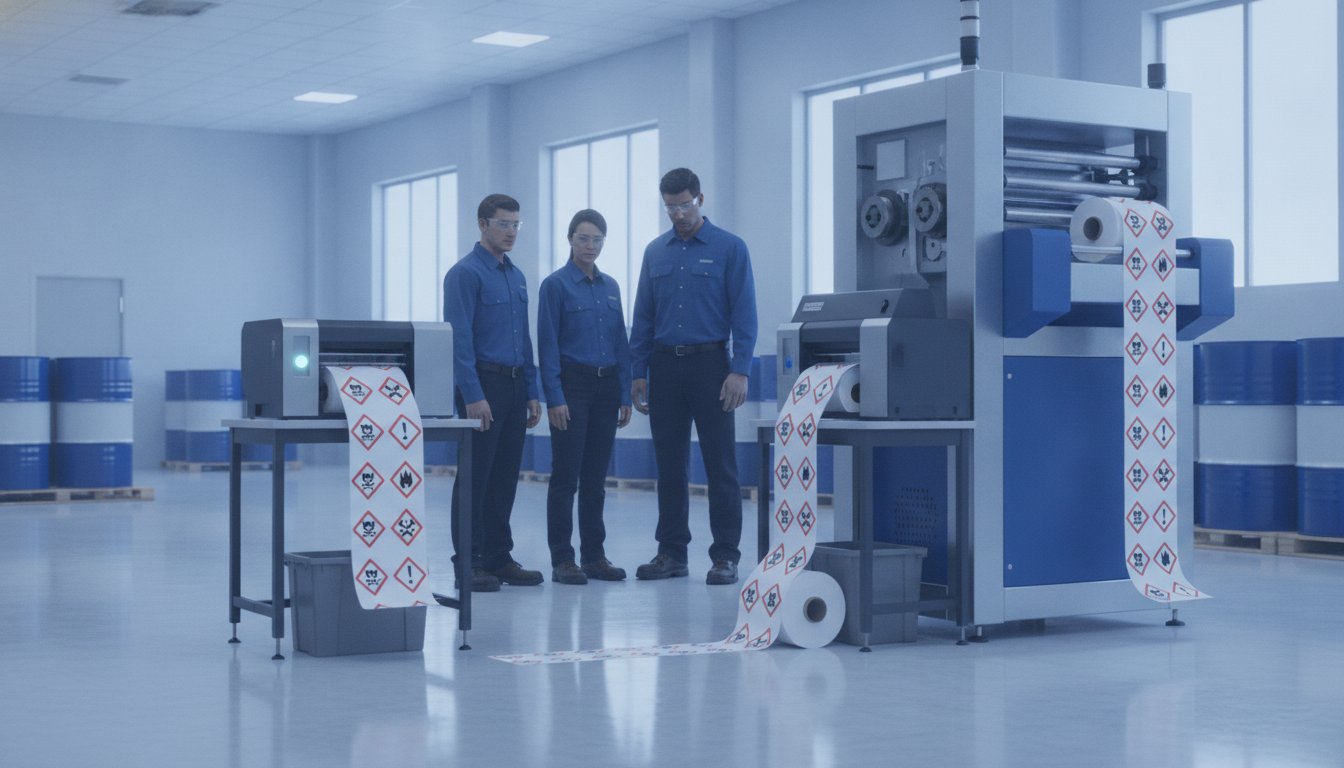
Could a single labeling error in 2026 cost your business more than the price of a high-end industrial press? With the May 2026 deadline for GHS Revision 7 compliance fast approaching, the pressure to produce durable, BS5609-certified labels has never been higher. You're likely tired of the high costs and long lead times associated with pre-printed labels that often fail to hold up in harsh marine environments. It's frustrating to deal with slow print speeds when your production schedule is on the line.
We understand that choosing the right hardware is a high-stakes decision for your facility. This comparison of the Epson C6500 vs Afinia X350 for chemical drum labels will show you exactly which high-performance pigment inkjet printer fits your specific GHS compliance needs. Whether you need the precision of an 8-inch desktop solution or the raw power of a 13-inch wide-format press, we have the data to guide you. We'll break down the total cost of ownership, print speeds, and media versatility to help you bring your label production in-house with total confidence. By the end of this guide, you'll know which machine will best protect your brand and your bottom line.
Key Takeaways
- Learn how to achieve full GHS and BS5609 compliance using specialized pigment inks paired with DuraFast Matte Chemical Labels.
- Compare the Epson C6500 vs Afinia X350 for chemical drum labels to see if a mid-volume desktop unit or a high-speed industrial press fits your production volume.
- Evaluate the performance gap between the 5-ips Epson model and the Afinia X350, which delivers nearly 30 inches per second for rapid industrial output.
- Discover how the Afinia X350’s 13-inch print width simplifies labeling for extra-wide 55-gallon drums compared to standard 8-inch systems.
- Analyze the long-term ROI benefits of moving from small ink cartridges to high-capacity 2-liter tanks for large-scale chemical labeling runs.
The High Stakes of Chemical Drum Labeling: GHS and BS5609 Standards
Labeling a 55-gallon chemical drum isn't just about branding. It's a critical safety requirement. The Globally Harmonized System (GHS) ensures that workers and emergency responders understand exactly what's inside a container. If a label fades under UV light or peels off during marine transport, you face massive compliance risks. Standard inkjet labels often fail because they use dye-based inks that bleed when exposed to water or solvents. For industrial environments, pigment-based ink is the only reliable choice. It creates a chemical bond with the media that resists smudging and environmental degradation. With the May 19, 2026, deadline for updated Hazard Communication Standards, getting your labeling right is more urgent than ever.
What is BS5609 Compliance?
BS5609 is the international standard for labels used in marine environments. It's divided into distinct parts that verify total durability. Section 2 tests the base material and adhesive for saltwater immersion. Using specialized media like DuraFast Matte Chemical Labels ensures the adhesive holds up under pressure. Section 3 tests the actual print durability. You can't achieve Section 3 certification with a label alone; it requires a specific combination of media, printer, and ink. Choosing a certified GHS label printer ensures your labels remain legible even after three months of saltwater exposure. This is why the Epson C6500 vs Afinia X350 for chemical drum labels debate is so important for manufacturers shipping overseas.
The Challenge of Large-Format Drum Labels
Size is a major hurdle. A standard 4-inch shipping label is too small for a 55-gallon drum. You need wide-format capabilities to meet visibility standards. Drums also face physical abuse from forklifts and extreme weather. Many companies are moving away from pre-printed labels because they're expensive and lead to waste when regulations change. In-house printing gives you the agility to update safety data sheets (SDS) instantly. By evaluating the Epson C6500 vs Afinia X350 for chemical drum labels, you can find a system that handles the 8-inch to 13-inch widths required for industrial containers. This shift reduces label waste and ensures your facility stays compliant without the wait times of a third-party print shop.
Epson ColorWorks C6500: The Precision Standard for 8-Inch Labels
The Epson ColorWorks C6500 is a purpose-built industrial machine. It's designed to bridge the gap between small desktop printers and massive digital presses. When evaluating the Epson C6500 vs Afinia X350 for chemical drum labels, the C6500 is often the preferred choice for facilities that prioritize precision and a compact footprint. Its 8-inch print width is specifically scaled for the most common chemical drum sizes. This ensures you aren't wasting media or overcomplicating your layout during production.
One of its strongest features is the PrecisionCore TFP printhead. It delivers sharp, high-resolution text even at small font sizes. This is critical for meeting OSHA's Hazard Communication Standard, which requires specific pictograms and legible safety data. Integration is also a breeze. The C6500 supports ZPL II, meaning it can drop into existing thermal printer workflows without a total software overhaul. It's a reliable workhorse that simplifies the transition to color labeling.
Models and Workflow Integration
Efficiency on the plant floor depends on how your labels are handled after they're printed. The C6500 series offers two distinct models to match your setup. The C6500A includes an integrated autocutter, which is perfect for batch printing operations. If you prefer an apply-as-you-go method, the C6500P features a built-in peeler. Both models work best when paired with high-quality Epson C6500 labels. These materials are tested to ensure the adhesive stays put on rough drum surfaces. You can even manage multiple units across different facilities using Epson's remote management tools.
Ink Performance and Chemical Resistance
Durability is where the Epson ColorWorks ecosystem truly shines. It uses UltraChrome DL pigment ink. Unlike dye inks, these pigments sit on top of the media and resist fading from UV exposure. They don't smudge when touched by oils or solvents. This ink chemistry is a cornerstone for achieving BS5609 Section 3 certification. It ensures your safety information remains visible through the harshest conditions. If you're unsure which model fits your specific chemical environment, you can always talk to a labeling specialist for a custom recommendation.
Afinia X350: Scaling Up for Extra-Wide Industrial Production
The Afinia X350 shifts the conversation from desktop convenience to industrial scale. While the Epson C6500 excels in localized, mid-volume environments, the X350 is a digital roll-to-roll press designed for 24/7 production. It offers a massive 13-inch print width. This extra space is a game changer for oversized chemical containers that require wrapping labels or large-format safety data. When comparing the Epson C6500 vs Afinia X350 for chemical drum labels, the choice often comes down to your daily output requirements and the physical size of your containers. The X350 isn't just a printer; it's a high-capacity production hub built with heavy-duty components to handle the rigors of a chemical manufacturing floor. For industrial operators who also need to manage fluid systems, you can explore Goulds Water Technology Pumps to support your water treatment and processing requirements.
Downtime is the enemy of any industrial facility. To combat this, the X350 utilizes high-capacity 2-liter ink tanks for each color. This is a significant step up from the 80ml cartridges found in smaller units. These large tanks mean fewer interruptions for ink swaps and a much lower intervention rate during long runs. The system also features advanced media handling that accommodates large-diameter label rolls. This allows you to load enough material for an entire shift without stopping to reload. It's a robust solution for those who have outgrown desktop systems and need a dedicated press to keep up with global demand.
The performance gap between these two systems is most apparent when you look at linear speed. The Afinia X350 delivers a blistering print speed of up to 29.5 inches per second. In contrast, the Epson C6500 maxes out at 5 inches per second. For a facility printing thousands of 8x10 or 10x12 drum labels, this speed difference saves hours of production time every single week. Batch-printing hazardous warnings becomes a streamlined process rather than a bottleneck. You can clear your daily queue in a fraction of the time, allowing your team to focus on shipping and logistics rather than waiting for the printer to finish a roll.
Wide Format Versatility
The 13-inch web width provides flexibility that standard 8-inch printers simply can't match. You can print extra-large labels for 55-gallon drums or even utilize the width to print multiple smaller labels across the web. This "multi-up" printing strategy significantly reduces media waste and optimizes your cost per label. Integrating the X350 alongside other color label printers in your production line ensures you have the right tool for every container size. Most importantly, the pigment ink technology used in the X350 ensures that every label meets the BS5609 durability standard. This ensures your labels remain intact and legible during international transit, regardless of how wide or large the container may be.
Head-to-Head: Speed, Ink Cost, and Durability Comparison
Choosing the right system involves more than just looking at the initial hardware. When comparing the Epson C6500 vs Afinia X350 for chemical drum labels, you're looking at two different levels of industrial capability. The Epson C6500 is a compact desktop unit that fits into existing workstations and features user-replaceable maintenance boxes. It's easy to manage and has a small footprint. The Afinia X350 is a robust roll-to-roll press that requires dedicated floor space and stable environmental conditions to handle heavy-duty production cycles.
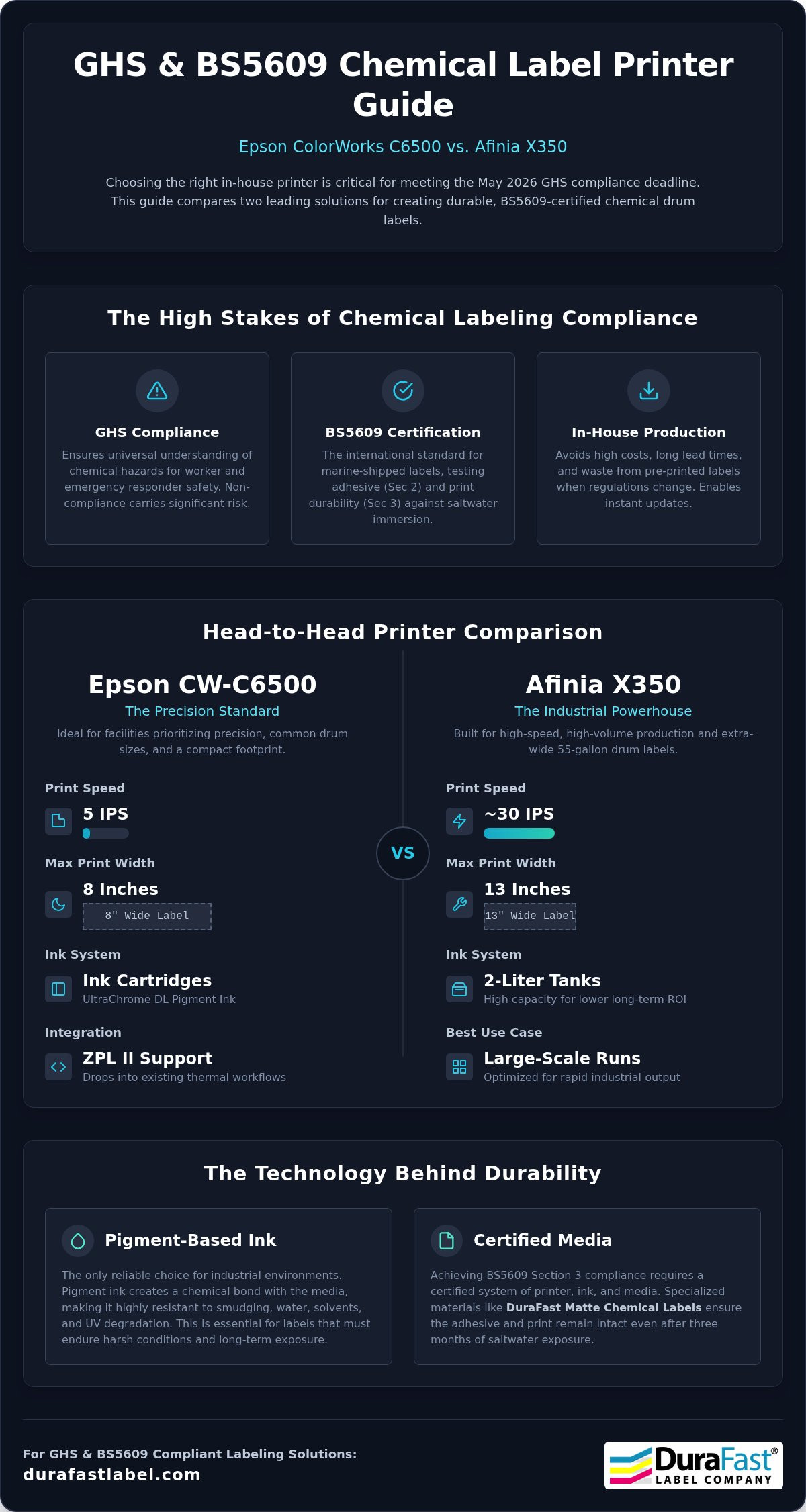
Speed and resolution create a significant performance gap. While the Epson prints at 5 inches per second with 1200 dpi resolution, the Afinia X350 reaches 29.5 inches per second at 1600 dpi. This isn't just about finishing jobs faster. It's about clearing production bottlenecks while maintaining superior image quality for complex GHS pictograms. If your facility produces hundreds of drums daily, the X350's throughput is essential. If you only print a few dozen labels per day, the C6500's precision is more than enough for your workflow.
Durability and Certification Performance
Both printers use pigment-based inks to ensure GHS compliance. When used with DuraFast Matte Chemical Labels, both machines achieve BS5609 Section 3 certification. This means the labels can survive three months of saltwater immersion and still be legible. Pigment inks from Epson and Afinia provide protection against:
- Harsh solvents and cleaning agents
- Industrial oils and lubricants
- Acidic chemical splashes
- Prolonged UV and weather exposure
This level of durability is non-negotiable for 55-gallon drums that face harsh outdoor storage and chemical spills during transit. Both systems deliver the permanence required for international maritime safety.
Total Cost of Ownership (TCO)
The ROI for in-house printing comes from massive waste reduction. Pre-printed labels often become obsolete when regulations change, like the upcoming 2026 GHS Revision 7 updates. Printing on-demand ensures you only produce what you need. While the Epson uses 80ml cartridges, the Afinia X350 utilizes 2-liter tanks. For high-volume users, the lower cost per milliliter in the X350's tanks leads to significant long-term savings. The C6500 is the better entry point for mid-volume facilities, while the X350 is built for those who need to scale their industrial output rapidly.
If you're ready to see how these numbers apply to your specific facility, contact our labeling experts for a custom ROI analysis.
Choosing the Right System: Implementation and Consumables
Selecting between the Epson C6500 vs Afinia X350 for chemical drum labels depends on your daily production goals. If your facility handles mid-volume runs and requires a printer that fits on a standard workbench, the Epson C6500 is your best bet. It's a localized solution that integrates easily with major ERP systems. However, if you're running 24/7 production across multiple shifts, the Afinia X350 is the superior choice. Its ability to handle extra-wide 13-inch media and its high-capacity ink tanks make it a true industrial powerhouse. You won't have to stop for frequent ink swaps, which keeps your line moving during peak demand.
Transitioning to an in-house system is a straightforward process. It starts with auditing your current label sizes and regulatory needs. Most facilities find that switching to pigment-based inkjet labels eliminates the lead times and waste associated with pre-printed stock. You'll need to ensure your design software is configured for the new hardware. This ensures your safety data sheets are always up to date. Testing is the final step. Run a few test batches through your production line to verify adhesion and durability before a full rollout. This proactive approach prevents compliance headaches later.
DuraFast Matte Chemical Labels: The Missing Piece
The printer is only half of the compliance equation. To meet BS5609 standards, you need media that handles harsh marine environments. DuraFast Matte Chemical Labels feature specialized porous coatings designed to lock in pigment inks. This prevents smudging and ensures the label remains legible even after saltwater immersion. We offer these labels in standard 55-gallon drum dimensions, including 8x10 and 10x12 sizes. Using the right media ensures your investment in a high-end printer isn't wasted on labels that peel or fade. It's the most reliable way to guarantee your containers stay compliant from the warehouse to the final destination.
Final Recommendation for 2026
As the 2026 GHS deadlines approach, the stakes for compliance are high. The Epson C6500 offers precision for 8-inch applications, while the Afinia X350 scales your output for massive industrial runs. We recommend getting a sample kit to test how our labels and inks react to your specific chemical products. Consulting with our team can help you find a tailored industrial label printer solution that fits your budget and throughput needs. Don't wait until the compliance deadlines are upon you to modernize your workflow. Taking action now ensures your facility is ready for the regulatory shifts ahead.
Secure Your Compliance Strategy for 2026
The 2026 deadlines for GHS Revision 7 are firm. Your facility needs a reliable path to compliance that doesn't involve high pre-printed costs or wasted inventory. Deciding between the Epson C6500 vs Afinia X350 for chemical drum labels comes down to your specific production scale. The Epson C6500 offers unmatched precision for standard 8-inch applications. In contrast, the Afinia X350 provides the industrial speed and 13-inch width required for high-volume 55-gallon drum runs. Both systems deliver the pigment ink durability needed for BS5609 standards when paired with our specialized media.
DuraFast Label Company is your dependable partner for this transition. We specialize in BS5609 chemical label solutions and offer North American shipping and support. We maintain a comprehensive stock of pigment inks and DuraFast Matte Chemical Labels to keep your lines running. Don't let compliance risks slow your operations down. It's time to take control of your production. Shop the Epson C6500 and Afinia X350 at DuraFast Label Company today to find your perfect match. We're ready to help you simplify your labeling process and protect your business.
Frequently Asked Questions
Is the Epson C6500 fully BS5609 compliant for chemical drum labels?
The Epson C6500 is fully BS5609 compliant when you pair it with specialized media like DuraFast Matte Chemical Labels. This international standard requires both the adhesive and the printed image to survive three months of saltwater immersion. The printer's UltraChrome DL pigment ink creates a permanent bond with the label surface. This ensures your safety information remains legible throughout the entire maritime shipping journey, meeting all international safety requirements.
Can the Afinia X350 print labels wider than 8 inches for oversized drums?
Yes, the Afinia X350 is specifically designed for wide-format industrial applications with a 13-inch print width. This capability allows you to produce extra-large wrap-around labels for 55-gallon drums that standard 8-inch printers cannot handle. When evaluating the Epson C6500 vs Afinia X350 for chemical drum labels, this extra width provides the versatility to print multiple labels across a single web, significantly reducing media waste during high-volume production runs.
Do I need special software like BarTender for GHS label printing?
Using professional software like BarTender Professional is essential for GHS compliance. This software simplifies the process of including mandatory hazard pictograms, signal words, and safety statements on your labels. It integrates directly with your existing database to ensure accuracy across every batch. We provide BarTender and other major design tools to help you manage your in-house printing workflow efficiently. It's the most reliable way to stay current with changing regulatory standards.
What is the difference between pigment ink and dye ink for chemical resistance?
Pigment ink uses solid particles that sit on top of the label and bond to the fibers, providing extreme resistance to chemicals, UV rays, and moisture. Dye-based inks are liquid-based and soak into the material, making them prone to smudging or fading when exposed to solvents or rain. For GHS and BS5609 compliance, pigment ink is mandatory. It ensures that critical safety warnings don't disappear when a drum is splashed with chemicals or stored outdoors, which is also a vital consideration for laboratories that buy research peptides US and require permanent identification for their analytical samples.
High-capacity 2-liter ink tanks on the Afinia X350 dramatically reduce your long-term production expenses. These large tanks offer a much lower cost per milliliter compared to the 80ml cartridges used in smaller desktop models. By moving to a roll-to-roll press with bulk ink delivery, high-volume facilities can achieve significant savings on consumables. This setup also reduces downtime because your team won't need to stop the production line for frequent ink replacements.
Can these printers handle outdoor exposure and saltwater for drum shipping?
Both printers are engineered to handle the harshest shipping conditions. When you use pigment inks with DuraFast Matte Chemical Labels, your labels will withstand prolonged outdoor exposure and saltwater immersion. This durability is a core requirement for maritime shipping regulations. Whether your drums are stored on a hot loading dock or transported across the ocean, the safety data will remain intact and readable. This reliability protects your business from compliance fines and safety incidents.
Which printer is easier to maintain in a dusty chemical plant environment?
The Epson C6500 is often easier to manage in varied plant environments due to its compact size and user-replaceable maintenance boxes. It fits into smaller workstations and requires less specialized infrastructure. The Afinia X350 is an industrial-grade roll-to-roll press designed for heavy use, so it benefits from a more controlled environment to protect its precision components. When comparing the Epson C6500 vs Afinia X350 for chemical drum labels, consider your available floor space and dust control measures.
What is the maximum print speed for a full-color 8x10 GHS label?
Print speeds vary significantly between these two classes of hardware. The Epson C6500 reaches a maximum speed of 5 inches per second, which is ideal for on-demand or mid-volume needs. The Afinia X350 is a high-speed press that delivers up to 29.5 inches per second. For an 8x10 GHS label, the X350 can finish the job nearly six times faster than a desktop unit. This speed makes it the clear choice for massive industrial production runs.