Epson ColorWorks C6000A: The Complete Buyer & Technical Guide
23rd Sep 2026
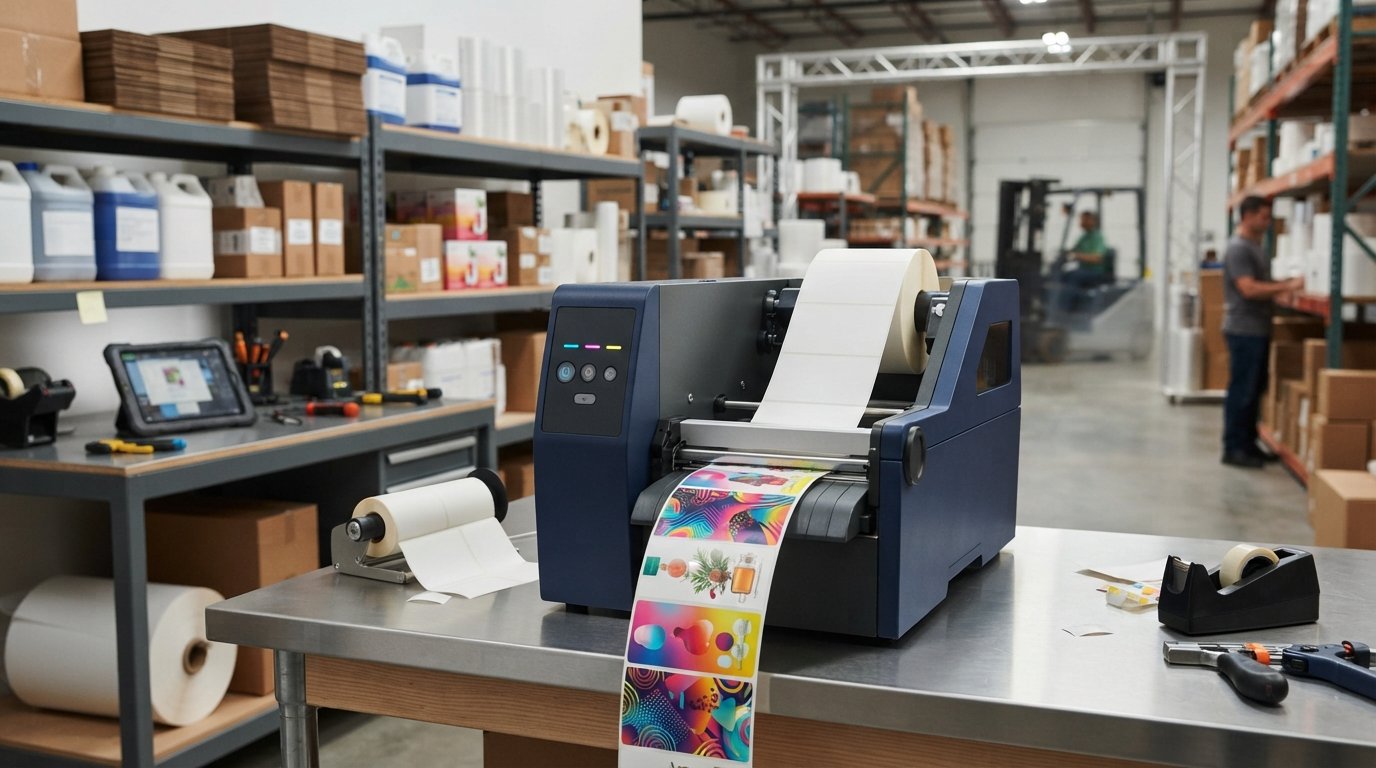
Holding thousands of pre-printed labels in your warehouse is an expensive gamble against changing regulations and sudden packaging redesigns. If you rely on outside print vendors, you already know the frustration of long turnaround times, rigid order minimums, and obsolete stock. Upgrading has also been tricky because finding a color system durable enough to replace legacy black-and-white thermal printers is tough. The Epson ColorWorks C6000A bridges that divide by combining industrial-grade durability with flexible, on-demand color printing.
You shouldn't have to compromise between chemical-resistant label compliance and retail-ready visual quality. In this comprehensive guide, you'll discover the core specifications, media versatility, and workflow integration capabilities of the Epson ColorWorks C6000A. We evaluate print speeds, resolution, auto-cutter functionality, and enterprise software compatibility to help you determine if this printer fits your operational packaging line.
Key Takeaways
- Understand how the Epson ColorWorks C6000A delivers 1200 x 1200 dpi print resolution across widths up to 4.25 inches for sharp text, scannable barcodes, and vibrant visuals.
- Compare UltraChrome DL gloss and matte pigment ink formulations to determine the right match for harsh chemical compliance or retail packaging.
- Discover how native ZPL II emulation allows you to replace legacy thermal transfer printers without overhauling your existing enterprise software workflows.
- Learn key setup practices for multi-platform operating system drivers and seamless barcoding software integration.
- Evaluate overall cost of ownership benefits achieved by eliminating pre-printed label inventories and reducing obsolete packaging stock.
What Is the Epson ColorWorks C6000A? Core Specifications and Technology
The Epson ColorWorks C6000A is a dedicated 4-inch on-demand inkjet printer engineered specifically for industrial and commercial environments. Instead of relying on slow, outdated methods, it delivers dynamic full-color production directly on the packaging line. By utilizing advanced inkjet printing technology, the unit bridges the operational gap between standard black-and-white barcodes and photographic-quality product labeling.
Speed and resolution define its production value:
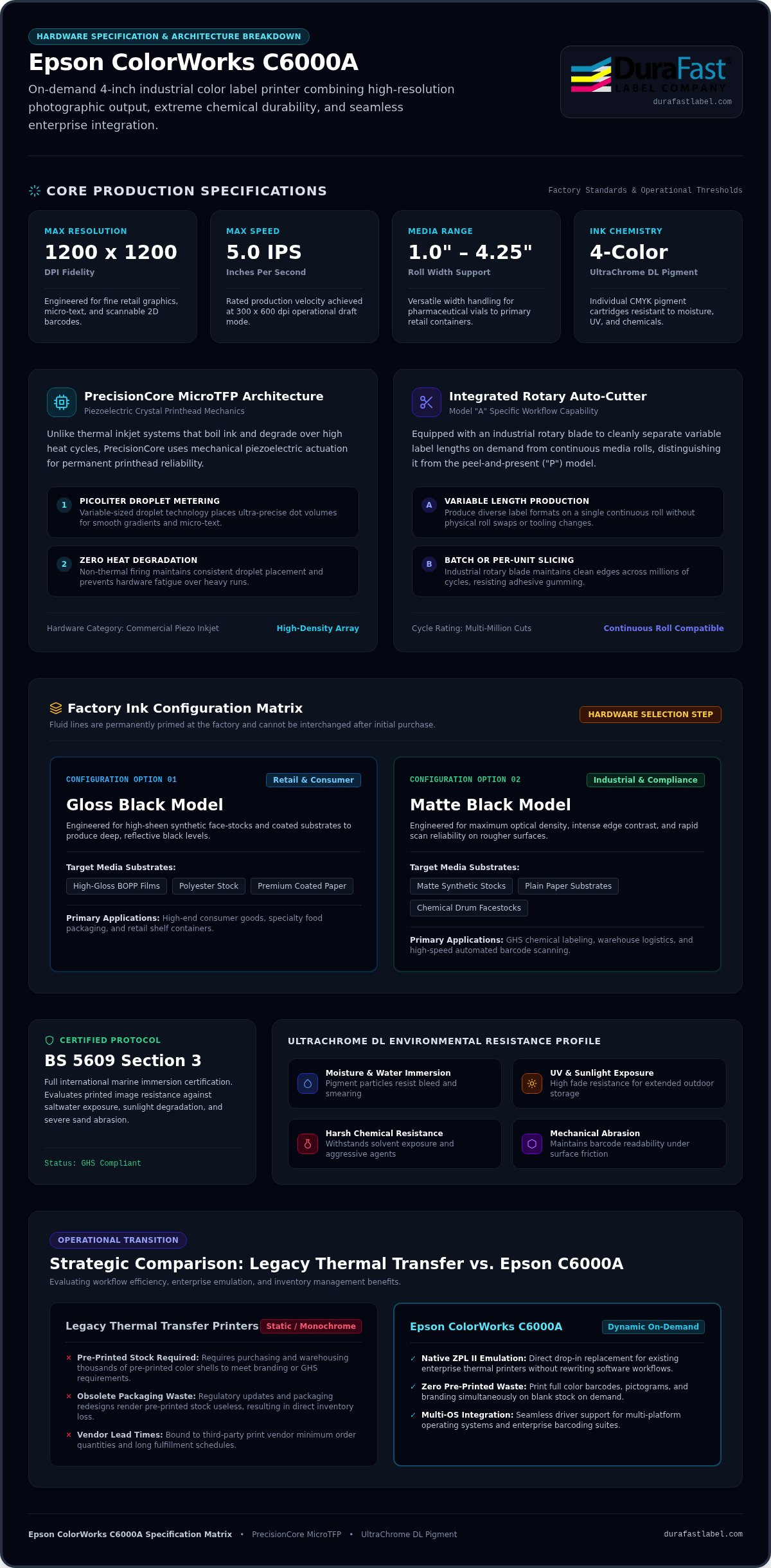
- Resolution Profiles: Up to 1200 x 1200 dpi for fine retail graphics, with adjustable draft modes for rapid warehouse routing.
- Production Speeds: Speeds reaching up to 5 inches per second at 300 x 600 dpi, keeping pace with active packaging operations.
- Media Width Support: Accommodates roll widths from 1.0 inch to 4.25 inches.
PrecisionCore Inkjet Architecture Explained
At the center of the hardware sits Epson's proprietary PrecisionCore MicroTFP print chip. Unlike conventional thermal inkjet elements that use heat to boil ink, PrecisionCore relies on mechanical piezoelectric crystals. The printhead doesn't degrade from repeated heat cycles, ensuring consistent droplet placement and long-term hardware reliability. Epson's Variable-Sized Droplet Technology precisely meters dot sizes down to picoliter measurements. The result is crisp micro-text on pharmaceutical packaging, smooth color gradients, and sharp, scan-ready 2D barcodes on primary retail containers.
The Auto-Cutter Mechanism: Practical Workflow Advantages
What sets the Epson ColorWorks C6000A apart from the peel-and-present "P" variant (C6000P) is its integrated high-speed rotary auto-cutter. The peeler model dispenses labels individually for immediate manual application. In contrast, the "A" model uses an automated blade to separate jobs on demand. This distinction is critical for production managers balancing diverse product formats.
The rotary cutter supports variable length cut-sheet print jobs, allowing you to produce differing label lengths from a single roll of continuous inkjet labels without hardware changes. Operators can configure batch-cut jobs, slicing after a set quantity of finished units, or program cuts between individual items. Built with an industrial rotary blade, the mechanism maintains clean edges across millions of cycles, resisting adhesive gumming and minimizing operator intervention during heavy packaging runs.
Media Versatility, UltraChrome Pigment Inks, and Durability Standards
Achieving durable, long-lasting labels requires pairing the right ink chemistry with the proper face-stock. The Epson ColorWorks C6000A utilizes four-color UltraChrome DL pigment inks designed specifically to withstand moisture, abrasion, UV exposure, and harsh chemicals. Unlike dye-based alternatives that bleed when wet, pigment particles bond securely with coated substrates to maintain legibility in punishing environments.
Gloss vs. Matte Ink Configurations: Making the Right Selection
Hardware selection begins with an essential choice: the C6000A ships from the factory configured for either gloss black or matte black ink. This configuration cannot be swapped later because the internal fluid lines are permanently primed. Choosing the right version depends directly on your packaging materials:
- Gloss Black Model: Formulated for high-gloss BOPP films, polyester, and premium coated paper stock. It delivers deep, reflective blacks across high-end consumer goods, specialty food packaging, and retail products.
- Matte Black Model: Engineered for matte synthetic face-stocks, plain paper, and rougher industrial labels. It provides maximum optical density and intense contrast, which is necessary for high-speed barcode scanning.
Stocking genuine OEM Epson inks ensures consistent fluid viscosity, accurate color profiles, and protection against premature nozzle clogging.
GHS and Chemical Resistance Performance Standards
Chemical manufacturers facing strict packaging guidelines rely heavily on the Epson ColorWorks C6000A to achieve GHS compliance. The printer earns international marine immersion certification under the BS 5609 certification protocol. While Section 2 evaluates base adhesive performance under marine conditions, Section 3 tests the printed image itself against saltwater abrasion and intense sunlight. When paired with certified matte synthetic inkjet labels, UltraChrome DL inks penetrate deep into the receiving layer, ensuring hazardous chemical warnings stay intact throughout transit.
Supported Label Media Widths, Cores, and Formats
Loading flexibility is built into the chassis. The internal roll carrier accommodates 1.0-inch to 4.25-inch media widths on standard 3-inch cores, supporting roll outer diameters up to 8 inches to reduce roll-change downtime. Dual movable sensors handle die-cut labels with gap detection, continuous rolls, and reflective black-mark stock. High-volume packaging lines can also route fanfold stacks directly through the rear feeding slot to run continuous print cycles with minimal loading delays. If you're unsure which substrate matches your operational needs, you can reach out to DuraFast Label Company specialists for media recommendations.
Epson C6000A vs. Legacy Thermal Transfer Printers: Strategic Comparison
Traditional manufacturing lines have long relied on monochrome thermal transfer machines. While dependable for basic shipping labels, those setups create bottlenecks when branding, hazard pictograms, or color coding enter the equation. Facilities often manage costly pre-printed rolls, only to run them through black-only units to add variable data. The Epson ColorWorks C6000A replaces this multi-stage headache with an agile, single-pass color printing workflow.
Upgrading from Monochrome Thermal Transfer to On-Demand Color
Adopting color doesn't require rewriting your core warehouse software. The C6000A features native ZPL II language emulation. It interprets legacy command streams directly, translating black-and-white field coordinates while allowing you to map specific color commands without re-architecting your ERP infrastructure. Switching from industrial units like the Zebra ZT411 to an on-demand color system eliminates thermal transfer ribbon wrinkles, burns, and mismatched wax-resin rolls. Inkjet technology also reduces consumable waste by consolidating your printing supplies into individual ink cartridges and blank media rolls.
ColorWorks C6000A vs. C6000P: Cutter vs. Peeler Selection
Choosing between Epson's two 4-inch models comes down to how your packaging floor handles applied labels:
- The C6000A (Auto-Cutter): Features an internal motorized rotary blade. It cleanly cuts liner and face-stock after individual jobs or set batch counts. This setup is ideal for kitting operations, variable-length carton labels, and packaging stations where workers need stacks of pre-separated sheets ready for rapid manual packing.
- The C6000P (Peeler): Uses an integrated mechanical peel bar with a presence sensor. It strips labels away from the backing liner one by one. The printer holds back the next label until an operator removes the first, making it best for high-cadence, one-at-a-time assembly lines.
Width and Volume Positioning: C6000A vs. C6500A
Width requirements determine your hardware path. The Epson ColorWorks C6000A handles media widths up to 4.25 inches, making it a targeted match for standard shipping tags, pharmaceutical vials, and retail bottle labeling. If your packaging requires wide-format formats, such as full-sized chemical drum labels, the 8-inch C6500A serves that footprint. Both platforms share the same high-durability print technology and intuitive management interface, giving growing plants a uniform hardware ecosystem across differing line sizes.
Enterprise Software Integration, Drivers, and Production Setup
Deploying the Epson ColorWorks C6000A into an existing line is straightforward. The printer fits cleanly into established packaging environments without requiring custom middleware or complex workarounds. Whether you manage a single packaging station or a sprawling industrial warehouse, the hardware offers flexible network connectivity and broad driver support across Windows, macOS, and Linux operating systems.
Connecting and Configuring the C6000A on Business Networks
Physical setup begins with your interface of choice. Connect directly to a local workstation using high-speed USB 2.0, or integrate the printer across your facility using the built-in Gigabit Ethernet port. The full-color front LCD panel makes network assignment quick and painless. IT teams can set static IP addresses, define subnet masks, and configure network security protocols directly from the screen. For centralized management, administrators can deploy Epson Device Admin software to remotely configure fleets, push firmware updates, and monitor ink cartridge levels across multiple industrial locations from a single console.
Label Design Workflows with BarTender Professional
Industrial packaging runs depend heavily on dynamic, automated template population. The printer pairs seamlessly with professional design tools like BarTender Professional. By leveraging native Windows drivers, the system allows database-driven fields to populate automatically on your label layouts:
- Dynamic Data Binding: Link serial numbers, batch lot codes, and real-time expiration dates directly from your internal ERP or warehouse management software.
- Precise Color Profiling: Manage standard ICC profiles within the driver settings to ensure exact spot-color reproduction and brand consistency across diverse media types.
- Automated Cut Commands: Trigger the integrated auto-cutter directly through print job parameters, alternating between batch runs and individual sheet slicing without manual intervention.
Routine Maintenance, Nozzle Checks, and Printhead Care
Unplanned downtime is costly in high-volume packaging lines. Epson addresses this with proprietary Nozzle Verification Technology. Built-in sensors automatically measure droplet discharge and use electronic compensation to clear clogs during production runs. Operators can also schedule automated cleaning cycles during planned shift changes to maintain peak print quality. Ink waste discharges into an easily accessible, high-capacity maintenance box located at the front of the unit. Replacing the maintenance box takes seconds, keeping downtime to an absolute minimum.
Planning your facility rollout? Talk with our software integration team to align your printer drivers and label design software for peak production speed.
Purchasing Framework: Consumables, Total Cost of Ownership, and Support
Evaluating total cost of ownership goes far beyond the initial equipment acquisition. The true financial return of bringing color labeling in-house comes from reducing warehouse footprint, eliminating obsolete inventory, and gaining agile scheduling on active production lines. The Epson ColorWorks C6000A provides a predictable operational model that helps facilities regain control over their packaging schedules.
Eliminating Waste and Inventory Minimums with On-Demand Color
Outsourcing pre-printed labels forces businesses to purchase large minimum order quantities to secure acceptable per-label pricing. When ingredient lists change, branding updates occur, or regulatory guidelines shift, entire pallets of unused rolls end up in the scrap bin. Producing runs on demand with the Epson ColorWorks C6000A eliminates this costly cycle. Your production team prints exact quantities for short-run product variations, seasonal releases, and private-label orders as needed. Partnering with an authorized color label printer supplier guarantees reliable access to genuine OEM hardware and manufacturer-backed technical resources.
Selecting the Right Media Partner and Consumables Ecosystem
A reliable packaging line requires a steady, predictable supply chain. Because the C6000A uses individual CMYK cartridges, operators only replace the specific color depleted, eliminating the consumable waste typical of combined tri-color units. Pairing your hardware with application-tested face-stocks ensures optimal ink absorption, smudge resistance, and reliable barcode scanning. Sourcing blank label stock, ink cartridges, and replacement maintenance boxes from a single distributor helps maintain consistent print quality and prevents supply disruptions.
Deployment Guidance and Specialist Consultation
A successful rollout starts with evaluating your operational requirements. Review your line speeds, daily print volumes, container surfaces, and environmental exposure conditions before commissioning new hardware:
- Substrate Verification: Test specific paper or synthetic label materials against your durability requirements, such as cold storage or chemical exposure.
- Operator Orientation: Train packaging staff on proper roll loading, sensor positioning, and driver selection to minimize setup errors.
- Workflow Alignment: Verify database connections and template designs prior to live production runs.
Need help finding the right setup for your facility? Connect with our team to request personalized hardware guidance and media samples tailored to your packaging environment.
Take Control of Your Industrial Packaging Line
Bringing full-color label production in-house eliminates the high costs and inventory headaches of outsourced printing. The Epson ColorWorks C6000A delivers the ideal balance of industrial durability, crisp 1200 dpi resolution, and rapid rotary cutting. With native ZPL II emulation, transitioning away from legacy monochrome thermal setups is seamless, allowing your team to respond instantly to regulatory updates and short-run production batches.
You don't have to navigate this hardware upgrade alone. As an authorized distributor specializing in industrial color systems and enterprise software integration, DuraFast Label Company maintains a comprehensive inventory of genuine Epson UltraChrome ink cartridges and certified media rolls. We provide in-depth technical consultation supporting GHS compliance and smooth ZPL thermal transitions so you can optimize your packaging line with total confidence.
Connect with DuraFast Label Company for personalized Epson C6000A configuration and sample kits to experience the difference on your packaging floor.
Frequently Asked Questions
What is the primary difference between the Epson C6000A and C6000P?
The primary difference lies in how finished labels exit the machine. The C6000A features an integrated rotary auto-cutter that slices liners and facestocks after individual prints or entire batch runs. In contrast, the C6000P incorporates an internal peeling bar and optical presence sensor. That peeler separates labels from their backing liner one at a time, holding the print queue until an assembly line worker removes each label.
Can the Epson C6000A directly replace an existing Zebra thermal transfer printer?
Yes, the Epson ColorWorks C6000A functions as a direct drop-in replacement for legacy thermal transfer printers. It features native ZPL II language emulation, which processes existing monochrome barcode command streams without extensive backend reprogramming. Facilities can maintain their current enterprise label formats while immediately adding full-color product graphics, red GHS pictograms, and color-coded inventory tags through single-pass printing.
Can I switch between gloss and matte black ink cartridges after purchasing the printer?
No, you cannot switch between gloss and matte black ink formulations after initial setup. Epson permanently configures the internal ink delivery lines and valves at the factory for either gloss or matte ink chemistry. Choosing between them depends on your primary label material: pick gloss for high-shine synthetic films and polyester, or select matte for uncoated papers and chemical-grade synthetic face-stocks.
What is the maximum label width and print speed supported by the C6000A?
The printer accommodates media roll widths ranging from 1.0 inch up to 4.25 inches. At maximum velocity, the C6000A reaches print speeds up to 5 inches per second at 300 x 600 dpi resolution. When your packaging requires photorealistic detail and intricate typography, switching to the maximum 1200 x 1200 dpi mode delivers sharp, retail-ready results at calibrated production speeds.
Are labels produced by the Epson C6000A waterproof and chemical resistant?
Yes, labels printed with the Epson ColorWorks C6000A resist water, moisture, and aggressive chemicals when paired with appropriate media. The UltraChrome DL pigment ink formulation bonds securely to compatible synthetic facestocks. When paired with tested materials, this ink set achieves international BS5609 certification, meeting strict marine immersion requirements for drum containers and hazardous chemical labeling without smudging or fading.
What label design software is compatible with the Epson ColorWorks C6000A?
The unit works smoothly with standard industrial design packages, including BarTender Professional, Loftware NiceLabel, and Teklynx software suites. Thanks to comprehensive raster drivers for Windows, macOS, and Linux operating systems, facilities can also drive prints directly through ERP systems like SAP. These software integrations allow packaging teams to automate serialized barcodes, database-linked expiration dates, and variable graphic assets without manual file conversions.
Does the C6000A support automatic cutting for variable label lengths in a single batch?
Yes, the motorized rotary cutter supports variable label lengths across a single print job when running continuous media rolls. Operators can define distinct length parameters within their software templates. The internal cutter then reads those document dimensions and cleanly cuts between jobs, allowing facilities to produce small product labels and long carton packing slips sequentially without changing supply rolls.