High-Durability TT307 Rat Tail Tags for Jewelry Labeling
31st Aug 2026
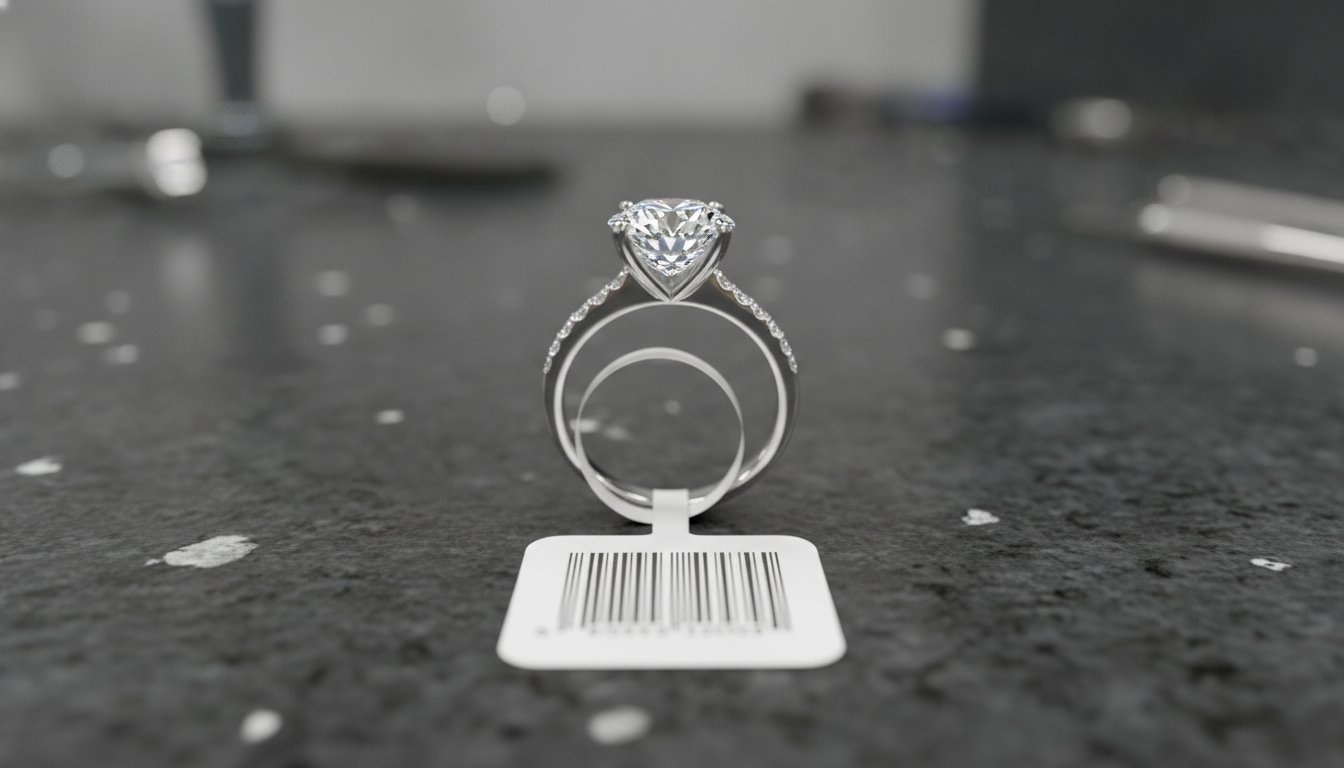
What if the only thing standing between your high-end inventory and a disorganized sales floor is a single strip of synthetic material? You've likely dealt with the frustration of a tag snapping during an ultrasonic cleaning or, even worse, leaving a sticky residue on a delicate 14k gold band. By mastering the use of TT307 rat tail tags, you can eliminate these retail pitfalls and ensure your inventory identification looks as professional as the pieces themselves. Faded barcodes that refuse to scan at the point of sale don't have to be part of your daily routine.
We understand that professional jewelry tagging is a complete system, not just a simple supply. These specialized tags are designed to withstand the rigors of the jewelry industry while maintaining a clean, high-end aesthetic. They provide the durability needed for heavy handling without sacrificing the visual appeal your brand requires. This approach ensures your labels stay intact from the display case to the final sale.
In this article, we'll walk you through everything you need to know to get the best results. You'll learn about the technical specifications of Poly-Laminate and Mylar materials, the specific printing requirements for crisp barcodes, and how to choose the right thermal transfer ribbons to ensure your labels never fade or smudge.
Key Takeaways
- Discover how the adhesive-free "rat tail" design prevents sticky residue on delicate jewelry while maintaining a secure, professional hold.
- Compare the technical benefits of Mylar and Poly-Laminate materials to choose the right level of heat and chemical resistance for your inventory.
- Learn how to correctly match TT307 rat tail tags to your hardware by selecting the proper 1-inch or 3-inch core size for your specific printer model.
- Understand why high-quality resin ribbons are mandatory for creating crisp, scratch-resistant barcodes that survive ultrasonic cleaning and heavy handling.
- Explore the long-term ROI of using BarTender Professional software to design and print your own high-durability jewelry labels in-house.
What are TT307 Rat Tail Tags and Why Do They Matter?
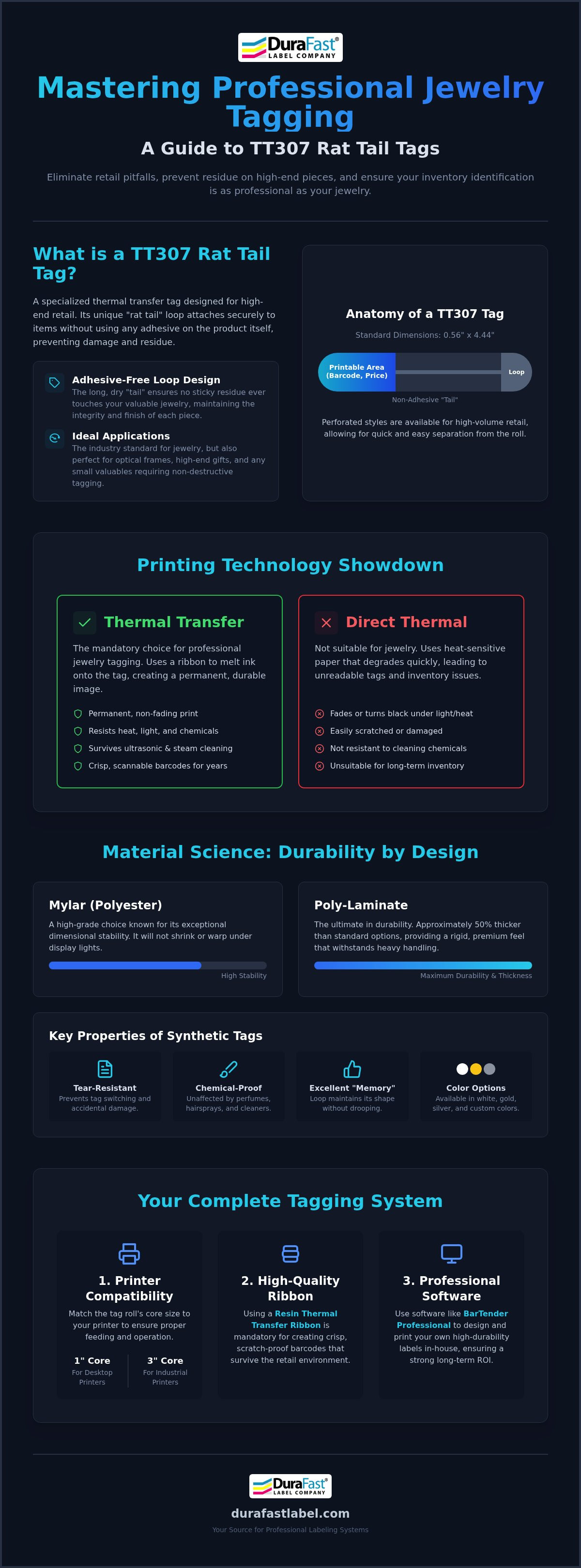
In the high-stakes world of fine jewelry, the way you identify your merchandise is just as important as the items themselves. TT307 rat tail tags are a specialized type of thermal transfer tag designed with a specific "tail" that loops around rings, bracelets, or necklaces. Unlike standard labels, these tags provide a secure attachment without the risk of damaging the product. They're built to survive the retail journey from the stockroom to the display case.
The biggest advantage of the "rat tail" design is the adhesive-free loop. Most labels use glue across the entire surface, but TT307 tags feature a long, dry tail. This design ensures that no sticky residue ever touches your jewelry. If you've ever spent time scrubbing adhesive off a delicate gold band, you'll understand why this is a game-changer. It maintains the integrity of your pieces while keeping your inventory organized and professional.
Standard dimensions for these TT307 rat tail tags are typically 0.56 x 4.44 inches. This size provides enough room for essential data while remaining discreet on a display. While they're most common in jewelry retail, they're also the preferred choice for optical frames and high-end gift tracking. Any industry that requires a non-destructive, durable tag for small valuables can benefit from this specific standard.
The Anatomy of a Jewelry Tag
A TT307 tag consists of two distinct parts: the printable area and the tail. The printable area is where your barcodes, prices, and descriptions go. The tail is the non-adhesive strip that wraps around the merchandise. For high-volume retail environments, perforated styles are essential. They allow staff to quickly separate tags from the roll without needing scissors, which speeds up the labeling process significantly. A TT307 tag is the industry standard for non-destructive jewelry identification.
Thermal Transfer vs. Direct Thermal for Jewelry
Choosing the right printing technology is vital for long-term inventory management. Direct thermal tags often fail in jewelry settings because they're sensitive to heat and light. If your jewelry sits in a sunny window or under bright showroom lights, direct thermal labels will turn black or fade within weeks. Thermal-transfer printing solves this problem by using a ribbon to melt ink onto the tag. This creates a permanent bond that doesn't degrade under heat. For inventory that might stay in stock for several years, this longevity is non-negotiable. You can explore our full range of thermal transfer labels to find the perfect fit for your specific printer setup.
Material Science: Comparing Mylar and Poly-Laminate Tags
When selecting TT307 rat tail tags, the material choice determines how well your labels survive the sales floor. Mylar, a high-grade polyester, is a popular choice due to its exceptional dimensional stability. It won't shrink or warp, even when exposed to the heat of display lights. However, Poly-Laminate takes durability a step further. By offering approximately 50% more thickness than standard synthetic options, Poly-Lam provides a rigid, premium feel that stands up to constant customer handling.
These materials aren't just for show. They are specifically engineered to withstand the rigorous cleaning processes used in the jewelry industry. Whether your items require a deep clean in an ultrasonic bath or a quick blast from a steam cleaner, these tags stay intact. The print won't wash away, and the material won't become brittle. While white is the standard, many retailers opt for gold, silver, or flood-coated colors to align with their brand's aesthetic and create a cohesive look across their inventory.
Tensile Strength and Tear Resistance
Synthetic materials are virtually impossible to tear by hand. This high tensile strength is a critical defense against "tag switching," a common method of retail theft where shoplifters attempt to swap prices between items. Additionally, these materials possess excellent "memory." Once the loop is formed around a ring or bracelet, it maintains its shape without drooping or stretching. While standard paper tags often fray or tear in high-touch environments, Poly-Lam tags remain crisp and professional throughout the product's shelf life.
Chemical and Environmental Resistance
Jewelry is frequently exposed to substances like perfumes, hairsprays, and skin oils. Mylar and Poly-Laminate are non-porous, meaning they won't absorb these chemicals or become discolored over time. This resistance extends to environmental factors as well. High-quality TT307 rat tail tags are UV-resistant, preventing the yellowing that often plagues lower-quality labels in showroom windows. Using jewellery ring labels for professional displays ensures your inventory looks pristine from the moment it's tagged until it's sold. If you have questions about which material fits your specific cleaning workflow, please reach out to our labeling experts for a recommendation.
Printer Compatibility: Choosing the Right Hardware
Selecting the right hardware is the next critical step after choosing your tag material. TT307 rat tail tags must physically fit your printer and align with its technical capabilities to produce professional results. The most common point of confusion for jewelry retailers is the "core size dilemma." This refers to the diameter of the cardboard tube the tags are wound on. Most desktop printers require a 1 inch core, while larger industrial units are designed for a 3 inch core. Matching this specification to your printer is essential for a smooth setup.
Calibration is another vital factor. Because jewelry tags have a non-standard shape with large gaps between the printable areas, your printer's sensor needs to be set correctly. Most modern thermal printers use a "gap sensor" or "transmissive sensor" to detect where one tag ends and the next begins. If your printer isn't calibrated to recognize the specific dimensions of TT307 rat tail tags, you'll likely face alignment issues or wasted labels. Taking five minutes to run a manual calibration cycle can save hours of frustration later.
Desktop Thermal Printers for Small Boutiques
For independent jewelers and small boutiques, space is often at a premium. Desktop models like the Zebra ZD-series or Godex desktop printers are excellent choices because they offer a compact footprint. These machines typically use 1 inch core rolls, which are easier to handle for smaller inventory runs. When shopping for a boutique setup, prioritize a printer with 300 DPI (dots per inch) resolution. This higher resolution ensures that the tiny barcodes and price details on your jewelry tags remain crisp and easy to scan at the register. You can shop desktop thermal printers that specialize in high-resolution retail tagging.
Industrial Printers for Manufacturers
High-volume manufacturers and large-scale retailers need hardware that can keep up with massive inventory runs. The Zebra ZT411 is a powerhouse in this category, offering the speed and durability required for 24/7 operations. Industrial printers utilize 3 inch core rolls, which hold significantly more tags per roll than desktop versions. This reduces the frequency of roll changes and lowers the overall cost per tag. If you're managing production for multiple storefronts, these high-capacity systems provide the best return on investment. For a deeper look at the latest high-capacity hardware, check out our Industrial Label Printer Roundup: Best Solutions for 2026.
Maximizing Print Quality with Thermal Transfer Ribbons
Selecting the right ribbon is just as vital as choosing the tag material itself. For TT307 rat tail tags, wax ribbons are completely unsuitable. Wax is designed for paper surfaces and doesn't have the chemical properties to bond with synthetic Mylar or Poly-Laminate. If you use wax on a synthetic jewelry tag, the ink will simply sit on the surface. It will smudge the moment a customer touches it or when the piece is placed in a display tray. This leads to unprofessional, unreadable labels that fail at the point of sale.
Resin ribbons are the mandatory requirement for these applications. Resin creates a permanent, high-contrast bond with the synthetic surface of the tag. This ensures the highest level of scratch and chemical resistance. Your barcodes will stay crisp and your pricing will remain legible even after multiple ultrasonic cleanings or exposure to perfumes and skin oils. Using high-quality thermal transfer ribbons is the only way to guarantee your jewelry identification survives the entire retail lifecycle.
Matching ribbon width to your tag width is a technical detail that many retailers overlook. You should always choose a ribbon that is slightly wider than the tag liner. This prevents the abrasive edges of the tag from coming into direct contact with the printhead. Over time, this small adjustment significantly reduces printhead wear and extends the life of your hardware. If you notice light or patchy print on your gloss synthetic tags, it's often a sign that your darkness or heat settings are too low. Increasing the heat slightly allows the resin to melt fully into the tag surface for a flawless finish.
Wax-Resin vs. Full Resin Formulations
While full resin is the gold standard for durability, some retailers consider wax-resin blends for cost savings. Wax-resin offers better smudge resistance than pure wax but lacks the chemical "bite" needed for long-term survival in ultrasonic baths. If your jewelry stays in a low-touch environment, wax-resin might suffice. However, for maximum durability and peace of mind, full resin is the superior choice. The heat settings on your printer must be tuned higher for resin to ensure the bond is permanent and the finish is high-gloss.
Specialized Ribbons for Zebra Printers
If you're using hardware from the Zebra ZT or ZD series, it's essential to use ribbons formulated for those specific printheads. Zebra printers have precise heat profiles that work best with matched consumables. A successful print on a resin-based jewelry tag should pass a smudge test where the ink remains perfectly intact even after firm, repeated rubbing with a thumb. You can find a wide selection of Zebra-compatible thermal ribbons to ensure your setup is optimized for performance. If you aren't sure which formulation matches your specific cleaning workflow, speak with a ribbon specialist to get a tailored recommendation.
Implementing In-House Jewelry Tagging with DuraFast
Transitioning to an in-house labeling system gives you total control over your inventory's professional presentation. By using BarTender Professional software, you can design TT307 rat tail tags that include everything from detailed SKU numbers to high-density barcodes. This level of customization is impossible with pre-printed tags. You can update prices instantly or add specific metal purity details as soon as new stock arrives on your sales floor, ensuring your displays are always accurate.
The return on investment for in-house printing is significant. Ordering from external print services often involves high minimums and long wait times. When you print your own tags, you eliminate these bottlenecks. You only use the exact number of tags required for your current inventory, which reduces waste and lowers your cost per unit over time. This flexibility is especially valuable for boutiques that refresh their collections frequently or manage seasonal sales.
Integrating these tags with your POS system is the final step toward a seamless retail operation. High-quality barcodes printed on synthetic materials ensure that your Datalogic scanners get a first-time read every time. This speed at the register prevents customer frustration and ensures your inventory levels are updated in real-time. It's a professional system that scales with your business needs while maintaining a high-end aesthetic.
Software Setup for Tiny Tags
Designing for a small surface area requires a strategic approach. In BarTender, you must manage small-scale text carefully to ensure legibility. We recommend using sans-serif fonts and high-density barcode formats like Code 128 to maximize the limited space. It's also vital to create templates that prevent text from bleeding into the tail area. Keeping your data strictly within the printable rectangle ensures the tag remains functional and looks clean when looped around a ring. For more implementation tips, check out our How to Print Your Own Product Labels: A 2026 Guide.
The DuraFast Advantage for Jewelry Retailers
We are committed to supporting North American jewelry businesses with a deep inventory of ready-to-ship supplies. Whether you need specific flood-coated colors for branding or different core sizes for your Zebra and Godex printers, we have the stock to keep your business running. Our experts provide technical advice on printer-ribbon-tag synchronization, ensuring you achieve the high-contrast results your high-end merchandise deserves. Don't settle for generic solutions when it comes to your brand's image. Browse our complete TT307 rat tail tag inventory today.
Elevate Your Jewelry Presentation Today
Implementing a professional labeling system is a direct investment in your brand's retail experience. By choosing high-quality materials like Poly-Laminate and pairing them with the correct resin ribbons, you ensure your inventory remains pristine through every cleaning cycle and customer interaction. You don't have to settle for smeared barcodes or adhesive residue that damages your finest pieces. Transitioning to an in-house system provides the control and speed your boutique needs to stay competitive.
Mastering your hardware setup with TT307 rat tail tags gives you the flexibility to update pricing and details instantly. We support jewelry businesses with fast shipping across North America and maintain a specialized inventory of tags and ribbons. Our solutions are fully compatible with Zebra, Godex, and Afinia printers; this ensures your hardware works perfectly from day one. We have the technical expertise and specialized resin ribbons in stock to help you achieve the high-contrast, durable results your merchandise deserves.
Are you ready to transform your jewelry identification process? Shop professional TT307 rat tail tags at DuraFast Label and see the difference that durability makes. Your jewelry deserves a label that matches its quality.
Frequently Asked Questions
What is the difference between TT307 and TT306 rat tail tags?
The primary difference is the length of the tag. TT307 tags are typically longer than the TT306 model, measuring 0.56 x 4.44 inches compared to the 3.625-inch length of the TT306. This extra length in the TT307 standard is ideal for larger rings or thick bracelets where a standard loop might feel too tight. Both share the same non-adhesive tail design to protect your precious metals and gemstones from sticky residue.
Can I print on TT307 tags with a regular inkjet or laser printer?
No, you cannot use a regular inkjet or laser printer for these tags. TT307 rat tail tags require thermal transfer technology to create a durable, permanent bond. Home or office printers don't have the specialized sensors to handle the non-standard jewelry shape. Additionally, inkjet ink would smudge on the synthetic Mylar or Poly-Laminate surface. You'll need a dedicated thermal printer and a resin ribbon for professional results.
Do TT307 tags leave adhesive residue on rings or jewelry?
These tags are specifically designed to leave zero adhesive residue on your merchandise. The "rat tail" portion of the tag is completely adhesive-free. This loop wraps around the jewelry, while the adhesive is only present on the back of the printable flag section where the two sides meet. This ensures that your gold, silver, or delicate gemstones never come into contact with glue, keeping your inventory clean and ready for sale.
What size thermal transfer ribbon do I need for TT307 tags?
You should select a thermal transfer ribbon that is slightly wider than the tag liner. For standard TT307 tags, a ribbon width of approximately 60mm to 64mm is ideal. Using a ribbon that is wider than the media protects your printhead from the abrasive edges of the tag backing. This simple technical adjustment helps prevent premature hardware failure and ensures consistent print quality across every label in your inventory.
Are TT307 rat tail tags safe for use in ultrasonic cleaners?
Yes, synthetic TT307 rat tail tags are safe for use in ultrasonic cleaners when printed with a high-quality resin ribbon. The Poly-Laminate and Mylar materials won't break down or become brittle when submerged in cleaning solutions. Unlike paper labels that disintegrate in liquid, these synthetic tags maintain their integrity. This allows you to clean your jewelry thoroughly without needing to re-tag the items afterward, saving your staff significant time.
How many TT307 tags typically come on a roll for a desktop printer?
A standard roll of TT307 tags for a desktop thermal printer typically contains 1,000 labels. These rolls are wound on a 1-inch core to fit the smaller internal compartments of desktop units. If you have a high volume of inventory, you might consider industrial rolls. Those larger rolls usually hold 4,500 tags and require a 3-inch core, making them more cost-effective for manufacturers or large-scale jewelry retailers.
Which core size should I choose for my Zebra ZD421 printer?
The Zebra ZD421 is a desktop printer, so you should choose the 1-inch core size for your tag rolls. While some desktop printers can use external roll stands for larger 3-inch cores, the internal spindle of the ZD421 is designed for the 1-inch standard. Matching the core size ensures the roll spins freely and aligns correctly with the printhead. This prevents feeding errors and keeps your labeling process running smoothly.
Are these tags available in colors other than white?
While white is the most common choice for high contrast, these tags are available in several professional colors. You can find options in gold, silver, and even red to match your brand's aesthetic or to categorize different types of inventory. These flood-coated variants maintain the same durability and chemical resistance as the standard white tags. Using different colors is a great way to visually organize your showroom trays for faster inventory checks.