High-Performance Autobag Ribbons: A Compatibility Guide
20th Sep 2026
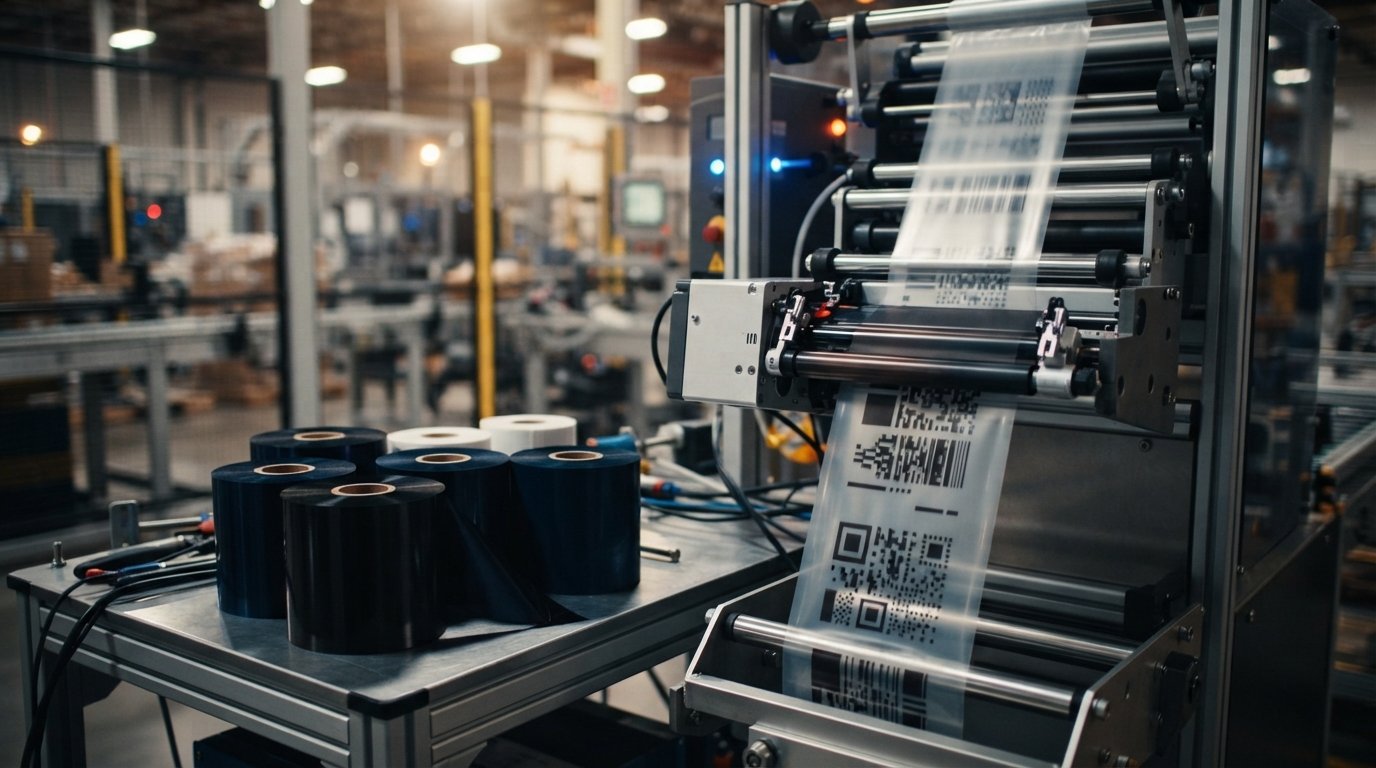
The brand name on your ribbon box matters far less than the specific resin chemistry inside it. If you've ever dealt with ink smudging on poly bags or a ribbon snapping during a high-speed run, you know that technical specs aren't just minor details; they're the heartbeat of your production line. Choosing the right Autobag Ribbon is about more than just finding a part that fits the spindle. It's frustrating when high OEM costs don't translate to the reliability you need for 2026 production standards. You deserve a solution that simplifies your workflow instead of adding to it.
This guide will help you master the technical requirements of thermal transfer ribbons to ensure durable prints on every automated bag. We'll show you how to reduce downtime from ribbon changes and build a more cost-effective supply chain. You'll learn how to navigate CSI orientations, 1-inch cores, and resin-enhanced wax blends to keep your bagging systems running at peak performance. By matching the ink formulation to your specific film substrate, you'll ensure every barcode is scannable and every logo stays crisp without the premium price tag.
Key Takeaways
- Understand how high-oscillation bagging machines require specialized thermal transfer technology to maintain print clarity at high speeds.
- Identify the best ink formulation for your specific film, focusing on why wax-resin hybrids are the preferred choice for a standard Autobag Ribbon setup.
- Learn to optimize your printer’s heat and darkness settings to prevent ribbon burn-through and extend the life of your expensive printheads.
- Compare compatible and OEM ribbon performance to see how you can maintain barcode scannability while significantly reducing your supply chain costs.
- Discover the importance of sourcing from specialized partners who understand the unique technical requirements of industrial bagging systems.
Understanding Autobag Ribbon Technology for Automated Systems
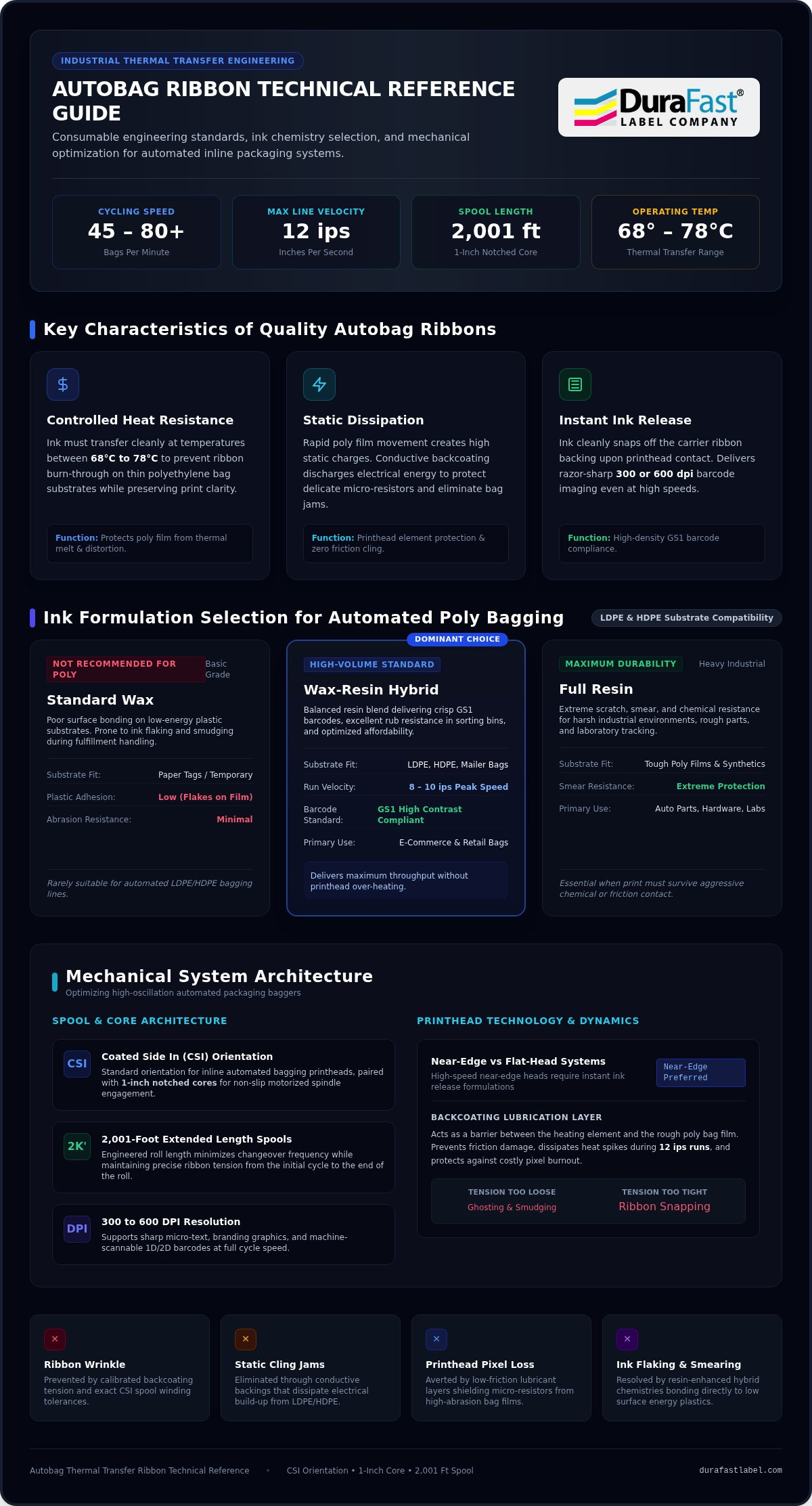
High-speed automated bagging systems demand more from a ribbon than a standard desktop printer. An Autobag Ribbon is a specialized thermal transfer consumable engineered to withstand the rapid, high-oscillation movements of modern inline baggers. In these industrial environments, the printer doesn't just sit still; it cycles between 45 and 80+ bags per minute. This requires a ribbon that can keep pace without snapping or losing registration during the intense mechanical motion.
The core of this technology relies on the thermal-transfer printing process, where heat from the printhead melts ink onto the polyethylene film. Standard ribbons often fail here because they aren't designed for the aggressive friction and heat spikes of automated lines. High-quality ribbons include a sophisticated backcoating. This layer acts as a lubricant, protecting the printhead from abrasive bag material and heat buildup during 12 inches per second (ips) runs. Without it, your printhead lifespan drops significantly, leading to costly pixel failures.
The Mechanics of Automated Bagging Printheads
Most automated systems utilize near-edge or flat-head technology, which dictates how the ink releases. Near-edge systems, common in high-speed packaging, require ribbons with instant-release properties to maintain clarity. For 2026 production lines, you'll typically find systems using Coated Side In (CSI) orientation on 1-inch notched cores. Ribbon tension is critical here. If the ribbon is too loose, you'll see ghosting or smudging. If it's too tight, the ribbon breaks. Premium ribbons are wound to precise lengths of 2,001 feet to minimize changeover frequency while maintaining consistent tension from the first bag to the last.
Key Characteristics of Quality Autobag Ribbons
Reliability in 2026 bagging operations comes down to three essential factors:
- Heat Resistance: The ink must transfer cleanly at temperatures around 68°C to 78°C without burning through the thin poly substrate.
- Static Dissipation: Fast-moving polyethylene generates massive static charges. Quality ribbons use conductive backcoatings to discharge this energy, preventing jams and protecting the printhead's micro-resistors.
- Ink Release: For sharp barcodes, the ink must snap off the ribbon backing instantly. This ensures scannable 300 or 600 dpi prints even at maximum throughput.
Using a generic ribbon instead of a dedicated Autobag Ribbon often leads to "ribbon wrinkle" or ink flaking. These issues can halt an entire fulfillment line, turning a small savings on supplies into a massive loss in productivity. Choosing a specialized formulation ensures your system stays up and running without the constant need for adjustments.
Choosing the Right Ink Formulation: Wax vs. Resin for Bagging
Choosing the right Autobag Ribbon starts with analyzing your bag material. Low-density polyethylene (LDPE) and high-density polyethylene (HDPE) are standard in 2026 bagging, but their surface energy differs significantly. Standard wax ribbons are rarely the right choice for these films because the ink doesn't bond well to plastic. They're better suited for paper tags or temporary applications. If you're using a high-speed system, a ribbon with a more robust formulation is necessary to prevent the ink from flaking off during transport.
When to Use Wax-Resin for High-Volume Packaging
Wax-resin hybrids are the dominant choice for e-commerce and retail fulfillment. They offer a balance of durability and affordability that pure resin can't match for high-volume runs. These ribbons create high-contrast prints that meet GS1 barcode quality standards, ensuring your packages don't get rejected by automated sorting hubs. They're particularly effective on standard mailer bags and shipping pouches where the package might rub against others in a sorting bin. In 2026, wax-resin hybrids achieve peak performance at speeds between 8 and 10 inches per second.
Full Resin for Industrial and Chemical Bagging
Industrial environments require a different level of protection. If your bags contain automotive parts, hardware, or laboratory samples, full resin is the only way to ensure the print survives. Full resin ribbons provide extreme scratch and smear resistance. They're also essential for meeting GHS requirements in chemical-resistant bagging. When paired with specialized films like DuraFast Matte Chemical Labels, the resulting print can withstand exposure to alcohols and solvents. This ensures critical safety information remains legible throughout the product's lifecycle.
Selecting the wrong formulation often leads to "cold-temp" smudging or "hot-temp" ghosting. If you're unsure which blend fits your specific laminate or HDPE film, you can request a compatibility test to see the results on your own materials. This small step prevents thousands of dollars in wasted supplies and shipping errors. Investing in a high-quality Autobag Ribbon tailored to your substrate is the most reliable way to maintain a smooth, efficient production line.
OEM vs. DuraFast Compatible Autobag Ribbons: Performance Comparison
Many facility managers believe they must stick exclusively to OEM supplies to protect their equipment or maintain print quality. This is a common misconception that often leads to inflated operational costs. High-performance compatible ribbons are engineered to meet or exceed the technical specifications of original manufacturers. When you choose a premium Autobag Ribbon from a specialized partner, you aren't sacrificing reliability; you're optimizing your supply chain for better efficiency and significant savings.
Compatibility Standards for 2026 Bagging Systems
Modern bagging systems, including the Sealed Air AutoLabel series and newer 2026 competitors, require precise physical configurations to function without errors. Our compatible ribbons utilize the exact 1-inch notched core and Coated Side In (CSI) orientation required for a seamless drop-in fit. We provide a comprehensive selection of Thermal Transfer Ribbons in widths like 2.52, 4.02, and 4.73 inches. These sizes ensure the ribbon always overlaps the film edge, which is a critical requirement for protecting the printhead from abrasive friction against the poly bag material.
Performance Metrics in High-Speed Environments
In high-speed production where machines exceed 10 inches per second, ink flaking and barcode contrast become the primary metrics of success. Testing consistently shows that our compatible resin-enhanced formulations deliver Grade A scannability ratings on standard polyethylene substrates. A persistent myth in the industry is that OEM-only ribbons provide superior printhead protection. In reality, printhead failure is typically caused by environmental debris or incorrect heat settings rather than the ribbon brand. Our ribbons feature advanced anti-static backcoatings that dissipate charges and reduce friction, matching the protective qualities of any OEM product.
Machine uptime is also tied directly to roll capacity. By maintaining the standard 2,001-foot roll length, our compatible supplies ensure your changeover frequency remains identical to OEM standards. For a detailed breakdown of how to evaluate these technical specs, you can refer to our Thermal Transfer Ribbon Guide. Switching to high-performance compatible supplies can reduce your consumable overhead by 50% to 70% based on industry benchmarks. This shift allows you to reallocate budget toward other production improvements without risking barcode scannability or machine health.
Optimizing Print Quality and Printhead Longevity in High-Speed Bagging
Setting the right parameters on your thermal transfer imprinter is a delicate balancing act. If your darkness setting is too high, you risk ribbon burn-through or premature printhead wear. If it's too low, your barcodes won't meet scannability standards. For high-speed production, you should always find the lowest heat setting that still produces a crisp, dark image. This preserves the delicate heating elements and ensures your Autobag Ribbon transfers its ink layer cleanly without sticking to the poly film.
Dust and debris are silent killers in industrial bagging environments. Cardboard fibers, plastic shavings, and ambient dust can get trapped between the printhead and the ribbon. At speeds of 10+ inches per second, a single speck of dust acts like a piece of sandpaper. It creates a physical scratch that results in a permanent white line through your print. 24/7 operations should implement a cleaning protocol every time a ribbon is changed or at the start of every shift to prevent this abrasive wear.
Proper tension prevents the dreaded ribbon wrinkle. If the supply spindle or take-up core isn't properly tensioned, the ribbon can drift or fold. This causes diagonal lines across your barcodes, making them unreadable. Ensuring your Autobag Ribbon is loaded squarely on its 1-inch core is the first step in maintaining this mechanical harmony. Small adjustments to the ribbon mandrel can often fix tracking issues before they ruin a production batch.
Troubleshooting Common Bagging Print Issues
Faded prints during a long run often indicate heat exhaustion or a buildup of ink residue on the printhead. If you notice light spots, stop the line and clean the head with an isopropyl alcohol swab. Ribbon tracking, or diagonal unprinted lines, usually stems from a misaligned ribbon guide or uneven tension. For smudging on glossy poly materials, you likely need a higher resin-content hybrid. These blends bond faster to the film surface, preventing the ink from rubbing off as the bag moves through the sealing and stacking phase.
Extending Printhead Life with Premium Ribbons
The backcoating on a high-quality ribbon does more than just hold the ink. It contains specialized lubricants that allow the ribbon to glide across the printhead with minimal friction. This lubrication is vital for preventing static electricity buildup, which can short out the sensitive electronics in your printer. For a deeper look at the hardware side of this equation, see The 2026 Professional Guide to Thermal Label Printers.
Maintaining a clean and calibrated system reduces your long-term maintenance costs. If you are experiencing persistent print quality issues on your specific bagging film, you can speak with our technical team for a custom calibration recommendation. A quick consultation can often resolve complex scannability issues and help you achieve the best possible performance from your equipment.
Sourcing Premium Autobag Ribbons and Supplies in 2026
Choosing where to buy your Autobag Ribbon is just as important as selecting the right ink formulation. General wholesalers often lack the technical expertise required to support high-speed automated lines. They might offer a low price, but they can't tell you why your ink is flaking or which resin blend matches a new HDPE film. Specialized suppliers understand the mechanical nuances of 2026 bagging systems. They offer the flexibility you need for custom widths and lengths that generalists simply don't stock.
Reliability depends on your supply chain's proximity. Local North American stock is vital for critical operations. You can't afford to wait weeks for a shipment to clear customs when your production line is down. Sourcing locally also allows for better quality control and more consistent ink formulations. It reduces the environmental impact of long-distance shipping and helps you maintain a leaner, more responsive inventory. Efficient ribbon usage starts with a partner who can provide the exact roll length your machines require, minimizing waste and unnecessary changeovers.
Inventory Management for High-Volume Operations
24/7 automated bagging facilities need precise reorder points to prevent stockouts. We recommend keeping at least a two-week buffer of supplies on hand. Proper storage is equally critical for maintaining ribbon integrity. Store your ribbons in a cool, dry place away from direct sunlight and heat sources. High humidity can cause the backcoating to degrade, leading to poor print quality or equipment jams. If you also utilize standard industrial printers, keeping a coordinated stock of Zebra Ribbons alongside your bagging supplies ensures all your labeling needs are met through a single, reliable source.
The DuraFast Advantage for Automated Bagging
DuraFast Label Company is committed to supporting North American industry with high-performance consumables. We don't just ship boxes; we provide the expert support you need for perfect ribbon-to-substrate matching. Our team has already done the heavy lifting of vetting formulations to ensure they meet the rigorous demands of modern bagging speeds. Whether you're bagging chemicals, hardware, or retail goods, we help you find the most cost-effective solution without compromising on durability or scannability.
Don't let supply chain gaps or poor ribbon quality slow down your fulfillment. Our specialized approach takes the guesswork out of industrial printing, giving you peace of mind and consistent results. You can Shop Premium Autobag Ribbons today and experience the difference that specialized expertise makes for your production line.
Future-Proof Your Bagging Operation
Mastering your thermal transfer setup is the most effective way to eliminate downtime and reduce supply chain overhead. By matching the right resin blend to your specific poly film, you ensure every barcode stays scannable from the warehouse to the customer's doorstep. We've explored how proper maintenance and the right Autobag Ribbon selection can extend your printhead's life while keeping your high-speed 2026 production lines moving at peak efficiency.
You don't have to navigate these technical requirements alone. Our high-performance supplies are fully compatible with all major Sealed Air Autobag models, providing a reliable drop-in solution that protects your equipment. If you're ready to optimize your workflow and cut consumable costs, our team is here to help with expert technical support and substrate matching. Take the next step in improving your packaging efficiency and browse our selection of high-performance ribbons for your system. We're excited to help you achieve crisp, durable prints on every automated bag.
Frequently Asked Questions
Will using compatible Autobag ribbons void my machine's warranty?
No, using a high-quality compatible Autobag Ribbon won't void your machine's warranty. Under the Magnuson-Moss Warranty Act in the United States, a manufacturer cannot legally require you to use their brand of consumables to keep your hardware warranty intact. As long as the compatible ribbon meets the technical specifications of your system, your equipment remains protected. It's a common industry myth designed to keep you locked into higher-priced OEM supply chains.
How do I know if I need a wax-resin or a full resin ribbon for my bags?
Your choice depends on the bag material and the environment the package will face. Wax-resin hybrids are the standard workhorse for polyethylene mailers, offering excellent scannability and smear resistance for e-commerce fulfillment. If your bags are exposed to chemicals, alcohols, or heavy abrasion, you'll need a full resin ribbon. This ensures your prints remain legible in harsh industrial conditions. We recommend testing both formulations on your specific substrate to find the most cost-effective balance.
What causes my Autobag ribbon to wrinkle during the printing process?
Ribbon wrinkling is typically caused by uneven tension or excessive printhead heat. If the supply mandrel or take-up core isn't properly aligned, the ribbon can drift and fold as it moves through the machine. This results in diagonal white lines across your barcodes. You can often fix this by adjusting the ribbon tension settings or lowering the darkness level. Ensuring your ribbon is loaded squarely on its 1-inch core prevents these tracking errors from ruining your production run.
Are Autobag ribbons compatible with other automated bagging brands?
Yes, many high-performance ribbons are compatible with various automated bagging brands beyond Sealed Air. The key is to verify the physical specifications of your system. Most industrial baggers use Coated Side In (CSI) orientation and 1-inch notched cores. If these match, the ribbon will function correctly regardless of the machine's brand name. Always check your equipment manual for the maximum supported roll width to ensure the ribbon provides full coverage across your printhead elements.
How often should I clean the printhead on my automated bagging system?
You should clean the printhead every time you replace a ribbon or at the start of every shift. In 24/7 automated environments, dust and poly shavings accumulate quickly on the heating elements. This buildup acts as an insulator, forcing you to increase the heat and shortening the printhead's lifespan. A quick wipe with an isopropyl alcohol swab prevents abrasive wear and keeps your barcode scannability at Grade A levels during long production cycles.
Can I use standard thermal transfer ribbons in an Autobag machine?
No, you shouldn't use standard thermal transfer ribbons designed for tabletop printers in an automated bagging system. Standard ribbons are usually Coated Side Out (CSO), while bagging systems require Coated Side In (CSI) orientation. If you install a CSO ribbon, the ink layer faces the printhead instead of the bag. This melts the ink directly onto the heating resistors, causing immediate and severe equipment damage. Always ensure your Autobag Ribbon is specifically wound for automated systems.
What is the shelf life of a thermal transfer ribbon in a warehouse environment?
Most thermal transfer ribbons have a shelf life of 12 to 24 months when stored in a climate-controlled warehouse. To prevent degradation, keep your stock in a cool, dry area away from direct sunlight. High humidity or temperatures exceeding 35°C can cause the ink layers to block or stick together on the roll. If your warehouse isn't climate-controlled, we suggest maintaining a leaner inventory to ensure you're always using fresh supplies for your bagging lines.
How does static buildup affect the performance of bagging ribbons?
Static buildup is a major issue in high-speed bagging because moving polyethylene generates massive electrical charges. This static can cause the ribbon to cling to the bag, leading to jams and registration errors. More importantly, static discharges can permanently damage the sensitive micro-resistors in your printhead. Premium ribbons feature conductive backcoatings that safely dissipate these charges. This protection is vital for maintaining machine uptime and preventing expensive electronic failures in your automated system.