High-Quality Thermal Card Grading Tags for Collectors
23rd Aug 2026
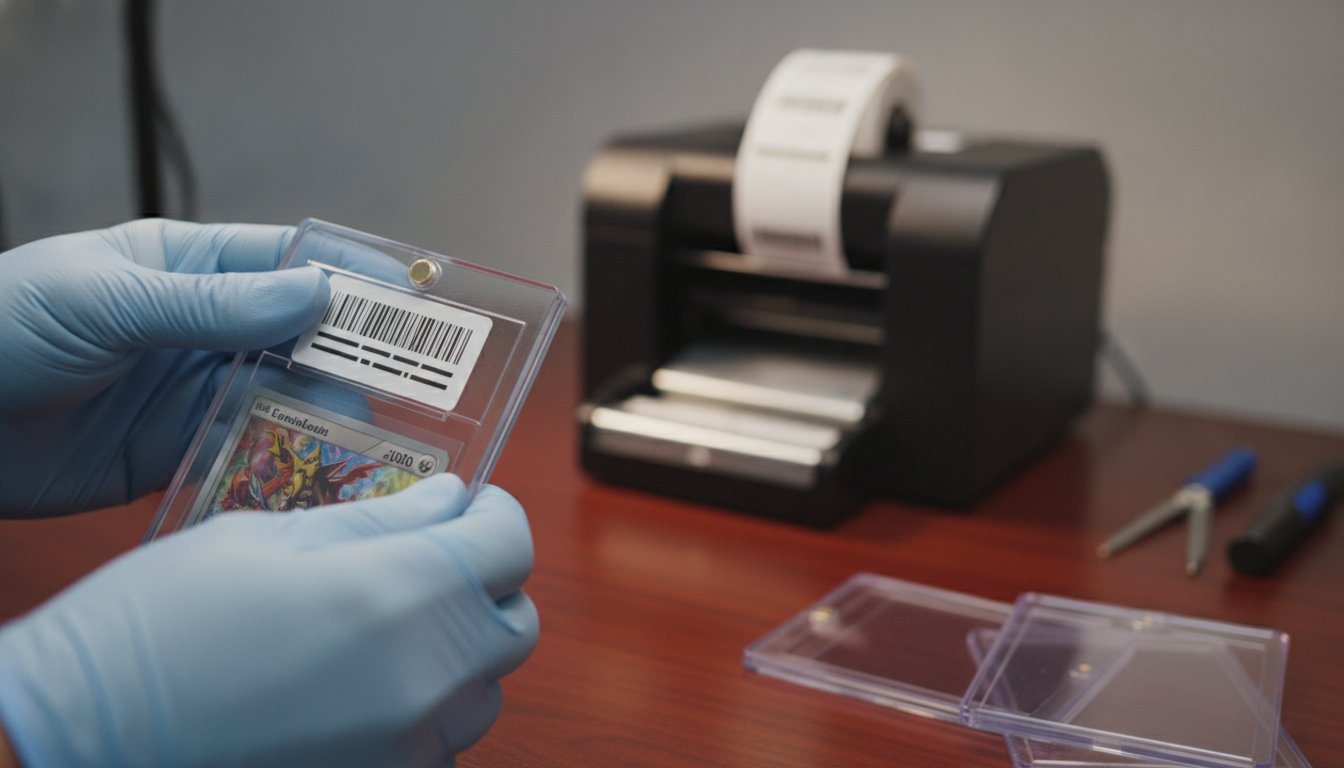
Is your collection's value slowly disappearing behind a layer of fading ink? It's a nightmare scenario for any serious collector: you invest in a pristine card and professional grading, only to watch the identification tag turn illegible due to heat or UV exposure. You already know that while the slab protects the physical card, the tag is what preserves its identity and long-term market value. Dealing with inconsistent print quality or chemical reactions from low-grade adhesives is a risk you shouldn't have to take.
The good news is that professional-grade results are within your reach. In this article, you'll learn how to select and print high-durability thermal Card Grading Tags that ensure archival safety and permanent legibility. We'll break down why thermal transfer technology beats direct thermal for long-term storage and which synthetic materials like PolyPro or Valeron offer the best protection against environmental damage. We'll also provide a clear look at setting up an efficient in-house production workflow so you can produce crisp, high-contrast barcodes and text that never fail. Let's make sure your grading tags are as durable as the cards they describe.
Key Takeaways
- Choose synthetic materials like Polypropylene or Valeron to ensure your tags are tear-resistant and chemically safe for long-term archival storage.
- Opt for thermal transfer technology over direct thermal to prevent tag fading caused by heat or UV light exposure inside the slab.
- Discover how to produce professional thermal Card Grading Tags in-house using specialized printers from industry leaders like Zebra and Godex.
- Streamline your grading workflow by integrating BarTender software for crisp, high-contrast barcodes and automated serialization.
- Ensure consistent legibility by pairing high-durability tags with the correct resin ribbons to create a permanent bond that resists abrasion.
Understanding Thermal Card Grading Tags in 2026
A thermal card grading tag is more than just a label. It acts as the permanent record of a card's condition and authenticity. Within the grading process, these tags are sealed inside a protective slab, serving as the bridge between the physical asset and its digital footprint. High-quality thermal Card Grading Tags ensure that this record remains legible for decades, regardless of storage conditions. Without a durable tag, the most valuable card in your collection is just another piece of cardboard.
Why the shift to thermal? Inkjet printers often struggle with small-format precision on synthetic materials. Ink can smudge or bleed on the non-porous surfaces required for archival safety. Thermal printing technology, specifically thermal transfer, uses heat to bond a resin-based ribbon directly to the tag material. This creates a crisp, durable bond that doesn't smear, making it the industrial standard for modern grading houses. It's the only way to ensure that small text and complex barcodes remain scan-ready for years.
A professional tag includes several critical elements. You'll typically find a high-resolution barcode for scanning, the specific numeric grade, and the card's pedigree. Modern tags also incorporate security features like microprinting or holographic elements to prevent counterfeiting. These features aren't just for show. They provide the reassurance collectors need when making high-value investments in TCG or sports cards. Using the right thermal Card Grading Tags is a fundamental part of the authentication process.
The Evolution of Card Identification
Years ago, collectors relied on handwritten notes or basic paper stickers. These were prone to peeling and offered zero security. Today, precision thermal barcodes connect every slab to a digital population report. This evolution allows collectors to verify a card's rarity instantly via online databases. The shift toward in-house printing has been a game-changer for small-to-medium grading houses. It allows for immediate serialization and reduces the lead times associated with outsourcing. By controlling the printing process, you ensure every tag meets exact specifications for thickness and alignment.
Why Visual Clarity Matters for Collectors
Aesthetics play a massive role in the perceived value of a graded card. Collectors look for high-contrast printing because it makes grade verification effortless and looks better on display. Crisp, sharp edges on text and borders define a premium slab and signal that the grading house uses top-tier equipment. Professional graders avoid paper because it can yellow or degrade over time. Archival-safe tags are those that do not outgas or yellow over 20+ years. This ensures the card remains pristine and the tag remains a clear testament to its value.
Direct Thermal vs. Thermal Transfer for Grading
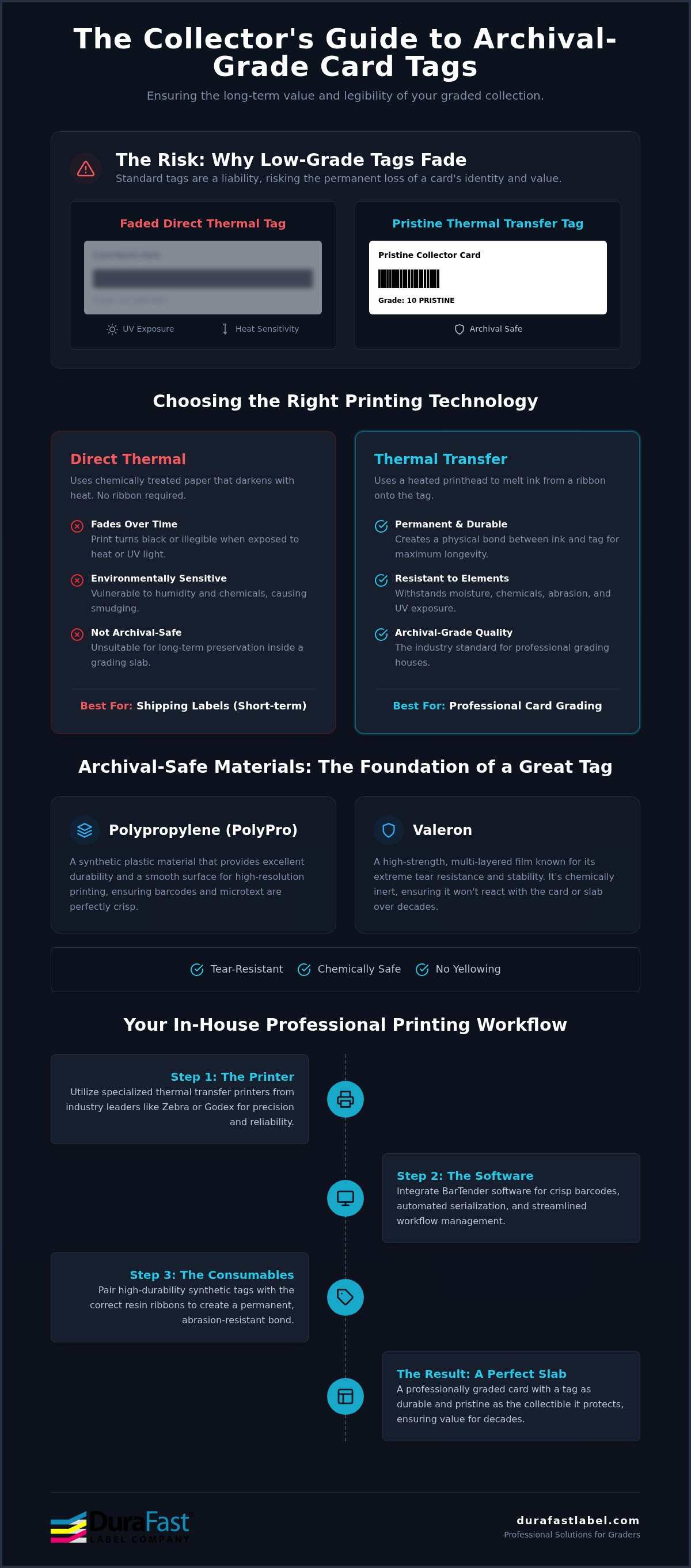
Choosing between direct thermal and thermal transfer printing is the most important decision you'll make when setting up your grading station. While both methods use heat, they produce very different results for your thermal Card Grading Tags. Direct thermal relies on chemically treated paper that darkens when heat is applied. It's a simple, ribbon-free process. Thermal transfer, however, uses a heated printhead to melt ink from a ribbon onto the tag material. This technical difference determines whether your card's grade will still be readable in twenty years or if it will fade into a blank strip of paper.
Direct Thermal: The Risks for Collectibles
Direct thermal tags are extremely sensitive to their environment. Since the paper is designed to react to heat, any exposure to high temperatures or direct sunlight can trigger a chemical reaction. This often leads to the "blackout" effect, where the entire tag turns dark and unreadable. Humidity also plays a role, causing the print to soften and blur over time. These tags are perfect for shipping labels that only need to last a week, but they're a dangerous choice for grading slabs meant for long-term preservation. If a collector leaves a slab in a warm car or near a window, a direct thermal tag can be ruined in hours.
Thermal Transfer: The Industrial Standard
Thermal transfer is the industrial standard for a reason. By using high-quality thermal transfer ribbons, you create a physical bond between the ink and the tag. Resin and wax-resin ribbons are particularly effective because they're designed to stay put. They offer incredible resistance to moisture, chemicals, and UV exposure. This ensures that the text and barcodes on your thermal Card Grading Tags remain sharp and high-contrast, even if the slab is stored in less-than-ideal conditions. It's the only way to guarantee the "lifetime" protection that collectors expect when they pay for professional grading.
Investing in a ribbon-based system might seem more complex at first, but it eliminates the risk of text fading or adhesive failure. From a cost-benefit perspective, the price of a ribbon is negligible compared to the value of the card it identifies. A faded tag can decrease a card's marketability and force a costly re-slabbing process. If you're unsure which setup fits your specific volume, you can reach out to our team for a tailored recommendation. Using the right equipment from the start saves time and protects your reputation as a professional grader.
Material Selection: Beyond Standard Paper Tags
Standard paper tags belong in a filing cabinet, not a professional grading slab. When protecting high-value TCG or sports cards, the material of your thermal Card Grading Tags is just as important as the print quality. Paper is susceptible to yellowing, tearing, and moisture absorption, all of which can compromise the card's perceived value over time. Professional graders move beyond paper to synthetic materials like Polypropylene, Tyvek, and Valeron. These materials offer the chemical stability and physical strength required for a tamper-evident, archival-safe environment.
Archival safety is a non-negotiable requirement in this industry. To protect the card's surface, tags must be both acid-free and lignin-free. Lignin is a natural component of wood pulp that breaks down over time, releasing acids that cause yellowing and can eventually damage the card's ink or cardstock. High-quality synthetic tags are inherently free of these components. They also offer low-outgassing properties, ensuring that no harmful chemical vapors are trapped inside the sealed slab to react with the card over twenty or thirty years.
Tyvek and Valeron Tags for Extreme Durability
Tyvek and Valeron represent the gold standard for tear-resistant identification. Tyvek is made of flash-spun high-density polyethylene fibers, creating a material that's nearly impossible to rip by hand. Valeron takes this further with a cross-laminated structure, offering industrial-grade strength. These properties are essential for security. If a tag is difficult to tear or distort, it becomes much harder for bad actors to swap labels or tamper with the authentication. These thermal transfer tags also provide a smooth, non-porous surface. This allows the thermal resin to bond perfectly, resulting in high-resolution barcodes that won't smudge or scratch during the slabbing process.
Adhesive vs. Non-Adhesive Tagging Strategies
Your specific grading workflow determines whether you need adhesive-backed or non-adhesive tags. Many grading houses prefer non-adhesive inserts that float within a designated window in the slab. This eliminates any risk of adhesive interacting with the card. However, some specialized workflows utilize "rat tail" tags or adhesive labels that wrap around internal sleeves. If you choose an adhesive option, it's vital to use an acrylic-based, low-outgassing adhesive. Using the right thermal card grading labels ensures that the bond remains permanent without bleeding through the tag or damaging the plastic housing. Whether you need a 7mil PolyPro tag or a 7.5mil Valeron roll, selecting the right material is the first step in building a trusted grading brand.
Setting Up Your In-House Printing Workflow
Setting up an in-house workflow for thermal Card Grading Tags gives you total control over the authentication process. You don't have to wait for external vendors or worry about batch errors. It allows you to print on demand as cards are graded, ensuring the tag matches the card's specific data instantly. This level of oversight is what separates hobbyist operations from professional grading houses. When you manage the printing yourself, you guarantee that every slab leaving your facility meets your exact quality standards.
Choosing the Right Hardware
Selecting the right printer is the foundation of your workflow. For most collectors and small grading houses, desktop thermal printers offer the perfect balance of footprint and performance. However, you must prioritize resolution. Grading tags often feature tiny fonts and high-density barcodes that require 300 DPI or higher to remain sharp. A standard 203 DPI printer will produce jagged edges on small text, which looks unprofessional and may fail to scan. If you're processing thousands of cards monthly, moving to an industrial printer provides the rugged durability needed for continuous, high-volume operation.
Software and Data Management
Professional software like BarTender Professional is essential for managing your grading data. It allows you to automate serialization, so every card receives a unique, sequential ID without manual entry. You can connect the software directly to your central database or population report. This ensures that the data printed on the tag perfectly mirrors your digital records. Software calibration prevents tag misalignment during high-speed runs by ensuring the printer recognizes the exact start and stop points of each individual tag. This automation reduces human error and keeps your production line moving efficiently.
Calibration is the secret to high-quality results on small-format media. Small tags have very little room for error. You need to calibrate your sensors to detect the gap or black mark on your tag stock accurately. This prevents "drift," where the print slowly moves off-center over several dozen tags. Quality control should involve a quick scan test of the first and last tag in every batch. This verifies that the barcode contrast is high enough for standard scanners to read. If you're ready to build a professional grading setup, contact our experts to find the right printer and software bundle for your specific volume.
DuraFast Solutions for Professional Graders
Choosing the right supplier for your thermal Card Grading Tags is just as important as the technology itself. At DuraFast Label Company, we've already done the heavy lifting of vetting products. We don't just sell printers; we provide a curated ecosystem of hardware and media designed to work together perfectly. As an authorized dealer for Zebra, Godex, and Epson, we offer the specialized inventory required for high-durability card identification. This means you get a reliable, one-stop solution that values your time and peace of mind.
Zebra ZT411: The Industrial Workhorse
The Zebra ZT411 is the go-to choice for grading houses handling massive volumes. It's a rugged, industrial machine built for continuous production. With options for 300 or 600 DPI, it delivers the precision needed for the tiny fonts and high-density barcodes discussed in earlier sections. Maintenance is straightforward, and the metal frame ensures it holds up in a busy production environment. If you're looking for a comparison of how this stacks up against other high-volume options, check out our Industrial Label Printer Roundup for 2026. For those who need reliability without the industrial footprint, Godex desktop models offer a specialized alternative that doesn't compromise on print quality.
Precision Media for Every Slab Type
Getting professional results requires perfect compatibility between your printer, ribbon, and tag stock. We provide custom-sized thermal transfer tags that fit every standard slab dimension on the market. Whether you need 7mil PolyPro or the extreme tear-resistance of 7.5mil Valeron, we have the stock ready to ship. Sourcing your ribbons and tags from a single provider eliminates the guesswork. We ensure the resin ribbons we supply are chemically matched to our synthetic tags for a permanent, archival-safe bond. This coordination prevents the outgassing and fading issues that plague lower-quality supplies.
Your reputation as a grader depends on the longevity of your slabs. Don't risk your brand on generic materials that might yellow or fail. We are committed to being your long-term partner by offering transparency, expert support, and high-quality media. Ready to upgrade your production line? You can Shop Thermal Card Grading Labels now to find the perfect fit for your operation.
Elevate Your Grading Standards Today
We've explored how the right technology and materials protect your collection's value for the long haul. Choosing thermal transfer over direct thermal prevents the fading that ruins slabs, while synthetic options like PolyPro and Valeron ensure archival safety. Setting up an in-house workflow with high-resolution equipment gives you the professional edge that collectors demand. You don't have to navigate these technical choices alone.
As an authorized Zebra and Godex partner, DuraFast Label Company provides specialized synthetic media specifically for archival use. We offer the expert technical support you need to streamline your production and ensure your thermal Card Grading Tags meet the highest industry standards. Whether you're a high-volume grading house or a dedicated collector, we're here to help you find the perfect solution. Contact our experts today to get started. Your cards deserve a tag that remains as pristine and durable as the assets they identify.
Frequently Asked Questions
Do thermal grading tags fade over time?
Thermal transfer tags don't fade when paired with high-quality resin ribbons, making them ideal for long-term storage. Unlike direct thermal labels, which use heat-sensitive chemicals that darken over time when exposed to UV light or heat, thermal transfer creates a physical bond. This ensures your card's grade remains legible for decades. If you want a permanent solution that survives sunlight and temperature shifts, thermal transfer is the industry standard for archival preservation.
What is the best DPI for printing small card grading tags?
A resolution of 300 DPI or higher is the best choice for small card grading tags. Most tags use tiny fonts and high-density barcodes that require extreme precision to remain crisp and scannable. A standard 203 DPI printer often produces jagged edges on small text, which can look unprofessional and lead to scanning errors. For the highest level of clarity on premium slabs, 600 DPI printers provide the sharpest possible output for intricate security features.
Are thermal transfer tags safe for high-value Pokemon or Magic cards?
Yes, thermal transfer tags are safe for high-value cards like Pokemon or Magic: The Gathering, provided you choose archival-safe materials. Look for tags that are acid-free and lignin-free to prevent yellowing or chemical reactions over time. Synthetic materials like Polypropylene or Valeron are preferred because they don't release harmful vapors inside a sealed slab. This ensures the physical integrity of your card remains protected while the tag preserves its authenticated grade.
Can I use a direct thermal printer for professional grading?
You shouldn't use a direct thermal printer for professional grading because the results aren't permanent. Direct thermal technology is designed for short-term use, such as shipping labels. These tags are susceptible to "blacking out" if they get too warm or fading if exposed to sunlight. Professional grading requires the longevity of thermal Card Grading Tags produced via thermal transfer, which uses a ribbon to create a durable, light-resistant image that lasts a lifetime.
What software is recommended for designing card grading tags?
BarTender Professional is the most recommended software for designing and printing card grading tags. It offers robust tools for automated serialization, allowing you to generate unique ID numbers for every card without manual entry. The software also connects easily to central databases, ensuring your printed tags match your digital population reports. This integration reduces human error and streamlines the high-speed printing workflow needed for growing grading businesses or serious collectors with large submissions.
What is the difference between Tyvek and standard paper tags for grading?
Tyvek is a synthetic, tear-resistant material that offers far superior durability compared to standard paper tags. While paper is made from wood pulp and can become brittle or yellow over time, Tyvek is moisture-resistant and virtually impossible to rip. This adds a layer of security to your slabs, as the tag won't degrade or be easily tampered with. It also provides a smoother surface that allows thermal resin to bond more effectively for high-contrast text.
How do I prevent my thermal tags from smudging?
To prevent smudging, you must pair your synthetic tags with a high-quality resin ribbon. Resin creates a hard, durable bond that resists abrasion, moisture, and even chemical exposure. Wax ribbons, while cheaper, are prone to smearing on non-porous synthetic surfaces. By matching the ribbon type to your specific thermal Card Grading Tags, you ensure the print stays sharp during the slabbing process and remains legible even if the plastic housing is handled frequently.
Can I print barcodes on thermal card grading tags?
Yes, you can and should print barcodes on your tags for better inventory management and authentication. Thermal transfer technology is specifically designed to produce high-contrast, high-density barcodes that standard scanners can read with ease. This allows collectors to verify a card's grade against a digital population report instantly. Using a printer with at least 300 DPI ensures that even the smallest 2D or linear barcodes remain sharp and functional within the limited space of a slab.