Horticulture Label and Tag Printers: The 2026 Guide to In-House Nursery Printing
18th Sep 2026
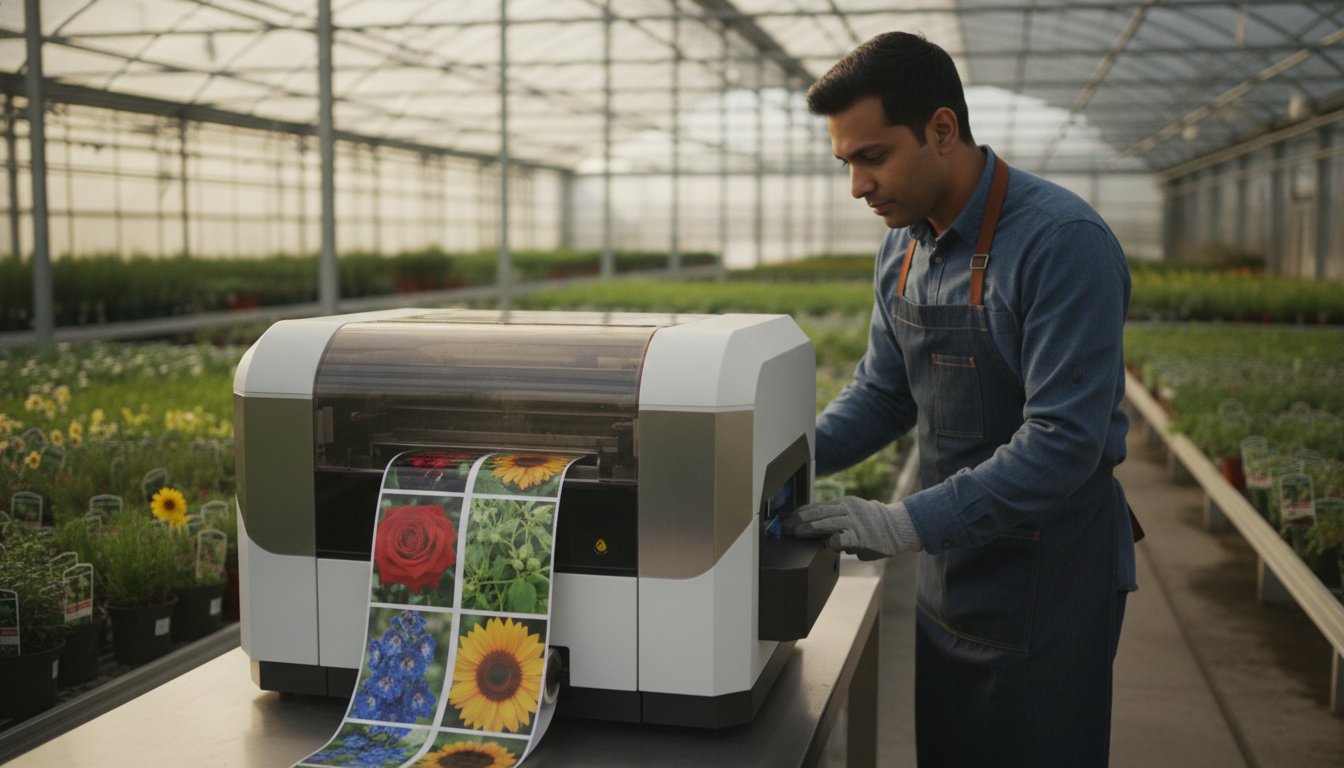
Why are you still paying a premium for pre-printed tags that fade into illegibility before the peak of the selling season? It's a common frustration for nursery owners who see their branding and regulatory data wash away under irrigation systems or bleach out in the harsh summer sun. Relying on outside vendors often means dealing with high costs and rigid designs that don't allow for quick inventory changes or custom photos. Investing in the right horticulture label and tag printers changes that dynamic instantly, giving you the power to print exactly what you need when you need it.
You deserve a labeling system that's as resilient as your plants. We're going to show you how to produce durable, weather-resistant tags in-house to improve your nursery's efficiency and professional image. This 2026 guide covers everything from high-resolution inkjet solutions like the Epson C6000A for retail branding to rugged thermal transfer printers from Zebra and Godex for industrial-strength tagging. You'll learn how to lower your cost-per-tag, meet new uniform pesticide labeling standards, and ensure your labels last multiple seasons outdoors without losing their clarity.
Key Takeaways
- Learn why standard office equipment fails in nursery environments and how specialized horticulture label and tag printers provide the UV and moisture resistance your inventory requires.
- Compare the industrial durability of thermal transfer tagging with the high-resolution, color-rich branding offered by modern inkjet technology.
- Identify the right hardware for your production volume, featuring the Epson C6000A for retail-ready labels and Zebra or Godex for cost-effective tagging.
- Discover how to select the right substrates, such as Tyvek or Valeron, to ensure your tags remain readable through irrigation and chemical exposure.
- Optimize your nursery operations by moving from rigid pre-printed inventory to a flexible, on-demand printing workflow that reduces waste.
Why Specialized Horticulture Label and Tag Printers are Essential
Nursery environments are brutal on standard office equipment. Between overhead irrigation systems and direct sunlight, a typical paper label doesn't stand a chance. This is where specialized horticulture label and tag printers become essential assets for your business. While an office printer handles standard paper, nursery stock requires heavy-duty substrates like Tyvek or Valeron. These materials are often too thick or rigid for consumer-grade hardware. Printing in-house eliminates the lag time of ordering from outside vendors. You can update pricing or inventory data in minutes. This agility is vital during the spring rush when stock moves fast and prices may fluctuate.
The Challenge of Environmental Durability
UV resistance is the most critical requirement for outdoor nursery stock. Sun exposure can bleach a standard label until it's completely blank in just a few weeks. You need a solution that keeps your branding and barcodes sharp for months. Moisture and humidity are equally challenging. Constant watering causes standard inks to bleed and paper to disintegrate. Using Thermal-transfer printing technology solves this by melting resin-based ink directly into the tag material. This process creates a permanent bond. It stands up to water, dirt, and chemical contact from fertilizers or pesticides without smudging.
Meeting Regulatory and Traceability Standards
Regulatory compliance is becoming increasingly complex for growers. The 2026 mandates for uniform pesticide labeling mean your data must be accurate and legible at all times. Printing in-house simplifies this compliance. You can easily include Plant Passport details or high-contrast barcodes for real-time inventory tracking. High-density barcodes are essential for managing large nurseries where scanning speed impacts your efficiency. With BarTender Professional Software, you can automate these complex designs. This software connects your plant database directly to your horticulture label and tag printers, which reduces manual entry errors and ensures every tag meets current legal standards.
Professional labels do more than just provide data; they enhance your brand's perceived value. A tag featuring a vibrant, high-resolution photo helps customers see the plant's future beauty even when it's not in bloom. This visual appeal often justifies a higher price point at the retail level and builds trust with your buyers. By controlling the process in-house, you ensure that every plant leaving your facility represents your brand perfectly.
Thermal Transfer vs. Inkjet: Choosing Your Printing Technology
Selecting the right technology for your horticulture label and tag printers depends on whether you value rugged utility or visual marketing. Thermal transfer remains the industry standard for industrial-strength, black-and-white tagging. It uses a heated ribbon to bond ink to synthetic surfaces. Conversely, inkjet technology has advanced rapidly. Modern pigment-based inkjet printers produce photo-quality labels that resist water and smearing. This makes them ideal for retail-facing products where appearance is as important as the data provided.
When to Choose Thermal Transfer Printers
If you need high-volume monochrome tags, pot stakes, or wrap-around tree tags, thermal transfer is usually the winner. It's incredibly cost-effective for large runs. To achieve maximum outdoor life, you must use a high-quality thermal transfer ribbon that matches your specific tag material. This setup is the best choice for printing on rugged substrates like Tyvek and Valeron. These materials are essential for meeting Container Labeling Regulations that require durable, legible information throughout the plant's lifecycle. Thermal transfer systems excel in dusty, outdoor environments where reliability is paramount.
When to Choose Color Inkjet Printers
Retail environments often demand more than just a barcode. Color inkjet printers allow you to print high-resolution plant photography and vibrant logos directly on your labels. This visual appeal helps customers visualize the plant in bloom. It also enables color-coded inventory management. You can use different colors to denote hardiness zones, sun requirements, or seasonal promotions. Modern pigment inks are designed for outdoor settings. They offer impressive fade resistance compared to older dye-based systems. While the ink cost is slightly higher than thermal ribbons, the branding benefits often justify the investment for premium nursery stock.
For high-volume production, thermal transfer typically offers the lowest cost-per-tag. It's a simple, robust process with fewer moving parts. However, inkjet reduces the need for multiple pre-printed stocks. You can print unique, full-color designs on a single roll of blank material, which eliminates the waste of obsolete pre-printed inventory. If you aren't sure which technology fits your specific nursery layout, you can get expert advice on printer selection to ensure you choose the right tool for the job. Many modern nurseries now use a hybrid approach, using thermal transfer for field tags and inkjet for retail display labels.
Top Hardware Solutions for Nurseries and Garden Centers
Choosing the right hardware for your nursery isn't just about the price tag. It's about matching the machine to your peak season workflow. If you're labeling thousands of pots a day, you need industrial models that support large media rolls. This reduces the time your staff spends changing supplies when every minute counts. For smaller boutique garden centers, compact desktop models provide a space-saving solution that doesn't sacrifice print quality. The goal is to find a balance between daily volume and the complexity of your designs.
Media handling features are often the difference between an efficient process and a bottleneck. Consider these options when evaluating horticulture label and tag printers:
- Peelers: These automatically separate the label from the liner, making manual application much faster.
- Cutters: Essential for continuous tag stock, allowing you to create individual pot stakes or wrap-around tags on demand.
- Rewinders: These neatly roll finished labels back onto a core for use in automated applicators.
Epson ColorWorks C6000A for High-Impact Branding
The Epson ColorWorks C6000A is the premium choice for retail-facing labels. It can print up to 8 inches wide, which is perfect for large containers or multi-plant trays that require high-impact graphics. It includes a built-in peeler to streamline your application workflow. This model ensures your branding stays sharp and professional, even in humid greenhouse conditions. For a deep dive into technical specifications and performance data, see our Epson ColorWorks: The Complete Guide.
Zebra and Godex for Industrial-Strength Tagging
When your priority is rugged, high-volume tagging, the Zebra ZT411 is the undisputed workhorse of the industry. It's designed for 24/7 operation in demanding environments where horticulture label and tag printers must perform without fail. If you're looking for a more cost-effective entry point for a mid-sized nursery, Godex printers offer impressive reliability and ease of use. Both brands excel at producing the high-contrast barcodes and text required by Nursery Container Labeling Regulations. You can explore additional hardware options and performance comparisons in our Industrial Label Printer Roundup.
Selecting the right hardware ensures your nursery stays compliant and efficient. Whether you need the vibrant color of an Epson or the industrial durability of a Zebra, the right printer will pay for itself through reduced waste and improved branding. Don't let a slow or unreliable printer hold back your production during your busiest months.
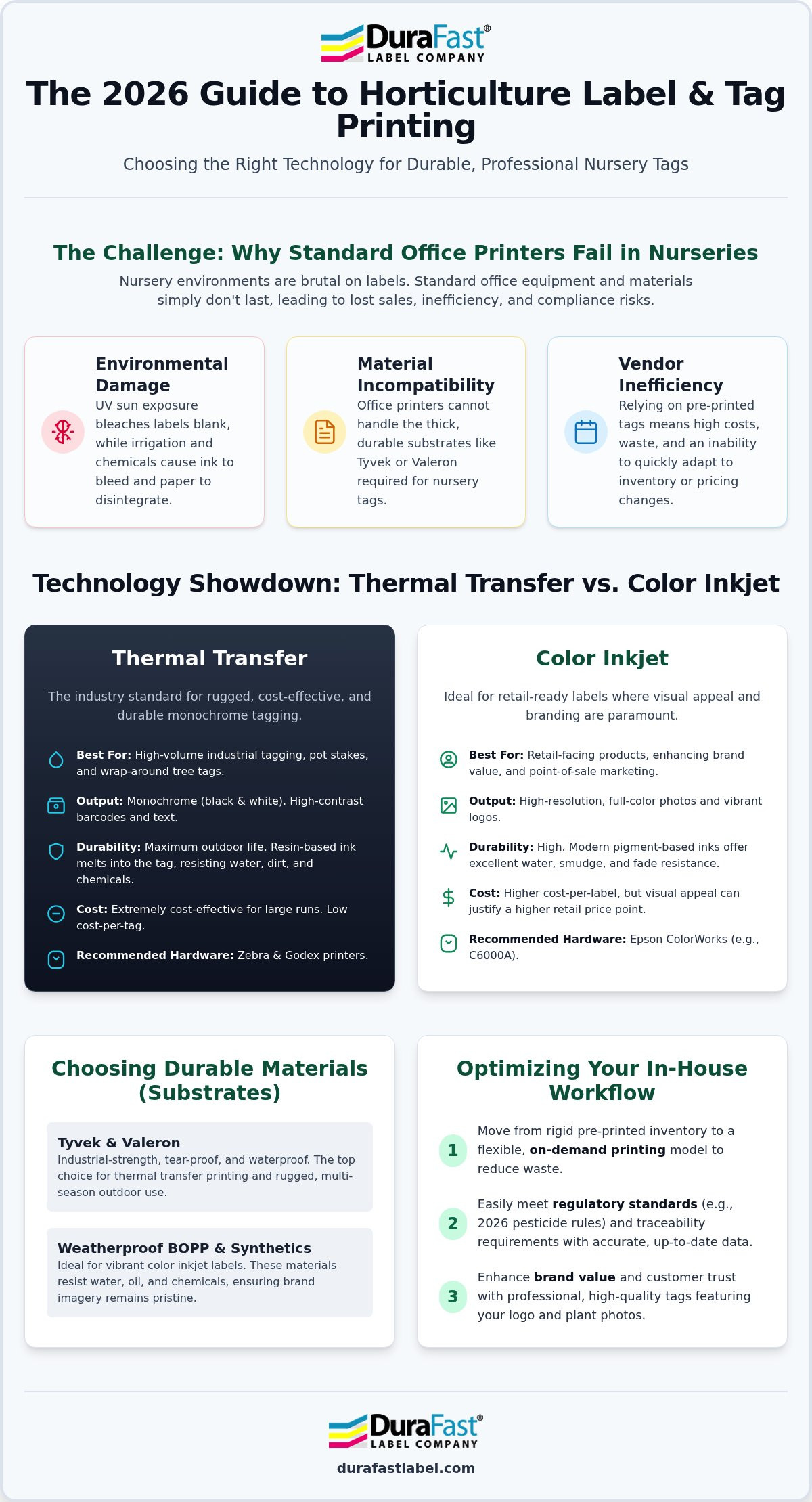
Selecting Durable Substrates: From Tyvek to Weatherproof BOPP
Your choice of hardware only gets you halfway to a readable tag. The substrate you choose is what actually survives the mud, sun, and rain. When using horticulture label and tag printers, matching the material to your specific environment is non-negotiable. If the material doesn't bond correctly with the ink or ribbon, your branding will flake off before the plant even leaves the greenhouse. You need a material that's engineered for the unique chemistry of your printer.
Thermal transfer technology relies on a specific top-coating. This coating allows the resin from the ribbon to melt and anchor into the surface. Without it, the print won't stick. Inkjet labels are different. They require a specialized porous or film layer designed to lock in pigment ink. This prevents the ink from sitting on top of the material where it could smear or wash away during daily irrigation. Understanding the difference between pressure-sensitive labels and non-adhesive tags is the first step toward a more efficient nursery.
High-Performance Tags: Tyvek and Valeron
Tyvek is widely considered the gold standard for non-adhesive, wrap-around plant tags. It's virtually impossible to tear by hand, making it perfect for trees and shrubs that might be handled frequently. If you need even more strength, Valeron offers superior durability for long-term outdoor exposure. These materials fall under the thermal transfer tags category and are specifically engineered for industrial tagging. They don't stretch or snap, ensuring your data stays attached to the stock through every season and remains legible for years.
Weatherproof Adhesive Labels
For pots and plastic containers, pressure-sensitive labels are the preferred choice. Matte BOPP (Polypropylene) is the industry workhorse here. It's a synthetic film that won't break down when exposed to water or fertilizers. The secret to a successful pot label isn't just the face sheet; it's the adhesive. You need aggressive adhesives that can stick to rough, cold, or even slightly dirty surfaces. For nurseries handling heavy chemical applications or requiring GHS compliance, DuraFast Matte Chemical Labels provide the highest level of resistance against solvents and abrasion.
Finding the right combination of printer and material can be tricky. Don't risk a failed batch of labels by guessing which substrate fits your horticulture label and tag printers. You can contact our specialists for a substrate compatibility test to ensure your tags last as long as your plants do.
Optimizing Your In-House Horticulture Printing Workflow
Transitioning to an on-demand system for your horticulture label and tag printers is about more than just buying hardware. It's about creating a centralized hub that reduces physical waste and ensures every plant is tagged correctly. When you rely on pre-printed inventory, you're often stuck with thousands of tags for varieties you no longer stock. Moving to on-demand production lets you print exactly what you need for today's shipments. This flexibility is a game-changer during the unpredictable spring season when stock levels shift rapidly. For retail-focused nurseries and garden centers, this same need for flexibility applies to sales; for example, a Blumenautomat24 allows you to sell your tagged arrangements 24/7, even when your main shop is closed.
Keeping your printers running during the peak rush requires simple, consistent preventive maintenance. Clean your printheads weekly with isopropyl alcohol to prevent ink buildup or ribbon residue that can cause streaks. To further optimize the process, integrate handheld barcode scanners into your shipping bay. This allows staff to scan a tag and verify that the plant in the pot matches the order in the system. It eliminates shipping errors and improves overall inventory accuracy before the truck even leaves the yard.
Automation is where the real efficiency happens. Using BarTender Professional Software allows you to create a single master template that pulls data directly from your inventory spreadsheet or database. Instead of manually designing a new label for every species, you simply swap the plant name, price, and care instructions through the automated data fields. This significantly reduces human error. You won't have to worry about a seasonal worker typing in the wrong hardiness zone or misspelling a botanical name during a busy shift.
Total Cost of Ownership and ROI
Many nursery owners worry about the initial investment, but the return on investment (ROI) is often reached within the first year of operation. You can see the detailed breakdown of savings by printing labels in-house versus the high cost of ordering small batches from a vendor. Just-in-time printing means you never pay for obsolete tag inventory again. You also gain full control over your branding, which allows you to run flash sales or seasonal promotions without waiting weeks for a print shop to deliver new tags.
Streamlining your labeling process doesn't have to be complicated. By combining the right hardware with smart automation software, you can focus on growing your plants instead of managing your tag inventory. If you're ready to upgrade your nursery's efficiency, contact our horticulture labeling experts today to build a custom solution for your facility.
Future-Proof Your Nursery Labeling Strategy
Transitioning to an in-house system gives you the flexibility to adapt to seasonal shifts and regulatory changes without the delay of third-party vendors. By matching high-performance horticulture label and tag printers with durable substrates like Tyvek and Valeron, you ensure your branding remains sharp through every irrigation cycle and sunny afternoon. Whether you prioritize the photo-quality retail appeal of inkjet or the industrial-strength output of thermal transfer, the right setup will lower your cost-per-tag and eliminate obsolete inventory.
We're here to simplify the transition. As an authorized Epson and Zebra partner and a specialized stockist of Valeron and Tyvek tag stock, we provide the hardware, software, and consumables you need for a complete solution. Our team offers 2026 industry-leading support to keep your operations running smoothly through the busiest spring rush. Contact our horticulture labeling experts for a custom quote to see how we can optimize your nursery's workflow. Your plants deserve labeling that's as resilient and professional as the stock you grow.
Frequently Asked Questions
What is the best printer for outdoor plant tags?
The best choice depends on whether you need full-color branding or high-volume industrial tagging. For rugged, monochrome field tags, the Zebra ZT411 is a top-tier industrial workhorse. If you require vibrant, photo-quality retail labels, the Epson ColorWorks C6000A is the superior option. Both machines are designed to handle the heavy-duty synthetic substrates required for outdoor nursery environments where exposure to water and UV light is constant.
Can I print color photos on plant tags in-house?
Yes, you can absolutely print high-resolution color photos on your plant tags using modern inkjet technology. High-resolution color label printers, including models like the Epson ColorWorks C6000A, allow you to produce "photo-quality" graphics that help customers visualize the plant in bloom. These machines use pigment-based inks that bond with specialized film layers, ensuring the images remain vibrant and water-resistant even when stored in humid greenhouse conditions or outdoor displays.
Do I need special ink for horticulture labels to prevent fading?
You must use pigment-based inks or high-quality resin ribbons to ensure your labels don't fade under intense UV exposure. Standard dye-based inks will wash away or bleach out quickly in a nursery setting. When using thermal transfer technology, matching the right ribbon to your tag material is vital for chemical and moisture resistance. This combination creates a permanent bond that withstands constant irrigation, fertilizers, and the harsh summer sun without losing legibility.
What is the difference between Tyvek and Valeron tags?
Tyvek is a lightweight, tear-resistant material that is perfect for flexible wrap-around tags on trees and shrubs. It's the industry standard for durability and ease of use. Valeron offers even higher tensile strength and stiffness, making it ideal for extreme outdoor exposure where tags might be subjected to heavy wind or mechanical stress. Both materials are compatible with industrial horticulture label and tag printers and provide multi-season longevity in demanding environments.
How much does it cost to print plant tags in-house vs. ordering them?
Printing in-house typically results in a lower cost-per-tag because you eliminate the markup and shipping fees associated with outside vendors. You also avoid the hidden costs of obsolete inventory, as you only print what you need on demand. While there is an initial hardware investment, most nurseries find that the ability to run small batches or update prices instantly provides a rapid return on investment through reduced waste and improved efficiency.
Can I use a regular thermal printer for horticulture tags?
Printing in-house typically results in a lower cost-per-tag because you eliminate the markup and shipping fees associated with outside vendors. You also avoid the hidden costs of obsolete inventory, as you only print what you need on demand. While there is an initial hardware investment, most nurseries find that the ability to run small batches or update prices instantly provides a rapid return on investment through reduced waste and improved efficiency. To further support your business operations, you can discover Strong Machinery Srl for a wide selection of agricultural machinery and essential spare parts.
Can I use a regular thermal printer for horticulture tags?
BarTender Professional Software is the most reliable tool for designing complex nursery labels. It allows you to create templates that pull data directly from your inventory spreadsheets, which automates the process of adding plant names, care tips, and barcodes. This database integration reduces human error and ensures that every tag meets current regulatory standards. The software makes it easy to generate high-contrast barcodes that are essential for accurate scanning in large-scale nursery operations.
Are there portable printers for nursery inventory tagging?
Yes, there are several rugged portable printers designed for real-time inventory tagging in the field. Models from Zebra and Seiko allow your staff to print and apply labels directly at the point of care, which saves time and reduces errors. These mobile units are built to withstand drops and moisture, making them perfect for use in greenhouses or outdoor yards. They connect via Bluetooth or WiFi to your central database for seamless data synchronization during the tagging process.