Premium Jewelry Rat Tail Tags for Professional Branding
27th Aug 2026
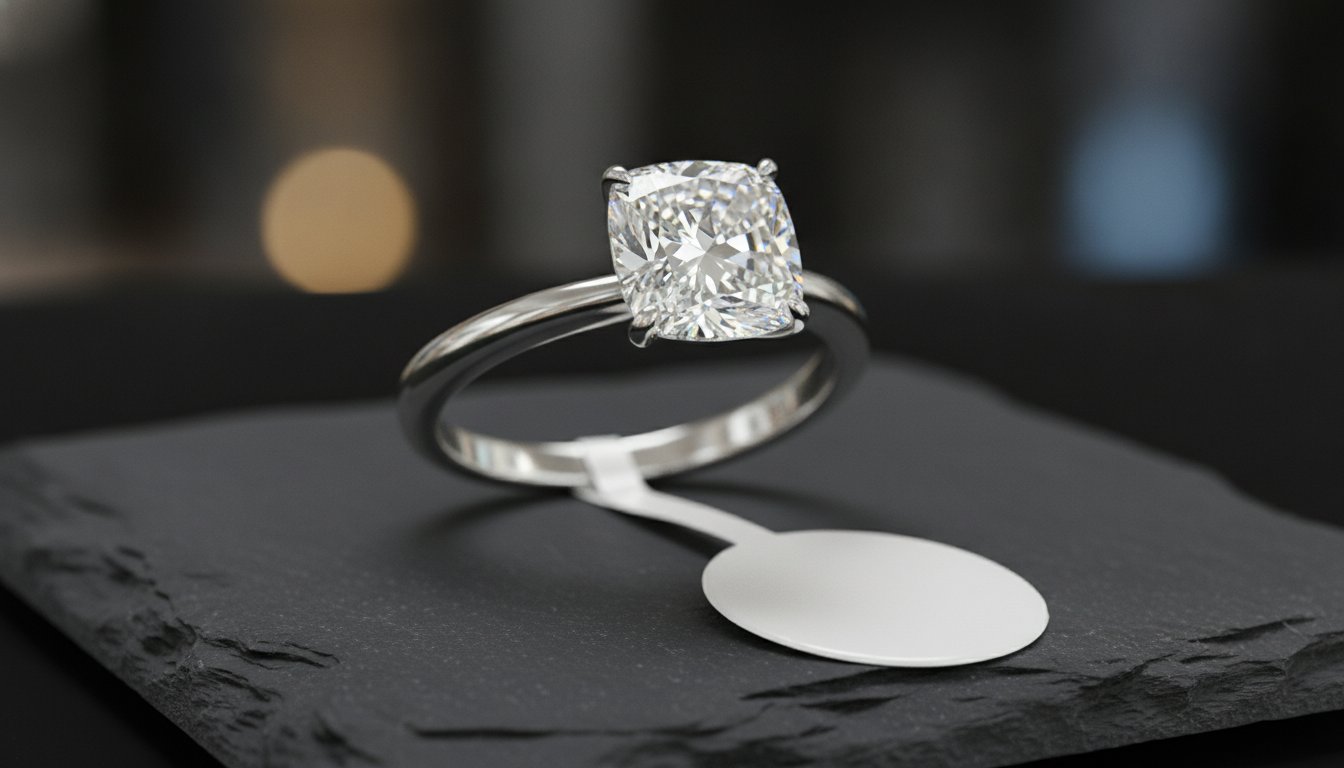
A sticky, faded price tag can instantly devalue a thousand-dollar diamond ring in the eyes of your customer. You've likely spent years perfecting your craft, only to have the presentation ruined by a messy Jewelry Rat Tail Tag that leaves adhesive residue behind. It's a common frustration for boutique jewelers, but it's one that is easily solved with the right professional tools and materials.
In this guide, you'll learn how to select, design, and print high-quality tags right in your own shop. We'll show you how to enhance your brand presentation and inventory security without the high costs of outsourcing small label runs. You don't have to settle for tags that tear or fade during handling anymore. Taking control of your labeling process means your jewelry always looks its best.
We will walk through the benefits of using durable materials like Poly-LAM and the best thermal transfer printers from brands like Zebra and Godex. You'll discover how to use BarTender software to update barcodes and prices instantly. This ensures your high-end items always have a clean, professional look that survives ultrasonic baths and constant customer interactions.
Key Takeaways
- Understand how the unique, adhesive-free loop of a Jewelry Rat Tail Tag protects your inventory from damage and sticky residue.
- Discover why synthetic materials and thermal transfer technology are the industry standard for tags that survive steam cleaning and ultrasonic baths.
- Identify the best hardware for your labeling station, including high-resolution printers from Zebra and Godex that deliver professional, crisp text.
- Compare specific tag models like the TT306, TT307, and TT364 to ensure you have the right fit for every item in your collection.
- Learn how printing in-house eliminates high outsourcing costs and gives you the flexibility to update prices or barcodes on demand.
What is a Jewelry Rat Tail Tag and Why is it Essential?
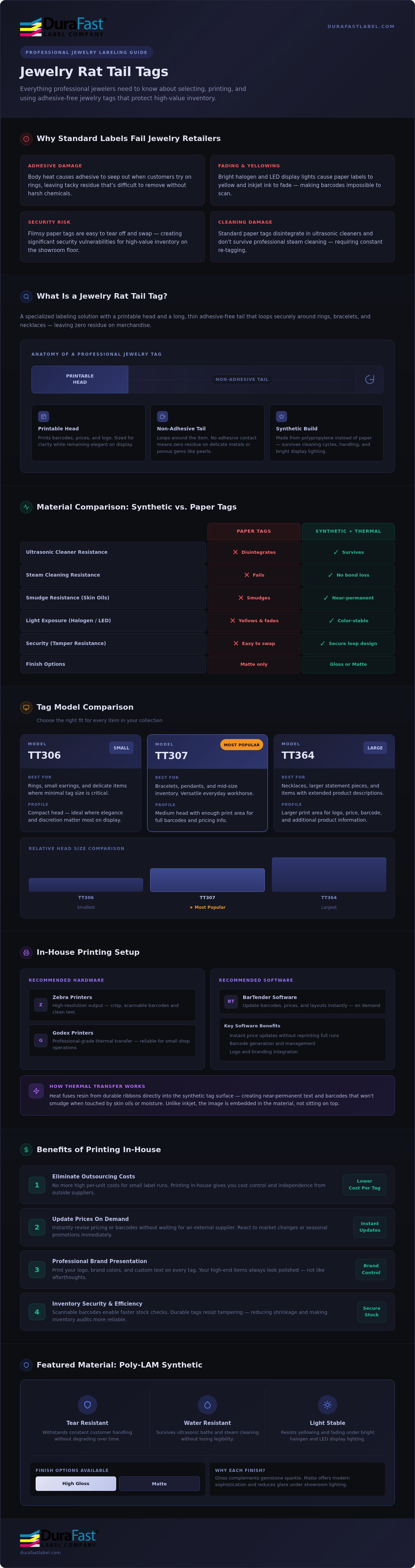
A Jewelry Rat Tail Tag is a specialized labeling solution designed for the unique needs of the jewelry industry. It features a printable head for data and a long, thin tail that loops around rings, bracelets, or necklaces. The name comes from its distinctive shape. Unlike standard stickers, the tail is adhesive-free. This ensures that no sticky residue ever touches your merchandise. This design is vital for maintaining the value and appearance of high-end pieces.
While the history and purpose of the price tag began as a simple way to communicate value to customers, modern retail demands more sophistication. In jewelry, a tag isn't just a price marker; it's a security feature and a branding tool. Using professional jewellery ring labels allows you to present a polished image while protecting your stock from the damage caused by inferior adhesives.
Anatomy of a Professional Jewelry Tag
Understanding the structure of these tags helps you appreciate their value. A professional tag consists of three main components that work together to secure your inventory:
- The printable head: This is the wider section where you print barcodes, prices, and your logo. It needs to be large enough for clarity but small enough to remain elegant on a display.
- The non-adhesive tail: This thin strip wraps around the item. Because it lacks adhesive, it won't damage delicate metals or porous gemstones like pearls.
- Synthetic construction: Professional tags use synthetic materials like polypropylene rather than paper. Paper tags tear easily and don't survive the cleaning processes common in jewelry maintenance.
Why Traditional Labels Fail in Jewelry Retail
Standard labels often lead to the "sticky mess" problem. When a customer tries on a ring, body heat can cause adhesive to seep out. This leaves a tacky residue that's difficult to remove without harsh chemicals. Additionally, many retail environments use bright halogen or LED lights. These lights cause paper labels to yellow and inkjet ink to fade over time.
A faded tag looks unprofessional and makes it hard for your staff to scan barcodes efficiently. Flimsy paper tags are also easy to tear off and swap. This creates a significant security risk for your high-value inventory. Switching to a durable, thermal transfer Jewelry Rat Tail Tag ensures your pricing remains legible and your items stay secure throughout their time on the showroom floor.
Material Science: Synthetic Thermal Transfer vs. Standard Paper Tags
Choosing the right material for your Jewelry Rat Tail Tag is a decision that impacts both your brand image and your bottom line. While paper tags might seem cost-effective initially, they fail quickly in the demanding retail environment. By 2026, synthetic materials like Polypropylene and Polyester have become the industry standard for professional jewelers. These materials don't just look better; they provide the structural integrity required to survive constant handling and intense display lighting.
Thermal transfer technology is the secret behind high-end jewelry labeling. Unlike standard inkjet printing, thermal transfer uses heat to fuse resin from durable ribbons directly into the synthetic tag surface. This creates near-permanent text and barcodes that won't smudge when touched by skin oils or moisture. You can choose between a high-gloss finish to complement the sparkle of your gemstones or a matte finish for a modern, sophisticated look that reduces glare under showroom lights.
Durability in Cleaning Environments
Jewelry often requires maintenance while in stock. Standard paper tags will disintegrate if they accidentally enter an ultrasonic cleaner, but high-quality synthetic tags are built to withstand those intense vibrations. They also handle the thermal shock of professional steam cleaning without losing their bond or legibility. This resilience ensures you don't have to re-tag items every time they are polished. If you have questions about which material fits your specific cleaning process, you can speak with our labeling experts for a personalized recommendation.
Adhesive Technology for Fine Jewelry
The way a tag sticks is just as important as the material itself. Professional jewellery ring labels often utilize patterned adhesive to ensure the tag stays secure without oozing. You'll need to decide between high-tack adhesives for maximum security or removable options that come off cleanly when the sale is made. An adhesive-free zone is the space between two adhesive layers on the tail that prevents any glue from touching the jewelry itself. This specialized engineering allows a Jewelry Rat Tail Tag to loop through a ring or around a necklace while keeping the precious metal completely clean and free of residue.
Selecting the Right Dimensions: TT306, TT307, and TT364 Compared
Every piece of jewelry in your collection has a unique profile. Using the same tag size for a delicate engagement ring and a heavy luxury watch creates a messy, unorganized display. Whether you are selling fine diamonds or specialized body jewelry like the collections at BodyJ4You, selecting the correct Jewelry Rat Tail Tag ensures your branding remains consistent and professional across your entire inventory. DuraFast provides three primary models designed to handle specific retail challenges.
The TT306 is the industry standard for rings and small earrings. It features a compact head and a shorter tail that creates a clean, tight loop. For mid-sized items like bracelets or individual charms, the TT307 offers more versatility. If you're dealing with bulky necklaces or luxury timepieces, the TT364 is the essential choice. It provides an extended tail that accommodates larger diameters without putting unnecessary stress on the tag or the merchandise.
Size Guide for Common Jewelry Items
Matching your tag to your item prevents common display headaches. For rings and bands, the TT306 is preferred because it doesn't flop around in the display tray. This keeps your prices and barcodes visible to customers at all times. Necklaces and chains require a different approach. Using a short tag on a long chain often leads to tangling; the TT364 prevents this by allowing the chain to hang naturally. For watches and thick bracelets, the extended tail of the TT364 ensures the adhesive-free zone clears the strap entirely, protecting leather or metal bands from any glue contact.
Compatibility with Desktop Thermal Printers
Your hardware must be able to handle these specialized dimensions. Most jewelry tags are wound on 1-inch cores, which are specifically designed for desktop thermal printers. If you're using an industrial unit, you'll likely need a roll with a 3-inch core. Sensor alignment is also critical. Since these tags are small, your printer needs to accurately detect the gap between labels to avoid wasting stock. We recommend using a high-resolution 300 DPI printer to ensure your barcodes remain crisp and scannable on these smaller surfaces. Browse our full selection of jewelry ring labels to find the perfect fit for your specific printer model and inventory needs.
How to Print Jewelry Rat Tail Tags In-House for Maximum Efficiency
Bringing your labeling process in-house transforms how you manage your boutique or retail store. Instead of waiting weeks for a print shop to deliver a small batch of labels, you can generate a custom Jewelry Rat Tail Tag the moment new inventory arrives. Setting up a professional station in 2026 requires three main components: a high-resolution thermal transfer printer, the correct resin ribbon, and intuitive design software. This setup gives you total control over your pricing and branding while reducing long-term costs.
The 300 DPI Advantage for Small Text
Resolution matters when you're working with the limited surface area of a jewelry tag. Most standard shipping label printers use 203 DPI, but this often results in fuzzy barcodes and illegible text on tiny labels. A 300 DPI printer is the industry standard for jewelry because it produces crisp, readable fonts even at 4pt or 5pt sizes. This ensures your barcodes scan perfectly every time, preventing delays at the checkout counter. Explore our desktop thermal printers for jewelry to find a high-resolution model from trusted brands like Zebra or Godex.
Designing Your First Tag with BarTender
BarTender Professional software simplifies the complex task of mapping data to a specialized tag shape. When designing, you'll set the page size to match the specific dimensions of your tag, carefully separating the printable "head" from the non-adhesive "tail." One of the biggest time-savers is the ability to link your inventory spreadsheet directly to the label design. This allows you to print variable data, such as serial numbers or specific gold weights, without manual typing. You can also add your logo to the head of the Jewelry Rat Tail Tag to maintain brand consistency across your entire display case.
Ribbon and Media Pairing
The durability of your print depends entirely on the ribbon you choose. For synthetic jewelry tags, a full resin ribbon is mandatory. Resin creates a bond that resists smudging, skin oils, and cleaning chemicals. Using a wax or wax-resin hybrid will result in fading text that ruins the professional look of your merchandise. DuraFast ribbons are specifically optimized for our synthetic media to ensure maximum adhesion. You can shop Zebra-compatible ribbons for jewelry tags to ensure your setup is reliable. For a deeper dive into hardware, check out The 2026 Professional Guide to Thermal Label Printers. If you need help configuring your specific printing station, feel free to reach out to our support team for expert guidance.
Implementing a Complete Jewelry Labeling Solution with DuraFast
Implementing an in-house labeling system is more than just a convenience; it's a strategic business move. When you stop outsourcing, you eliminate the frustration of high minimum order quantities and long lead times. You can print exactly what you need the moment new pieces arrive. This flexibility is essential for boutique jewelers who often introduce unique items that require immediate tagging. By controlling the production of every Jewelry Rat Tail Tag, you ensure your display cases always look uniform and professional. For boutique owners who want to extend this consistency to their staff uniforms or promotional gifts, B-BAM! Inc. provides expert custom branded merchandise.
DuraFast positions itself as a specialized partner by offering everything from the tags themselves to the high-performance hardware required to print them. Whether you're a single-location boutique or a growing regional chain, having a reliable source for ribbons, printers, and technical support simplifies your operations. We focus on providing solutions that strip away the complexity of technical equipment, making it easy for you to focus on your craft.
Scanning a tiny barcode on a curved surface can be challenging without the right equipment. We recommend using high-quality Datalogic scanners that are specifically designed to read high-density 1D and 2D codes. These devices ensure your staff can process sales and stocktakes quickly without struggling to get a "good read." As we move through 2026, many retailers are also transitioning to rfid jewelry labels. This technology allows you to scan an entire display tray in seconds, which drastically reduces the time spent on manual inventory counts. For more tips on optimizing your workflow, see our Barcode Scanner Inventory Management Guide.
Getting Started with a Jewelry Labeling Starter Kit
If you're ready to upgrade your presentation, a starter kit is the most efficient path forward. These kits often bundle a high-resolution Zebra ZT411 or a compact desktop equivalent with a supply of TT307 tags and matching resin ribbons. This ensures all your components are compatible right out of the box. Our team provides technical support to help with tag alignment and software setup, so you don't have to troubleshoot alone. You can learn more about the specifics of setting up your station in our guide on How to Print Your Own Product Labels. Choosing DuraFast means you're investing in a complete, long-term solution that grows with your brand.
Elevate Your Jewelry Presentation and Security
Professional branding is built on the small details. Switching from flimsy paper labels to a high-quality Jewelry Rat Tail Tag ensures your merchandise remains clean and your pricing stays legible. By utilizing specialized synthetic materials and full-resin ribbons, you protect your inventory from the harsh effects of steam cleaning and ultrasonic baths. You've seen how the right dimensions, from the TT306 to the TT364, provide a tailored fit for everything from delicate rings to luxury timepieces.
Taking your labeling in-house gives you the flexibility to update inventory instantly while maintaining a polished, high-end aesthetic. With BarTender software and high-resolution thermal printers, you're no longer at the mercy of long lead times or high minimum orders. Our team is ready to help you find the perfect combination of tags and hardware to streamline your retail operations. If you're ready to transform your display cases and simplify your stock management, contact our experts today to build your custom labeling solution. Your craft deserves a presentation that reflects its true value.
Frequently Asked Questions
What is the best material for jewelry rat tail tags?
Synthetic materials like polypropylene or polyester are the best choice for retail environments. Unlike paper, these materials resist tearing and won't yellow under bright showroom lights. They provide a high-end look that matches the quality of your merchandise. Synthetic tags also handle moisture and oils from skin contact without degrading. This ensures your branding remains crisp and professional from the display case to the customer's home.
Do rat tail tags leave a sticky residue on rings?
No, a professionally designed Jewelry Rat Tail Tag features an adhesive-free zone on the tail. This specific section is what comes into contact with the ring or bracelet. Only the head of the tag contains adhesive to secure it to itself after looping. This engineering prevents glue from ever touching precious metals or gemstones. It eliminates the need for harsh cleaning chemicals after a customer tries on a piece.
Can I print jewelry tags with a standard inkjet printer?
Standard inkjet printers are not recommended for these specialized tags. Inkjet ink often smudges on synthetic surfaces and fades quickly under the intense heat of jewelry store lighting. For durable results, you should use a thermal transfer printer. This technology uses heat to fuse resin directly onto the tag. It creates a permanent bond that withstands handling, cleaning, and the retail environment much better than liquid ink.
What is the difference between TT306 and TT307 jewelry tags?
The primary difference lies in the dimensions and intended application. The TT306 is the standard choice for small items like rings and earrings due to its compact loop. The TT307 is a mid-sized version that offers more versatility for charms, bracelets, and slightly larger accessories. Both models share the same high-quality synthetic construction. Choosing between them depends on the diameter of the items you need to secure and your preferred display aesthetic.
Do I need a special ribbon to print on synthetic jewelry tags?
Yes, you must use a full resin ribbon for synthetic jewelry labeling. Wax or wax-resin hybrid ribbons won't bond properly to polypropylene or polyester surfaces. Resin ribbons are specifically formulated to resist smudging, scratching, and chemical exposure. This is critical for jewelry because the tags often undergo steam cleaning or come into contact with polishing compounds. Using the correct ribbon ensures your barcodes and text remain scannable and legible.
Are jewelry rat tail tags compatible with ultrasonic cleaning?
High-quality synthetic tags are designed to survive the vibrations of an ultrasonic cleaner. Paper tags would disintegrate in the liquid bath, but polypropylene tags maintain their structural integrity. However, the print durability depends on using a resin ribbon. When paired correctly, your Jewelry Rat Tail Tag can go through a standard cleaning cycle without the text fading or the tag falling off. This saves you the time of re-tagging inventory after routine maintenance.
What software is best for designing jewelry barcodes?
BarTender Professional is the industry standard for designing jewelry labels. It allows you to create precise templates that map exactly to the unique shape of rat tail tags. You can easily link your inventory database to the software to print variable prices, weights, and barcodes automatically. This reduces manual entry errors and speeds up the tagging process. It also supports high-resolution logos to help you maintain consistent brand identity on every piece.
Can I use a Dymo printer for rat tail jewelry tags?
Most Dymo printers use direct thermal technology, which isn't ideal for long-term jewelry labeling. Direct thermal print is sensitive to heat and light, causing it to turn black or fade over time in a bright display case. We recommend using thermal transfer printers from brands like Zebra or Godex. These units use ribbons to create more durable, retail-grade labels that won't degrade under showroom lights or during professional cleaning processes.