Professional Jewelry Labels: Choosing the Right Tags
28th Aug 2026
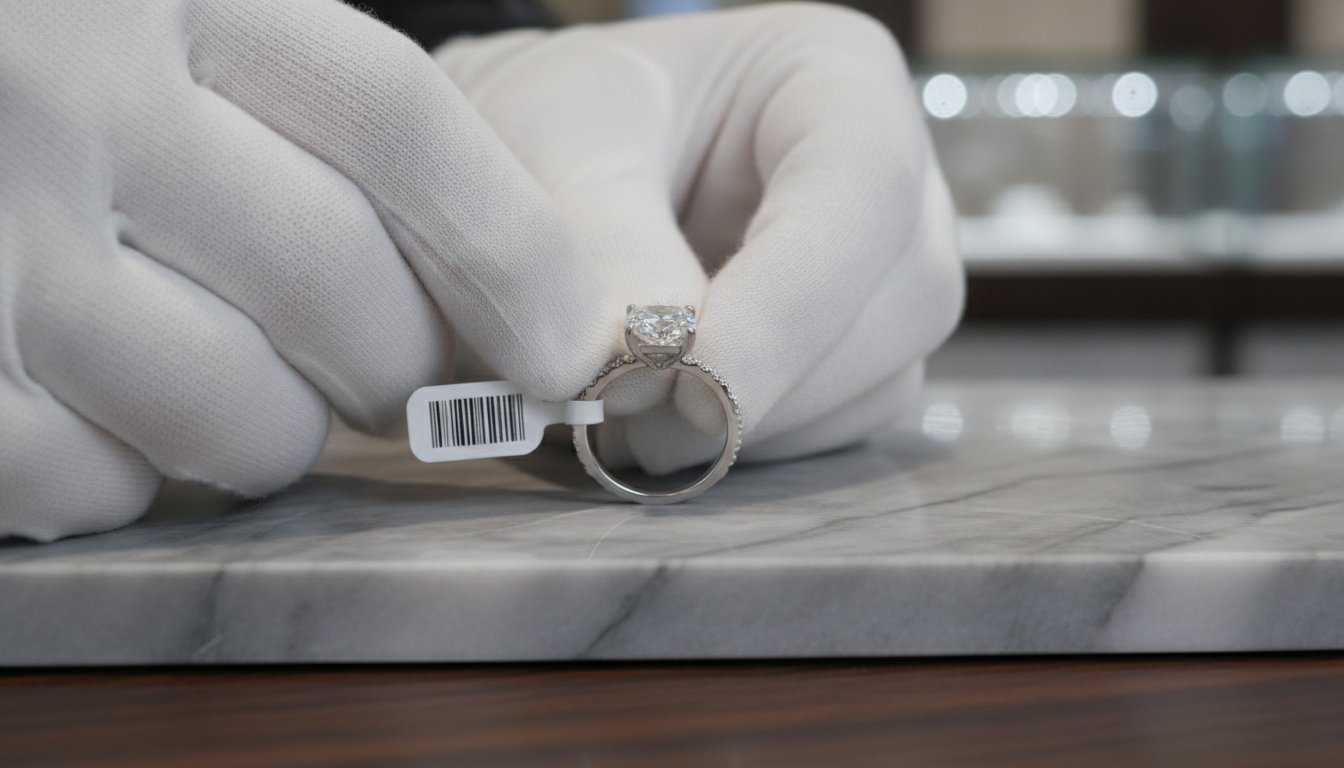
Imagine a customer's disappointment when they pick up a signature piece only to find a sticky, grey residue clinging to the gold. It's a small detail that can instantly devalue your hard work and make a premium brand look unprofessional. You know that hand-writing prices is tedious, and flimsy tags that tear during customer handling are a constant headache. We understand that your inventory deserves better than generic stickers that can't survive a standard cleaning bath.
This guide will show you how to choose and print high-quality, durable jewelry labels that protect your pieces and elevate your shop's image. We'll walk you through selecting the right synthetic materials, using professional design software like BarTender, and finding the best in-house printing hardware like the Seiko SLP850. You'll also learn how to implement easy inventory tracking with barcodes. These professional solutions ensure your tags stay secure, clean, and legible from the initial display case to the final sale.
Key Takeaways
- Understand why specialized synthetic materials are vital for tags that must withstand both intense retail lighting and constant customer handling.
- Identify the specific benefits of barbell and rat tail styles for ensuring your jewelry labels never leave a sticky residue on your inventory.
- Compare thermal and inkjet printing technologies to see which one provides the durability and branding your high-end store requires.
- Learn how to choose tags that survive ultrasonic cleaning baths and harsh chemicals to keep your pieces looking their best without re-labeling.
- Discover the essential components of an in-house labeling system that reduces lead times and improves inventory tracking efficiency.
What Are Jewelry Labels and Why Do Materials Matter?
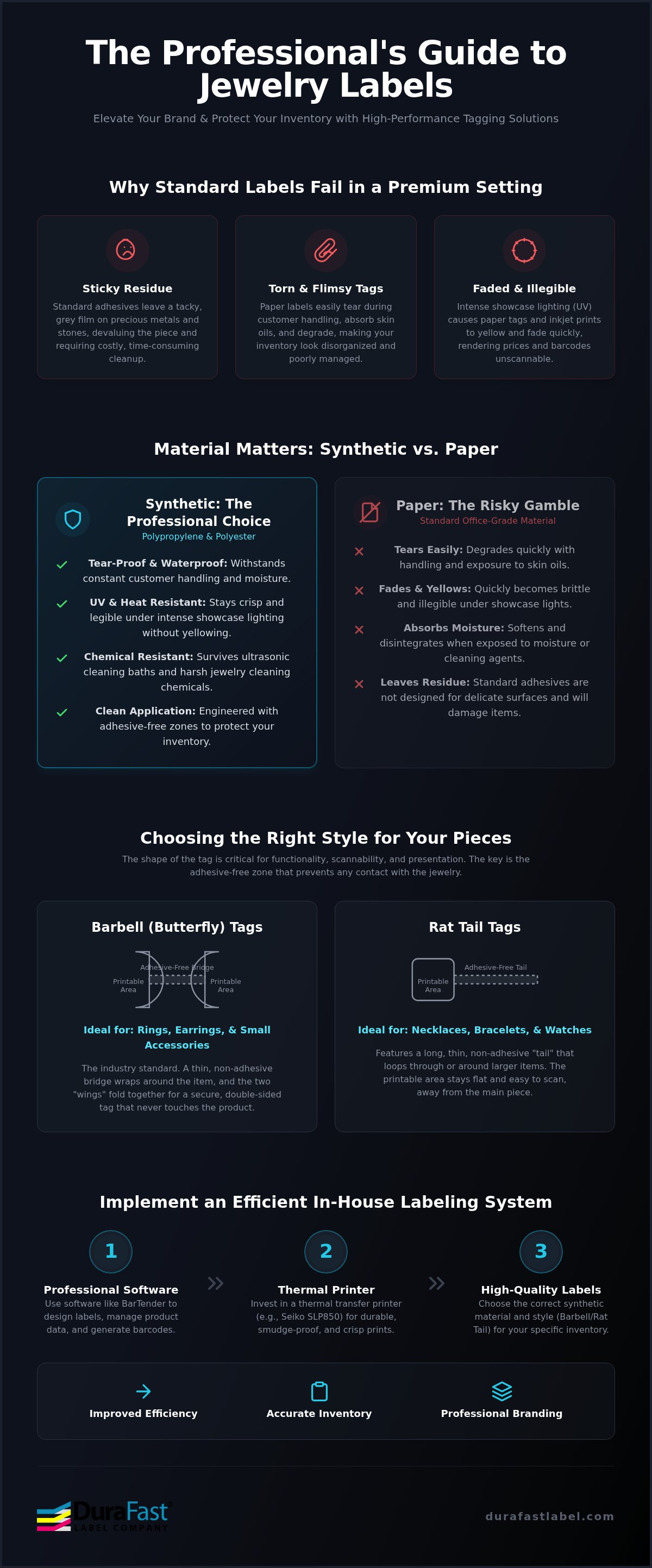
Jewelry labels are specialized tags designed to display pricing and inventory data on small, high-value items. These aren't your typical office stickers. Because your inventory is often displayed under high-intensity showcase lighting and undergoes frequent customer handling, the tags must be exceptionally resilient. Jewelry labels are durable, synthetic tags designed for non-residue application on delicate surfaces. They serve as the silent communicator of your brand's value and attention to detail.
Choosing the wrong material can lead to faded text, torn tags, or even damaged inventory. Most retail environments require materials like polypropylene and polyester rather than standard paper. These synthetics ensure that your barcodes remain scannable and your prices stay legible from the moment the item is tagged until it leaves with a customer.
Synthetic vs. Paper: The Durability Debate
Paper labels often fail in a retail jewelry environment. They absorb oils from skin contact and moisture from the air, which causes them to soften and tear. Furthermore, paper is prone to yellowing and becoming brittle when exposed to the constant UV output of display case lights. This is where synthetic materials prove their worth. Polypropylene is a top choice for retailers because it resists UV yellowing and stays crisp under heat.
If you need the highest level of longevity, polyester labels offer maximum resistance to chemicals and high temperatures. When you consider the wide variety of jewelry materials used in modern design, including precious metals and sensitive gemstones, using a stable synthetic label is essential. It prevents the tag from degrading and potentially reacting with the jewelry itself.
The Importance of Adhesive-Free Zones
The most critical feature of a professional tag is the adhesive-free zone. These "non-stick" centers ensure that no glue ever contacts your precious metals or stones. Cleaning sticky residue off a diamond ring or a delicate silver chain is a tedious process that can even lead to surface scratches if handled improperly. Professional jewellery ring labels are engineered to wrap around the item while keeping the adhesive strictly on the tag itself.
- Barbell (Butterfly) Tags: These feature two rounded or rectangular ends connected by a thin, adhesive-free bridge. They are the industry standard for rings and small accessories.
- Rat Tail Tags: These have a long, thin "tail" that acts like a string. They provide more flexibility for tagging thicker bracelets or necklaces.
While premium labels might have a slightly higher upfront cost, they save you money in the long run. The labor cost of cleaning adhesive residue from hundreds of pieces far outweighs the price of high-quality tags. Investing in the right materials protects your inventory and maintains your brand's professional appearance.
Choosing the Right Style: Barbell vs. Rat Tail Tags
The shape of your tag does more than just hold a price. It dictates how the item sits in your display and how a customer feels when they try it on. If a tag is too bulky or awkwardly placed, it distracts from the jewelry's beauty. Choosing the right style ensures your jewelry labels remain professional and functional throughout the entire sales process.
Selecting the correct shape also guarantees that your barcodes remain scannable. On curved surfaces like ring bands or watch straps, a poorly fitted label can cause the barcode to wrap or distort. This leads to frustration at the checkout. By matching the tag style to the item, you maintain a smooth operational flow and a clean, organized aesthetic.
Barbell (Butterfly) Labels for Rings
Barbell labels, often called butterfly tags, are the industry standard for rings and small accessories. They consist of two printable "wings" connected by a thin, adhesive-free bridge. This bridge wraps around the shank of the ring, allowing the two wings to fold together and create a secure, double-sided display area. It's a simple mechanism that provides a clean surface for both branding and technical data.
To achieve a professional look, you must ensure the edges are perfectly aligned during the folding process. This prevents "winging," where the adhesive edges peel apart and collect dust or lint over time. These tags are built for high-volume inventory. Their symmetrical design makes them incredibly fast to apply, helping you get your latest collections onto the sales floor without delay.
Rat Tail Tags for Necklaces and Watches
Rat tail tags offer a different approach with a long, narrow tail that mimics a traditional string tag. This style is ideal for necklaces, bracelets, and watches where a barbell might be too short to loop around the material. The tail provides enough length to drape the tag over the side of a display bust or watch pillow, keeping the pricing information visible without obscuring the jewelry itself.
These tags are essential for items that can't be easily looped by a standard barbell. Because the tail section is adhesive-free, it moves freely with the jewelry, providing a more premium, high-end feel during customer trials. If you're looking for specific solutions for your retail shop, explore our specialized jewellery ring labels for various retail applications.
Finding the perfect fit for your inventory doesn't have to be a guessing game. If you need help determining which style best suits your specific collection, talk to one of our labeling experts for a personalized recommendation.
Thermal vs. Inkjet: Which Printing Technology Wins?
Deciding between thermal and inkjet printing for your jewelry labels often comes down to a simple choice: do you need sheer utility or premium brand aesthetics? Thermal transfer has long been the reliable standard for high-volume, black-and-white barcodes. However, inkjet technology is quickly becoming a favorite for boutiques that want to print full-color logos directly on their tags. Both technologies have evolved into compact, desktop formats that fit perfectly on a crowded retail counter or in a small back office.
Your choice will dictate the type of media you buy and the long-term durability of your tags. While both can produce professional results, they serve different operational goals. Understanding the strengths of each helps you build a labeling system that grows with your business.
Thermal Printing for Utility and Barcoding
For high-speed, on-demand price changes, the Seiko SLP850 is a standout performer. It's designed for efficiency, allowing you to print a single tag or a whole batch without wasting material. When using thermal transfer technology, it's vital to use resin-based ribbons. These ribbons provide the intense chemical resistance required to keep your text from smearing when the jewelry is handled or cleaned. If you're curious about how this hardware compares to other industrial options, see The 2026 Professional Guide to Thermal Label Printers.
Color Inkjet for Premium Branding
If your brand relies on a specific color palette or a detailed logo, the Epson ColorWorks series is the ideal solution. These printers allow you to add high-resolution branding to every tag, which elevates the customer's perception of your pieces. For boutiques that offer a mix of jewelry and luxury gifts, you can check out Engraveitnow Ltd for inspiration on how high-quality personalization can define a brand. Beyond looks, color-coded tags are a practical tool for your team; you can use different colors to help staff identify stone types or metal quality at a glance. We offer inkjet-compatible synthetic materials that are engineered to dry instantly, so you won't have to worry about ink smudging or bleeding during handling.
Inventory management can be a massive time-sink, but RFID technology is changing that. RFID jewelry labels allow you to perform rapid inventory counts by simply waving a scanner near your display cases. These tags have a tiny chip embedded within standard barbell or rat tail shapes, making them virtually indistinguishable from regular labels. To implement this, you'll need specialized encoding software like BarTender Professional. This system not only speeds up your daily counts but also adds a layer of theft prevention that traditional barcodes can't match.
Durability Testing: Cleaning Baths and Chemicals
High-end jewelry requires frequent maintenance to keep its brilliance, especially after being handled by multiple customers. In a busy retail environment, pieces are often placed into cleaning systems while still tagged to save time. If your jewelry labels aren't engineered for these harsh environments, you'll likely end up with unreadable barcodes or tags that fall off entirely. Testing your labels before a full roll-out is a critical step in quality control that protects your inventory and your data.
Ultrasonic baths present a unique challenge. These systems use high-frequency sound waves and specialized chemical solutions to reach tight crevices in intricate designs. While effective for jewelry, the intense vibration and chemical exposure can easily strip the ink from standard paper or low-quality synthetic labels. Only resin-based thermal transfer or pigment-based inkjet inks should be used for jewelry cleaning to ensure the print remains intact.
Ultrasonic and Chemical Resistance
When using thermal transfer printers, resin ribbons are mandatory for any item destined for a cleaning bath. Unlike wax or wax-resin blends, pure resin creates a chemical bond with the synthetic label surface that resists solvents and mechanical scrubbing. This ensures that your pricing and inventory data stay crisp even after multiple cycles in an ultrasonic cleaner.
The finish of your synthetic material also plays a role in longevity. Matte synthetics often provide a more reliable surface for ink anchorage compared to high-gloss finishes, which can sometimes peel or flake under intense vibration. If your cleaning process involves harsh grease-cutters or ammonia-based solutions, choosing a matte chemical-resistant label is your safest bet for long-term legibility.
Lightfastness and Display Longevity
Showcase lights are a constant threat to label integrity. High-intensity halogen or LED bulbs emit UV radiation that acts as a torture chamber for standard inks. Dye-based inks, common in many consumer printers, can begin to fade within weeks of display. This makes your inventory look old and can lead to pricing errors if the text becomes unreadable.
Pigment-based inks offer significantly higher lightfastness because the color particles sit on the surface rather than soaking in. Selecting labels with UV-resistant topcoats is also essential for items that sit in window displays or under bright spotlights for extended periods. These specialized coatings act as a shield, preventing the synthetic material from yellowing or becoming brittle over time.
Steam cleaning presents a final hurdle. The high-temperature moisture can cause standard adhesives to melt and seep out from the edges of the tag. Heat-stabilized adhesives are necessary to prevent this "bleeding" effect, which can leave a sticky residue on your precious metals. If you need to verify which materials will stand up to your specific cleaning process, request a sample pack from our team for in-house testing.
Implementing an In-House Jewelry Labeling System
Moving your labeling process in-house is a game-changer for retail agility. Instead of waiting weeks for a custom order, you can print jewelry labels the moment a new collection arrives. This flexibility is essential for immediate price adjustments during flash sales or seasonal shifts. It puts you in total control of your inventory presentation without relying on external vendors who don't understand your daily pace.
Printing on-site also allows you to experiment with different layouts and data fields. If you find that customers are asking more questions about stone origin or metal purity, you can update your tags instantly. This responsive approach keeps your sales floor current and ensures your staff always has the most accurate information at their fingertips.
Hardware and Software Essentials
A complete system involves three core components: a high-performance printer, specialized media, and professional design software. For many jewelry retailers, counter space is a primary concern. Choosing a desktop footprint like the Seiko SLP850 allows you to save space while maintaining a professional back-office setup. This compact unit is specifically built for the precision required in small-format printing. To find the right media for this hardware, browse our Seiko SLP850 labels for your direct thermal needs.
Software acts as the brain of your labeling workflow. BarTender Professional is the industry standard for creating complex jewelry tag layouts. It handles the precise alignment needed for barbell and rat tail shapes, ensuring your barcodes and text stay within the printable zones. This software also makes it easy to incorporate logos or serial numbers, helping you maintain a consistent brand identity across all your pieces.
Cost Savings and ROI of In-House Printing
The financial benefits of in-house production are substantial. Custom print shops often demand high minimum order quantities, which forces you to carry excess inventory of tags you may never use. This "dead stock" ties up your capital and leads to waste. In-house printing allows you to produce exactly what you need, whether it's one tag for a custom repair or five hundred for a new line.
You'll find that the per-label cost is significantly lower when you remove the middleman. By reducing lead times and eliminating shipping costs for small tag orders, the system often pays for itself within the first year of operation. For more tips on setting up your workflow, check out our guide on How to Print Your Own Product Labels: A 2026 Guide. Transitioning to an in-house system ensures your business remains nimble, efficient, and ready for growth.
Elevate Your Brand with Professional Tagging Solutions
Selecting the right jewelry labels is a small decision that has a massive impact on your brand perception and inventory safety. You've seen how synthetic materials and specialized adhesive-free zones are essential for preventing sticky residue on your precious metals. Whether you opt for the high-speed utility of a thermal system or the premium branding power of color inkjet, an in-house labeling setup gives you the agility to respond to market shifts instantly.
DuraFast Label Company is here to simplify your transition to professional in-house printing. As an authorized dealer for Seiko and Epson, we keep a wide variety of specialized adhesive-free jewelry tags in stock and ready for shipping. Our team provides expert North American support to ensure your system runs smoothly from day one. You don't have to settle for unprofessional, hand-written tags or flimsy stickers that fail in the cleaning bath.
Shop Specialized Jewelry Labels and Printers at DuraFast Label Company and give your collection the professional presentation it deserves.
Frequently Asked Questions
Will jewelry labels leave a sticky residue on my rings?
Professional jewelry labels are specifically designed with adhesive-free zones to prevent residue. These "non-stick" centers ensure that only the tag's material touches your precious metals and stones. If you use a high-quality barbell or rat tail style, the adhesive remains on the folding wings of the tag rather than the item itself. This eliminates the need for tedious cleaning and protects the surface of your high-value inventory.
Can I use a regular office printer for jewelry tags?
No, standard office printers are generally unsuitable for professional jewelry tags. Inkjet and laser office printers lack the precision alignment required for tiny barbell shapes and often use inks that smudge or fade. These machines also cannot handle the thick synthetic materials needed for retail durability. You'll get much better results using a dedicated desktop thermal printer or a specialized color label printer designed for small-format retail applications.
What is the difference between barbell and rat tail labels?
The main difference lies in the shape and how they attach to the jewelry. Barbell labels, also known as butterfly tags, have two printable wings connected by a short, adhesive-free bridge; they're ideal for rings. Rat tail tags feature a longer, string-like tail that is perfect for necklaces, bracelets, and watches. Choosing between them depends on the thickness and shape of the item you need to tag.
Do jewelry labels survive ultrasonic cleaning baths?
Yes, provided you use the correct materials and ink. Specialized synthetic jewelry labels made from polypropylene or polyester are built to withstand these environments. However, you must use resin-based thermal transfer ribbons or pigment-based inkjet inks. These create a durable bond that won't strip away during the intense vibration and chemical exposure of an ultrasonic bath. Standard paper labels or dye-based inks will likely dissolve or fade.
What is the best printer for small jewelry price tags?
The Seiko SLP850 is widely considered the ideal desktop solution for small retail jewelry counters. It offers a compact footprint and high-resolution printing for clear, legible text on tiny tags. If you require full-color branding or logos, the Epson ColorWorks series is a fantastic choice. Both options provide the precision alignment needed for professional jewelry tags and integrate seamlessly with industry-standard design software like BarTender.
How do I print barcodes on such small labels?
You print barcodes on small tags by using high-resolution printers and specialized design software. Programs like BarTender Professional allow you to create precise layouts where the barcode is scaled perfectly for the printable "wings" of a barbell tag. Using a printer with at least 300 DPI ensures the barcode lines are crisp enough for scanners to read. This system makes inventory tracking fast and accurate even for your smallest pieces; for those needing specialized or custom-designed codes, you can learn more about TECHNICOD.
Yes, synthetic labels made from materials like polypropylene and polyester are naturally waterproof. Unlike paper, these materials don't absorb moisture or lose their integrity when wet. When paired with the right thermal transfer ribbon or pigment ink, the entire tag remains durable and legible even if it's submerged in a cleaning solution or exposed to high humidity. These are the industry standard for any professional retail environment.
Can I include my logo on a jewelry ring tag?
You can definitely include your logo if you use a high-resolution color printer like those in the Epson ColorWorks series. These printers handle fine details and vibrant colors, allowing you to add branding directly to your jewelry tags. Adding a logo enhances your brand perception and makes your shop look more established. Even on tiny barbell tags, a well-placed logo creates a premium feel that resonates with customers looking for high-quality pieces.