The Ultimate Buying Guide to Label Printers for Product Labels in 2026
23rd Jun 2026
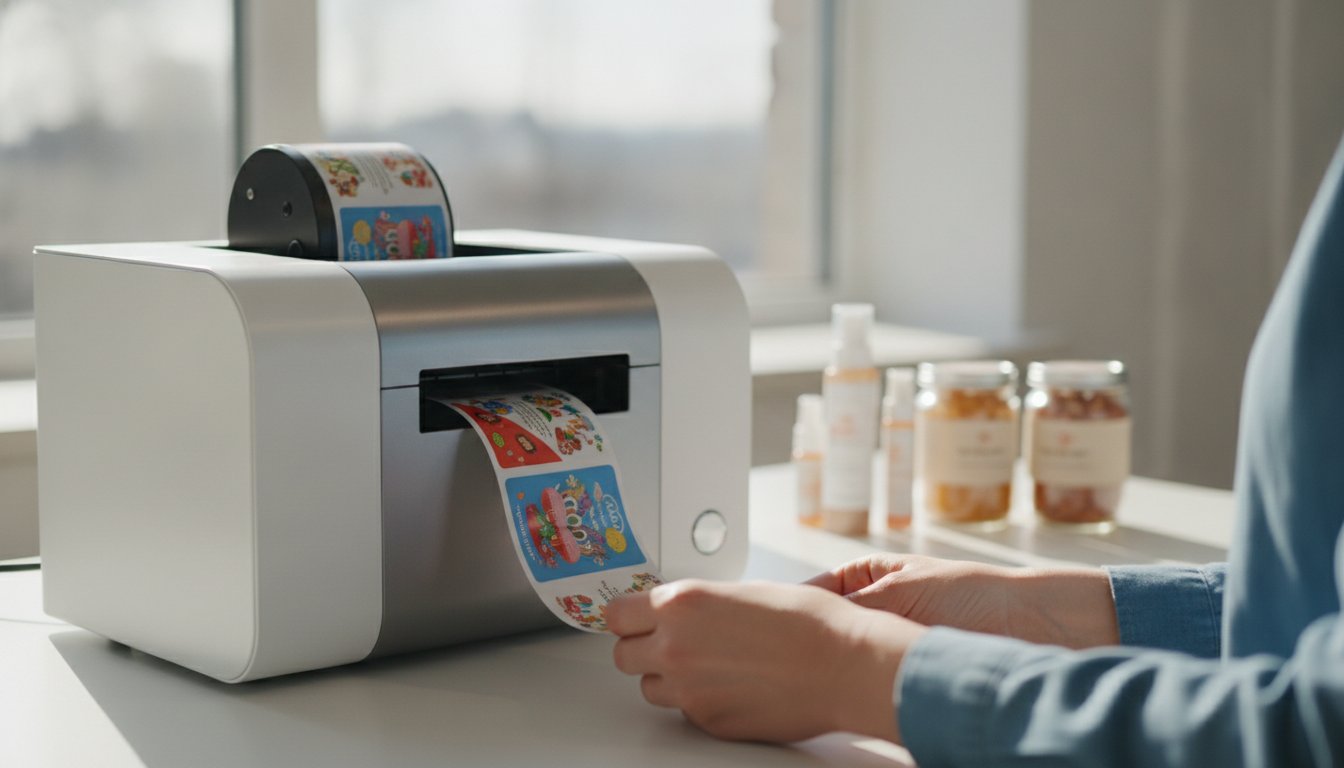
Why are you still paying a premium to wait weeks for labels that might be obsolete by the time they arrive? It’s a common frustration for growing brands. You likely agree that outsourcing small runs is a constant drain on your budget, especially when high minimum order quantities leave you with stacks of unused inventory. You need professional branding that doesn't smudge or fade, but you also need the flexibility to change your design at a moment's notice to stay competitive.
Finding the right label printer for product labels is the fastest way to professionalize your packaging while significantly lowering your long-term costs. In this 2026 buying guide, we’ll help you choose a solution that offers total production control and rivals the quality of any big-box competitor. We’ll preview the latest industry shifts, including the recent release of BarTender 12 and the impact of the EU Packaging and Packaging Waste Regulation. You'll learn how to identify the best technology for your specific volume, ensuring your new in-house setup is both future-proof and highly efficient.
Key Takeaways
- Learn how moving production in-house eliminates high minimum order quantities and slashes lead times from weeks to minutes.
- Understand the technical differences between vibrant color inkjet and durable thermal transfer to select the best label printer for product labels based on your branding needs.
- Discover how to match specialized printer features to specific industries, like moisture-resistant labels for food or high-resolution finishes for cosmetics.
- Calculate your true ROI by looking beyond the sticker price to account for ink consumption and long-term maintenance costs.
- Pinpoint the exact technical specs, like 1200 dpi resolution and max print width, that your business needs to stay competitive in 2026.
Why Switch to an In-House Label Printer for Product Labels?
Relying on external print houses is a bottleneck for agile businesses. You shouldn't have to wait weeks to see your new brand design on a physical bottle or box. Investing in a dedicated label printer for product labels changes the math of your business. It turns a logistical headache into a competitive advantage by putting you back in the driver's seat of your own production timeline.
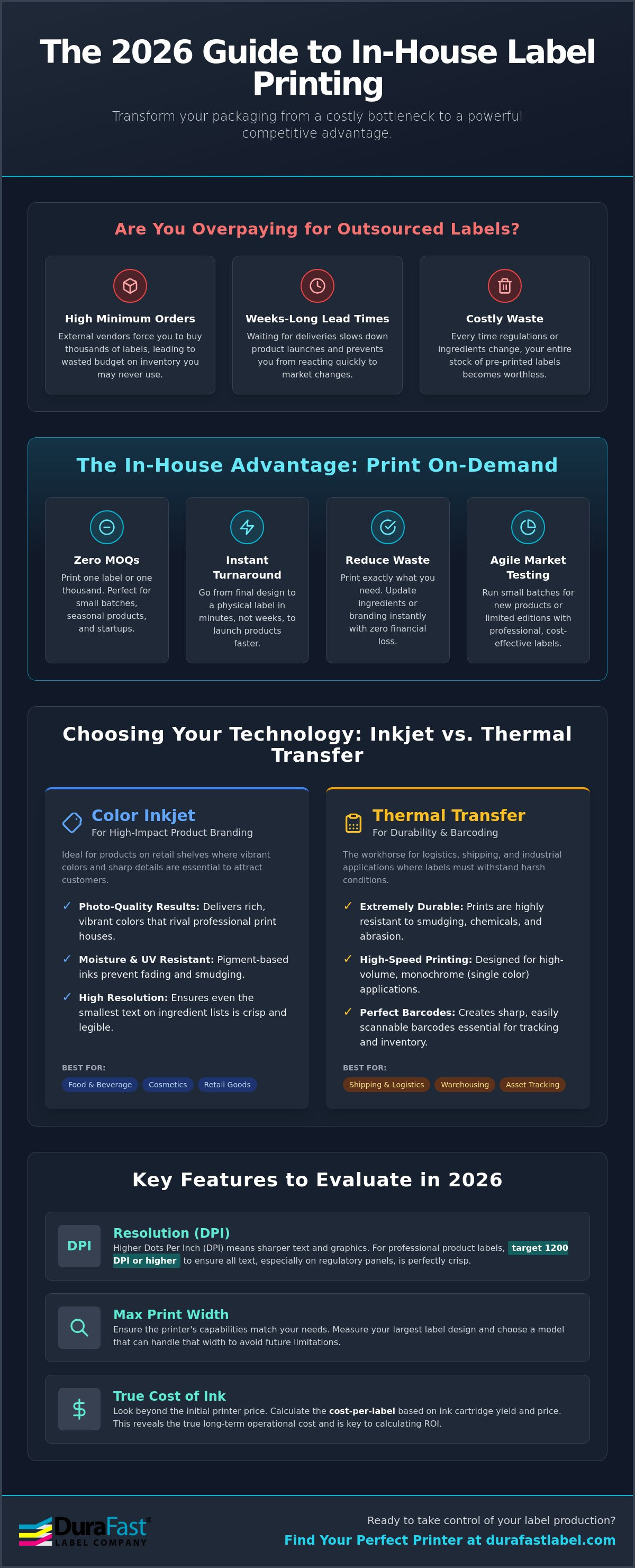
External vendors survive on high-volume runs. They often enforce minimum order quantities (MOQs) that force you to buy thousands of labels for a product that might only sell a few hundred units this month. This leads to "closet inventory," where thousands of dollars in pre-printed labels sit on shelves, slowly becoming obsolete. If you change an ingredient or a regulatory requirement changes, those labels go straight to the bin. By bringing this process in-house, you gain several immediate benefits:
- Zero MOQs: Print one label or one thousand for the same unit cost.
- Instant Turnaround: Launch new products on a Tuesday without waiting for a Friday delivery.
- Reduced Waste: Stop throwing away outdated labels every time a regulation changes.
- Market Testing: Run small "beta" batches of new scents or flavors with professional packaging.
The cost of this waste adds up fast. By printing on-demand, you only produce what you need for today's orders. This "just-in-time" approach keeps your cash flow healthy and your workspace clear of clutter. It also eliminates the stress of a three-week lead time. When you have the hardware on-site, you can go from a design file to a finished product in minutes.
The Death of the Minimum Order Quantity
Outsourcing small batches is becoming cost-prohibitive in 2026. As global regulations like the EU Packaging and Packaging Waste Regulation (PPWR) demand more specific material disclosures starting in August 2026, labels must be updated more frequently. In-house printing gives you the freedom to update ingredients or regulatory text instantly without wasting a single cent on old stock. It supports a lean manufacturing approach where your packaging evolves as fast as your product. While color label printers are the go-to for branding, many warehouses still utilize Thermal Printing Technology for high-speed, durable industrial tracking.
On-Demand Flexibility for Modern Brands
Inkjet vs. Thermal: Choosing Your Label Printing Technology
Choosing the right label printer for product labels depends entirely on where your product is going. Are you trying to catch a shopper's eye on a crowded retail shelf, or do you need a barcode that survives a cross-country shipping journey? These two goals require very different technologies. Understanding the trade-offs between color vibrancy, printing speed, and environmental durability is the first step toward a smart investment.
Color Inkjet Printers for High-Impact Branding
Color inkjet technology is the gold standard for primary product branding. Brands like Epson and Afinia dominate this space because they deliver photo-quality results that rival professional print houses. Unlike older consumer models, industrial color label printers use advanced pigment-based inks. These inks offer excellent moisture and UV resistance, which is critical if your products sit in a refrigerator or near a sunny window. When designing labels to meet Food Product Labeling Requirements, high-resolution inkjet is often the only way to fit mandatory text into a small space without losing clarity. High resolution (DPI) ensures that even the smallest font on your nutritional panel remains crisp and legible to the naked eye.
Thermal Transfer for Durability and Barcoding
If your priority is industrial ruggedness rather than full-color graphics, a thermal transfer label printer for product labels is the superior choice for back-end logistics. This technology uses a heated ribbon to melt a wax or resin image onto the label surface. It creates a bond that is incredibly resistant to scratching, chemicals, and extreme temperatures. For high-volume industrial tracking, a Zebra ZT411 is a workhorse that can run all day without overheating. These machines are the standard for warehouse tags, shipping labels, and UL-certified equipment labels where longevity is more important than aesthetics.
Direct thermal printing is a third option, but it's generally reserved for short-term logistics. Because it uses heat-sensitive paper rather than ink or ribbons, direct thermal labels eventually fade or darken when exposed to heat or light. They are perfect for 4x6 shipping labels that only need to last a few days, but they are not suitable for primary product branding. If you're unsure which technology fits your specific environment, our team can help you evaluate your label requirements to find the perfect match.
Matching Your Printer to Your Specific Product Category
A "one size fits all" strategy rarely works when choosing a label printer for product labels. Your choice depends heavily on the lifecycle of your product. A gourmet sauce bottle kept in a dry pantry has vastly different requirements than a craft beer bottle submerged in a cold ice bucket or a chemical drum stored outdoors. Matching the right printer technology to your specific industry ensures your branding remains intact from the production line to the customer's hand.
Cosmetics and health brands often prioritize the "no-label" look. This requires a printer capable of handling clear film substrates with high precision. Because these products frequently come into contact with oils and lotions, the ink must be smudge-proof and chemically resistant. Similarly, the cannabis industry faces strict regulatory hurdles. Labels must often include high-density data, such as lab results and QR codes, in a very small footprint. This makes high-resolution printing a necessity rather than a luxury.
Food, Beverage, and Specialty Gourmet
Appetite appeal is everything in food retail. You need a printer that produces vibrant, saturated colors to make your packaging pop on the shelf. However, beauty isn't enough. Many food products require refrigeration or face high-moisture environments. Using high-quality inkjet labels designed for pigment-based printers ensures your graphics don't bleed or peel when things get damp. Whether you are labeling artisanal jams or refrigerated juices, your label printer for product labels must handle the environmental stress of the cold chain.
Industrial and GHS Chemical Labeling
In the industrial sector, compliance is the top priority. If you manufacture chemicals, your labels must meet GHS (Globally Harmonized System) standards. The Epson ColorWorks C6000A is currently the leader for chemical compliance because it is designed specifically for these high-stakes environments. When you pair this machine with DuraFast Matte Chemical Labels, you achieve BS5609 certification. This means your labels can survive immersion in seawater and extreme UV exposure without fading or losing adhesion. It’s about more than just branding; it's about safety and long-term durability in the harshest conditions imaginable.
Key Features to Evaluate Before You Invest
Buying a label printer for product labels is a long-term investment in your brand's image. While price is always a factor, the technical specifications of the machine determine whether your packaging looks professional or amateur. You need to look past the marketing fluff and focus on the four pillars of printer performance: resolution, width, speed, and software integration. Getting these right today prevents you from needing a costly upgrade six months down the line.
Print resolution is your most important metric for branding. In 2026, 1200 dpi has become the industry benchmark for professional product labels. This high resolution allows you to print vibrant, photographic images and incredibly sharp text. If your product requires a lot of fine print, such as a long list of organic ingredients or complex regulatory warnings, anything less than 1200 dpi can result in blurry, unreadable characters that hurt your credibility.
You also need to match the maximum print width to your largest container. If you sell 5-gallon pails but buy a printer with a 4-inch maximum width, you'll be stuck with undersized labels that look out of place. Conversely, if you only sell small essential oil bottles, a wide-format press might be overkill. Always choose a machine that offers a bit more width than you currently need to allow for future product expansions.
Media Versatility and Material Support
Can your printer handle the specific materials your brand requires? A high-quality printer should work seamlessly with gloss, matte, and synthetic stocks. If you want to use unique shapes like circles, stars, or custom die-cuts, look for a machine with a moveable sensor. This feature allows the printer to detect the edges of non-rectangular labels accurately. For businesses needing heavy-duty, scratch-resistant media for industrial environments, thermal transfer label printers remain the most reliable choice for handling specialty synthetics.
Software and Ease of Operation
Hardware is only half the battle; your design tools must talk to your printer without errors. BarTender Professional, specifically the latest BarTender 12 released in March 2026, is the industry standard for a reason. It offers the best balance of powerful design features and "Plug and Play" simplicity. You want a system that makes managing ink or ribbon changes easy so your team doesn't face technical downtime during a busy production run. If you're feeling overwhelmed by the technical specs, you can speak with our experts to find the right configuration for your workflow.
Calculating the ROI of In-House Label Production
Many business owners focus solely on the sticker price of a new machine. While the initial cost matters, the real value of a label printer for product labels is found in its long-term return on investment (ROI). You have to look at the total cost of ownership. This includes the hardware, the price of media, the efficiency of ink consumption, and the time saved by your team. When you stop paying for rush shipping and setup fees from external printers, the equipment often pays for itself within the first year of operation.
Think about your current inventory waste. When you order 5,000 labels but only use 3,200 before a design change, those remaining 1,800 labels are pure lost profit. In-house production allows for exact-count runs. You print exactly what you need for today's shipments. This zero-waste approach frees up capital that would otherwise be sitting on a shelf. It also allows you to be more aggressive with seasonal promotions or limited-edition launches because the cost of entry is essentially zero. You aren't just saving money; you're gaining the agility to outmaneuver larger competitors.
Estimating Ink and Consumable Costs
Pigment ink efficiency varies significantly between brands. Some machines use more ink during cleaning cycles, while others are optimized for high-volume output. High-capacity ink tanks are a major advantage for reducing your cost-per-label. They lower the frequency of replacements and usually offer a better price-per-milliliter than small cartridges. Most modern manufacturers provide specialized cost-estimator software that allows you to upload your design and verify exact ink costs before you even hit print. This transparency helps you price your products more accurately and manage your margins with confidence. By understanding these variables, you can select a label printer for product labels that fits your specific volume requirements.
Getting Started with DuraFast Label Company
Selecting the right hardware is easier when you have a specialized partner. Big-box retailers often lack the technical expertise to help you match a printer to a specific substrate or environment. As a dedicated North American provider, we focus on finding the perfect balance between hardware, software, and specialized media. We've vetted the best color label printers on the market to ensure our customers get reliable, high-performance solutions. Whether you need an entry-level desktop unit or a high-speed industrial press, we help you navigate the technical details. Our goal is to ensure your transition to in-house printing is a seamless, stress-free experience that helps your brand thrive.
Take Control of Your Brand's Production Today
Transitioning to an in-house label printer for product labels is more than a cost-cutting measure; it's a strategic move for any brand looking to stay agile in 2026. You've seen how the right technology can eliminate minimum order quantities, slash lead times, and ensure total compliance with evolving standards like GHS and BS5609. Whether you need the photographic brilliance of inkjet or the industrial durability of thermal transfer, the power to print exactly what you need is now within your reach.
As an Authorized Epson and Afinia Diamond Partner, DuraFast Label Company is here to help you navigate these technical choices with ease. We specialize in complex compliance requirements and provide dedicated North American support with fast shipping on all consumables. Don't let external print houses dictate your launch schedule or drain your margins any longer. Our team is ready to help you find the perfect balance of hardware, software, and media for your unique product line.
Ready to see the difference for yourself? Browse the best product label printers of 2026 at DuraFast and find the perfect match for your business today. It's time to professionalize your packaging and take your branding to the next level.
Frequently Asked Questions
Is it cheaper to print my own product labels or buy them?
Yes, printing in-house is typically more cost-effective for small to medium batches because you eliminate high setup fees and minimum order quantities. You also save on inventory waste. Instead of discarding thousands of pre-printed labels when a recipe or regulation changes, you only print what you need for today's orders. This agility protects your margins and keeps your cash flow healthy.
What is the best label printer for a small business starting out?
The Primera LX series or an entry-level Epson ColorWorks model is often the best choice for new businesses. These machines offer a lower entry cost while providing the professional 1200 dpi resolution needed for retail branding. They are compact enough for a small office and easy to operate without extensive technical training. These models provide a reliable starting point before scaling to higher-volume industrial equipment.
Do I need special ink for labels that will be refrigerated?
Yes, you should use pigment-based inks and synthetic media for any product kept in cold or damp environments. Unlike dye-based inks, pigment inks are highly resistant to moisture and smudging. This ensures your branding remains crisp and legible even after weeks in a refrigerator or ice bucket. Pairing the right ink with a moisture-resistant label printer for product labels is essential for food and beverage brands.
Can I print on transparent or "clear" labels with these printers?
Yes, many inkjet and thermal printers can handle clear or transparent media to achieve a "no-label" look. This is a popular choice for cosmetics and specialty beverages where you want the product to show through the packaging. Just ensure your printer has a moveable sensor. This feature allows the hardware to detect the gaps between labels on a clear liner accurately.
How do I ensure my barcodes are scannable every time?
Consistency starts with high print resolution and professional design software. Use a printer with at least 300 dpi for thermal or 1200 dpi for inkjet to ensure sharp, distinct lines. Software like BarTender Professional automatically calculates the correct quiet zones and bar widths to meet global GS1 standards. This prevents frustrating scanning errors at the checkout counter or in the warehouse.
What software do I need to design professional product labels?
BarTender Professional is the industry standard for creating complex, data-driven labels. It allows you to integrate barcodes, nutritional panels, and variable data seamlessly. While you can use basic graphic design tools, dedicated labeling software ensures your designs are correctly formatted for the specific technical requirements of your hardware. It helps you manage compliance and design updates without technical downtime.
Can one printer handle both shipping labels and product labels?
Technically, a high-quality label printer for product labels can print shipping labels, but it isn't always the most efficient workflow. Swapping between expensive color media and cheap thermal shipping rolls takes time and creates unnecessary waste. Most businesses find it more productive to use a dedicated thermal printer for logistics and a color inkjet for their primary product branding.
What is the difference between a label maker and a product label printer?
Label makers are generally handheld or desktop devices designed for basic organization, such as filing or shelf labeling. Product label printers are industrial-grade machines built for high-resolution graphics and high-volume production. They handle wider media, print much faster, and use specialized inks that are durable enough for retail shelves and harsh shipping environments. They are designed to create the high-impact branding that drives sales.