Thermal Transfer Tags: The 2026 Guide to Heavy-Duty Industrial Tagging
24th Sep 2026
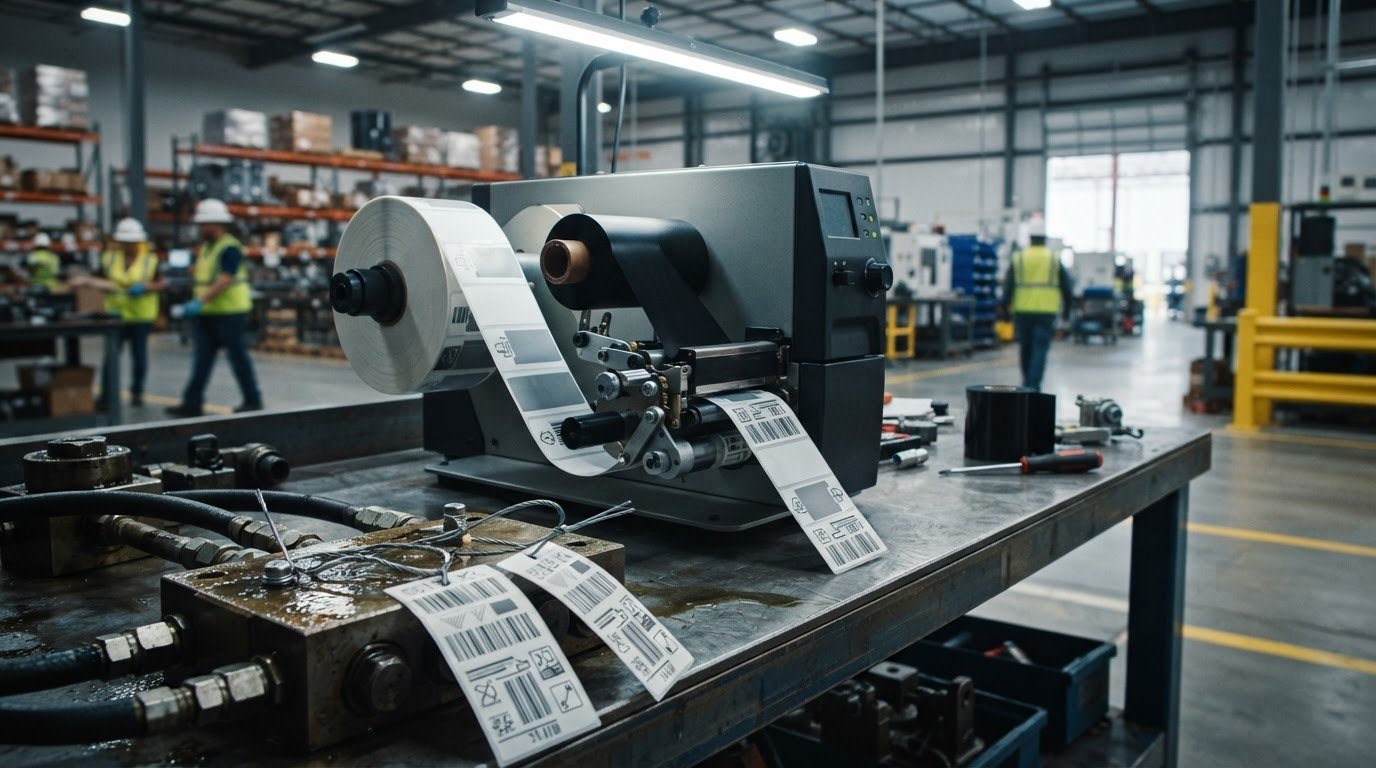
The toughest barcode printer in your plant cannot protect an inventory tag that was doomed before it left the floor. If you have ever watched standard adhesive labels curl off oily steel, fade under direct sunlight, or shred during transit, you know the frustration firsthand. Heavy-duty thermal transfer tags solve these adhesion failures, but keeping barcodes readable outdoors requires more than just loading synthetic stock into your machine.
Durability depends entirely on three elements working together: your tag substrate, your ribbon chemistry, and your printer's media sensors. In this guide, you will discover how to match rugged stocks like Tyvek and tear-proof Valeron with the exact wax-resin or pure resin ribbons your environment demands. You will also learn how to calibrate gap and notch sensors on your in-house printers to stop feed jams and barcode misreads for good. Let's walk through the exact material pairings and printer configurations that keep your assets traceable in extreme conditions.
Key Takeaways
- Replace peeling stickers on rough or oily equipment by switching to durable thermal transfer tags fastened with ties, wire, or staples.
- Match your environmental exposure to the right substrate, from economical indoor cardstock to tear-proof Tyvek and puncture-resistant Valeron.
- Prevent barcode flaking and scuffs by pairing synthetic media with wax-resin or full-resin ribbons engineered for high friction.
- Calibrate transmissive notch and reflective black-mark sensors properly to eliminate tracking alignment errors and printer feed jams.
- Choose industrial hardware with the motor torque and core capacity needed to handle heavy-gauge rolls during high-volume print runs.
What Are Thermal Transfer Tags and How Do They Differ from Labels?
Every industrial tracking setup faces surfaces where pressure-sensitive labels fail. Greasy machinery parts, rough-sawn lumber, woven textiles, and outdoor steel reject standard adhesives. This is where thermal transfer tags step in. Unlike adhesive labels, tags are non-adhesive, heavy-gauge media engineered from cardstock or synthetic films. Instead of relying on a chemical bond to stick to an asset, they attach mechanically using wire, plastic fasteners, zip ties, or heavy staples.
The imaging method defines their durability. Through Thermal-transfer printing, a heated printhead melts ribbon ink directly into the pores or synthetic coating of the tag substrate. This creates crisp barcodes and text that resist moisture, high heat, and abrasive handling for years, unlike direct thermal media which darkens under heat or sunlight.
The Core Mechanical Differences Between Tags and Labels
Removing the adhesive backing changes how media runs through your printer and performs in the yard:
- No liner waste or adhesive bleed: Pressure-sensitive labels carry silicone release liners that create physical waste. Under printhead heat, adhesive can ooze past the edge, gumming up platen rollers. Tags run clean without sticky buildup.
- Higher caliper tensile strength: Tags feature significantly thicker materials, usually ranging from 7 to 14 mils. This structural thickness prevents eyelets from tearing out when media hangs under heavy wind or mechanical vibration.
- Two-sided printability: Because tags lack release liners, you can print on both faces. Operators print scannable barcodes on the front while adding batch tracking numbers, handling warnings, or inspection checklists on the back.
Primary Industrial Applications Demanding Non-Adhesive Tags
Non-adhesive tags solve identification challenges in several rugged operational environments:
- Commercial horticulture: Tree nurseries and greenhouses require tear-resistant, UV-stable pot stakes and wrap-around tags that survive automated overhead watering, soil friction, and full sun exposure.
- Metals and forestry: Steel yards track hot-rolled coils, structural beams, and timber bundles where surface moisture, rust, or grease would strip adhesive backing within minutes.
- Apparel and textile finishing: Garment makers utilize heavy cardstock hangtags to display pricing and production lot numbers without leaving gummy residue on fabrics.
Review our broad selection of thermal transfer tag options to find media built for your specific physical handling conditions, or compare them against labels direct thermal alternatives for temporary indoor tracking needs.
Substrate Engineering: Choosing Paper, Tyvek, and Valeron Tag Stocks
Selecting the right base material prevents tracking failures before tags ever reach the field. If you select a substrate that cannot handle your yard's mechanical tear stress, moisture, or ultraviolet radiation, your tracking chain breaks down. High-performance thermal transfer tags rely on precise substrate engineering matched to your facility's physical hazards. Always verify stock caliper thickness against your printer feed specifications, as rigid media above 10 or 12 mils can cause feed slips on light-duty platen rollers.
For applications needing formal compliance, materials often align with test protocols like the UL 969 Standard for Marking and Labeling Systems to verify resistance against outdoor weather, heat aging, and mechanical abrasion.
Heavyweight Paper Cardstock for Indoor Inventory
Heavy cardstock tags, typically measuring 7-point to 10-point caliper, provide an economical answer for climate-controlled warehousing. These smooth paper stocks accept low-temperature wax ribbons easily. They deliver crisp barcode edges for short-term retail staging, staging bins, equipment repair intake, and dry asset inspection. However, paper stocks absorb humidity and tear easily under mechanical tension, making them unsuitable for wet or outdoor storage.
Tyvek Tags for Moisture and Tear Resistance
Spunbonded high-density polyethylene fibers give Tyvek its balance of light weight and high tensile strength. Water rolls off without softening the core, preventing rot and mildew during prolonged outdoor storage. The pliable composition flexes through rough transit without snapping zip ties or pulling out at punched eyelets. Tyvek provides dependable tracking for outdoor staging, nurseries, and wet production floors where standard paper would disintegrate.
Valeron and Polyolefin for Extreme Outdoor Durability
Cross-laminated Valeron represents the gold standard for severe industrial punishment. Built by cross-laminating two continuous high-density polyethylene films, it stops tear propagation completely. Even if punctured by heavy industrial staples, steel banding, or rough wire, the material will not run or rip free.
Valeron withstands intense UV exposure, rough handling in structural steel fabrication yards, and lumber bundling without brittle fracture. Paired with pure resin ribbons, it keeps barcode lines scan-ready against chemical washdowns and prolonged outdoor exposure.
If you need help selecting the right synthetic stock or confirming your printer can feed heavy-gauge materials, talk with our media specialists to test sample stocks in your workflow.
Pairing Thermal Transfer Tags with the Right Ribbon Formulations
Pairing the wrong ribbon chemistry with your tag substrate causes immediate printing headaches. If you run a standard wax ribbon on smooth synthetic Tyvek or Valeron tags, the ink simply sits on top of the non-porous film. A single thumb swipe or rough scrape during pallet loading will flake or smudge the barcode completely. Printing legible, scannable barcodes on thermal transfer tags requires matching ribbon melting points and chemical resins to your chosen stock.
Heavy tag stocks also demand careful printer heat calibration. Thick calipers absorb thermal energy faster than thin labels. Operators often make the mistake of cranking the darkness setting to maximum, which burns through thin ribbon backings and causes ribbon snapping. Instead, dial in printhead energy progressively, adjusting print speed downward to let heavier polymers accept the transferred ink cleanly.
Wax Ribbons for High-Speed Paper Tag Printing
Wax formulations melt at lower temperatures, which minimizes wear on printhead heating elements. When heated, the wax melts quickly and wicks deep into the cellulose matrix of uncoated paper tags. This bond is ideal for high-speed carton tagging, short-term retail hangtags, and indoor parts routing. Don't use wax ribbons on synthetics, however, since wax cannot bond to plastic films and will rub off under minimal friction.
Wax-Resin Blends for Intermediate Durability
Wax-resin ribbons combine moderate heat flow with the mechanical hardness of synthetic resin. They create crisp, scratch-resistant text on coated cardstocks, polypropylene tags, and treated horticultural tags. If your tags face conveyor scuffs, morning condensation, light outdoor staging, or garden nursery watering, wax-resin blends prevent image degradation without requiring extreme printhead heat.
Full Resin Ribbons for Harsh Environment Tracking
Pure resin ribbons are engineered specifically for synthetic stocks like Tyvek, cross-laminated Valeron, and polyester. The printhead must operate at higher heat settings to liquify the resin base, which cross-links directly with the synthetic tag surface. Once cured, the barcode resists severe industrial chemicals, including:
- Engine oils, lubricants, and transmission fluids
- Hydraulic fluid and harsh industrial degreasers
- Salt spray, prolonged rainfall, and continuous UV exposure
- Heavy abrasive contact along metal chain hoists and flatbed trailers
Make sure your barcode scan rates stay consistent by exploring our certified line of thermal transfer ribbons, matched specifically for both paper and synthetic tag media.
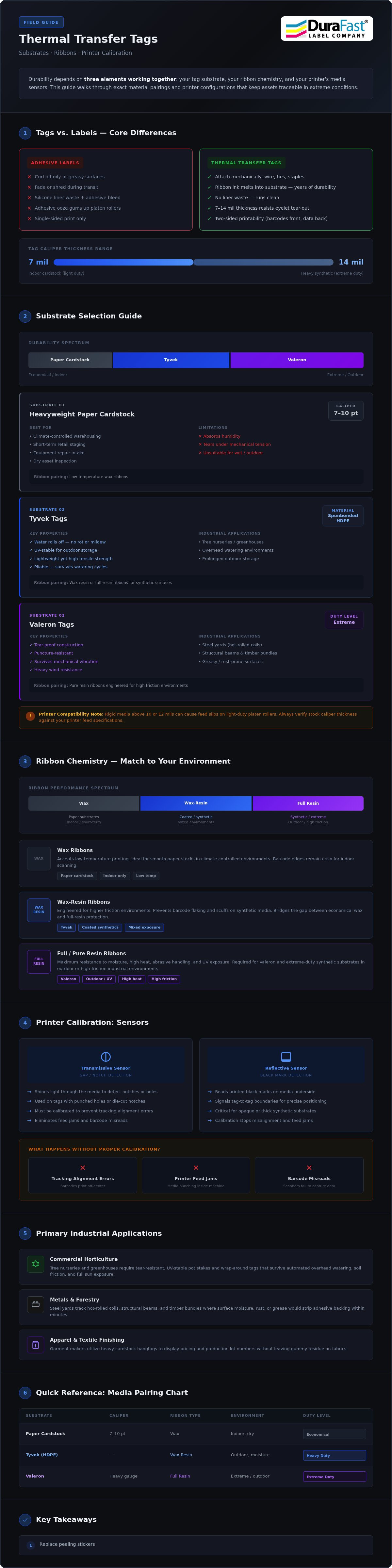
Printer Calibration and Sensing: Notches, Holes, and Black Marks
Adhesive labels feed predictably because optical sensors easily spot the translucent gap between die-cut labels on a backing liner. Non-adhesive thermal transfer tags lack this carrier web entirely. Since there is no gap to read, your printer must rely on physical notches, punched feed holes, or infrared-reflective black lines to track tag boundaries. Misaligned sensors cause skipped tags, drifting print registration, and sudden paper-out errors that halt production runs.
Aligning Transmissive Sensors for Notched and Die-Cut Tags
Transmissive optical sensors use an upper light emitter and a lower receiver to identify breaks in media opacity. When running notched edge tags or center-punched synthetic stocks, you must physically slide the sensor bracket directly over the notch opening. If the beam rests even two millimeters off-center, the sensor reads solid material and feeds continuously without stopping. Once aligned, perform a manual calibration through your printer menu so the sensor firmware learns the exact light threshold between the tag body and the cut hole.
Reflective Black Mark Sensing on Heavy Cardstock
Dense paper cardstock and opaque multi-layer synthetics block transmitted light completely. These materials require reflective sensing, where an optical beam bounces off a high-density black bar pre-printed across the underside of the stock. For reliable indexing, check these conditions:
- Position the bottom sensor directly beneath the path of the printed timing mark.
- Avoid colored tag backings or reflective coatings that reflect stray light into the detector.
- Verify mark width meets your printer hardware specifications, typically a minimum of 3 mm.
For more details on matching media sensors to your hardware, check our guide to thermal label printer selection.
Optimizing Printhead Pressure and Darkness Settings
Tag media routinely measures between 7 and 14 mils thick, which creates far more physical resistance than standard labels. To prevent feed slippage, adjust your printhead toggle cams inward. Increasing mechanical pressure ensures even contact across the entire width of heavy cardstock, preventing faint print on the outer edges.
Dial darkness settings up gradually rather than jumping straight to high heat. Excessive temperature melts the face of synthetic thermal transfer tags during slower feed cycles. Regular maintenance matters too. Heavy cardstock sheds cellulose debris as it passes the tear bar, so clean your platen rollers and sensor eyes with isopropyl alcohol at every ribbon change.
If your media keeps skipping or showing registration drift, contact our technical support team for assistance with sensor calibration and roll testing.
Selecting Industrial Hardware and Supplies for In-House Tag Printing
Printing high-volume thermal transfer tags requires hardware with enough mechanical torque to feed thick media rolls without stalling. While standard adhesive label rolls spin freely on lightweight spindles, high-caliper synthetic rolls add significant rotational weight. Choosing the right printer class, media feed accessories, and matched ribbon supplies ensures your in-house tagging workflow runs reliably from day one.
Industrial vs Desktop Printers for Heavy Tag Media
Industrial platforms like the Zebra ZT411 or Godex industrial barcode printers feature cast-aluminum frames and high-torque motors built to pull large 8-inch outer diameter tag rolls on 3-inch cores. Their heavy-duty drive assemblies maintain consistent web tension, pulling dense tag stock across the platen roller without motor hesitation or registration slippage.
In contrast, desktop thermal printers suit lighter seasonal runs, such as nursery pot stakes or temporary retail ticketing. Because compact desktop models only hold smaller rolls on 1-inch cores, running heavy materials often requires external unwinder stands or fanfold feeding. Evaluate commercial machinery in our industrial label printer roundup to match printhead width and throughput to your plant's volume.
Tag Media Handling Accessories: Cutters and Rewinders
Managing continuous tag stock requires specialized hardware options at the printer exit path. Without pre-perforated lines, heavy synthetic thermal transfer tags like Valeron will not tear cleanly by hand. Installing a heavy-duty rotary cutter cleanly slices individual tags or multi-part sets on demand without dulling blades or jamming the chute.
When tags need batch sorting or transport to remote workstations, internal rewind hubs wind finished tags onto take-up cores for neat distribution. If you run ultra-high volumes, rear feed slots let you pull fanfolded tag cartons directly from behind the chassis, avoiding frequent roll changeovers.
Source Tested Tag Media and Ribbon Bundles
Eliminating barcode scanning errors comes down to sourcing matched, validated media. DuraFast Label Company supplies durable Tyvek, tear-proof Valeron, and heavy cardstock tag media alongside compatible wax-resin and pure resin ribbons. Testing your ribbon formulation against specific tag stocks in advance prevents unexpected flaking, scanning bottlenecks, and downtime.
Whether you need help setting up moveable transmissive sensors or selecting hardware for tough industrial environments, browse our complete catalog of direct thermal and transfer tags and printers to build a dependable tracking system in-house.
Upgrade Your Industrial Tagging Workflow Today
Reliable asset identification in demanding environments comes down to three operational decisions. You must select heavy-duty substrates matched to your yard's mechanical stress, pair them with the right ribbon chemistry to lock in barcode sharpness, and calibrate optical sensors to avoid feeding faults. Implementing durable thermal transfer tags ensures your critical batch and serial data survives rain, oil, and rough transport without scanning failures.
DuraFast Label Company makes building that workflow simple. As an authorized distributor for industry leaders like Zebra, Godex, and TSC, we supply complete in-house systems. We stock heavy cardstock, tear-proof Tyvek, and puncture-resistant Valeron tag rolls, all engineered to pair with our certified wax-resin and full resin ribbons. If you are ready to eliminate indexing jams and lost inventory, contact our media specialists today to request tag samples and build a dependable tracking system for your facility.
Frequently Asked Questions
What is the main difference between a thermal transfer tag and a label?
The fundamental difference is the adhesive backing. Labels use a pressure-sensitive adhesive layer mounted to a disposable release liner. In contrast, thermal transfer tags are non-adhesive, heavy-gauge media fastened with wires, zip ties, or staples. Because tags lack sticky liners, they produce zero liner waste and eliminate adhesive bleed inside the printer. They are ideal for rough, oily, or unbonded surfaces where chemical adhesives fail to form a reliable grip.
Can I print thermal transfer tags on a standard desktop barcode printer?
Yes, you can print tags on desktop units, but roll size and caliper create limits. Most desktop printers accept rolls on one-inch cores up to five inches in outer diameter. Because heavy tag media is thick, rolls contain fewer tags and run out quickly. You will need external unwinder stands or fanfolded media boxes to handle larger volumes without stalling the smaller feed motor. Check that your printer's platen roller handles stock above seven mils.
Which tag material should I choose for outdoor lumber or steel storage?
Cross-laminated Valeron is the top choice for outdoor timber yards and structural steel yards. Valeron resists heavy tears, puncture stress from industrial staples, and rough chain rigging. It maintains structural strength through continuous UV exposure, winter frost, and heavy rainfall without becoming brittle. If your yard experiences high-friction wind or rough transport, Valeron prevents tags from ripping away from bundles, keeping raw materials identifiable and traceable from processing through final delivery.
Why does my thermal printer show an out-of-paper error when feeding tags?
This error occurs when your optical media sensor is misaligned or configured incorrectly in the driver. Tags don't have translucent gaps, so printers set to gap sensing think the roll has ended. Switch your printer settings to transmissive for notched tags or reflective for black marks. Then, physically slide the optical sensor assembly directly over the notch cut or the pre-printed timing mark on the underside of the media before running a manual sensor calibration.
Do thermal transfer tags require full resin ribbons, or is wax sufficient?
Ribbon selection depends entirely on your tag substrate. Standard wax ribbons work well for porous cardstock tags used in dry indoor storage. However, synthetic thermal transfer tags made from Tyvek or Valeron require wax-resin blends or full resin ribbons. Wax cannot chemically bond to plastic films, causing printed text to smear or flake off under light friction. Harsh outdoor environments and chemical exposures demand pure resin ribbons to guarantee barcode scan readability.
What is the difference between Tyvek and Valeron for heavy-duty tags?
While both materials are durable synthetics, their construction creates different physical strengths. Tyvek is made from spunbonded high-density polyethylene fibers, making it lightweight, flexible, and waterproof. Valeron uses a cross-laminated film design that provides extreme puncture resistance. While Tyvek can tear once nicked with a sharp blade or heavy staple, Valeron prevents tear propagation entirely, making it superior for bundling rough steel, sharp metal coils, and heavy building lumber.
How do printer sensors detect tag separation without a label liner?
Printers use two specialized optical methods to detect tag separation. Transmissive sensors project a beam of light through edge die-cut notches or centered punch holes, indexing the tag when the light beam breaks through the opening. Alternatively, reflective sensors bounce infrared light off the back of the media, registering high-contrast black timing bars printed between tags. Both methods provide precise start-and-stop coordinates without needing a separate translucent carrier liner.
Can thermal transfer tags be printed on both sides?
Yes, tags can be printed on both sides because they lack adhesive backing and silicone liners. Standard industrial printers allow you to print batch information on the front, let the roll feed through, and reload it to print handling instructions or safety warnings on the reverse face. For automated, high-speed lines, dedicated dual-printhead thermal printers can image both sides simultaneously in a single pass, saving labor and keeping tags perfectly synchronized.