Thermal Transfer vs. Direct Thermal: The 2026 Professional Selection Guide
11th Aug 2026
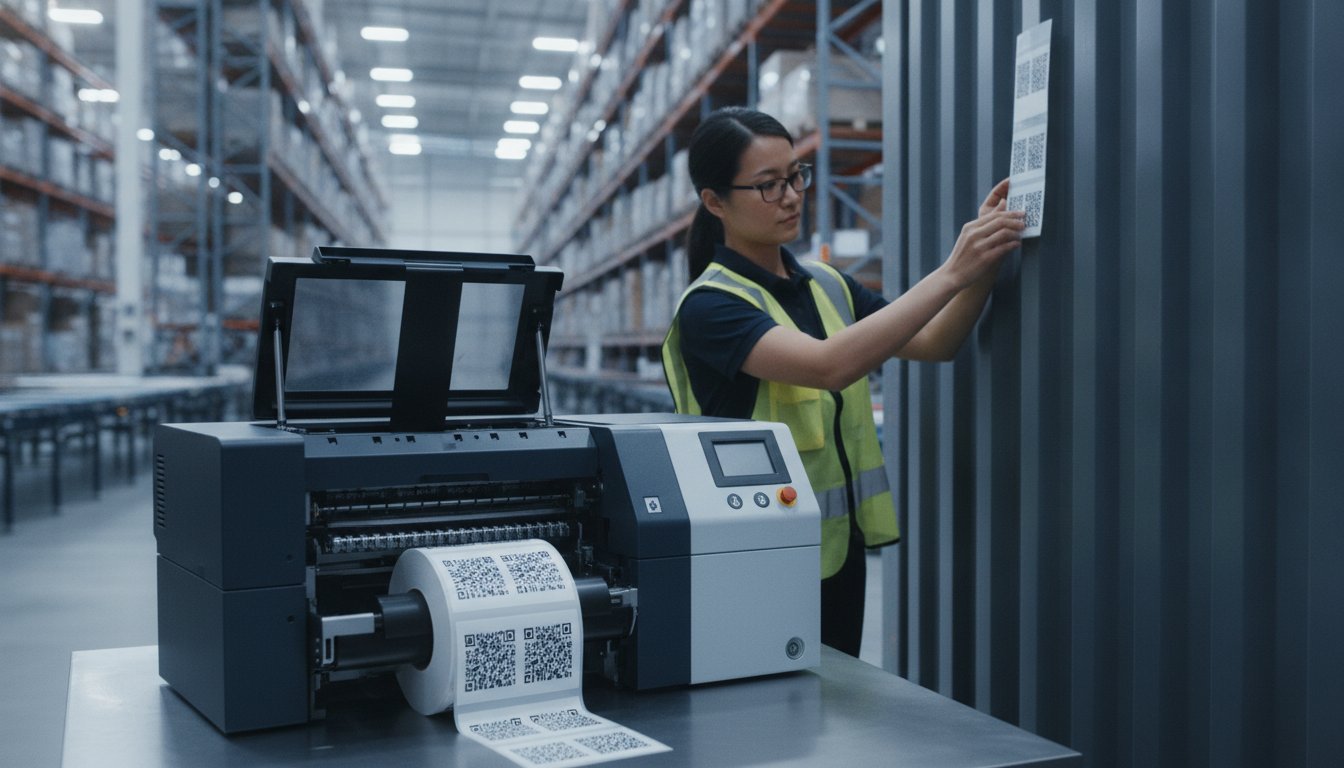
Is the "cheaper" printer actually costing you double in replacement printheads and lost shipments? Many businesses choose a labeling method based on the upfront price tag, only to find their barcodes fading before they even reach the customer. It's a frustrating cycle of wasted media and premature hardware wear that eats into your margins. You deserve a setup that's reliable from the first print to the final delivery.
We understand you want a solution that stays simple and functional. Whether you're managing high-volume shipping or long-term asset tracking, the choice between thermal transfer vs direct thermal comes down to your specific environment. This guide will help you master the technical differences so you can choose the most cost-effective and durable solution for your business.
You'll learn about the total cost of ownership, the impact of the 2026 GS1 General Specifications update, and how to select hardware like the Zebra ZT411 that scales with your growth. We'll break down ribbon compatibility and media durability to ensure your labels remain readable throughout the entire supply chain.
Key Takeaways
- Identify the best printing method for your specific environment by comparing the durability and lifespan of thermal transfer vs direct thermal labels.
- Calculate the true cost of ownership by evaluating the trade-offs between specialized heat-sensitive media and the combination of ribbons and standard labels.
- Protect your equipment investment by learning how ribbon usage in thermal transfer systems can extend the life of your printhead compared to direct contact methods.
- Streamline your logistics or product branding by matching industry-standard hardware, like the Zebra ZT411, with specialized software for accurate data management.
- Future-proof your supply chain by aligning your technology choice with the latest 2026 GS1 specifications and the industry shift toward 2D barcodes.
Understanding the Basics: What is the Difference Between Thermal Transfer and Direct Thermal?
Choosing between thermal transfer vs direct thermal starts with understanding how each technology handles heat. While both methods fall under the umbrella of Thermal printing, they solve different business problems. One is built for speed and simplicity in the warehouse. The other is designed for longevity and resilience in harsh environments. The most obvious physical difference is the ribbon. If your printer uses a roll of ink-coated film, it's thermal transfer. If it only uses a roll of paper, it's direct thermal.
The Core Mechanism of Direct Thermal Printing
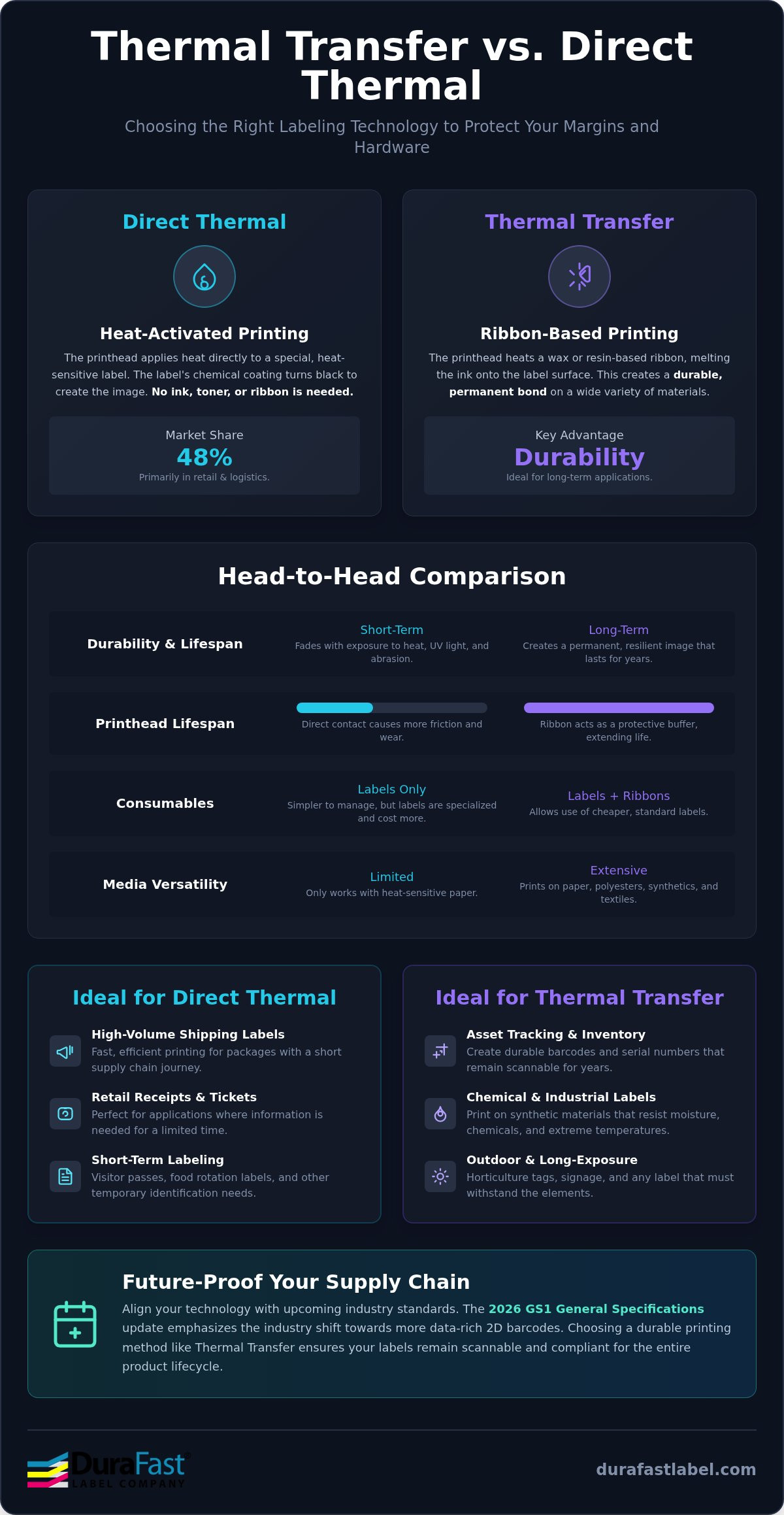
Direct thermal printing is a streamlined process that doesn't require ink, toner, or a ribbon. Instead, the chemistry is right in the paper. We call these direct thermal labels, and they're designed with a heat-sensitive topcoat. When the printhead applies heat, the coating blackens to create your text or barcode. This technology currently leads the market with a 48% share, primarily due to its efficiency in retail and logistics.
This method is the go-to choice for high-volume, short-term applications. Think about the shipping labels on your e-commerce packages or the receipts you get at the grocery store. It's fast and efficient because you only have one consumable to manage. However, this simplicity comes with a trade-off. Direct thermal prints are sensitive to environmental factors. Over time, exposure to high heat, bright sunlight, or even heavy abrasion will cause the image to fade or the entire label to darken.
The Core Mechanism of Thermal Transfer Printing
Thermal transfer printing takes a more robust approach to creating an image. This method requires a thermal transfer ribbon to act as the intermediary. The printhead doesn't touch the label directly. Instead, it heats the back of the ribbon, melting the ink onto the label surface. This creates a permanent bond that is far more durable than direct thermal methods. It's the professional standard for labels that must survive for years, not just days.
Because the ink is transferred from a ribbon, you aren't limited to heat-sensitive paper. You can print on synthetics, polyesters, and even specialized textiles. This versatility makes thermal transfer essential for several specific needs:
- Long-term asset tracking and inventory management.
- Outdoor signage and horticulture tags exposed to UV light.
- Chemical drum labeling using DuraFast Matte Chemical Labels.
- Jewelry ring labels that must resist oils and cleaning solutions.
The ribbon also acts as a protective barrier, reducing friction between the printhead and the label material. This often results in a longer equipment lifespan for industrial units. Understanding the fundamental split in thermal transfer vs direct thermal technology ensures you don't overspend on supplies or suffer from labels that fade in the supply chain.
How Each Technology Works: The Science of Heat and Ribbons
The printhead is the engine of any thermal system. It features a dense row of microscopic heating elements, often called resistors, that fire in rapid sequences. These elements generate the exact amount of thermal energy needed to create dots, which then form your text, graphics, and barcodes. To maintain high print quality, the platen roller acts as the unsung hero. This rubberized cylinder provides constant back-pressure, pulling the media across the printhead at a steady speed. Without a perfectly aligned platen roller, you would see ghosting or distorted barcodes that fail to scan.
The Direct Thermal Chemical Reaction
Direct thermal printing relies on a sophisticated chemical topcoat rather than external ink. Leuco dyes are the heat-sensitive coating used in ribbonless printing. When the resistors in the printhead warm these dyes, they undergo a structural change and turn black instantly. This process is incredibly efficient for high-volume tasks because there are no ribbons to change or align. However, since the chemistry remains active on the label surface, the media stays reactive to its environment. Direct thermal labels will often yellow or fade when exposed to UV light, high temperatures, or heavy friction. This is why a shipping label might become unreadable if it sits in a hot delivery truck for too long.
The Thermal Transfer Fusion Process
The thermal transfer method uses a fusion process to create a permanent image. Instead of changing the paper's chemistry, the printhead melts an ink layer from a thin carrier ribbon onto the label substrate. This allows for a much wider range of media compatibility, including plastics, films, and polyesters. The success of this process depends on specific ribbon dynamics. You must choose between wax, resin, or wax-resin blends based on your label material. Wax is the standard for paper, while resin is required for maximum durability on synthetics that face chemical exposure.
Engineered consumables, such as Zebra ribbons, are designed to melt at precise temperatures that match the printer's firmware settings. This prevents the printhead from working too hard, which reduces wear and tear on the hardware. If you're struggling to get a crisp image on specialized stock, you can speak with our team for a technical recommendation. Understanding the science behind thermal transfer vs direct thermal ensures you don't just buy a printer, but a reliable labeling system. By matching the right heat level to the right ribbon, you achieve a bond that resists chemicals, moisture, and years of warehouse handling.
Head-to-Head Comparison: Durability, Cost, and Print Quality
Hardware costs are just the beginning of your investment. While a desktop direct thermal unit often carries a lower price tag at purchase, the long-term operational expenses tell a different story. In the thermal transfer vs direct thermal debate, you have to look at how consumables affect your hardware's health. Ribbons aren't just for ink. They act as a lubricant. They protect the printhead from the abrasive surface of the label material. This protection often results in a printhead that lasts twice as long as one used in a ribbonless setup, saving you hundreds in replacement parts over the life of the machine.
Durability and Environmental Resistance
Environment dictates your technology choice more than the price tag does. If your products face harsh conditions, thermal transfer labels are mandatory. They provide the chemical resistance required for GHS compliance and industrial use. Direct thermal labels fail in high-temperature warehouses or cold storage because the paper remains chemically active. They also struggle with abrasion. During long-haul shipping, the constant friction of boxes rubbing together can "scuff" a direct thermal barcode, making it unreadable by the time it reaches the customer. Thermal transfer prints remain crisp and scannable for years, regardless of light exposure or rough handling.
Total Cost of Ownership (TCO) Analysis
Direct thermal is the king of simplicity. You don't have to manage ribbon inventory or worry about ribbon wrinkles. However, you pay a premium for that convenience. Direct thermal media is more expensive because the chemistry is built into the paper. If you're printing thousands of labels monthly, that extra cost-per-label adds up quickly. You also face more frequent printhead changes due to the direct contact between the abrasive paper and the heating elements.
Thermal transfer requires more steps during setup, but it offers a lower cost-per-label on high volumes. The combination of a standard label and a ribbon is often cheaper than specialized direct thermal stock. When you calculate the ROI of switching from outsourcing to in-house production, thermal transfer usually wins for industrial applications. It gives you the flexibility to print on durable synthetics while keeping your hardware running longer with less downtime. Choosing the right method ensures your supply chain stays moving without constant hardware failures or unreadable barcodes.
Choosing the Right Method for Your Business Application
Your choice in the thermal transfer vs direct thermal debate depends entirely on how your labels will live their lives. A shipping label that stays on a box for three days faces different challenges than a chemical drum label that must survive five years in the rain. Matching the technology to your specific application prevents costly re-labeling projects and ensures your barcodes remain scannable from the warehouse to the customer's doorstep.
In high-volume logistics, direct thermal labels are the industry standard for 4x6 shipping. They provide the speed and simplicity required for fast-paced fulfillment centers. However, for retail product labeling, thermal transfer is often the better choice. It allows you to use premium synthetic materials that won't smudge or scratch when handled by customers. This resilience is also critical for compliance labeling. If you need to meet UL, GHS, or healthcare standards, the permanent bond of thermal transfer ink is usually a non-negotiable requirement.
When to Choose Direct Thermal
Direct thermal is the clear winner for high-turnover items with a shelf life of less than six months. If your labels are destined for indoor use, such as visitor badges, deli labels, or standard courier packages, this method keeps your workflow lean. It's also the only practical option for mobile printing environments. Field technicians and delivery drivers often use portable printers to generate receipts or tags on the go. Since these workers don't have to carry or load ribbons, the entire process stays fast and error-free.
In addition to streamlining mobile operations, businesses with active fleets often prioritize vehicle security and safety by utilizing advanced systems from AL Priority USA.
When to Choose Thermal Transfer
You should opt for thermal transfer when durability is your primary goal. This technology is essential for outdoor storage or any environment where labels face moisture, extreme heat, or heavy sunlight. It is also the professional standard for pharmaceutical and chemical labeling, where BS5609 compliance is necessary to ensure safety information remains legible.
In high-stakes medical environments requiring similar precision, Dextro Imaging Solutions provides portable diagnostic workstations that ensure critical data is handled with the same level of reliability.
High-speed industrial environments also benefit from the mechanical design of these systems. Heavy-duty units like the Zebra ZT411 are engineered to handle the constant tension of ribbon-fed printing at rapid speeds. This setup is particularly effective for tracking long-term assets or managing inventory that must align with the GS1 Sunrise 2027 initiative for 2D barcodes. If you aren't sure which media matches your specific hardware, you can request a free media sample to test in your actual environment. Making the right choice now ensures your hardware scales smoothly as your business grows.
Implementing the Right Thermal Solution with DuraFast Label Company
Choosing the right hardware is about matching your daily print volume to the machine's duty cycle. Many small offices or retail shops start with desktop thermal printers for occasional shipping or asset tags. These units are compact, user-friendly, and perfect for environments where space is at a premium. However, as your operations scale toward thousands of labels per day, you'll need the rugged durability of industrial hardware to maintain uptime and prevent bottlenecking in your warehouse.
Hardware Spotlight: Zebra Industrial Printers
The Zebra ZT411 remains the preferred choice for businesses that require a versatile thermal transfer workflow. It's built for 24/7 operation and handles high-speed printing without sacrificing the crisp barcode clarity needed for modern scanners. Integrating these printers into your existing ERP or warehouse management system (WMS) is straightforward thanks to Zebra's robust driver support. This connectivity allows for real-time label generation directly from your sales orders, which reduces the manual entry errors that often slow down fulfillment.
To keep your industrial system running at peak performance, consistency is key. We recommend cleaning your printhead with isopropyl alcohol every time you change a ribbon or a new roll of media. This simple maintenance step prevents adhesive and dust residue from building up on the heating elements. It's an easy way to protect your investment and extend the life of your hardware significantly.
The Workflow Connection: Software and Supplies
Hardware is only half the battle. You also need a reliable way to manage your data and design compliant labels. BarTender Professional software acts as the bridge, allowing you to create dynamic templates that work seamlessly across both technologies. Whether you're printing short-term shipping labels or durable jewellery ring labels, the software ensures your data remains accurate and scannable throughout the supply chain.
Sourcing compatible consumables is more complex than it looks on the surface. In 2026, staying compliant with GS1 standards for 2D barcodes requires high-quality ribbons and matching label stocks that can handle increased data density. A "one size fits all" approach often leads to wasted media and unreadable prints that result in vendor chargebacks. We specialize in vetting these combinations so you don't have to guess. If you're ready to optimize your labeling, contact our experts for a personalized assessment. We'll help you navigate the nuances of thermal transfer vs direct thermal to find the most efficient path forward for your specific industry requirements.
Future-Proof Your Labeling Strategy
Mastering the choice between thermal transfer vs direct thermal is about more than just buying a printer. It's about protecting your supply chain and your bottom line. You've learned that direct thermal excels in fast-paced logistics, while thermal transfer provides the rugged resistance needed for industrial compliance.
Matching your hardware with specialized media ensures your labels remain readable from the warehouse to the customer. As an Authorized Zebra Partner, we've already done the hard work of vetting the best combinations for your business. We provide specialized chemical and industrial media along with North American wide shipping to keep your operations running smoothly.
Don't let unreadable barcodes or premature printhead wear eat into your profits. We're ready to help you simplify your decision-making process with expert guidance tailored to your unique environment. You can take the next step toward a more efficient workflow today by speaking with our team.
Get a Professional Thermal Printing Consultation
You've got the knowledge to make a smart choice. We're just here to help you implement it with confidence and ease.
Frequently Asked Questions
Does thermal transfer printing require ink or toner?
Thermal transfer printing doesn't use liquid ink or the powdered toner found in traditional office equipment. It utilizes a solid ink layer coated onto a thin polyester carrier ribbon. When the printhead elements heat up, they melt this ink directly onto the label surface. This creates a permanent, high-resolution image that resists smudging, making it ideal for industrial environments where long-term durability is a priority.
Can I use direct thermal labels in a thermal transfer printer?
You can use direct thermal labels in most thermal transfer printers by simply removing the ribbon and adjusting your driver settings to "Direct Thermal" mode. The printer will still apply heat to the label, triggering the chemical reaction in the paper. However, you can't use standard thermal transfer labels without a ribbon. Those labels lack the heat-sensitive coating required for the printhead to create an image without an ink source.
How long do direct thermal labels last before fading?
Direct thermal labels typically remain readable for six to twelve months under standard indoor office conditions. Their actual lifespan depends heavily on exposure to environmental factors like UV light, high humidity, and surface friction. In a hot warehouse or under bright fluorescent lights, the image can begin to fade much sooner. For items that need to stay scannable for several years, we always recommend using a thermal transfer setup.
What is the best ribbon type for my thermal transfer printer?
The best ribbon depends on your label material and the specific durability your application requires. Wax ribbons are the most cost-effective choice for standard paper labels used in short-term tracking. Wax-resin blends offer better smudge resistance for semi-gloss or synthetic stocks. Full resin ribbons provide the highest level of durability and are necessary for polyester or chemical-resistant labels that must survive harsh outdoor conditions or heavy industrial handling.
Is thermal transfer or direct thermal better for shipping labels?
Direct thermal is the industry standard for most shipping labels because packages typically reach their destination within a few days. Since these labels don't need to last for years, the simplicity of ribbonless printing saves time and reduces consumable costs. However, if you are shipping international freight that might sit in high-heat containers for weeks, the durability of thermal transfer vs direct thermal becomes a critical factor for ensuring barcodes remain scannable.
Why are my direct thermal labels turning black?
Direct thermal labels turn black when they are exposed to excessive heat, which triggers the leuco dyes in the paper's chemical coating. This often happens if labels are left in a hot vehicle, placed near a heat source, or subjected to heavy friction during the sorting process. If your labels are turning black while still inside the printer, your darkness settings are likely too high, causing the printhead to overheat the media.
Do I need special software to print thermal barcodes?
You don't strictly need specialized software to print, but using a professional tool like BarTender makes the process significantly more efficient. These programs include native drivers that optimize print speeds and ensure your barcodes meet strict GS1 standards. While you can print from standard office applications, dedicated label software allows you to connect to your database and automate variable data like batch numbers, serial codes, and expiration dates.
How often should I clean my thermal printhead?
You should clean your thermal printhead every time you replace a roll of labels or a ribbon. Dust, adhesive residue, and carbon buildup can insulate the heating elements, leading to "voids" or unreadable barcodes that fail to scan. Using a simple isopropyl alcohol swab to wipe the printhead takes only seconds. This routine maintenance significantly extends the life of your hardware and ensures consistent print quality across every roll of labels.