Top Zebra Mobile Linerless Labels: Improve Efficiency
19th Sep 2026
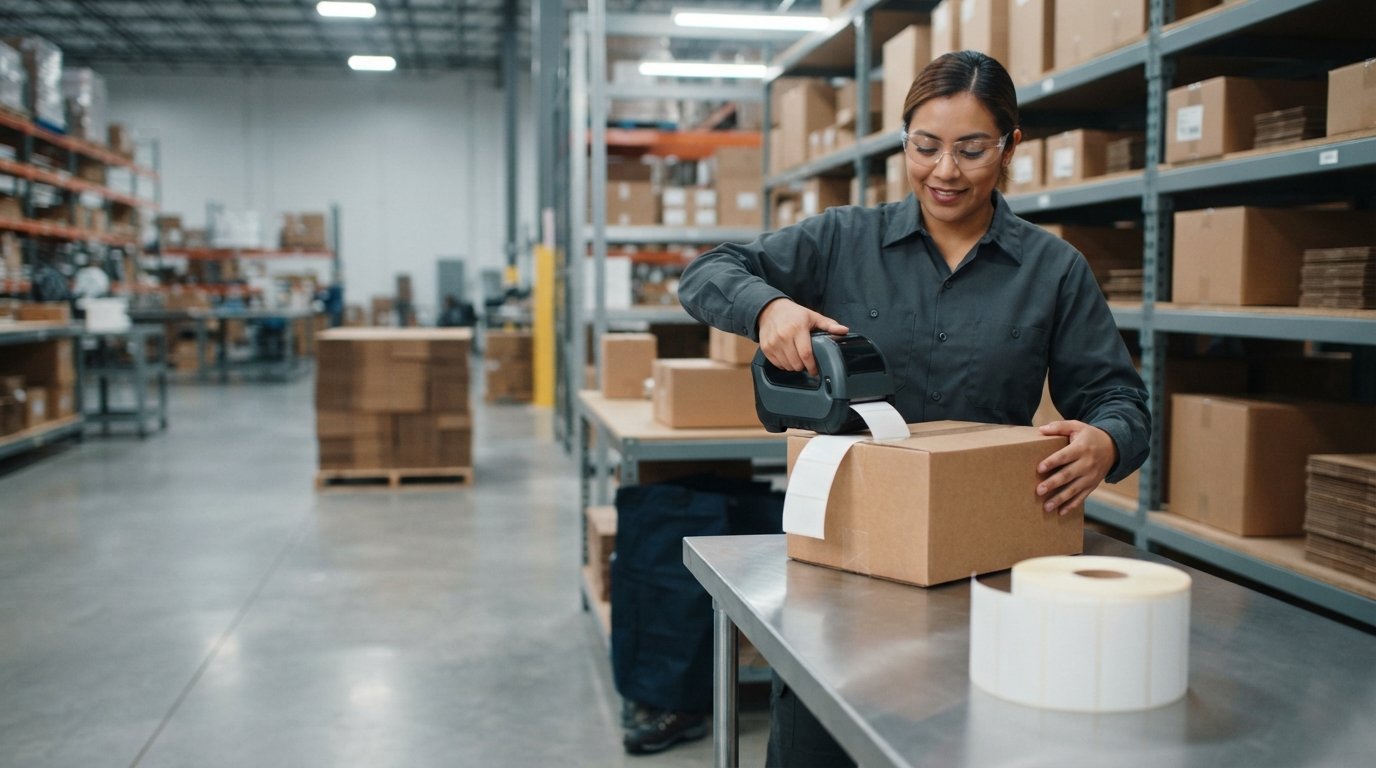
How much time does your team lose every shift simply peeling away backing paper or stopping to swap out empty rolls? If you're managing a busy warehouse or a retail floor, those minutes add up to hours of lost productivity. You've likely felt the frustration of slippery waste paper cluttering your aisles or a label jam stalling your workflow. If you're considering zebra mobile linerless labels, you're already looking for a way to fix these common operational pains.
We're here to show you that making the switch is a major tactical advantage. By adopting linerless technology, you can transform your labeling process into a zero-waste operation. You'll gain significantly longer uptime because linerless rolls pack more labels into the same space, meaning fewer stops for your workers. This article will help you master the technical and operational benefits of linerless media for your Zebra mobile printers. We'll cover everything from label durability in varied environments to how these rolls eliminate the "roll-change bottleneck," ensuring your team stays focused on the task at hand rather than the trash on the floor.
Key Takeaways
- Boost your team's productivity by switching to zebra mobile linerless labels, which provide up to 60% more labels per roll to minimize downtime.
- Create a safer, cleaner workspace by eliminating the slippery backing paper waste that typically clutters warehouse and retail aisles.
- Identify the best material for your specific application, from standard direct thermal for receipts to rugged BOPP for moisture and chemical resistance.
- Ensure seamless operation by matching the correct core sizes and outer diameter limits to your Zebra ZQ series mobile printers.
- Master the technical setup for your portable units to prevent jams and optimize performance in challenging industrial environments.
Understanding Zebra Mobile Linerless Labels for On-the-Go Printing
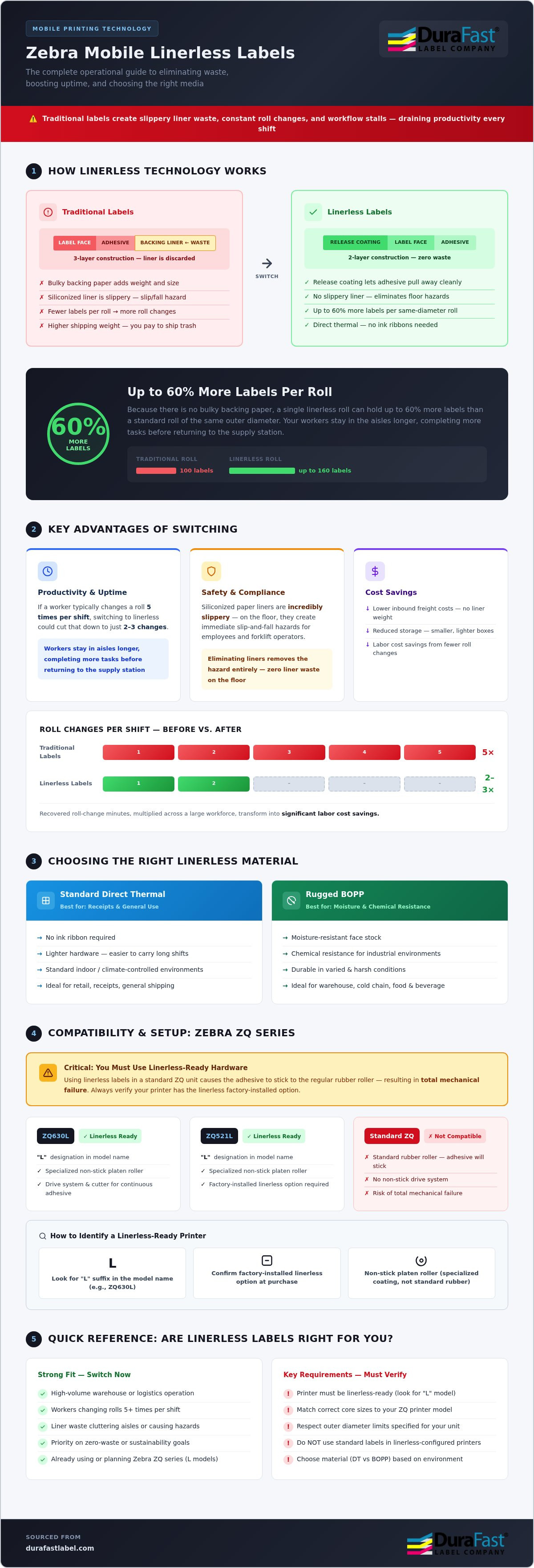
Traditional labels rely on a siliconized release liner to keep the adhesive from sticking to everything before it's applied. While effective, this creates a mountain of slippery waste. Zebra mobile linerless labels solve this by removing the backing paper entirely. These labels are wound onto a roll where the adhesive side of one layer rests directly against the face of the layer beneath it. This design is a cornerstone of modern label printing technology, offering a more streamlined way to handle high-volume tasks.
As we move into 2026, North American logistics hubs are prioritizing zero-waste operations. Managing discarded liners in a fast-paced warehouse isn't just an environmental issue; it's a safety hazard. Removing the liner means your team spends less time picking up trash and more time moving inventory. It's a simple change that yields immediate results in operational flow.
How Linerless Technology Works
The secret to this "stick-to-itself" design is a special release coating applied to the face of the label. This coating acts like a non-stick pan, allowing the adhesive to pull away cleanly without leaving residue. You can't simply put standard labels into a linerless-configured printer. Standard labels will gum up the internal components almost immediately because they lack this protective top layer. Most linerless labels for mobile units use direct thermal technology. This eliminates the need for ribbons, making the hardware lighter and easier to carry during long shifts.
Zebra ZQ Series Compatibility
Not every Zebra printer can handle linerless media. You must use specific "linerless-ready" hardware, often designated with an "L" in the model name, such as the ZQ630L or ZQ521L. These units feature a specialized non-stick platen roller. This roller is engineered to repel adhesive, ensuring the label moves through the printer without jamming or wrapping around the mechanism. If you try to use zebra mobile linerless labels in a standard ZQ unit, the adhesive will stick to the regular rubber roller, causing a total mechanical failure. For those using the Zebra ZQ630 units, compatibility requires the specific linerless factory-installed option to ensure the drive system and cutter can handle the continuous adhesive surface.
Key Advantages of Switching to Linerless Media in 2026
Switching to linerless media is no longer just a "green" initiative. In 2026, it's a fundamental shift in how high-volume logistics operations manage their mobile printing workflows. By using zebra mobile linerless labels, businesses solve the two biggest drains on productivity: constant roll changes and waste management. Because there is no bulky backing paper, a single roll can hold up to 60% more labels than a standard roll of the same diameter. This means your team stays in the aisles longer, completing more tasks before needing to head back to the supply station.
Operational Efficiency and ROI
This is especially true in the food retail and hospitality sectors, where professional presentation is as important as efficiency. Businesses that rely on high-quality display equipment from manufacturers like TFSE Products Ltd find that linerless labels help maintain a clean, professional look while speeding up back-of-house tasks.
The return on investment for linerless technology becomes clear when you look at the labor hours saved. Reducing the frequency of roll changes directly impacts your bottom line. Traditional rolls are bulky. Linerless rolls aren't. This difference changes everything for a mobile worker. Consider these operational gains:
- More labels per roll: Up to 60% more media per roll means workers stop less often.
- Lower shipping costs: You're no longer paying to ship heavy backing paper that ends up in the trash.
- Reduced storage: Boxes are smaller and lighter, freeing up valuable warehouse shelf space.
If a worker typically changes a roll five times per shift, switching to linerless labels could cut that down to just two or three. Over a large workforce, these recovered minutes transform into significant labor cost savings. You're also shipping more labels per box without the added weight of the liner, which helps drop your inbound freight costs.
Safety and Compliance Benefits
Safety is a critical factor that often gets overlooked in the labeling process. Traditional release liners are made of siliconized paper, which is incredibly slippery. When these liners end up on the floor, they create immediate slip-and-fall hazards for employees and forklift operators. By moving to a linerless system, you eliminate this hazard entirely, helping you maintain a safer environment that aligns with OSHA standards.
This transition also supports corporate ESG goals for 2026 by drastically reducing landfill waste. Many North American municipalities are tightening regulations on industrial waste, making zero-waste labeling a proactive way to stay ahead of compliance requirements. If you're ready to modernize your workflow, you can reach out to our experts for a personalized assessment of your facility's needs.
Choosing the Right Linerless Material: Direct Thermal vs. Durable BOPP
Selecting the right material for your zebra mobile linerless labels is the difference between a successful deployment and a costly failure. Most users start with standard paper-based direct thermal options. These are perfect for high-volume indoor tasks like printing retail receipts or temporary shelf tags. They are economical and work perfectly with the internal cutters on your mobile units. However, paper has limits. It doesn't handle moisture well, and prolonged exposure to direct sunlight can cause the thermal image to fade or the paper to yellow.
When your work moves outdoors or into harsh industrial settings, you must switch to Durable BOPP (Polypropylene). This synthetic material offers the moisture, chemical, and abrasion resistance that paper lacks. If you're labeling outdoor equipment or chemical drums, a synthetic face sheet is mandatory to ensure the barcode remains scannable. Using the wrong material leads to unreadable labels and broken supply chains, so matching the media to the environment is your first priority.
UltraMax DT: The Standard for Extreme Environments
Mobile workers in utilities and construction often face unpredictable conditions. Standard media often fails in these spots. We recommend UltraMax DT Direct Thermal Labels for Outdoor applications to bridge this gap. This material is engineered to resist oil, grease, and common cleaning agents. It provides a rugged solution for field service teams who need zebra mobile linerless labels to survive rain, heat, and physical friction. Using a BOPP-based linerless product ensures that your data stays legible from the moment it's printed until the job is done.
Application Matching Guide
Matching your material to your specific environment is key to operational success. Here's how to categorize your needs:
- Retail and Shelf Labeling: Choose paper-based linerless with removable adhesive for cost-efficiency and easy updates.
- Logistics and Shipping: Opt for permanent adhesive on paper or synthetic media to ensure labels stick to corrugated boxes throughout the supply chain.
- Healthcare: Stick with synthetic linerless for patient tracking to withstand moisture and alcohol-based sanitizers.
For 2026, permanent vs. removable options have become more specialized. Permanent linerless provides an aggressive initial tack for rough surfaces like recycled cardboard. Removable versions are now more reliable for temporary labeling in retail or BOPIS (Buy Online, Pick Up In-Store) workflows. These labels stay put when needed but leave no residue behind when the task is complete.
Compatibility and Setup: Matching Media to Your Zebra ZQ Series Printer
Success with zebra mobile linerless labels depends on physical specifications. You can't just buy any roll and expect it to work. Core size is the first hurdle. Most Zebra mobile units use a 0.75-inch or 1-inch core. If you buy a roll with a 3-inch core intended for an industrial desktop, it won't even sit on the spindle. This simple mistake can stall an entire deployment before it starts.
Outer Diameter (OD) is equally vital. Mobile printers have compact housings designed for portability. A roll that is too thick simply won't close. For the ZQ630 and ZQ521, you typically need to stay within a 2.25-inch OD. Always check your specific model's manual before ordering to avoid the headache of returning incompatible stock. Because linerless rolls have no backing, they are wound more tightly, allowing for more media within that small diameter.
How does the printer know where to stop? Since linerless media is continuous, there are no die-cut gaps or black marks to trigger a sensor. Zebra printers use "continuous" sensor settings to manage this. The printer measures the feed distance based on your software settings in BarTender or your mobile application. Calibration is straightforward, but it's a step you must perform to ensure precise label lengths and avoid wasted material.
ZQ630 and ZQ521 Specific Requirements
If you are running 4-inch wide workflows, you'll likely use Zebra ZQ521 linerless label rolls. These rolls are specifically wound to meet the torque and tension requirements of the ZQ series motors. For a deeper look at how these mobile units compare to other technologies, check out our 2026 Professional Guide to Thermal Label Printers. Matching width (2, 3, or 4 inches) to your specific print head ensures you aren't wasting media or overworking the hardware.
Maintenance Best Practices
Linerless media puts more stress on your rollers than standard labels. Even with a specialized platen, microscopic adhesive residue can accumulate over time, especially when using zebra mobile linerless labels in high-volume settings. We recommend a quick cleaning every time you change a roll. A simple isopropyl alcohol swab or a specialized cleaning pen is all you need to keep the path clear. Consistent cleaning prevents the media from wrapping around the roller, which is the most common cause of mobile printer failure. Adhesive buildup on the platen roller creates friction that eventually shortens the lifespan of your expensive print head.
Reach out to our support team if you're unsure which roll fits your specific ZQ configuration, and we'll help you find the perfect match for your hardware.
Why Source Zebra Linerless Labels from DuraFast Label Company?
Finding the right zebra mobile linerless labels shouldn't be a guessing game. At DuraFast Label Company, we specialize in high-performance thermal media that keeps your operations running without a hitch. We understand the technical nuances of Zebra hardware, from the ZQ series mobile units to industrial desktop models. Our team has already done the heavy lifting of vetting products, so you receive a curated selection of rolls that fit your specific core and diameter requirements every time.
We aren't just a supplier of consumables. We provide a complete ecosystem. This includes the hardware, the linerless labels you need, and the BarTender Professional software required to design your templates. If you're managing complex logistics in North America, you need a partner who understands the whole picture. We pride ourselves on being an efficient problem-solver that values your time and peace of mind.
The DuraFast Advantage for North American Businesses
We maintain a deep inventory of labels for direct thermal printers, including those hard-to-find sizes for mobile applications. Whether you need standard paper for retail or the rugged UltraMax DT for outdoor work, we have it in stock and ready to ship across the US and Canada. Our expertise extends to software support as well. We help businesses configure BarTender Professional to handle the unique spacing and sensor requirements of linerless media. This ensures your labels print perfectly from the very first roll, preventing the trial-and-error that often leads to wasted stock.
Getting Started with Your Linerless Transition
Are you worried about how a new material will perform in your specific warehouse or field environment? We make it easy to test before you commit. You can request samples of our zebra mobile linerless labels to verify adhesive strength and print quality on your own equipment. This transparency is a core part of our service. We want you to be confident in the durability of your labels before you place a large order.
Our experts are available to guide you through the transition, helping you match the right media to your Zebra model's specifications. We'll look at your environment, your printer model, and your durability needs to find the ideal solution. Ready to boost your efficiency and eliminate waste? Shop our full collection of Zebra-compatible linerless labels here and see the difference a specialized partner makes for your business.
Ready to Modernize Your Mobile Labeling?
Modernizing your warehouse or retail floor starts with removing the friction of traditional media. By choosing zebra mobile linerless labels, you've already identified a path toward zero-waste logistics and higher worker uptime. Success in this transition lies in matching your specific environment to the right material. Whether you need standard paper for receipts or our specialized UltraMax DT for extreme durability, having the correct media is non-negotiable for long-term reliability.
As an authorized Zebra partner, we're here to ensure your transition is seamless and stress-free. We provide the expert North American support needed to navigate hardware compatibility and software setup, so you don't have to do the heavy lifting alone. It's time to stop managing backing paper waste and start focusing on the speed of your operations. Our team is committed to helping you find the highest quality solutions that keep your mobile printers running at peak performance.
If you're ready to see how these high-performance rolls can transform your daily workflow, we're ready to help you find the perfect fit. Browse our Zebra-Compatible Linerless Labels and UltraMax DT Rolls
Frequently Asked Questions
Can I use linerless labels in any Zebra mobile printer?
No, you must use specific linerless-ready models like the Zebra ZQ630L or ZQ521L. These units feature a specialized non-stick platen roller and a modified cutter mechanism. If you try to run zebra mobile linerless labels through a standard mobile printer, the adhesive will immediately stick to the rubber rollers. This causes severe jams and can lead to expensive mechanical failures. Always verify your printer has the factory-installed linerless option before switching media.
Do linerless labels damage the print head or platen roller?
Linerless media won't damage your printer as long as you use compatible hardware and follow a regular cleaning schedule. The specialized platen rollers in linerless-ready units are engineered to repel adhesive. Problems only arise if you neglect maintenance and allow residue to build up over time. This buildup can eventually increase friction and put unnecessary strain on the print head. Consistent cleaning ensures your hardware remains in top condition for years of service.
Are linerless labels more expensive than standard labels?
While the price per roll might be slightly higher, the total cost of ownership is often lower. You get up to 60% more labels on every roll because there is no bulky backing paper. This reduces shipping costs, storage requirements, and the labor time spent changing rolls. You also eliminate the costs associated with disposing of liner waste. Most businesses find the productivity gains quickly outweigh the initial investment in zebra mobile linerless labels.
How do I clean my Zebra printer after using linerless media?
Cleaning is a simple process that involves using isopropyl alcohol swabs or specialized cleaning pens. You should wipe down the platen roller, the print head, and the media path every time you load a new roll. This prevents microscopic adhesive particles from accumulating and causing jams. It's a quick task that takes less than a minute but significantly extends the life of your mobile unit. Regular maintenance is the best way to ensure consistent print quality.
What is the maximum roll length for a Zebra ZQ630 linerless label?
The maximum roll length is determined by the printer's internal housing capacity, which usually limits the outer diameter to about 2.25 inches. Because linerless rolls are thinner without the backing paper, they provide significantly more footage than standard rolls. For a ZQ630, this typically translates to about 60% more labels per roll. This extra length is a major advantage for high-volume workers who need to stay productive without frequent trips to the supply room.
Can linerless labels be used for outdoor or chemical applications?
Yes, but you must choose the correct material for the job. Standard paper-based linerless is best for indoor receipts or temporary tags. If you need resistance to rain, sunlight, or chemicals, you should use a synthetic BOPP material. Our UltraMax DT labels are specifically designed for these extreme conditions. They provide the durability needed for field service, utilities, and construction sites where standard paper labels would quickly fade or peel away.
Do linerless labels require special software like BarTender?
You can use various applications, but BarTender Professional is the industry standard for a reason. It simplifies the design process for continuous media and ensures your printer's sensors are calibrated correctly for different label lengths. Our team at DuraFast Label Company provides support for BarTender to help you create custom templates that work seamlessly with your mobile printers. This software makes it much easier to manage variable data and barcodes on linerless rolls.