UPS and FedEx 4x6 Tire Shipping Labels: The 2026 Guide to Secure Adhesion
27th Aug 2026
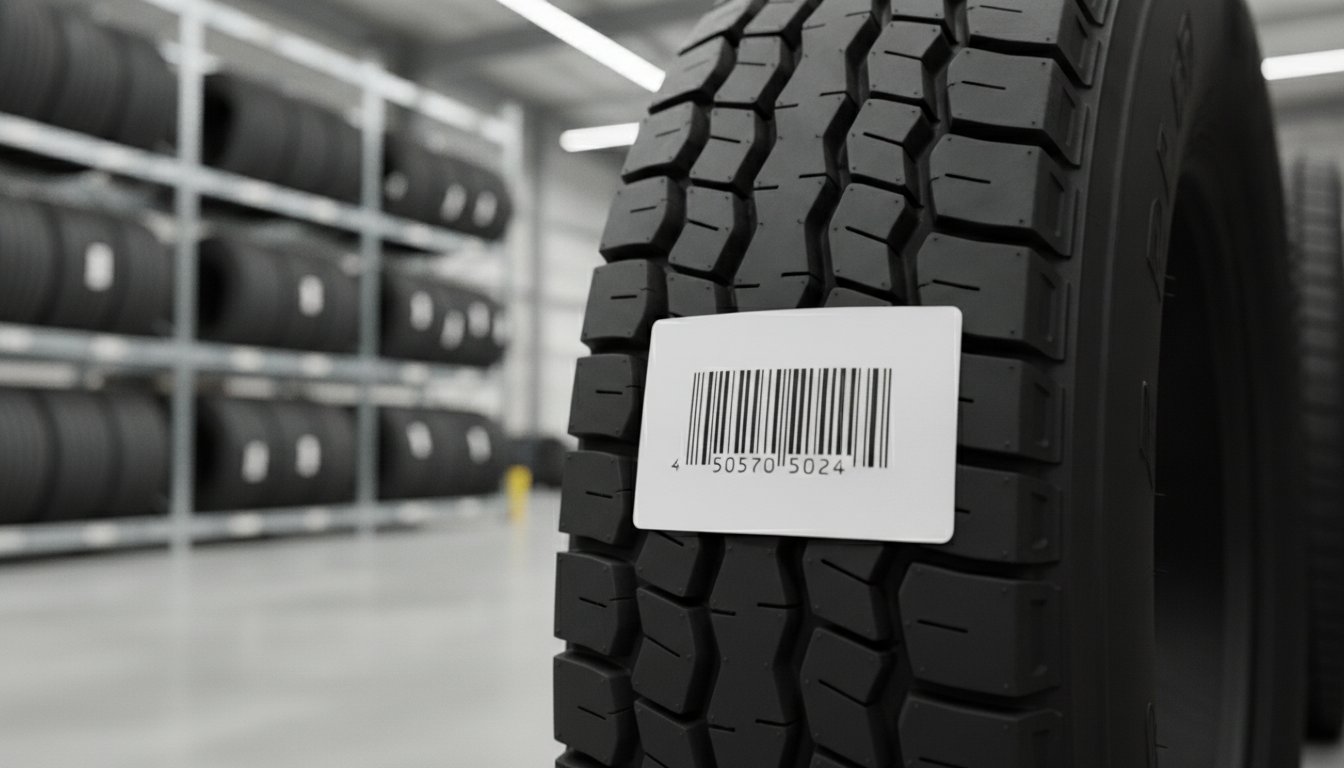
A single lost tire due to a fallen label can cost your business more than an entire roll of specialized adhesive. It's a frustrating and expensive reality. Standard labels simply aren't built to handle the constant chemical outgassing of raw rubber. If you're currently searching for reliable ups and fedex 4x6 tire shipping labels, you've likely dealt with the headache of carrier rejections or barcodes that won't scan at the sorting facility. These failures don't just delay your shipments; they damage your reputation with your customers.
We know that shipping tires is a unique challenge that requires more than just a standard sticky back. It's about maintaining carrier compliance while protecting your bottom line. This guide will show you how to achieve zero-fail adhesion on rubber surfaces and ensure your shipments breeze through UPS and FedEx systems. You'll learn why standard adhesives fail, how to choose the right 4x6 tire shipping labels for your specific printer, and how to implement a cost-effective bulk labeling solution that works every time. Let's get your shipping process back on track and ensure your labels stay exactly where you put them.
Key Takeaways
- Understand why rubber outgassing causes standard labels to fail and how specialized aggressive adhesives keep your shipments secure.
- Learn how to choose ups and fedex 4x6 tire shipping labels that guarantee 2026 carrier compliance and flawless barcode scanning.
- Identify the industrial thermal printers and heat settings required to handle the unique thickness of professional tire label stock.
- Discover why in-house printing with specialized hardware and software reduces shipping delays and prevents costly carrier rejections.
- Explore the logistical benefits of ordering fanfolded labels to streamline high-volume tire shipping workflows.
The Challenge of Labeling Tires for UPS and FedEx
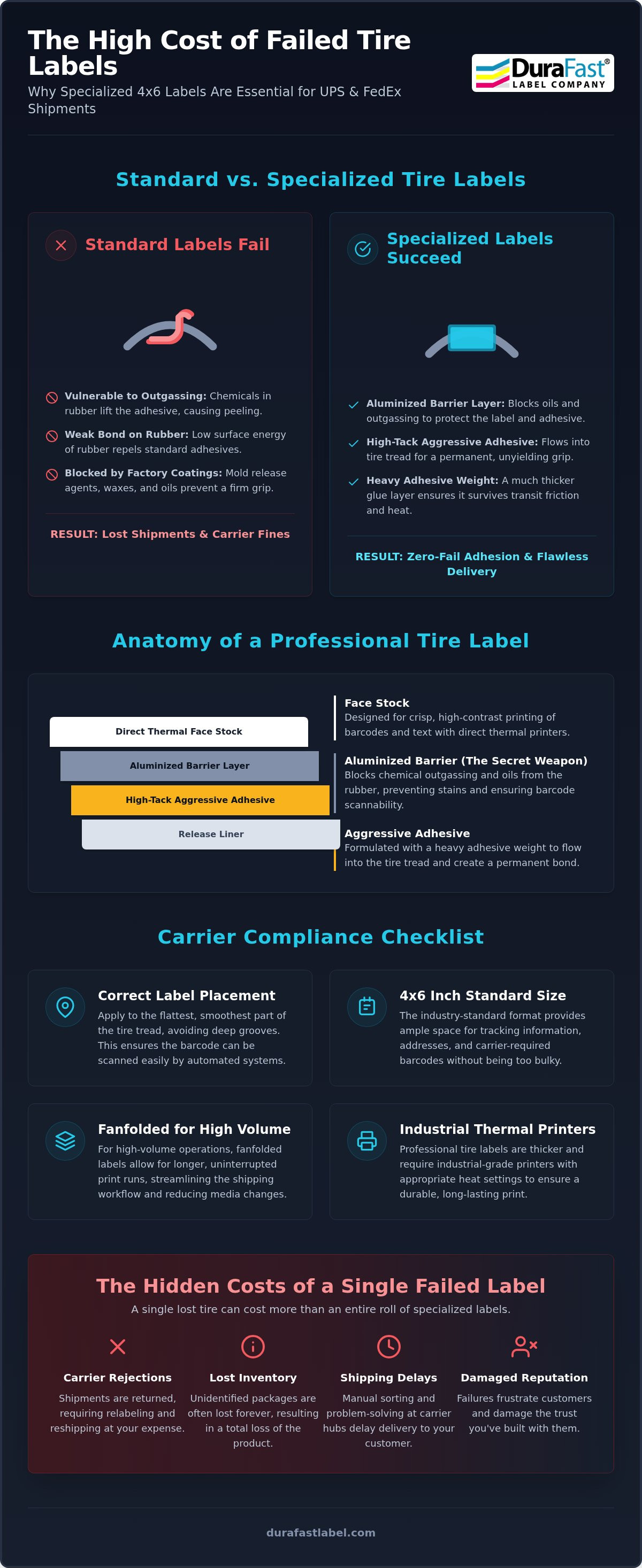
Shipping tires presents a unique logistical hurdle that standard corrugated boxes don't share. Unlike cardboard, rubber is a porous and dynamic material. It constantly undergoes a process called outgassing. This chemical phenomenon occurs when gases and compounds used in the manufacturing process migrate to the tire's surface over time. When you apply standard 4x6 labels, these gases essentially "lift" the adhesive off the rubber. It's the primary reason why labels that seem secure in the warehouse often peel away before the tire even reaches the first sorting facility.
Failure in this area isn't just a minor inconvenience; it's an expensive mistake. A lost label means a lost shipment. When a tire arrives at a carrier hub without identification, it becomes an unidentified package or "overgood." Carriers often charge additional handling fees or fines for non-compliant packaging that requires manual intervention. Using specialized ups and fedex 4x6 tire shipping labels ensures your tracking information remains intact throughout the entire journey. The 4x6 format is the industry standard for modern logistics, providing ample space for clear text and the barcode technology required for automated sorting.
Why Standard 4x6 Labels Fail on Rubber
Standard labels are designed for high-energy surfaces like paper and plastic. Rubber has low surface energy, which means it naturally repels most common adhesives. New tires are also frequently coated in mold release agents, waxes, and oils from the factory. These substances create a slick barrier that prevents a firm bond from ever forming. To understand the complex properties of these types of industrial materials, you can find out more about technical polymers and their diverse applications. Transit conditions add another layer of difficulty. High heat inside delivery trucks and constant friction during movement quickly degrade the weak bond of a standard paper label. This causes the edges to curl and eventually leads to total label failure.
A professional tire label is a multi-layered piece of engineering. The secret to its success is an aluminized barrier layer. This thin coating sits between the adhesive and the face stock to block gases and oils from seeping through. Without this barrier, the chemical reaction from the rubber would stain the label or turn it yellow, making the tracking information unreadable.
The adhesive itself must be "high-tack" and incredibly aggressive. It's formulated to flow into the microscopic ridges of the tire tread to create a permanent grip. While standard labels use a light coat of glue, specialized direct thermal tire labels utilize a much heavier adhesive weight. This ensures the label survives the rigors of the global shipping network without budging.
Technical Specifications for 4x6 Tire Shipping Labels
The 4x6 size is the industry sweet spot for automotive logistics. It provides enough surface area for tracking info, carrier proprietary data, and shipping addresses without being overly bulky. These labels typically come in two formats: rolls for smaller desktop units and fanfolded stacks for high-volume industrial workflows. Fanfolded options are particularly popular because they allow for longer print runs without frequent media changes. If you're following FedEx's official guide to shipping tires, you know that label placement and scan-ability are non-negotiable for successful delivery.
Barcode legibility depends on the label's ability to resist chemical migration. A high-quality tire label includes a specialized barrier coating that prevents the tire's internal oils from reaching the surface. This ensures that ups and fedex 4x6 tire shipping labels remain crisp and scannable throughout the entire transit process. Without this barrier, the barcode can become fuzzy or stained, leading to manual sorting delays and potential carrier fines. Choosing a label with the right technical specs isn't just about size; it's about the chemistry behind the face stock.
Direct Thermal vs. Thermal Transfer for Tires
Direct thermal is the go-to for most logistics managers. It doesn't require a ribbon, which simplifies the printing process and lowers the cost per label. It's fast and efficient for high-volume environments where labels are applied and shipped immediately. However, if your tires will sit in outdoor storage or face extreme weather for months, thermal transfer might be the better choice. In those cases, using DuraFast Thermal Transfer Ribbons with a compatible face stock ensures your print remains smudge-proof and durable against UV exposure. Most modern direct thermal tire labels are more than enough for standard shipping windows.
Adhesive Grades: Permanent vs. Aggressive
Most standard shipping labels use a permanent adhesive designed for cardboard boxes. On a tire, this adhesive is insufficient because rubber is a low-surface energy material. Tires require an aggressive adhesive grade with a much higher coat weight. This allows the glue to bite into the microscopic ridges of the rubber and hold fast. Outgassing is the release of volatile compounds that dissolves standard glues. Because of this chemical process, only a specialized adhesive can maintain a bond over several days or weeks during transit. If you're unsure which spec fits your volume, you can contact our specialists for a media recommendation.
- Verify the presence of an aluminized or chemical barrier layer.
- Ensure the adhesive is specifically rated for rubber or low-surface energy materials.
- Check if the label thickness is compatible with your thermal printer's head pressure.
- Confirm the 4x6 dimensions match your carrier's software templates for UPS WorldShip or FedEx Ship Manager.
UPS vs. FedEx: Shipping Requirements for Tires
While both major carriers have moved toward highly automated sorting systems, their specific software settings for tire shipments can be tricky. Both UPS and FedEx recognize the 4x6 format as a universal standard for thermal printing. However, the way you apply these labels matters just as much as the data printed on them. Industry standards, such as those promoted by the Tire Industry Association, emphasize the need for clear, durable identification throughout the supply chain. Since tires are frequently shipped "naked" without an outer box, the label is the only thing standing between a successful delivery and a lost unit.
Shipping without a box means your ups and fedex 4x6 tire shipping labels are exposed to conveyor belts, metal sorting chutes, and extreme temperature shifts. This environment demands a label that provides high-contrast barcodes that won't smudge or tear under physical stress. Automated scanners in carrier hubs rely on these barcodes to route your package correctly. If a label peels or the print fades, the package is pulled for manual processing, which often results in delays and additional handling surcharges.
Configuring 4x6 Templates in FedEx Ship Manager
Many logistics managers find that FedEx Ship Manager sometimes defaults to a 4x8 layout, which can lead to scaling issues. To ensure your barcodes are crisp and scannable, navigate to the "Print" or "Label" settings within the software. Select "4x6 Thermal" as your default output size. This prevents the barcode from being truncated or shrunk to a point where it becomes unreadable. For businesses that need to incorporate color-coded branding or hazard warnings alongside their shipping data, the Epson ColorWorks C6000A provides a versatile solution for high-speed color logistics.
UPS WorldShip and 4x6 Thermal Label Integration
UPS WorldShip is built for speed and is highly compatible with thermal label media. When setting up your printer drivers, always select the "Thermal 4x6" option to match your physical stock. UPS often requires labels to be applied to a clean, dry area of the tread. If the tire is wrapped, the label should be placed on a flat surface of the stretch wrap. Using fanfolded ups and fedex 4x6 tire shipping labels is a smart move for high-volume operations. These stacks sit behind the printer and feed continuously, which significantly reduces the downtime caused by frequent roll changes. This setup ensures your team stays productive while remaining fully compliant with 2026 UPS shipping standards.
Best Printers for 4x6 Tire Shipping Labels
Choosing the right hardware is just as critical as selecting the label itself. Tire labels are significantly thicker than standard shipping labels because of their aluminized barrier and heavy adhesive layers. This extra bulk requires a printer that can exert consistent print head pressure. If the pressure is too low, your barcodes will appear faint or patchy, leading to the sorting failures we've already discussed. You'll also need to adjust the darkness or heat settings in your printer driver. This ensures the thermal reaction penetrates the top coating for a crisp, high-contrast finish that scanners can read instantly.
Software integration also plays a major role in your success. Using BarTender Professional software allows you to automate your data by pulling tire specifications, DOT numbers, and shipping info directly from your database into your ups and fedex 4x6 tire shipping labels. This reduces manual entry errors and keeps your labeling process moving at top speed. If you're ready to upgrade your hardware but aren't sure which model supports your specific volume, talk to our technical team today for a personalized recommendation.
Zebra Industrial Printers for High-Volume Distribution
For warehouses moving hundreds of tires daily, an industrial-grade machine is essential. The Zebra ZT411 is a standout choice for its rugged metal frame and high-duty cycle. Industrial printers handle specialized ups and fedex 4x6 tire shipping labels better than desktop models because they use larger motors and more durable rollers. These components pull heavy rolls of adhesive-rich labels without slipping or jamming. You can explore more options in our Industrial Label Printer Roundup to find the best fit for your 2026 production goals.
Seiko and Desktop Solutions for Smaller Operations
You don't always need a massive industrial unit if you're running a smaller shop or a retail tire center. The Seiko SLP850 offers a compact and efficient 4x6 alternative. It fits easily on a desk or packing station and supports Bluetooth connectivity, which lets your team print labels directly from a tablet on the warehouse floor. Using dedicated Seiko SLP850 labels ensures you get the best direct thermal efficiency without the need for ribbons. It's a simple, plug-and-play solution for businesses that value speed and a small footprint. These desktop units are perfect for "on-demand" printing where space is at a premium.
Ordering Bulk 4x6 Tire Labels from DuraFast
Selecting the right hardware and software is a major step, but your daily operations depend on the consistent quality of your consumables. Buying in bulk isn't just about lowering your cost per unit; it's about ensuring your warehouse never grinds to a halt due to a media shortage. When you source ups and fedex 4x6 tire shipping labels, you're investing in a specialized tool designed to survive the high-speed sorting environments of North American logistics. The return on investment becomes clear when you see a dramatic drop in lost shipments and carrier surcharges. A high-quality label ensures your product reaches the customer on time, every time.
While 4x6 is the versatile standard for most 2026 shipping templates, we understand that some specialized applications require different dimensions. If 4x6 isn't the perfect fit for your specific tread width or wrapping style, we provide a variety of sizes to ensure full carrier compliance. Using the right label footprint prevents barcode wrap-around and ensures scanners can capture data from any angle on the conveyor. It's a simple change that leads to faster delivery and fewer customer service headaches.
Fanfolded vs. Rolled: Which is Better for Your Warehouse?
Your choice between fanfolded and rolled labels depends on your printer type and daily volume. Fanfolded labels are the gold standard for high-volume, unattended printing. Because they sit in a stack behind the printer, you can run much larger batches without stopping to change a roll. This setup is perfect for industrial machines like the Zebra ZT411. Rolled labels, on the other hand, are designed for compact desktop units with limited internal space. However, standard desktop printers have roll size limitations that can lead to more frequent downtime. You can explore our full inventory of Direct Thermal Labels to find the configuration that matches your packing station's workflow.
Why Partner with DuraFast Label Company?
We don't just sell labels; we provide vetted solutions that combine hardware, software, and media. Our tire labels are carrier-tested to meet the rigorous demands of the UPS and FedEx networks. We also provide deep support for industry-leading software like BarTender Professional, helping you automate your labeling process and eliminate manual entry errors. By partnering with an expert that understands the chemistry of rubber outgassing and the mechanics of thermal printing, you protect your bottom line from the hidden costs of label failure. Shop our full range of tire shipping labels today and experience the peace of mind that comes with secure adhesion.
Secure Your Logistics with High-Performance Tire Labeling
Maintaining secure adhesion on rubber surfaces is no longer a guessing game. By choosing labels with specialized barrier coatings and aggressive adhesive formulations, you eliminate the risks of outgassing and label failure. You've seen how the right hardware and software settings ensure your barcodes remain scannable from the warehouse to the customer's doorstep. Implementing these professional ups and fedex 4x6 tire shipping labels protects your brand from costly shipping delays and carrier surcharges.
DuraFast Label Company provides the industrial-grade durability and carrier-compliant adhesives your business needs to stay competitive. We offer comprehensive North American shipping support to help you scale your logistics with confidence. Don't let a fallen label disrupt your supply chain. It's time to transition to a labeling solution that holds fast under pressure and keeps your operations moving at top speed.
Order Your High-Tack 4x6 Tire Shipping Labels Today
We're ready to help you streamline your tire shipping process and achieve total label security. Let's get your products moving without the worry of lost inventory.
Frequently Asked Questions
Do I need a special printer for 4x6 tire shipping labels?
Yes, you need a thermal printer capable of handling thicker media and exerting high print head pressure. While many standard thermal printers can technically feed the labels, industrial models like the Zebra ZT411 are better suited for the heavy adhesive and aluminized barrier of tire stock. These printers allow you to adjust heat settings to ensure the print remains crisp and legible throughout transit.
Will standard 4x6 shipping labels work for FedEx tire shipments?
No, standard paper labels lack the aggressive adhesive and chemical barrier required for raw rubber. FedEx sorting facilities use high-speed automated scanners that will fail to read a label if it curls or stains due to rubber outgassing. To ensure compliance, you must use specialized ups and fedex 4x6 tire shipping labels featuring a high-tack adhesive and an aluminized layer to prevent oil migration from the tire surface.
What is the best adhesive for labels on raw rubber tires?
The best option is a high-tack, aggressive adhesive specifically formulated for low-surface energy materials. Raw rubber is porous and releases volatile compounds that dissolve standard glues. A tire-grade adhesive has a higher coat weight, allowing it to flow into the microscopic ridges of the tread. This creates a permanent bond that survives the physical friction and temperature shifts common in global shipping networks.
Can I use direct thermal labels for tires stored outdoors?
Direct thermal labels are excellent for standard shipping windows, but they may fade if exposed to prolonged UV light and extreme weather during outdoor storage. If your tires will sit outside for months, thermal transfer labels paired with a resin ribbon offer superior durability. For most immediate distribution needs, high-quality direct thermal tire labels provide the necessary resistance to smudging and moisture without requiring a ribbon.
How do I prevent my shipping labels from falling off during UPS transit?
Ensure you are using ups and fedex 4x6 tire shipping labels with an integrated chemical barrier and apply them to a clean, dry area of the tire tread. Pressure is key; firmly rub the label onto the rubber to activate the adhesive bond. Avoid placing labels over heavy factory wax or oils. If the tire is wrapped in stretch film, apply the label to a flat, smooth section of the wrap.
What is the difference between 4x6 and 4x8 tire shipping labels?
The main difference is the length and compatibility with software templates. While 4x8 labels offer more space for additional branding, the 4x6 size is the universal standard for most carrier software like UPS WorldShip and FedEx Ship Manager. Many modern thermal printers default to 4x6, making it easier to integrate into existing workflows without scaling issues or barcode truncation. It's a more compact, efficient choice for most distributors.
Are 4x6 tire labels compatible with Zebra and Seiko printers?
Yes, these labels are fully compatible with both Zebra and Seiko thermal printers. Industrial Zebra models are ideal for high-volume fanfolded stacks, while the Seiko SLP850 is a perfect desktop solution for smaller operations. Just ensure your printer settings are adjusted for the extra thickness of the tire stock. You'll likely need to increase the darkness setting to achieve a scan-ready finish on the specialized face stock.
Is a ribbon required for direct thermal tire labels?
No, direct thermal labels don't require a ribbon because the face stock is heat-sensitive. This makes them a cost-effective and simplified solution for high-volume shipping environments. The printer's thermal head applies heat directly to the label to create the image. This eliminates the need to manage ribbon inventory and reduces the time spent on media changes, allowing your warehouse team to focus on getting shipments out the door faster.