Who Should Buy the Afinia X350 Color Label Press?
21st Jul 2026
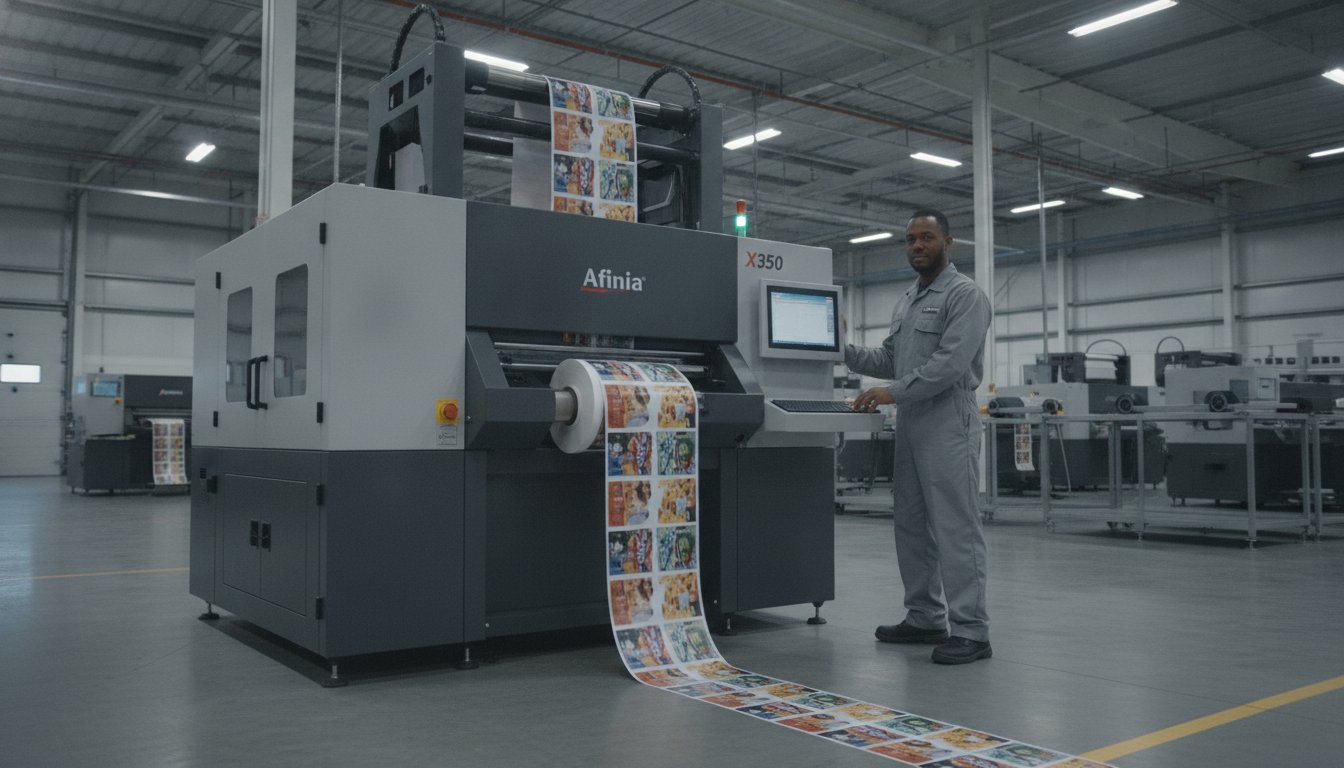
The gap between desktop printing and million-dollar commercial presses has finally closed, and it's changing how growing brands scale. You've likely felt the frustration of watching a desktop printer struggle to keep up with rising demand while your cost-per-label eats into your margins. It's exhausting to manage constant roll changes and limited media widths when your business is ready for more. If you're asking, "Who should buy the Afinia X350 Color Label Press?", you are likely at a pivotal tipping point in your production.
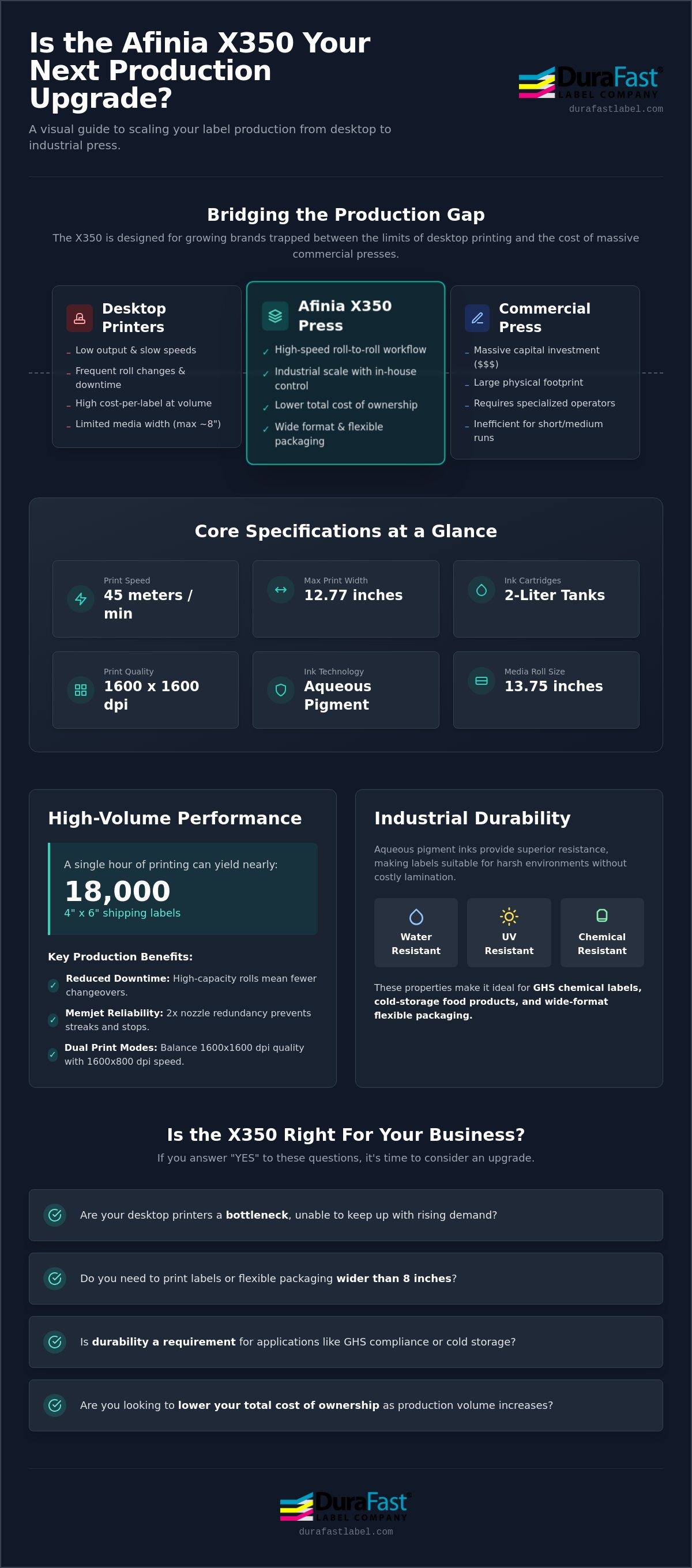
We'll help you discover if this industrial scale-up is your right next move by analyzing your specific volume, durability requirements, and long-term ROI. This guide explores how transitioning to a professional roll-to-roll workflow can lower your total cost of ownership. We will also look at how the 13.75-inch media width and pigment-based inks provide the flexibility you need for everything from GHS-compliant chemical labels to wide-format flexible packaging.
Key Takeaways
- Understand how the X350 bridges the gap between desktop units and massive commercial presses for growing brands.
- Learn who should buy the Afinia X350 Color Label Press by identifying the specific production volumes where ink savings outweigh equipment costs.
- Discover how 45 meters per minute print speeds and high-capacity 13.75-inch rolls significantly reduce your daily production downtime.
- Explore why pigment-based inks are essential for high-durability applications like GHS chemical labeling and cold-storage food products.
- Assess the logistical needs of a roll-to-roll workflow, including the compact footprint and the importance of integrated digital finishing.
What is the Afinia X350 and Where Does It Fit?
The Afinia X350 is an industrial-grade digital roll-to-roll inkjet press designed to solve a specific scaling problem. Many growing businesses find themselves trapped in a "middle ground" of production. You might have outgrown your high-end desktop units, but you aren't ready to invest in a massive commercial press that costs hundreds of thousands of dollars. The X350 fills this gap perfectly. It offers the speed and durability of a large-scale press with the footprint and ease of use of an in-house solution. Understanding what is digital label printing? helps clarify why this machine is so effective for short to medium runs that require high resolution and variable data.
A major differentiator for this machine is its 12.77-inch print width. Most industrial desktop printers max out at 8 inches. This extra space allows you to print large-format labels for chemical drums, oversized shipping containers, or even wide flexible packaging like snack pouches. If you're asking, "Who should buy the Afinia X350 Color Label Press?", the answer often starts with companies that need that extra width and professional-grade durability. It moves you away from the limitations of small rolls and slow speeds, allowing you to take full control of your supply chain.
The Technology: Memjet Performance
This press is built on Memjet stationary printhead technology. Unlike desktop printers where the printhead moves back and forth, the X350 head remains still while the media moves underneath at speeds up to 45 meters per minute. It's fast, but it's also reliable. The system features 2x nozzle redundancy. If one nozzle clogs during a run, another takes over immediately to prevent streaks or quality drops. You can manage long, high-volume jobs without constant supervision by using the massive 2-liter Afinia ink cartridges. This setup ensures your production stays uninterrupted for hours at a time.
Aqueous Pigment Ink Advantages
Durability is non-negotiable for industrial applications. The X350 uses aqueous pigment inks that offer superior resistance to water, UV light, and harsh chemicals. This makes the press an ideal choice for businesses following a GHS label printer guide to maintain chemical compliance. These inks are also food-safe, making them perfect for snack and beverage packaging that might face moisture or refrigeration. You get professional-grade durability on standard inkjet labels, which helps lower your total cost of ownership by reducing the need for expensive secondary laminates.
High-Volume Performance: Evaluating the Production Specs
The Afinia X350 is built for raw speed. At 45 meters per minute, it delivers roughly 150 feet of finished media every sixty seconds. To put that in perspective, a standard 4x6 shipping label run would yield nearly 18,000 labels in a single hour. This is a game changer for businesses currently bottlenecked by desktop units that struggle to hit even a fraction of that output. If you are wondering who should buy the Afinia X350 Color Label Press, look at your weekly production hours. If your team spends more time watching a printer than shipping products, it's time to scale.
Downtime is often the hidden killer of ROI. The X350 addresses this with a massive 13.75-inch roll capacity. Larger rolls mean fewer changeovers and more "lights-out" production time. Managing these jobs is remarkably simple thanks to the integrated PC and 21-inch touchscreen interface. You don't need a separate computer tethered to the unit; everything from job queuing to ink monitoring happens right at the press. This efficiency, combined with the low cost of 2-liter ink tanks, ensures that high-coverage designs remain affordable even at industrial scales.
Speed vs. Quality Trade-offs
The X350 offers two primary print modes: 1600 x 1600 dpi and 1600 x 800 dpi. Choosing between them depends on your specific market. High-end craft beverages or beauty products often require the maximum resolution for crisp text and vibrant gradients. Industrial chemical manufacturers, however, often prioritize throughput. They can run at 1600 x 800 dpi to maximize speed while still maintaining professional clarity. Balancing these settings allows you to optimize your workflow based on the visual impact your customers expect.
Media Versatility: Beyond Standard Labels
This press isn't limited to standard stickers. It handles continuous rolls and pre-die-cut inkjet labels with equal precision. The 13-inch width also opens doors for flexible packaging films and pouches. For businesses in the food sector, maintaining FDA label compliance is much easier when you can print high-resolution nutritional facts directly onto your packaging material. If you need help determining which media fits your specific application, you can request a media compatibility consultation with our team.
The Decision Matrix: When to Upgrade to the X350
Deciding when to move from a desktop unit to a full-scale press is largely a math problem. Most businesses hit a "pain point" when their monthly ink spend on a desktop unit begins to rival the monthly lease payment of an industrial press. If you are printing between 20,000 and 500,000 labels per month, you have reached the threshold where desktop efficiency starts to decline. While the Epson ColorWorks C6000 series is an incredible tool for on-demand mid-volume needs, it isn't designed for the relentless, high-speed throughput that a dedicated press provides. Identifying who should buy the Afinia X350 Color Label Press usually starts with recognizing these rising costs.
Labor is the other critical side of the equation. Desktop units often require frequent roll changes and manual handling of small batches, which ties up your team's time. The X350 uses a streamlined roll-to-roll workflow that allows one operator to manage significantly more output with less physical intervention. This transition also closes the "professional gap" that occurs when customers start to notice the limitations of smaller-scale printing. When your brand's reputation depends on consistent, high-end finishing across hundreds of thousands of units, the X350 provides the industrial reliability you need to compete at a higher level.
Desktop vs. Press: Cost per Label
Consider a standard label for a 500ml bottle. On a desktop unit, you might pay a higher price per label due to the smaller ink cartridges. The X350 utilizes massive 2-liter ink tanks, which drastically reduces the price per milliliter. This lower consumable cost, combined with the press's ability to minimize media waste during job setup, means your total cost of ownership drops as your volume increases. You stop paying a premium for the convenience of a small footprint and start benefiting from true industrial economies of scale.
Scalability for Growing Brands
Relying on third-party print houses for large orders often leads to long lead times and high minimum order quantities. By learning how to print your own product labels on an industrial scale, you regain 100% control over your production schedule. You can handle sudden seasonal spikes or last-minute design changes without the stress of external delays. This flexibility is vital for growing companies that need to pivot quickly while maintaining professional quality and keeping all production in-house.
Industry Profiles: Who Wins with the Afinia X350?
Different industries face unique labeling hurdles that standard desktop printers simply cannot clear. The Afinia X350 is designed to handle these specific challenges at scale, providing a robust solution for businesses that require both speed and specialized durability. If you are evaluating who should buy the Afinia X350 Color Label Press, your industry's specific environmental and regulatory needs will likely provide the answer. From harsh chemical storage to high-end retail shelves, this press adapts to the rigorous demands of professional production.
Contract packagers especially benefit from the versatility of this machine. These businesses often juggle dozens of different clients with wildly varying requirements in a single week. The X350 allows for quick changeovers between different media types and job sizes without the massive setup waste associated with traditional flexographic presses. It provides the "Missing Middle" solution that allows a packager to accept medium-sized jobs that were previously too small to be profitable on a commercial press but too large for a desktop fleet.
GHS and Chemical Compliance
Chemical manufacturers require labels that stay legible in the most punishing conditions. The pigment ink system in the X350 is engineered for maximum resistance to solvents, water, and UV exposure. When paired with BS5609-certified media, such as matte chemical labels, your output meets strict international maritime standards. This ensures that critical safety information remains intact even if a drum is exposed to saltwater or harsh industrial cleaners during transit.
The Flexible Packaging Frontier
One of the most significant opportunities for this press lies in the flexible packaging market. Most in-house printers are too narrow for anything beyond a standard bottle label. The 12.77-inch print width of the X350 changes that. It allows you to print directly onto flexible films for sachets, snack pouches, and stick packs. This capability is perfect for brands that want to offer personalized packaging or run rapid prototypes in a packaging lab without waiting weeks for external proofs.
For businesses looking to integrate these packaging capabilities into a broader automated system, fasterfoodtech.com provides AI-driven robotics designed to optimize the general food processing workflow.
The shift toward short-run, high-variety snack foods has created a massive demand for this type of agility. You can now produce professional-grade, food-safe pouches in-house and on-demand. If you are ready to see how this technology can transform your specific production line, contact our specialists for a custom ROI analysis today.
Implementing the X350: Workflow and Logistics
The final stage of scaling your production is the physical setup. Many industrial presses require specialized flooring or massive dedicated rooms. The Afinia X350 breaks that mold. It fits in less than one square meter of floor space. This makes it a perfect fit for urban production centers where square footage is expensive. If you've been asking who should buy the Afinia X350 Color Label Press, look at your current floor plan. It delivers massive output without the need for a warehouse-sized footprint.
Efficiency isn't just about the hardware. It's about how the machine talks to your data. Using BarTender Professional allows you to automate complex tasks like lot numbering and expiration dating. This software ensures your labels are accurate every time. To keep these high-speed runs moving, you must have a consistent supply of Afinia X350 inks. Working with a national partner provides the peace of mind that your 2-liter tanks will arrive on time, keeping your cost-per-label low and your production line active.
Finishing Options for a Complete Line
Printing a roll is only half the battle. To get a retail-ready product, you often need digital finishing. Tools like the DLF-350L allow you to laminate, die-cut, and slit your labels in a single continuous process. Lamination is particularly important for the pigment-based output of the X350. While the ink is already durable, a laminate layer adds that extra visual "pop" and the physical protection required for high-end cosmetics or household cleaners. Once finished, your labels are neatly wound and ready for high-speed automatic applicators.
Facility Requirements
The X350 simplifies the transition to industrial printing. It runs on standard 110-220V power, which avoids the need for heavy-duty electrical overhauls. You will need a climate-controlled environment to ensure the media and inks perform at their peak. The touchscreen interface is designed for simplicity. Operators who are used to smaller desktop units will find the controls familiar and easy to navigate. This reduces the learning curve and allows your team to hit their production targets almost immediately after installation. It’s a powerful press that respects your time and your space.
Ready to Scale Your Label Production?
Moving from entry-level desktop units to a full-scale digital press represents a major leap in your operational capability. By now, it's clear that the Afinia X350 provides the necessary bridge for brands that require industrial speed without the massive footprint of traditional commercial equipment. It solves the most common scaling pains, from high ink costs on small cartridges to the limitations of narrow media widths. This press ensures your labels remain durable and compliant as your market reach expands while significantly reducing your daily production downtime.
If you're still evaluating who should buy the Afinia X350 Color Label Press, our specialists are ready to assist with a personalized assessment. DuraFast Label Company offers the expert guidance needed for a successful industrial scale-up, backed by a complete inventory of pigment inks and high-volume media. With our national shipping and professional support, you can bring your label production in-house with total confidence. Let us help you streamline your workflow and take control of your packaging future.
View the Afinia X350 and Request a Custom Quote from DuraFast Label Company
Frequently Asked Questions
What is the maximum print speed of the Afinia X350?
The Afinia X350 reaches a maximum print speed of 45 meters per minute, which is approximately 150 feet per minute. This high-speed output allows businesses to produce thousands of labels in a single hour, making it a true industrial-grade solution. It's significantly faster than desktop units, helping you clear production bottlenecks and meet tight shipping deadlines with ease.
Does the Afinia X350 use pigment or dye-based ink?
The Afinia X350 utilizes aqueous pigment-based inks for all four CMYK channels. Pigment inks are preferred for industrial applications because they offer superior resistance to water, UV light, and chemicals. This durability is essential for brands that need their labels to remain legible in harsh environments, such as cold storage or outdoor shipping conditions.
Can the Afinia X350 print on flexible packaging materials?
Yes, the X350 is specifically designed to handle flexible packaging materials like films and pouches. Its 12.77-inch print width provides the necessary space for producing sachets, snack bags, and stick packs that smaller printers cannot accommodate. This versatility is a primary reason why companies looking for who should buy the Afinia X350 Color Label Press often come from the food and beverage sectors.
What is the recommended monthly print volume for the X350?
The recommended monthly print volume for the Afinia X350 ranges from 20,000 to over 500,000 labels. While it can handle smaller runs, its true value is realized at these higher volumes where the low cost of the 2-liter ink tanks provides the best return on investment. It's built for consistent, heavy-duty use that would overwhelm standard desktop hardware.
Does the Afinia X350 require a specialized power outlet?
No, the Afinia X350 doesn't require a specialized high-voltage electrical setup and runs on standard 110-220V power. This makes installation straightforward in most commercial or urban production facilities. You won't need to hire an industrial electrician for expensive rewiring, allowing you to get your new press up and running quickly after delivery.
Is the Afinia X350 ink food-safe?
Yes, the aqueous pigment inks used in the X350 are considered food-safe and have passed migration tests for indirect food contact. This makes the press an excellent choice for labeling primary food packaging, such as snack pouches or beverage bottles. It helps brands maintain compliance while producing vibrant, high-resolution graphics that stand out on retail shelves.
How does the X350 compare to the Afinia L901?
The X350 is a dedicated industrial press with a 13-inch media width, while the L901 is a desktop-sized engine with an 8.5-inch width. The X350 offers much higher speeds and uses larger 2-liter ink tanks compared to the L901's smaller cartridges. If you are deciding who should buy the Afinia X350 Color Label Press versus a desktop unit, the choice usually comes down to your total monthly volume.
What finishing equipment is compatible with the X350?
The Afinia X350 is compatible with a wide range of digital finishing equipment, including the DLF-350L. These systems allow you to laminate, die-cut, and slit your printed rolls into finished products in a single pass. Using a compatible finisher is vital for businesses that want to move from raw printed media to retail-ready labels without manual intervention.