Zebra 170Xi4 Ribbons: The 2026 Professional Selection & Optimization Guide
18th Sep 2026
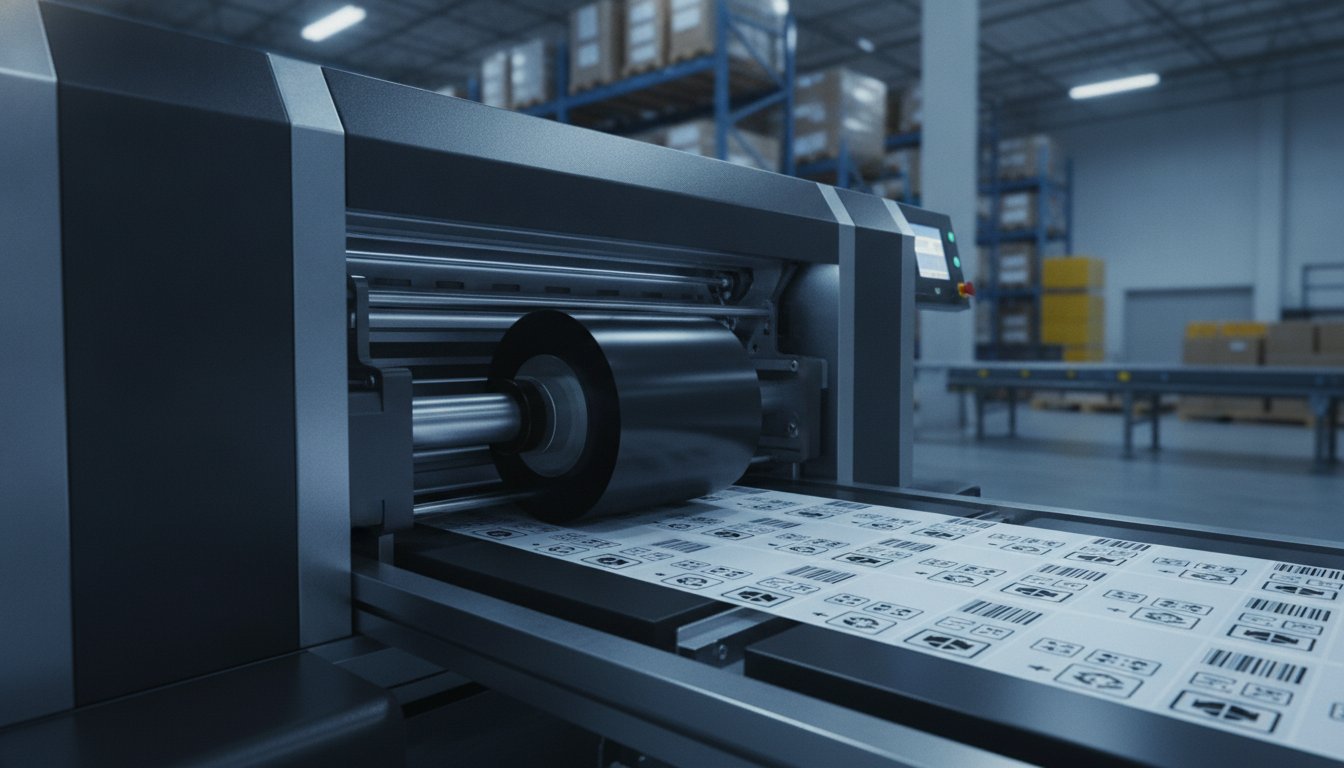
Why would you put low-octane fuel in a supercar? Running a high-performance Zebra 170Xi4 with the wrong thermal transfer supplies leads to the same disappointing results. Many operators push their units to the 12 ips limit only to face snapped ribbons, smudged wide-format labels, or premature printhead failure. We understand the pressure of high-volume environments where every second of downtime impacts your bottom line. It's a frustrating cycle that wastes both time and money.
You can stop the cycle of frequent replacements and illegible barcodes by mastering the technical nuances of 170xi4 ribbons. This guide provides a professional selection framework to help you maximize print speed and durability while protecting your equipment. We'll walk you through the chemistry behind wax, wax-resin, and resin options specifically for wide-format needs. You will learn how to achieve crisp, scannable results and extend the longevity of your 170Xi4 printhead, ultimately lowering your total cost-per-label for 2026 and beyond.
Key Takeaways
- Learn how to select the ideal ribbon chemistry to maintain 12 ips print speeds without sacrificing barcode scannability.
- Discover the "sweet spot" between wax and resin to achieve professional results on semi-gloss and coated materials.
- Find out how switching to high-quality 170xi4 ribbons from DuraFast Label Company can significantly reduce your operational costs while protecting your equipment.
- Master the critical darkness and pressure adjustments needed to extend the life of your wide-format thermal printhead.
- Identify the correct wind direction and ribbon widths to ensure seamless compatibility and edge-to-edge print protection.
Why Your Zebra 170Xi4 Ribbon Choice Matters in 2026
The Zebra 170Xi4 is a true industrial workhorse. It's built for 24/7 wide-format labeling in demanding environments. When you're pushing this machine to its 12 ips limit, your choice of 170xi4 ribbons becomes the most critical factor in your success. High-speed printing leaves no room for poor ink transfer. Thermal transfer technology works by using precise heat to melt ink onto the substrate. If the ribbon isn't designed for these high-speed thermal cycles, you'll see barcode voids and faded text. Wide-format printing also introduces tension issues. If the ribbon tension isn't perfectly balanced across the 6.6-inch width, you'll face ribbon wrinkling. These wrinkles create diagonal dead zones that make barcodes unreadable.
Wide-Format Thermal Dynamics
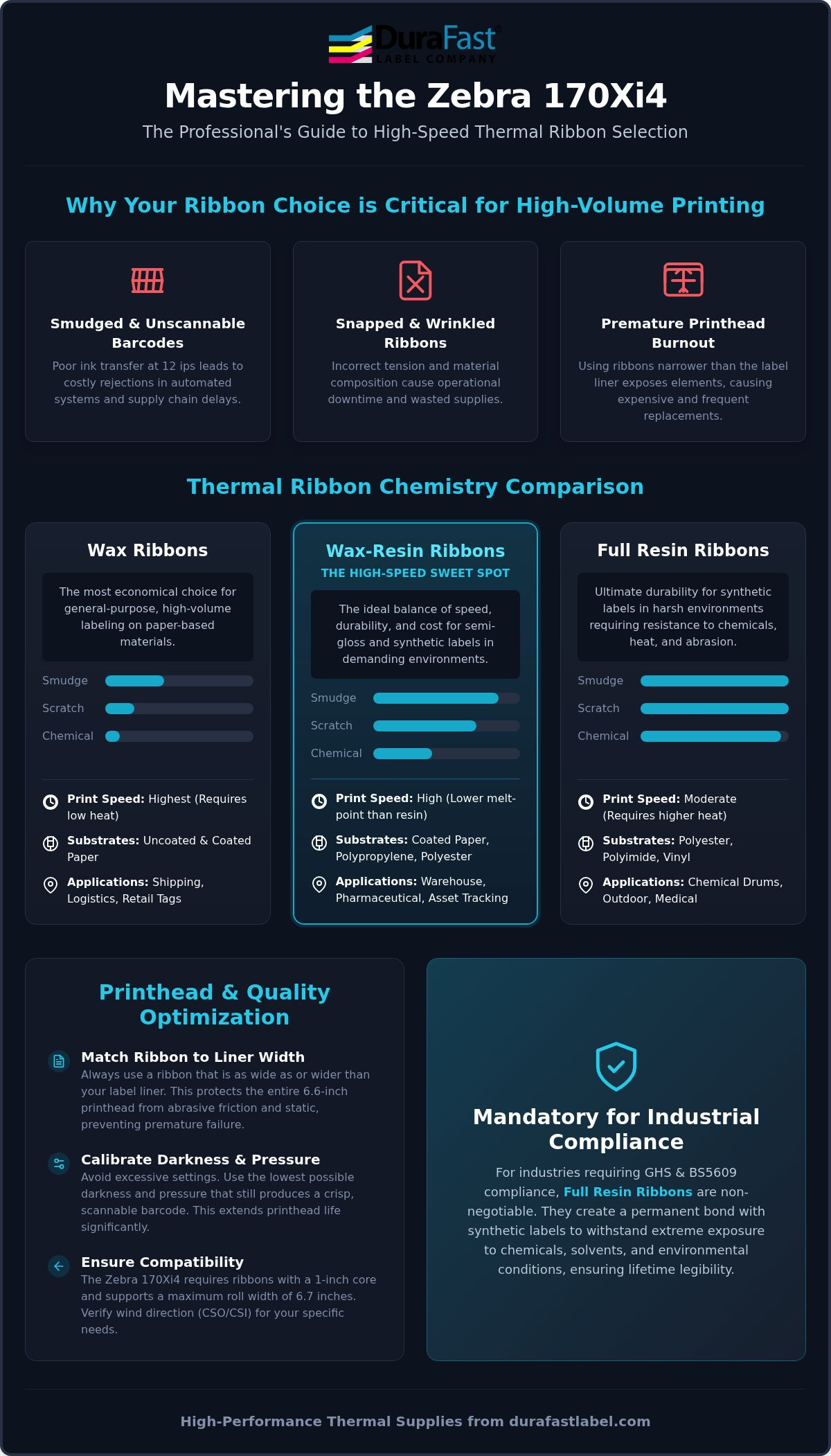
Distributing heat across a 6.6-inch printhead requires sophisticated thermal management. Each heating element must fire and cool rapidly to maintain crisp edges at 12 ips. High-quality 170xi4 ribbons play a vital role in this cooling cycle. The ribbon acts as a protective barrier and a heat sink for the printhead. If the ribbon is too narrow, the exposed printhead elements can overheat. This leads to "burn-out" and expensive replacements. You should always match your ribbon width to the width of your label liner. This ensures the entire printhead is protected by the ribbon's specialized back-coating, which reduces friction and static buildup.
Industrial Durability Standards for 2026
In 2026, industrial labeling is about more than just identification. It's about compliance and survival in automated systems. High-speed sorting centers use advanced scanners that demand perfect contrast. Any smudging or scratching during transport can lead to costly rejections. For specialized industries, meeting GHS and BS5609 compliance with resin ribbons is mandatory. These ribbons ensure that labels remain legible when exposed to chemicals, moisture, or extreme temperatures. Using the right ribbon chemistry protects your brand and your bottom line.
Standard 170Xi4 ribbon compatibility requires a 1-inch core and supports a maximum roll width of 6.7 inches to accommodate the printer's wide-format industrial specifications.
Comparing Wax, Wax-Resin, and Resin Ribbons for 170Xi4
Selecting the right 170xi4 ribbons depends on your label material and the environment where your product will live. Each ribbon chemistry offers a unique balance of durability and cost. You don't want to overspend on resin for simple shipping labels. Conversely, using wax for chemical drums leads to compliance disasters. Understanding these three categories is the first step toward supply chain optimization. When you match the ribbon to the substrate, you ensure that every barcode remains scannable from the warehouse to the end user.
- Wax Ribbons: These are the most economical choice. They work best on standard paper labels for indoor storage and high-volume shipping applications.
- Wax-Resin Ribbons: This hybrid is the "sweet spot" for semi-gloss and coated materials. They offer significantly better smudge and scratch resistance than pure wax.
- Full Resin Ribbons: These are essential for synthetic substrates. They provide the highest level of resistance to chemicals, extreme heat, and heavy abrasion.
When to Choose Wax-Resin for High-Speed Printing
The Zebra 170Xi4 is a beast at high speeds. Running jobs at 10 or 12 ips requires a ribbon that melts quickly but sets instantly. Wax-resin hybrids are designed for this exact challenge. They feature a lower melt-point than full resin, which helps preserve your printhead life by requiring less heat. However, they still provide the smudge resistance needed for high-speed conveyor systems. For logistics operations using coated paper, these ribbons provide the best ROI. You get professional, durable results without the premium cost of full resin supplies. In automated facilities, the extra durability of a wax-resin ribbon pays for itself by reducing the manual intervention costs triggered by unreadable codes.
Full Resin Applications: Chemical and Outdoor Use
Harsh environments demand specialized solutions. If your labels face solvents, industrial oils, or extreme outdoor temperatures, full resin thermal transfer ribbons are mandatory. These ribbons create a permanent bond with synthetic surfaces that standard inks can't match. We often recommend pairing these high-performance ribbons with DuraFast Matte Chemical Labels to ensure long-term legibility. This combination is ideal for GHS compliance and heavy machinery tracking. Your barcodes will remain crisp and scannable even after years of environmental stress. If you aren't sure which material fits your specific application, feel free to contact us for expert guidance or ribbon testing samples.
OEM vs. DuraFast Ribbons: Balancing Cost and Performance
Does using third-party 170xi4 ribbons damage your printer? This is a common concern for operations managers looking to trim costs. The short answer is no. Using high-quality compatible ribbons won't harm your hardware or void your warranty. The real danger comes from low-grade, "bargain" ribbons that lack proper quality control. High-performance ribbons from DuraFast are engineered to meet the same rigorous standards as OEM supplies. They provide a reliable way to reduce your overhead without risking your industrial equipment.
The secret to printhead longevity lies in the back-coating. The thermal printhead is the most expensive component in your Zebra 170Xi4. A premium back-coating acts as a lubricant. It reduces the friction generated as the ribbon moves at 12 ips. Cheap ribbons often skip this step or use inferior materials. This causes the printhead to wear down prematurely. Consistency in the ink formulation is just as vital. When ink is uneven, operators often crank up the darkness settings to fix light spots. These "hot spots" put unnecessary stress on the thermal elements. Over time, the cost of replacing printheads far outweighs the small savings from cheap ribbons.
The Anatomy of a High-Quality Ribbon
What sets a professional ribbon apart from a generic one? It starts with anti-static properties. Industrial environments are breeding grounds for static electricity. This static attracts dust and debris directly to the ribbon. As the debris passes under the printhead, it acts like sandpaper, causing scratches and element failure. Professional-grade 170xi4 ribbons also feature clean-film leaders. These specialized leaders help clear away residue during every ribbon change. This simple feature extends your maintenance cycles and ensures your 300 dpi barcodes stay crisp and scan-ready.
Sourcing for National Operations
Managing a national supply chain requires absolute consistency. You need to know that a ribbon ordered for a facility in one state will perform exactly like the one used across the country. We specialize in providing reliable Zebra ribbons that maintain the same specifications roll after roll. Bulk purchasing is especially effective for wide-format units. Since 170Xi4 supplies are wider than standard 4-inch rolls, the price per unit is higher. Buying in volume helps you lock in better rates and ensures your high-volume lines never experience downtime due to a lack of consumables.
Maximizing 170Xi4 Printhead Life and Output Quality
The Zebra 170Xi4 is a high-speed workhorse. Reaching 12 ips is impressive, but it puts immense stress on the thermal printhead. If you want to avoid frequent replacements, you must balance your hardware settings with your 170xi4 ribbons. Most operators make the mistake of cranking up the darkness when they see light print. This is often counterproductive. Instead of better quality, you get "ribbon burn" and shortened printhead life. Finding the right balance ensures your barcodes stay crisp without wearing out your machine.
Darkness and Speed Calibration
Finding the right temperature is a science. At 12 ips, the "heat-transfer window" is incredibly small. The heating elements have milliseconds to fire and cool. If your darkness is too high, the ink doesn't just melt; it smears. Using a lower melt-point ribbon allows you to drop the darkness settings while maintaining crisp edges. Selecting a ribbon with a lower melt-point directly reduces the thermal stress on the printhead, significantly extending its operational lifespan. You should always aim for the lowest darkness setting that produces a scannable barcode.
Preventative Maintenance for Industrial Printers
High-volume environments generate significant dust and adhesive buildup. We recommend the "one ribbon, one clean" rule. Every time you swap out your 170xi4 ribbons, clean the printhead with an isopropyl alcohol swab. This prevents buildup from becoming "baked on" by the thermal elements. You can also use BarTender Professional software to fine-tune your print density at the software level. This provides better control than just adjusting the printer's front panel. For more on choosing the right hardware for your facility, check out The 2026 Professional Guide to Thermal Label Printers.
Don't forget about printhead pressure. Since you're likely printing 6-inch wide labels, the pressure must be even across the entire width. If one side is tighter than the other, you'll see ribbon wrinkling. This is the most common cause of unreadable barcodes in wide-format printing. Adjust the pressure toggles until the ribbon feeds flat and smooth. If you're still seeing diagonal lines or "ghosting" in your print, it's time to re-evaluate your ribbon and label pairing. We can help you find the perfect match for your specific high-speed applications. Please contact us today to discuss custom ribbon testing for your 170Xi4 units.
Sourcing High-Quality 170Xi4 Ribbons and Supplies
Selecting the right 170xi4 ribbons is about more than just the ink chemistry. You must verify hardware compatibility before you finalize your order. Zebra industrial units typically require a 1-inch core and a "Coated Side Out" (CSO) wind direction. If you accidentally load a "Coated Side In" (CSI) ribbon, the ink won't transfer to the label. Instead, it will stick to your printhead and cause a mess that requires significant downtime to clean. We always recommend double-checking your printer settings to ensure your supplies match your configuration.
Ribbon width is another critical factor for equipment health. While the 170Xi4 has a maximum ribbon width of 6.7 inches, you should always choose a ribbon that is slightly wider than your label liner. For example, if you're printing on 6-inch labels, a 6.5-inch ribbon is a smart choice. This safety margin ensures the printhead is never exposed to the abrasive edges of the label liner. By keeping the entire printhead covered by the ribbon's protective back-coating, you prevent premature wear and avoid expensive hardware repairs. It's a simple sourcing strategy that saves thousands of dollars over the life of your printer fleet.
Custom Ribbon Testing and Validation
Not every label material reacts the same way to every ribbon. We strongly recommend testing your specific substrate before you commit to a bulk order. This is especially true for chemical-resistant or GHS-compliant labels where durability is non-negotiable. If your application involves harsh environments or long-term outdoor exposure, request samples to ensure the ink bond is permanent. We also offer ribbon audits for manufacturing facilities. Our team can analyze your current output and identify where you can save money or improve barcode scannability. Don't guess which supplies you need when you can validate them with real-world testing.
Contact DuraFast for Expert Guidance
Optimizing a fleet of industrial printers is a complex task. Our technical support team understands the nuances of Zebra hardware and thermal transfer workflows. We don't just sell supplies; we provide solutions that help you lower your total cost-per-label. For national logistics providers, we offer customized supply contracts that ensure you have a steady stream of high-quality 170xi4 ribbons across all your locations. You'll benefit from consistent pricing and a reliable supply chain that keeps your high-volume lines moving without interruption. Take the next step in optimizing your labeling operations today.
Contact our Zebra experts to find the perfect 170Xi4 ribbon
Future-Proof Your Wide-Format Printing Operations
Mastering your supply chain is the key to maintaining a competitive edge in 2026. By selecting high-performance 170xi4 ribbons with specialized back-coating, you protect your most valuable hardware while ensuring every barcode is crisp and scannable. Whether you're running high-speed logistics or managing complex chemical labeling, the right supplies reduce your total cost-per-label and prevent unnecessary downtime. We've seen how the right pairing of ribbon and substrate can transform a struggling production line into a model of efficiency.
Our team brings specialized expertise in wide-format industrial thermal printing to every partnership. With our national supply chain reliability, you can trust that your facilities will always have the consistent consumables they need to thrive. Don't let poor ribbon quality slow down your 12 ips operations or lead to expensive printhead failures. It's time to take control of your output quality and hardware longevity.
Ready to optimize your workflow? Request a Technical Ribbon Audit for Your Zebra 170Xi4 Fleet to see the difference professional-grade supplies can make for your business. Let's make your high-volume printing stress-free and efficient.
Frequently Asked Questions
What is the maximum ribbon width for the Zebra 170Xi4?
The maximum ribbon width for the Zebra 170Xi4 is 6.7 inches. This wide-format capacity allows the printer to handle large industrial labels, such as those used for pallet shipping or chemical drum identification. To protect your printhead from premature wear, it's best practice to select a ribbon that is slightly wider than your label liner. This ensures the entire heating element stays covered by the ribbon's protective back-coating during high-speed runs.
Can I use wax ribbons for high-speed printing at 12 ips?
You shouldn't use standard wax ribbons for high-speed printing at 12 ips. Wax has a relatively low melting point and lacks the durability needed to stay crisp at maximum speeds. At 12 ips, the ink may smudge or fail to bond properly with the label substrate. For high-speed applications on the 170Xi4, a high-performance wax-resin hybrid is the better choice. It offers the smudge resistance and fast-setting properties required for automated logistics.
Why is my ribbon wrinkling on my Zebra 170Xi4?
Ribbon wrinkling on the Zebra 170Xi4 usually occurs due to uneven printhead pressure or incorrect ribbon tension across its 6.6-inch width. If the pressure toggles aren't balanced, the ribbon will feed at an angle, creating diagonal creases that result in unreadable barcodes. You should adjust the toggles until the ribbon flows smoothly. Using high-quality 170xi4 ribbons with consistent back-coating can also help reduce the friction that leads to this common issue.
Do I need a resin ribbon for GHS compliant labels?
Yes, you definitely need a full resin ribbon to meet GHS compliance standards for chemical labeling. GHS labels must withstand harsh environments, including exposure to saltwater, chemicals, and extreme temperatures. When paired with DuraFast Matte Chemical Labels, resin ink creates a permanent bond that won't smudge or peel. This combination ensures your safety data remains legible throughout the product's lifecycle, protecting your business from compliance failures in demanding industrial settings.
How often should I clean the printhead on my 170Xi4?
You should clean the printhead on your 170Xi4 every time you replace the ribbon. This is often called the "one ribbon, one clean" rule in high-volume industrial environments. Dust, adhesive residue, and ink buildup can accumulate quickly, especially during wide-format printing. Regular cleaning with isopropyl alcohol swabs prevents these contaminants from baking onto the thermal elements. This simple habit is the most effective way to extend your printhead life and maintain consistent output quality.
What is the difference between CSO and CSI ribbons for Zebra printers?
The difference between CSO and CSI ribbons is the side of the film that carries the ink. Zebra printers, including the 170Xi4, are designed for Coated Side Out (CSO) ribbons. This means the ink faces away from the core. If you use a Coated Side In (CSI) ribbon, the ink will face the printhead instead of the label. This causes the ink to melt onto the hardware, leading to a difficult cleanup and potential equipment damage.
Will using third-party ribbons void my Zebra 170Xi4 warranty?
Using third-party 170xi4 ribbons will not void your Zebra printer warranty. Federal laws, such as the Magnuson-Moss Warranty Act, protect your right to use compatible supplies from other manufacturers. The key is to choose high-quality ribbons that meet industrial standards. DuraFast ribbons are engineered to provide the same back-coating protection and ink consistency as OEM options. This allows you to reduce operational costs without risking your equipment's coverage or long-term performance.
How do I choose between wax-resin and full resin for my application?
Choosing between wax-resin and full resin depends on your label material and the durability your application requires. Wax-resin is the ideal choice for semi-gloss paper or coated labels that need smudge resistance for shipping and retail. Full resin is necessary for synthetic materials like polyester or polypropylene. If your labels will face heavy abrasion, chemicals, or outdoor exposure, full resin provides the extreme durability needed to keep your barcodes scannable in the toughest conditions.