Zebra ZT411 vs ZT620 Printer Comparison: Choosing the Right Industrial Powerhouse
4th Sep 2026
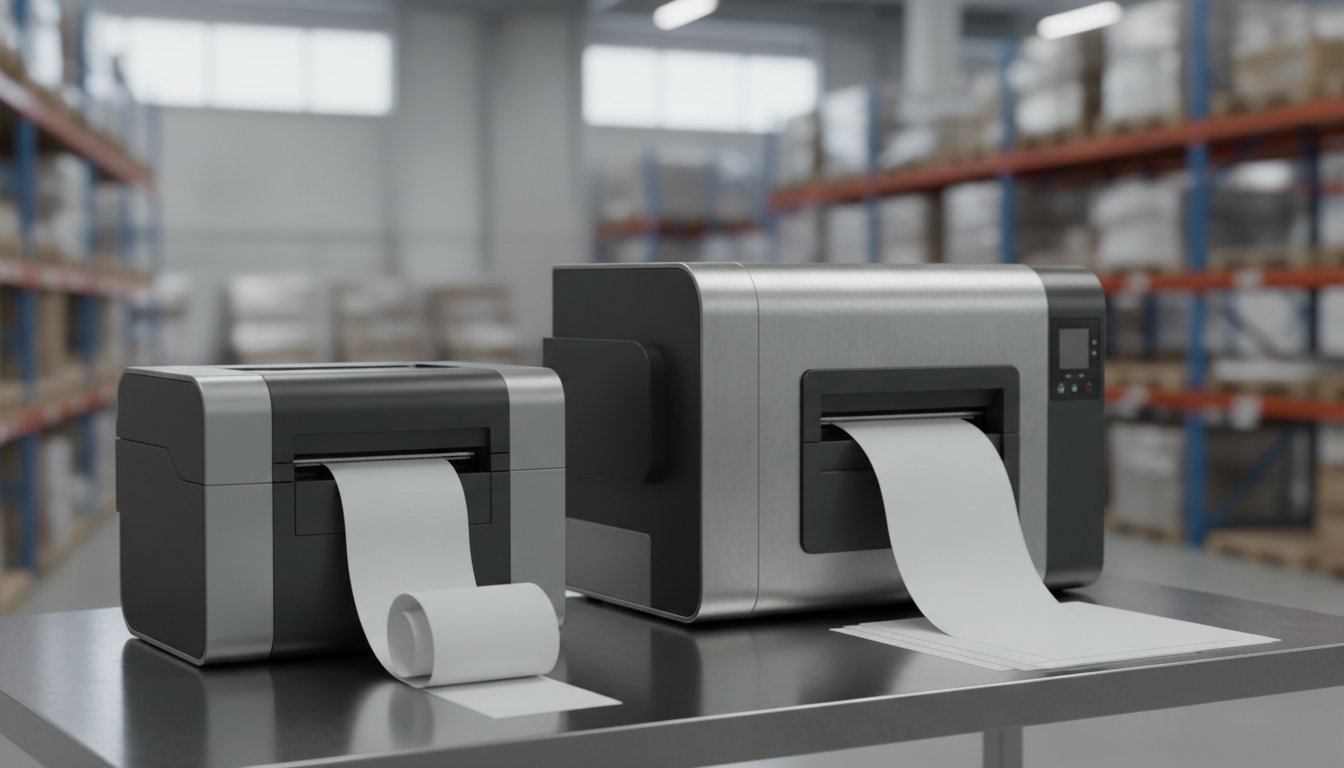
What if the budget-friendly printer you choose today ends up costing your facility thousands in lost productivity by next year? Choosing between two heavyweights requires more than just looking at a spec sheet. This Zebra ZT411 vs ZT620 printer comparison helps you look past the hardware to find the reliability your 24/7 environment demands. You likely already know that a single hour of downtime during a pallet labeling run can throw your entire shipping schedule into chaos. It's frustrating when a printer fails just because the workload became too intense or the media was too complex to calibrate quickly.
We're here to simplify that decision and give you peace of mind. You'll discover the critical differences in print width, durability, and long-term performance so you can justify the investment difference with confidence. We'll examine why the ZT411 is the go-to for standard 4-inch logistics while the ZT620 serves as a specialized powerhouse for wide-format chemical and pallet applications. By the end of this guide, you'll know exactly which model supports your label dimensions and what maintenance is required to keep your lines moving without interruption.
Key Takeaways
- Determine if your application requires the standard 4-inch versatility of the ZT411 or the specialized 6.6-inch wide-format capacity of the ZT620.
- Match your facility's output to the right duty cycle by comparing the ZT411’s industrial rating against the ZT620’s rugged, 24/7 mission-critical construction.
- Use this Zebra ZT411 vs ZT620 printer comparison to find the best ROI based on your specific print speeds, resolution needs, and media torque requirements.
- Learn how to leverage advanced features like field-installable RFID kits and BarTender Professional software to maintain compliance and efficiency.
- Discover why selecting the correct thermal transfer ribbons and labels is just as critical as the hardware for preventing expensive industrial downtime.
Zebra ZT411 vs ZT620: A High-Level Comparison
Choosing between the Zebra ZT411 and the ZT620 is more than a simple price check. It's about matching your hardware to the pulse of your operations. The ZT411 stands as the industry's versatile mid-range workhorse. It's designed for standard 4-inch labeling tasks in busy shipping docks and retail backrooms. On the other hand, the ZT620 represents the premium, wide-format evolution of the legendary Xi series. It's built to thrive where other printers fail. Both models utilize high-end Thermal-transfer printing technology to ensure crisp, durable barcodes that scan the first time.
While they share a rugged all-metal construction and the powerful Link-OS platform, their roles are distinct. Your Zebra ZT411 vs ZT620 printer comparison should start with three main factors: how wide your labels are, how many hours a day you print, and how harsh your environment is.
Key Specifications at a Glance
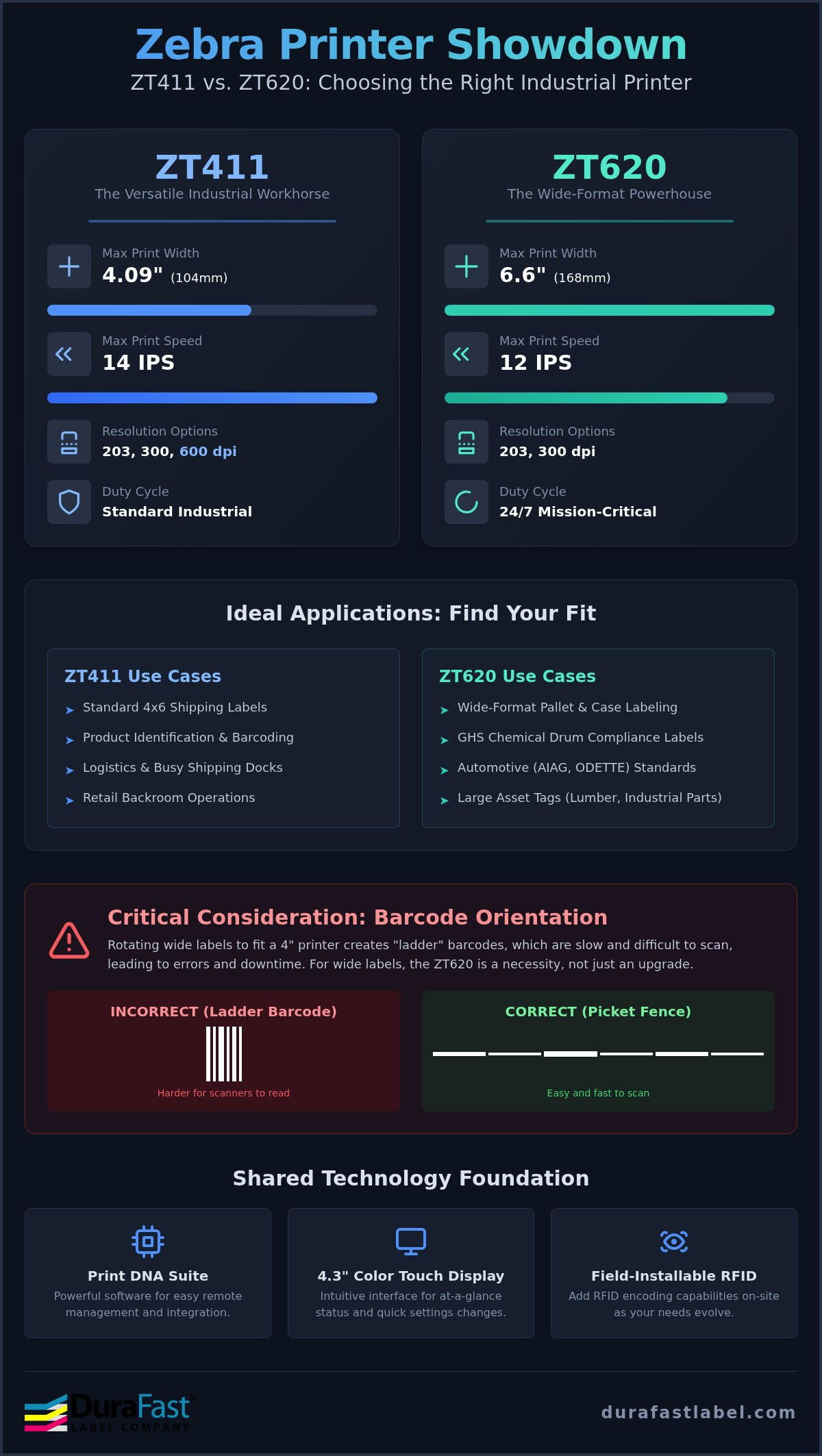
Performance metrics reveal the first major differences. The ZT411 is actually the faster of the two at standard resolution, reaching speeds of 14 inches per second (ips) at 203 dpi. The ZT620 clocks in at 12 ips. However, the ZT620 is built for high-torque situations involving heavy media rolls. Resolution options also vary. The ZT411 offers 203, 300, and 600 dpi configurations. The ZT620 focuses on industrial clarity with 203 and 300 dpi options. You also need to plan your space carefully. The ZT620 has a larger physical footprint to accommodate its 6.6-inch print mechanism, so ensure your packing stations have the extra room.
The Technology Foundation: Print DNA
Both units feature a user-friendly 4.3-inch color touch display. This interface makes it easy to check status at a glance or change settings without a PC. Beneath the screen, Zebra’s Print DNA suite simplifies remote management. It allows your IT team to monitor every industrial barcode printer in your facility from a single dashboard. This firmware consistency is a huge win for mixed fleets. Whether you're using the ZT411 for shipping or the ZT620 for pallet labels, they both use the same Zebra ribbons and software logic. This uniformity reduces training time and prevents configuration errors that lead to downtime.
Print Width: The 4-Inch vs 6.6-Inch Advantage
This Zebra ZT411 vs ZT620 printer comparison often boils down to a single physical constraint: the width of your media. The ZT411 is a standard industrial unit with a maximum print width of 4.09 inches (104mm). It's the perfect size for 4x6 shipping labels and standard product identification. However, the ZT620 enters a different league with its wide-format capability. It supports labels up to 6.6 inches (168mm) wide, providing the extra real estate needed for specialized industrial applications.
Some try to save on hardware costs by rotating wide label designs to fit a 4-inch printer. This is usually a mistake. Printing a 6-inch wide label sideways (as a 6-inch long label) forces the printer to generate "ladder" barcodes. These vertical barcodes are much harder for standard scanners to read than "picket fence" barcodes. It also slows down your throughput significantly. If your business requires wide-format output, the ZT620 isn't just an upgrade; it's a necessity for maintaining scan accuracy and line speed.
When 4 Inches Isn’t Enough
GHS chemical drum labeling is a prime example where the ZT411 falls short. These labels must accommodate multiple red-bordered pictograms, signal words, and extensive safety text. Trying to cram this data into 4 inches often results in unreadable text that fails compliance audits. Pallet labeling in the automotive and logistics sectors also demands the ZT620. Standards like ODETTE or AIAG frequently require large-format labels that provide visibility from across a warehouse. The ZT620 handles wide thermal transfer tags for industrial inventory and lumber with ease.
Government and defense logistics also rely on large-scale asset tracking. Research into RFID technology in government highlights the importance of data integrity in complex supply chains. The ZT620 ensures these large, data-heavy labels remain legible and compliant under harsh conditions. Whether you're tagging chemical containers or oversized shipping crates, the extra width prevents data crowding.
Media Handling and Versatility
It's not just about the printhead size. The ZT620 features a high-torque media drive system specifically engineered to pull massive, heavy rolls of wide labels. It uses specialized sensors to accurately detect non-standard label shapes or black marks on the backing. You'll find that loading Zebra ribbons into the ZT620 is surprisingly simple, even in cramped warehouse corners. The side-loading design and illuminated media path reduce the chance of threading errors.
Choosing the wrong width leads to wasted media and frustrated operators. If you're unsure which width fits your specific chemical or shipping application, you can talk to our labeling experts for a media compatibility review.
Durability and Duty Cycle: Mid-Range vs. Ultra-Rugged
Understanding the duty cycle is a vital part of any Zebra ZT411 vs ZT620 printer comparison. While both machines carry an industrial label, they're built for different levels of intensity. The ZT411 is rated as an advanced industrial printer, which is perfect for standard warehouse environments and distribution centers. The ZT620 is a high-duty industrial powerhouse. It's engineered for mission-critical, 24/7 operations where stopping for even an hour isn't an option. If your facility never sleeps, the ZT620 is the model that can keep up with that pace.
A major mechanical difference lies in how these machines handle physical stress. The ZT620 features a high-torque media drive system. This system is specifically designed to pull heavy, full-width rolls of media without straining the motor or causing registration errors. It also excels in thermal management. In high-heat manufacturing plants, the ZT620 dissipates heat more effectively than the ZT411. This prevents the internal electronics from throttling print speeds during long, continuous runs. For facilities that demand this level of resilience across their entire production line, using smart sensors from Contrinex can help ensure that every stage of automation remains reliable. For a deeper look at how these tiers stack up against the competition, you can read this industrial barcode printer review.
The ZT620 carries the DNA of the legendary Xi series, which was the gold standard for industrial reliability for decades. While the ZT411 uses high-impact plastic for certain non-critical components to save weight, the ZT620 utilizes metal components throughout the entire media path. This all-metal construction resists wear from abrasive labels and harsh cleaning chemicals found in industrial settings. The ZT620 is the most durable wide-format printer in Zebra’s 2026 catalog. It's designed to provide years of service in environments that would quickly wear out a lesser machine.
ZT411: The Perfect Balance for Standard Workflows
You don't always need the most rugged model for every task. The ZT411 hits the "sweet spot" for facilities running one or two shifts per day. It's often the better choice for retail distribution centers where space is limited. Its bi-fold door design requires only 4 inches of swing space, so it fits perfectly into tight packing stations. It's also designed to be easy to maintain for non-technical staff. Both models feature tool-less printhead and platen roller replacement, which keeps your lines moving. Using high-quality Zebra ribbons with either model will help protect these components and extend the life of your industrial barcode printer.
Advanced Features: RFID, Connectivity, and Software
Beyond the metal frames, the intelligence of these machines determines how well they integrate into your digital workflow. This Zebra ZT411 vs ZT620 printer comparison shows that while they share a common software foundation, their application in high-tech environments varies. Both units come standard with USB 2.0, RS-232 Serial, 10/100 Ethernet, and Bluetooth 4.1. This ensures they fit into almost any existing network architecture. The inclusion of dual USB Host ports is a game-changer for standalone stations. You can plug a barcode scanner or a keyboard directly into the printer. This allows workers to input data without needing a dedicated PC at every station.
Software synergy is where these printers truly shine. Using BarTender Professional allows you to design complex labels that leverage Zebra's internal logic. It makes the integration process seamless. This is especially true when you're dealing with variable data or serialized barcodes that must be perfectly accurate every time. The software handles the heavy lifting, allowing the printer to focus on high-speed output.
RFID and Future-Proofing
Future-proofing your investment often means looking at RFID technology. Both models support field-installable RFID kits. This means you don't have to pay for the capability until your customers or compliance rules demand it. The ZT620 is particularly effective at handling large RFID labels used for tracking heavy assets or palletized loads. Zebra's adaptive encoding technology automatically selects the best settings for the specific tag you're using. This eliminates the trial-and-error calibration that often plagues other brands. We suggest using thermal transfer labels specifically optimized for RFID inlays to ensure the highest read rates.
Network Management and Security
Managing a fleet of printers across a massive warehouse is simplified through the Link-OS environment. You get real-time monitoring of thermal ribbons and media levels. This prevents "run-out" surprises that stop production. Security is also a priority. Zebra’s PrintSecure feature protects your hardware from cyber threats by encrypting connections and blocking unauthorized access. These printers can also integrate directly with cloud-based ERP systems for automated label triggering. If you need help configuring your RFID setup or choosing the right connectivity options, contact our technical team today for expert guidance.
The Final Verdict: Which Zebra Printer Should You Choose?
Deciding between these two powerhouses comes down to your production volume and label dimensions. This Zebra ZT411 vs ZT620 printer comparison shows that while both machines are leaders, they serve different operational goals. If your workflow involves standard shipping labels and you operate during normal business hours, the ZT411 offers the best return on investment. It provides professional grade results without the premium price of a wide format unit. It's the versatile choice for businesses that need reliability without overspending on capacity they don't use.
The ZT620 is the non negotiable choice when your labels exceed 4 inches or when your production line never stops. It's built to handle the physical strain of wide media and the thermal stress of continuous printing. Many facilities find success by mixing these models in a single fleet. Because they share the same Link-OS software platform and Print DNA suite, you can deploy a ZT620 for heavy duty pallet labeling while using ZT411 units for standard product identification. This hybrid approach maintains consistency for your IT team while optimizing your hardware budget across the facility.
Choose the ZT411 If...
- Your labels are 4 inches wide or smaller, such as standard 4x6 shipping labels.
- You operate in a standard warehouse or manufacturing environment with 1 to 2 shifts per day.
- Budget and floor space are your primary constraints, as the ZT411 has a smaller footprint and lower entry price.
Choose the ZT620 If...
- You require 6 inch wide labels for chemical drums, compliance labeling, or oversized pallets.
- You run a 24/7 mission critical operation where any amount of downtime is unacceptable.
- You need the highest torque and durability to handle massive industrial media rolls without registration errors.
Your next step is to evaluate your specific media and ribbon requirements. Even the best printer needs the right consumables to perform at its peak. Choosing the correct combination of labels and ribbons prevents premature printhead wear and ensures your barcodes remain legible in harsh conditions. To find the perfect fit for your facility, you can browse our full range of Zebra Industrial Printers or consult with our experts for a custom media recommendation.
Upgrade Your Industrial Labeling Power
Whether you are planning facility upgrades with equipment from United Lift LLC or streamlining your labeling workflow, choosing the right tools is the first step toward a more efficient facility. This Zebra ZT411 vs ZT620 printer comparison highlights a clear path forward for your operations. If you primarily print standard 4-inch shipping labels during normal business hours, the ZT411 provides the perfect balance of speed and ROI. However, for those managing wide-format chemical drums or mission-critical 24/7 production lines, the ZT620 stands as the ultimate rugged solution. Its all-metal construction and high-torque motor handle the most demanding media rolls without hesitation.
At DuraFast Label Company, we do more than just sell equipment. We're an authorized Zebra distributor with specialized thermal transfer ribbons in stock to keep your lines moving. Our team also provides expert technical support for BarTender Professional integration, ensuring your labels are compliant from the very first print. Don't let printer failure or media incompatibility slow your growth. If you're ready to secure your next industrial powerhouse, Shop Zebra Industrial Printers at DuraFast Label Company. We're here to help you make the right choice for your long-term success.
Can the Zebra ZT411 print 6-inch wide labels?
No, the Zebra ZT411 cannot print 6-inch wide labels. It has a physical maximum print width of 4.09 inches (104mm). This makes it ideal for standard 4x6 shipping labels or product tags. If your application requires wider media for chemical drums or large pallet identification, you must choose the ZT620. The ZT620 supports media up to 6.6 inches (168mm) wide. Attempting to rotate designs to fit a smaller printer usually leads to scan errors.
What is the main difference between Zebra ZT400 and ZT600 series?
The primary difference lies in the duty cycle and mechanical construction. The ZT400 series is an advanced industrial line designed for 1 to 2 shifts per day. The ZT600 series is a high-duty, mission-critical line built for 24/7 operation in harsh environments. While both are rugged, the ZT600 features all-metal components and a high-torque drive system. This makes it better suited for continuous, heavy-duty labeling tasks where downtime is not an option.
Is the ZT620 faster than the ZT411?
Surprisingly, the ZT620 is not faster than the ZT411. In this Zebra ZT411 vs ZT620 printer comparison, the ZT411 leads with a maximum print speed of 14 inches per second (ips) at 203 dpi. The ZT620 reaches 12 ips at the same resolution. However, the ZT620 is designed to maintain its speed while pulling much heavier, wider media rolls. It's engineered for torque and durability rather than raw speed, ensuring consistent output for wide-format labeling.
Do these printers support both direct thermal and thermal transfer printing?
Yes, both models support direct thermal and thermal transfer printing modes. Direct thermal is ideal for short-term labels like shipping tags that don't face extreme conditions. Thermal transfer uses a ribbon to create durable images for chemical or outdoor applications. You can easily switch between these modes by changing your media and adjusting the settings in the Link-OS interface. Using high-quality ribbons from DuraFast ensures you get the best performance and protects your expensive printheads.
Can I upgrade my ZT411 to RFID later if I don’t buy it now?
Yes, you can upgrade your ZT411 to RFID at any time. Zebra designed these units with field-installable RFID kits. This allows you to add encoding capabilities when your business requirements change without buying an entirely new machine. The installation process is straightforward and doesn't require specialized technical tools. This flexibility makes the ZT411 a great choice for companies that want to future-proof their labeling operations while managing their initial hardware budget effectively.
Which thermal ribbon is best for Zebra industrial printers?
The best ribbon depends entirely on your specific label material and environment. Wax ribbons are standard for paper labels used in shipping. Wax-resin ribbons provide better smudge resistance for mid-range synthetic materials. Full resin ribbons are required for chemical-resistant or weatherproof labels. We stock specialized DuraFast thermal transfer ribbons designed specifically for Zebra units. These ribbons protect your printhead and ensure high-contrast barcodes that scan reliably every time, regardless of the printer model.
Does the ZT620 require special software to operate?
No, the ZT620 does not require special software to function. It uses standard Zebra Windows drivers and the Link-OS platform for management. However, for complex industrial designs, we recommend using BarTender Professional. This software integrates perfectly with Zebra's internal logic. It allows you to manage variable data and RFID encoding with ease. Most businesses find that using professional software significantly reduces the time spent on label design while improving overall print accuracy.
What resolution do I need for small barcodes: 203 or 300 dpi?
For small barcodes or fine text, 300 dpi is the recommended minimum. While 203 dpi is standard for shipping labels, it lacks the clarity needed for tiny 2D codes or intricate graphics. The ZT411 offers an even higher 600 dpi option for high-density electronic labels. In our Zebra ZT411 vs ZT620 printer comparison, remember that the ZT620 tops out at 300 dpi. Choose the resolution that matches your smallest label requirements to avoid frustrating scan errors.