What Is the Best Label Printer for Electrician Use Today?
9th Jul 2026
Key Highlights
-
Professional label printers are essential for improving electrical safety, accuracy, and compliance across residential, commercial, and industrial projects.
-
Durable labels help electricians prevent electrical failures, maintain power stability, and reduce downtime during maintenance or emergencies.
-
The best electrician label printers support heat-resistant materials, heat shrink tubing, and laminated tapes for long-term legibility.
-
Key features to look for include print clarity, cutting precision, portability, battery power, and fast workflow efficiency.
-
Choosing the right label printer depends on work type, required label materials, portability needs, and long-term operating costs.
-
Following best practices such as consistent formatting and proper adhesion ensures labels remain reliable over time.
Electrical work often involves complex systems where unclear identification can lead to safety risks, wasted time, failed inspections, and costly mistakes. Electricians need a reliable way to label circuits, cables, and equipment accurately without slowing down the job.
As projects grow in size and complexity, labeling becomes harder to manage. Harsh environments, heat, moisture, and frequent modifications can quickly degrade poor-quality labels, making systems difficult to troubleshoot and maintain.
This blog explains why professional label printers matter, how electricians choose the right one, which features and practices deliver the best results, and how proper labeling improves safety, efficiency, and long-term reliability.
Why Do Electricians Need The Best Professional Label Printer?
Electricians need the best professional label printer because clear, durable labeling is critical for safety, efficiency, and compliance. Accurate labels allow circuits, panels, cables, and equipment to be identified instantly, reducing the risk of electrical shock, incorrect shutoffs, and costly mistakes.
In busy commercial and industrial environments, time matters. A reliable label printer helps electricians work faster, standardize identification, and minimize troubleshooting during maintenance or emergencies.
Professional label printers also produce labels that resist heat, moisture, abrasion, and chemicals, ensuring information stays legible for years. This durability supports electrical codes and inspection requirements while protecting long-term system integrity.
Ultimately, the right label printer improves job quality, boosts productivity, and helps electricians deliver safer, more professional installations every time.
What Types of Labels Do Electricians Commonly Print?
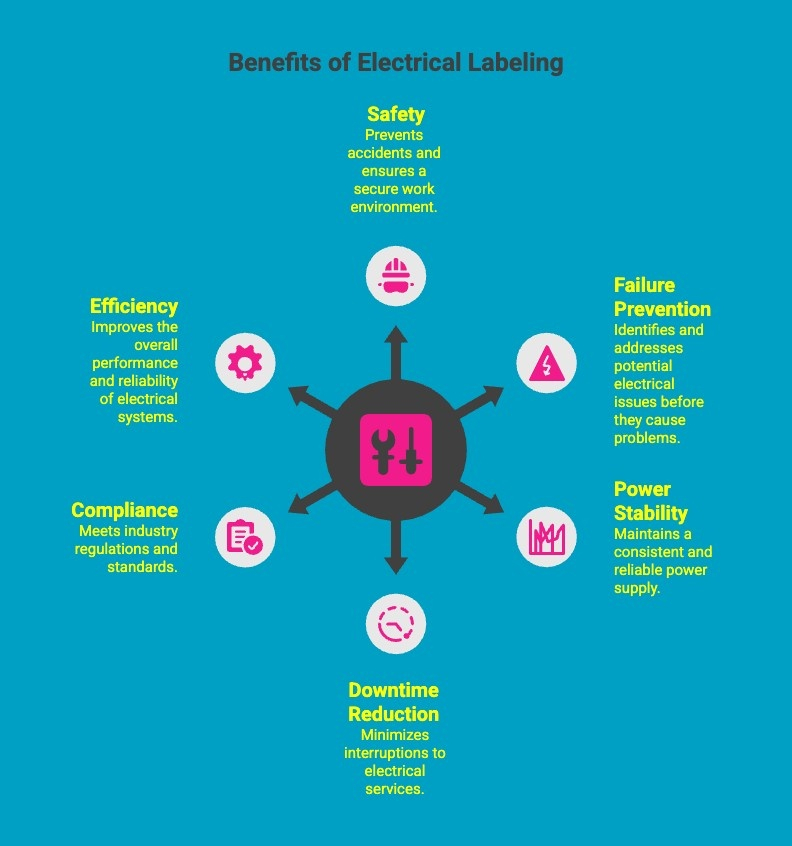
Electricians rely on clear, durable labels to keep electrical systems safe, organized, and dependable across residential, commercial, and industrial projects.
Below are the key ways professional electrical labels support safety, performance, and long-term reliability in real-world installations:
1) Ensures Safety
Clear electrical labels help prevent accidents by allowing electricians and maintenance teams to quickly identify circuits, voltages, and equipment functions. Proper identification reduces the risk of accidental contact with live components, incorrect shutoffs, and electrical shock. In emergencies, accurate labels enable faster isolation of power, protecting both workers and occupants.
2) Prevents Electrical Failures
Labeled panels, cables, and components make troubleshooting far more precise. When circuits and connections are clearly marked, electricians can avoid incorrect connections, overloaded lines, and mismatched components. This clarity reduces human error during installation and maintenance, helping prevent short circuits, overheating, and premature equipment failure over time.
3) Maintains Power Stability
Consistent labeling supports balanced electrical loads and proper phase identification. By clearly marking circuits and distribution points, electricians can manage power flow more effectively and avoid uneven loading. This helps maintain stable voltage levels, protects sensitive equipment, and ensures electrical systems operate smoothly without unexpected fluctuations or disruptions.
4) Reduces Downtime
When issues arise, labeled systems are easier and faster to diagnose. Electricians can quickly trace circuits, identify affected areas, and carry out repairs without guesswork. This efficiency minimizes system downtime, limits operational disruptions, and allows businesses or facilities to resume normal operations with minimal delay.
5) Meets Compliance Standards
Electrical codes and safety regulations require circuits and equipment to be clearly identified. Durable, legible labels help electricians meet inspection requirements and demonstrate compliance with applicable standards. Proper labeling reduces the risk of failed inspections, rework, or penalties while ensuring installations remain code compliant throughout their service life.
6) Enhances Efficiency and Reliability
Professional labeling improves workflow consistency and long-term system reliability. Standardized labels create a clear reference for future upgrades, repairs, or expansions. Electricians can work more efficiently, maintain accurate documentation, and deliver higher-quality installations that remain organized, understandable, and dependable for years.
Effective electrical labeling turns complex systems into clear, safe, and reliable installations that support both daily operation and long-term maintenance.
What Features Should the Best Electrician Label Printer Have?
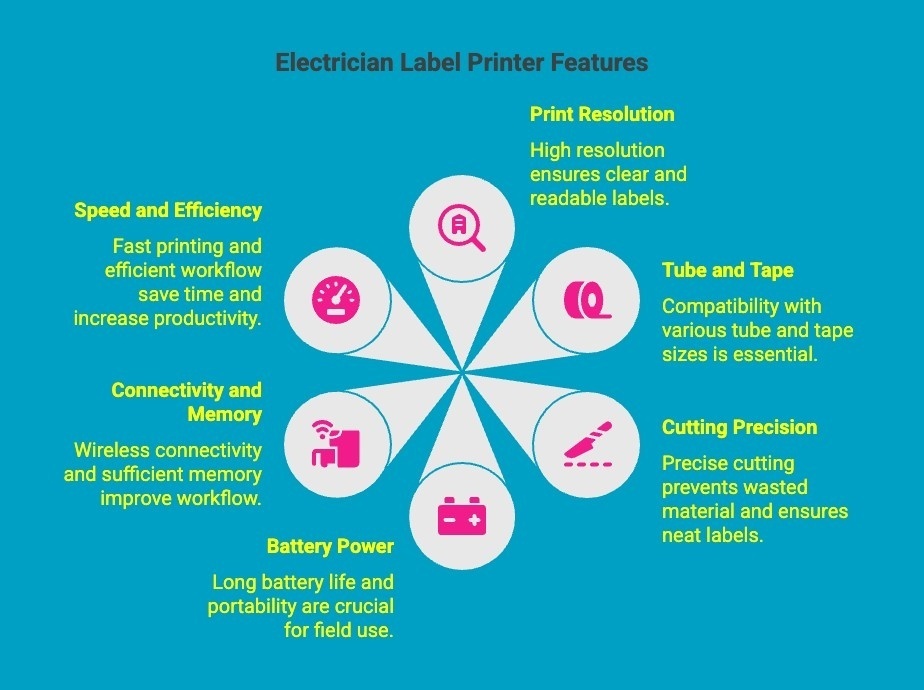
A professional electrician label printer must handle demanding environments while delivering speed, accuracy, and durability.
Here are the essential features that define a high-quality label printer and support safe, efficient, and consistent electrical labelling across every job site:
1) Print Resolution and Clarity
High print resolution ensures text, symbols, and barcodes remain crisp and readable on small labels, cables, and panels. Clear printing prevents misidentification, supports fast troubleshooting, and improves safety. Sharp labels remain legible during inspections and long-term use, even in environments exposed to heat, dust, or vibration.
2) Tube and Tape Compatibility
The best electrician label printers support a wide range of label tapes and heat shrink tubes. This flexibility allows electricians to create cable markers, panel labels, and equipment identification using the correct material and size. Proper compatibility ensures labels fit securely and perform reliably in different electrical applications.
3) Cutting Precision (Half Cut / Full Cut)
Precision cutting improves efficiency and label handling. Half-cut options keep labels attached in strips for quick application, while full cut delivers clean individual labels. Accurate cutting reduces waste, speeds up workflows, and ensures labels apply neatly without tearing or misalignment during installation.
4) Battery Power and Field Portability
Battery-powered operation is essential for on-site work. A portable label printer allows electricians to print labels directly at the point of installation, reducing errors and rework. Lightweight designs and long battery life support continuous use across large sites without interruption.
5) Connectivity and Memory Functions
Modern label printers offer USB, Bluetooth, or wireless connectivity for flexible label creation. Built-in memory allows storage of templates, symbols, and serialized data. These features support consistent labeling, reduce setup time, and enable faster printing for repeat tasks across multiple projects.
6) Speed and Workflow Efficiency
Fast print speeds and intuitive controls help electricians maintain productivity on tight schedules. Efficient printers support batch printing, quick formatting, and minimal downtime. Streamlined workflows allow electricians to complete labeling accurately while focusing more time on installation quality and safety.
The right combination of features ensures electrical labels are accurate, durable, and efficient to produce, supporting safer and more professional electrical work.
Which Label Printer Is Best for Electricians? (Top Options Compared)
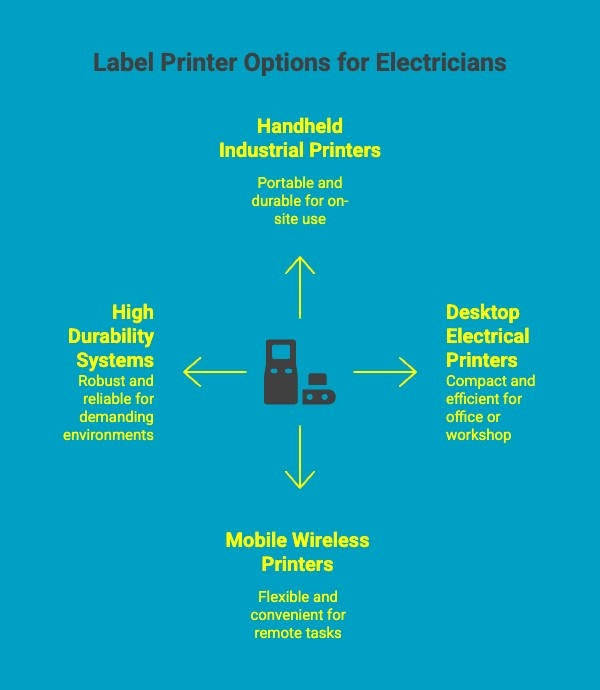
Selecting the right label printer helps electricians improve safety, efficiency, and long-term reliability across every project.
Below are the top types of label printers compared, highlighting where each option performs best based on work environment and labeling demands:
1) Handheld Industrial Label Printers
Handheld industrial label printers are ideal for electricians working directly on-site. They are battery powered, rugged, and designed for quick cable, panel, and equipment labeling. Built-in templates and quick keys allow labels to be created at the point of application, reducing errors and saving time during installations, service calls, and maintenance work.
2) Desktop Electrical Label Printers
Desktop label printers are best suited for workshops, panel shops, and prefabrication environments. They support higher print volumes, faster output, and larger label rolls. Electricians use them to batch print consistent labels before installation, making them ideal for large projects that require standardization, accuracy, and efficient production workflows.
3) Mobile Wireless Label Printers
Mobile wireless label printers offer flexibility by connecting to laptops, tablets, or smartphones. Bluetooth or USB connectivity allows electricians to design and print labels using software or mobile apps. These printers balance portability with advanced formatting, making them useful for teams that rely on digital documentation and repeatable labeling across multiple job sites.
4) High Durability Industrial Label Systems
High-durability industrial label systems are designed for harsh and regulated environments. They focus on long-lasting labels that resist heat, chemicals, abrasion, and moisture. These systems are commonly used in industrial plants, data centres, and facilities where compliance, traceability, and long term legibility are critical requirements.
The best label printer for electricians depends on how, where, and how often labeling is done, making the right choice essential for consistent and professional results.
Why Is the MAX LETATWIN LM-550A3BH One of the Best Label Printers for Electricians?
The MAX LETATWIN LM-550A3BH is widely regarded as one of the best label printers for electricians because it is purpose-built for speed, accuracy, and durability in real-world electrical environments. It excels at printing heat shrink tube labels with precise alignment, ensuring clean, professional results for cables, panels, and control wiring. Its fast print speed, consistent character spacing, and reliable cutting mechanism help electricians reduce labeling time while maintaining high standards of clarity and compliance.
What truly sets this printer apart is how well it supports large projects. Electricians can label multiple cables efficiently without rework, improving safety, organization, and long-term reliability across installations.
For professionals looking to purchase the MAX LETATWIN LM-550A3BH, DuraFast Label Company is a trusted choice. DuraFast offers authorized products, expert guidance, and dependable access to compatible supplies, ensuring electricians get the right solution for their exact needs.
Contact DuraFast Label Company today to explore the LM-550A3BH and get expert help choosing the best labelling system for your projects.
How Do Electricians Choose the Right Label Printer for Their Work?
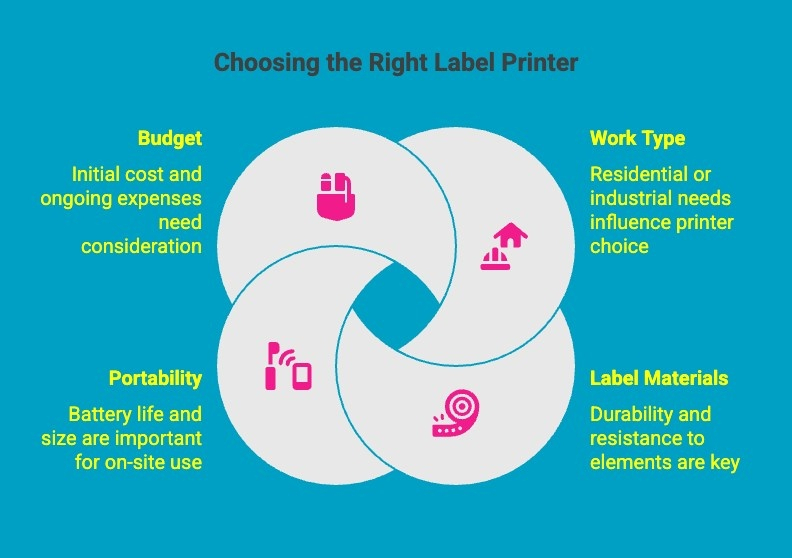
Choosing the right label printer depends on how electricians work, where labels are applied, and the conditions they face daily.
Here are the key factors electricians evaluate to ensure their label printer supports safety, efficiency, and long-term performance:
1) Identifying Your Work Type (Residential vs. Industrial)
Residential electricians often need simple, portable printers for panels and basic circuit labels, while industrial electricians require rugged systems that handle heat shrink tubing, long cable runs, and strict standards. Understanding your primary work environment ensures the printer matches labeling volume, durability needs, and compliance requirements without over- or underinvesting.
2) Required Label Materials
Different jobs demand different label materials. Electricians should confirm the printer supports laminated tapes, vinyl labels, and heat shrink tubes suited to their applications. Material compatibility ensures labels adhere properly, remain legible, and withstand heat, moisture, chemicals, and abrasion common in electrical environments.
3) Portability and Battery Needs
For on-site work, portability matters. Battery-powered printers allow electricians to print labels directly where cables and panels are installed. Lightweight designs, long battery life, and fast startup reduce interruptions and improve accuracy, especially when working across large sites or multiple locations in a single day.
4) Budget and Long-Term Cost
The initial cost is only part of the decision. Electricians should consider tape pricing, tube compatibility, maintenance, and durability. A reliable printer with efficient consumables often delivers lower long-term costs by reducing reprints, downtime, and replacement expenses over time.
Selecting the right label printer ensures electricians work safer, faster, and more consistently across every project.
What Are the Best Practices for Electrical Label Printing?
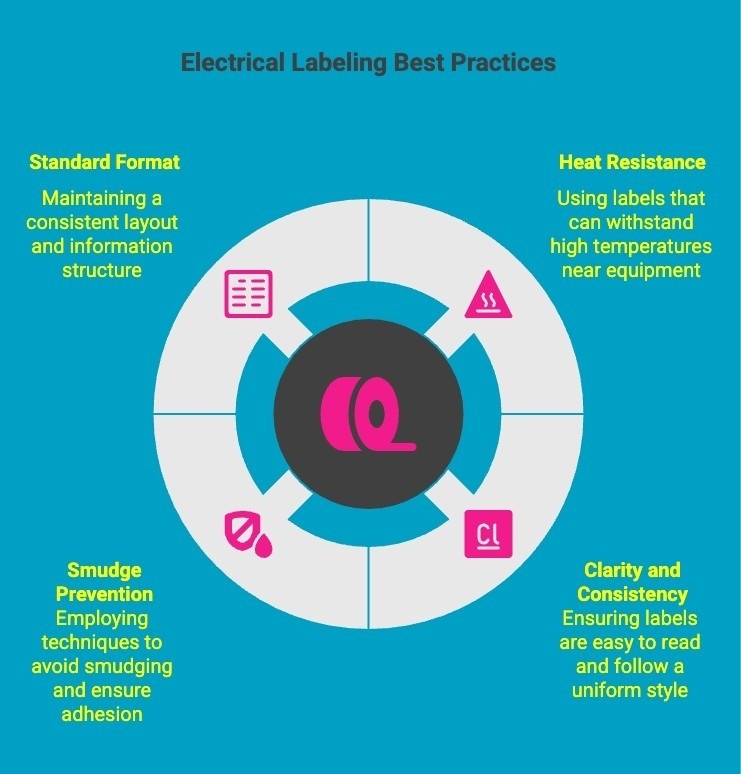
Effective electrical label printing ensures safety, clarity, and long term reliability across installations and maintenance work.
Below are the best practices electricians follow to produce durable, compliant labels that remain legible and useful in demanding electrical environments:
1) Using Heat-Resistant Labels Near Equipment
Electrical equipment generates heat that can quickly degrade standard labels. Electricians should use heat-resistant materials designed for panels, motors, and control cabinets. These labels maintain adhesion and legibility despite elevated temperatures, preventing critical information from fading, peeling, or becoming unreadable over time.
2) Labeling Circuits Clearly and Consistently
Clear, consistent circuit labeling reduces confusion and improves safety. Each label should describe the circuit’s exact function using standard terminology. Consistency across panels and systems helps electricians and maintenance teams quickly identify circuits, reducing errors during troubleshooting, upgrades, or emergency shutoffs.
3) Avoiding Smudging and Poor Adhesion
Smudging and peeling often result from low-quality materials or improper application. Labels should be printed using durable printers and applied to clean, dry surfaces. Proper adhesion ensures labels stay in place despite vibration, moisture, dust, or routine cleaning, maintaining reliability throughout the system’s lifespan.
4) Keeping a Standard Labeling Format
Standardized label formats improve readability and professionalism. Using consistent fonts, sizes, symbols, and layouts makes labels easier to understand across different projects and teams. A uniform format also supports inspections, documentation, and future maintenance by ensuring information is predictable and easy to locate.
Following proven labeling best practices helps electricians create safer, clearer, and more reliable electrical systems that stand the test of time.
Conclusion
Professional electrical labeling is more than a finishing step. It plays a direct role in safety, efficiency, and long-term system reliability. Clear, durable labels help electricians reduce errors, speed up troubleshooting, and meet compliance requirements across residential, commercial, and industrial projects.
When best practices are followed, labels remain legible despite heat, moisture, and wear, providing reliable information for years. Consistent labeling also supports future maintenance, upgrades, and inspections, making electrical systems easier to manage over time. By using the right materials, tools, and formats, electricians can deliver cleaner installations, improve workplace safety, and present a higher standard of professional workmanship on every job.
Frequently Asked Questions
What is the easiest label printer electrician can use for fast labeling?
The easiest label printer for electricians is a handheld industrial model with built in templates and quick keys. These printers allow fast, on site label creation for cables and panels without complex software or setup.
Are there budget-friendly electrician label printers for electrical projects?
Yes. Budget friendly electrician label printers are available that support basic tape labeling for panels and circuits. They are ideal for light-duty work, small projects, and residential jobs where advanced features are not required.
Which label printer electrician recommend for low voltage cabling?
Electricians often recommend label printers that support cable wraps and heat shrink tubing for low voltage cabling. Clear print resolution and consistent spacing help maintain readability on data, control, and communication cables.
What features should I look for in a label printer for electrical labeling tasks?
Look for durability, clear print resolution, compatibility with heat shrink and laminated tapes, battery-powered portability, and reliable cutting. These features ensure accurate, long-lasting labels across electrical panels, wires, and equipment.
Are there label makers that can print durable labels for wires and circuit breakers?
Yes. Professional label makers can print laminated or heat-resistant labels designed for wires and circuit breakers. These labels resist heat, abrasion, and moisture, ensuring information remains legible in demanding electrical environments.
Which label makers handle low-voltage cabling best for electricians?
Label makers that support small fonts, cable wraps, and heat shrink tubing handle low-voltage cabling best. They provide precise spacing and clarity needed for data, security, and control wiring installations.
What's the difference between a label maker and a label printer?
A label maker is typically handheld with basic features for simple labeling. A label printer offers advanced capabilities like higher resolution, tube printing, batch jobs, and software integration for professional electrical labeling tasks.
Are there specific printer brands favored by electricians on forums and Reddit?
Yes. Electricians on forums and Reddit often favor brands like Brother P-Touch, MAX LETATWIN, and Brady for their durability, heat shrink compatibility, clear printing, and consistent performance in demanding professional electrical environments.
How do Brother and DYMO label makers compare for electrician use?
Brother P-touch E510VP and E560BTBP label makers suit electricians needing heat shrink, durability, and professional features, while DYMO Rhino 6000+ works for light-duty panel labels. Brother is generally better for demanding electrical and industrial applications.