
What Makes the Best Self Laminating Labels for Wiring?
14th Jul 2026
Key Highlights
-
Self-laminating labels provide excellent protection by sealing printed information under a clear laminate for long-term readability.
-
They are a more efficient alternative to cable tags and other marking methods that loosen, rotate, or fade over time.
-
Available in a wide range of materials, sizes, and formats, they support a wide range of identification solutions across electrical and industrial systems.
-
Correct selection of material, adhesive strength, and printer compatibility is critical for durability and compliance.
-
Proper application and storage prevent common issues such as peeling, smudging, and premature label failure.
-
Common mistakes include poor surface preparation, incorrect sizing, and using incompatible printers or ribbons.
Clear wire and cable identification is critical for safety, maintenance efficiency, and system reliability. When labels fade, peel, or become unreadable, it leads to confusion, downtime, and increased risk during troubleshooting or upgrades.
Many traditional marking methods fail under heat, moisture, chemicals, or frequent handling. Without the right labeling approach, even well-organized systems can quickly become difficult to manage, especially in industrial and electrical environments.
This blog explains what self-laminating labels are, how they work, and how to choose, apply, and maintain them correctly. It also compares them with other cable marking solutions to help you select a reliable, long-term identification method.
What Are Self Laminating Labels and How Do They Work?
Self-laminating labels are identification labels designed to protect printed information from moisture, abrasion, chemicals, and handling. They consist of two parts: a printable white area for text or barcodes and a clear laminate tail attached to the same label.
To use them, the text is printed on the white section, then the label is wrapped around a wire, cable, or small surface. The clear tail folds over the printed area, sealing it completely. This creates a smooth, transparent protective layer without needing a separate lamination step.
Because the print is sealed beneath the laminate, self-laminating labels remain readable over time, even in electrical panels, industrial equipment, and outdoor environments where durability is essential.
Why Should You Use Self Laminating Labels for Wire and Cable Identification?
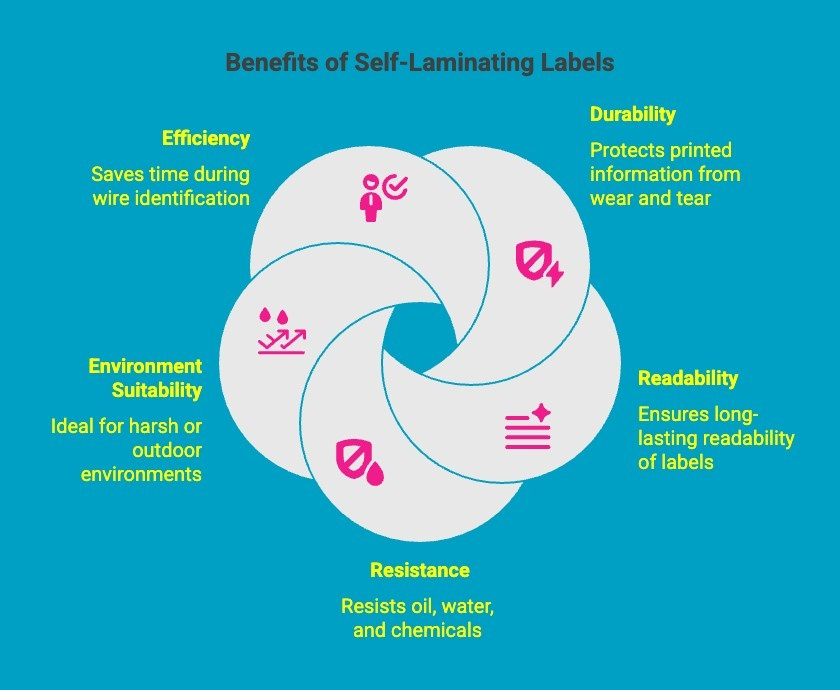
Clear wire identification prevents errors, speeds maintenance, and improves safety across electrical systems. Choosing self-laminating labels adds durability without extra steps; here are the reasons professionals rely on them for consistent, readable, and protected cable marking in demanding environments.
-
Protects Printed Information from Wear and Tear: The clear laminate seals text and barcodes, preventing smudging, fading, or abrasion during handling.
-
Ensures Long-Lasting Readability: Print stays sharp and legible throughout the life of the wire or cable.
-
Resistant to Oil, Water, and Chemicals: Laminated coverage shields identification from common industrial contaminants.
-
Ideal for Harsh or Outdoor Environments: Performs reliably in panels, machinery, and exposed installations.
-
Saves Time During Wire Identification: Faster reading means quicker troubleshooting and safer maintenance.
A simple upgrade that delivers clarity, protection, and efficiency where it matters most.
What Features Define the Best Self Laminating Labels?
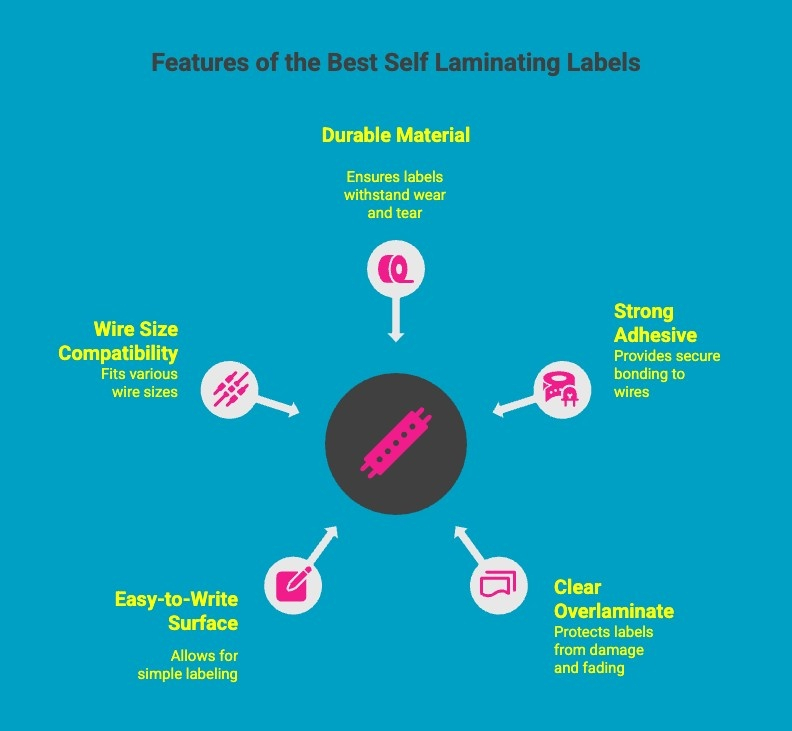
Choosing the best self laminating labels directly affects durability, legibility, and long term performance in real world conditions. Below are the key features that define high-quality options trusted for professional wire and cable identification.
-
Durable, Tear-Resistant Material: Holds up against pulling, bending, vibration, and routine handling without ripping.
-
Strong Adhesive for Secure Bonding: Stays firmly wrapped on wires and cables, even in warm or high-movement environments.
-
Clear Overlaminate for Protection: Seals printed information against abrasion, moisture, and contaminants.
-
Easy-to-Write or Printable Surface: Supports clean handwriting or sharp thermal transfer printing.
-
Compatibility with Various Wire Sizes: The wrap design fits thin conductors and larger cables consistently.
These features ensure labels stay readable, secure, and dependable throughout the life of the installation.
What Are the Different Types of Self Laminating Labels?
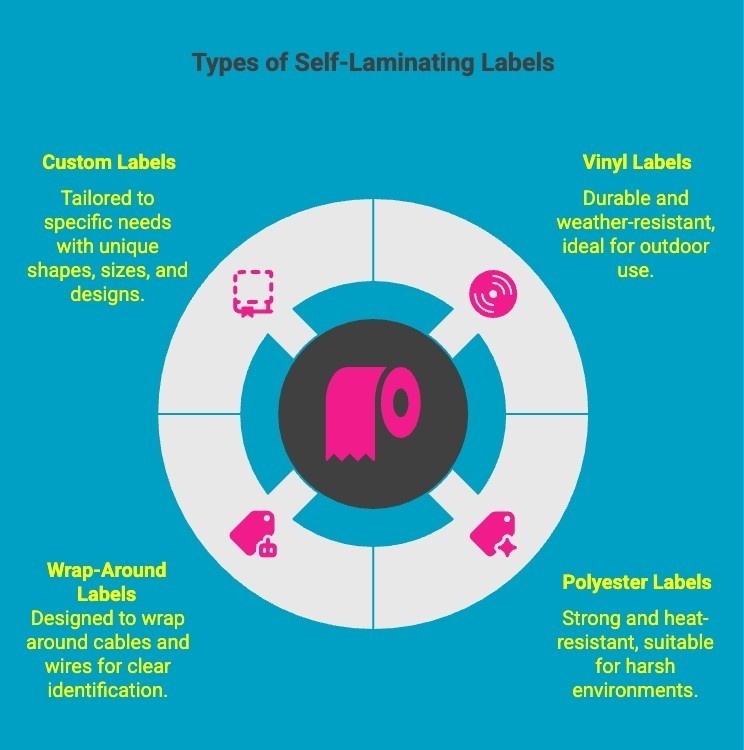
Choosing the right type of self-laminating label depends on durability needs, environment, and identification method. Different materials suit different use cases, from indoor cabling to harsh industrial systems; here are the main types of self-laminating labels used for wire and cable identification.
1) Vinyl Self Laminating Labels
Self laminating vinyl labels are flexible, cost-effective, and simple to apply, making them ideal self laminating wire labels for general-purpose identification. They work well indoors with minimal heat or chemical exposure. These self laminating ID labels resist light moisture and abrasion, delivering dependable readability for control panels, office cabling, and low-stress electrical applications.
2) Polyester Self Laminating Labels
Polyester options are built for demanding environments where durability matters most. These self laminating cable labels resist heat, chemicals, oils, and abrasion, making them suitable for industrial and outdoor use. They maintain sharp print quality and long-term legibility, even when produced using a self laminating label maker for high-volume projects.
3) Wrap-Around Cable Labels
Wrap-around designs feature an extended clear laminate that seals the printed area completely. These self laminating cable labels protect against smearing, moisture, and handling, making them ideal for panels, data centers, and equipment requiring frequent maintenance.
4) Custom Self Laminating Labels
Custom self laminating ID labels are designed for specific wire sizes, colors, or compliance needs. They can include barcodes, serialization, or color coding and are often printed using dedicated self laminating label maker systems for consistent results.
Selecting the right label type ensures reliable identification, better organization, and long-term performance across all wiring environments.
How Do You Choose the Right Self Laminating Labels for Your Application?
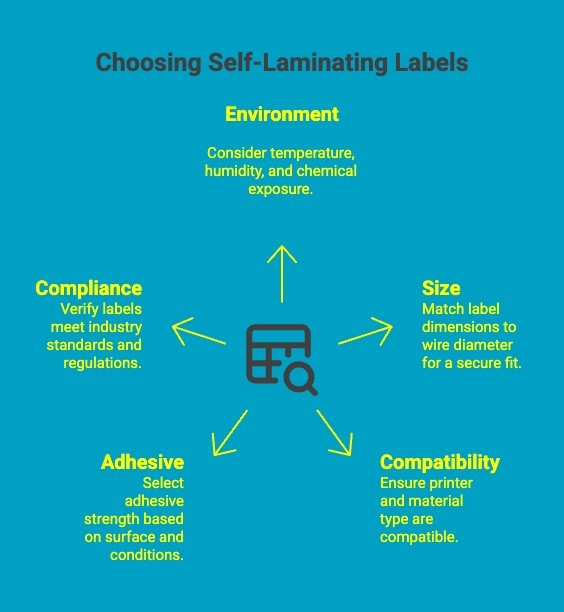
Selecting the right self laminating labels ensures clear identification, long-term durability, and compliance in real working conditions.
Below are the key factors to evaluate before choosing labels for wire and cable applications:
-
Consider the Environment and Conditions: Assess exposure to heat, moisture, chemicals, UV, or abrasion to select the right material.
-
Match Label Size to Wire Diameter: Ensure the wrap area and laminate length fully cover the wire without lifting.
-
Check Printer Compatibility and Material Type: Confirm the labels work with your printer and printing method for sharp results.
-
Choose the Right Adhesive Strength: Strong adhesives are essential for high-movement or high-temperature environments.
-
Ensure Compliance with Industry Standards: Look for labels that meet electrical, safety, and regulatory requirements.
The right choice delivers reliable identification that lasts as long as the installation itself.
How Do You Apply Self Laminating Labels Properly?
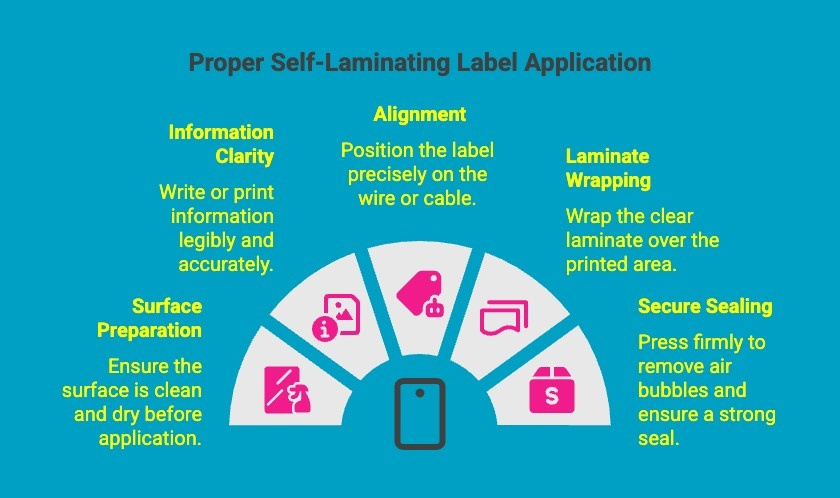
Correct application is essential for label durability, legibility, and long term performance in electrical and industrial settings. Small mistakes can lead to lifting or unreadable markings; here are the steps professionals follow to apply self laminating labels cleanly and consistently.
-
Clean the Surface Before Application: Remove dust, oil, and moisture to ensure proper adhesive bonding.
-
Write or Print Information Clearly: Use legible text or sharp printing to avoid future identification errors.
-
Align the Label with the Wire or Cable: Keep the printable area straight and centered before wrapping.
-
Wrap the Clear Laminate Over the Printed Area: Seal the information completely with the transparent overlaminate.
-
Press Firmly to Remove Air Bubbles and Secure the Seal: Apply even pressure for a smooth, durable finish.
A few careful steps ensure labels stay secure, readable, and reliable over time.
What Are the Common Mistakes People Make With Self Laminating Labels?
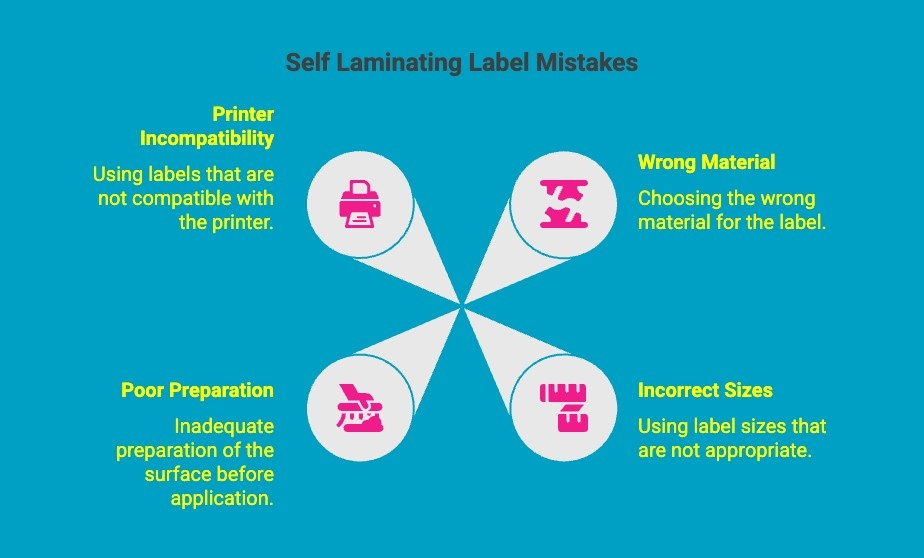
Small mistakes with self laminating labels often lead to peeling, fading, or unreadable markings that slow maintenance and increase safety risks. Knowing where issues begin helps prevent early failure; here are the most common mistakes people make when selecting and applying self laminating labels.
1) Choosing the Wrong Material
Using a material that does not match the environment is a common issue. Vinyl labels applied in high heat, chemical exposure, or outdoor conditions can shrink, fade, or lift. Polyester materials are better suited for harsh electrical and industrial environments where long-term durability is required.
2) Using Incorrect Label Sizes
Labels that are too small may not fully seal the printed area, while oversized labels can wrinkle or lose adhesion. Incorrect sizing affects readability and protection. Matching the label width and wrap length to the wire diameter ensures a clean wrap and a secure laminate seal.
3) Poor Surface Preparation
Applying labels to dirty, oily, or damp wires weakens adhesive bonding. Contaminants prevent full contact between the label and surface, leading to peeling over time. Cleaning and drying the wire before application is essential for reliable, long-lasting identification.
4) Using Labels Not Compatible With Your Printer
Incompatible labels or ribbons often cause smudged text, fading, or incomplete printing. Poor print quality reduces legibility and compliance. Always verify printer, ribbon, and label compatibility to achieve sharp, durable identification.
Avoiding these mistakes helps self laminating labels remain secure, readable, and dependable throughout the life of the installation.
How Does Self-Laminating Labels Compare to Heat-Shrink Tubes and Other Cable Marking Solutions?
Self-laminating labels offer a faster, more flexible alternative to heat shrink tubes and other cable marking solutions. Unlike heat shrink, they do not require heat guns, power sources, or shutdowns, making them ideal for live panels, retrofits, and quick maintenance work. The clear overlaminate seals printed information, protecting it from abrasion, moisture, oils, and chemicals while maintaining excellent readability.
Compared to clip on markers or tags, self laminating labels provide a permanent, professional finish that will not rotate, fall off, or fade easily. They also accommodate variable data like barcodes, circuit IDs, and custom text without additional accessories.
Professionals trust DuraFast Label Company for high-quality self-laminating labels designed for real-world electrical and industrial environments. Their expert guidance ensures you select the right material, size, and printer compatibility for your application.
For reliable cable identification that saves time and lasts longer, contact DuraFast Label Company today to get expert support and the right labeling solution for your needs.
How Do You Maintain and Store Self Laminating Labels for Long-Term Use?
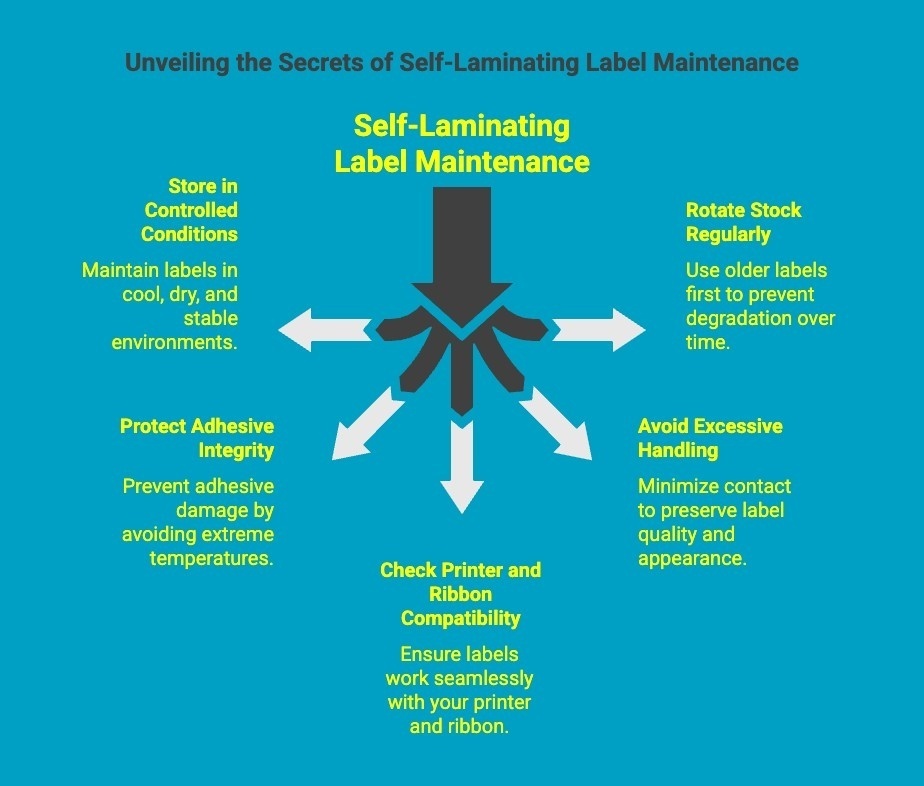
Proper maintenance and storage help self laminating labels retain adhesive strength, print quality, and durability over time. Exposure to heat, dust, or moisture can shorten shelf life; here are five best practices to keep labels ready for long-term use.
-
Store in Controlled Conditions: Keep labels in a cool, dry place away from direct sunlight and humidity.
-
Protect Adhesive Integrity: Leave labels in original packaging to prevent contamination or premature bonding.
-
Check Printer and Ribbon Compatibility: Use approved ribbons to avoid print fading or smudging.
-
Avoid Excessive Handling: Minimize contact with adhesive surfaces to maintain bonding strength.
-
Rotate Stock Regularly: Use older label rolls first to prevent aging issues.
Proper care ensures consistent performance whenever labels are needed.
Conclusion
Self laminating labels offer a dependable solution for long-term cable identification in electrical and industrial environments. As wire labels, they support clear auto ID workflows by keeping text and codes protected, legible, and easy to verify over time. Compared with temporary markers or loose alternatives, they reduce confusion during maintenance and upgrades.
Selecting the right material, size, and adhesive ensures performance matches real-world conditions. When applied and stored correctly, self laminating labels improve organization, enhance safety, and simplify troubleshooting. This consistency helps teams maintain accurate identification across systems, even as installations expand, change, or operate under demanding conditions.
Frequently Asked Questions
Can you recommend affordable self laminating labels for wrap-around wire labeling?
Affordable self laminating labels are widely available for industrial use and wrap-around wire labeling. Many are printable labels for laser printer or inkjet use, sold in pcs packs, offering reliable labelling performance without premium pricing.
Are self laminating labels better than hard tags or RFID cable ties?
Self laminating labels are often more practical than hard tags or RFID cable ties. They wrap securely, do not rotate, and protect text with a clear laminate, eliminating the need for a clear protective box.
Can I design self laminating labels using MS Word or Excel?
Yes, many self laminating labels include templates for MS Word and Excel. These templates simplify layout, spacing, and formatting, allowing users to create consistent labels without advanced label software like TagPrint Pro.
Are affordable self laminating labels suitable for industrial use?
Affordable self laminating labels can perform well in industrial use when matched to the right material. Polyester options resist abrasion and chemicals, while the laminate protects printed information during handling and routine maintenance.
Do budget self laminating labels meet RoHS or halogen requirements?
Many budget self laminating labels meet RoHS compliance and use halogen free materials. This makes them suitable for regulated environments while keeping costs manageable for large scale electrical and industrial labelling projects.
How are self laminating labels packaged and sized?
Self laminating labels are commonly packaged in rolls or sheets, measured in pcs. Each size specifies minimum and maximum cable diameters, helping users select labels that wrap cleanly and seal properly.
Can affordable self laminating labels be printed with inkjet or laser printers?
Yes, many cost-effective self laminating labels support laser print and inkjet printing. Using the correct printer ensures sharp text, reliable adhesion, and long term readability for wire and cable identification.
Are there any self laminating label printers suitable for on-site cable labeling?
Yes, portable thermal transfer printers from brands like Brady are designed for on-site cable labeling. They support self laminating labels, durable printing, and quick changes for efficient field labelling work.
Where can I buy self laminating labels online with a wide selection?
Self laminating labels are available from specialised industrial suppliers and major marketplaces like Amazon. Online buying offers access to multiple materials, sizes, printer compatibility details, and compliance options.