What Is Flexible Packaging Printing and How Is It Done at High Speed?
29th Jul 2026
Key Highlights
-
Flexible packaging accounts for 40%+ of global packaging, requiring clear expiry dates, barcodes, and batch codes printed while lines run at 100-400+ packs per minute.
-
Printing on flexible films is specialized because materials like OPP, PET, laminates, and foils are non-porous, so ink must adhere to the surface rather than absorb into it.
-
Packaging formats such as flow-wrap, stand-up pouches, sachets, pillow bags, laminated films, and retort pouches use different substrates, which require specific ribbon formulations for reliable coding.
-
Common printing technologies include TTO, CIJ, laser, flexographic printing, and TIJ, each suited to different materials and production speeds.
-
Near-edge TTO printers (e.g., Videojet DataFlex, Markem-Imaje SmartDate) are widely used for high-speed flexible packaging because they can print at 400–600 mm/sec with consistent barcode quality.
-
Flexible packaging printing requires tight synchronization between film movement, ribbon transfer, and sealing processes to apply variable data during production without slowing the line.
-
Selecting the right printer, ribbon chemistry, and packaging substrate helps prevent issues like smudging, poor adhesion, ribbon wrinkles, and unreadable codes.
Flexible packaging now represents over 40% of global packaging production, with millions of packages printed every hour across food, pharmaceutical, cosmetic, and consumer goods industries. Every package must carry clear, scannable information such as expiry dates, batch codes, and barcodes to support traceability and regulatory compliance.
At the same time, flexible packaging lines often operate at 100-400+ packs per minute, leaving little room for printing errors. Coding systems must produce sharp, durable marks while keeping pace with continuous, high-speed production environments.
This article explains what flexible packaging printing is, the main technologies used for coding and marking, and why near-edge thermal printing has become a widely adopted solution for reliable, high-speed flexible packaging lines.
What Is Flexible Packaging Printing, and Why Is It Specialized?
Flexible packaging printing is the precise process of applying high-quality graphics, branding, and variable data, such as barcodes and batch numbers, directly onto pliable materials like plastic films, laminates, and foils. Unlike printing on rigid surfaces like cardboard boxes, this process requires materials that can stretch, bend, and conform to the shape of the product without cracking or smudging.
Key Elements Applied to Flexible Packaging
Because these materials are often used for food or consumer goods, the printed information must remain readable throughout manufacturing, distribution, and retail handling. In flexible packaging, printing typically falls into two categories: primary printing and secondary printing.
-
Primary Printing (Brand & Design Graphics): This includes the high-resolution graphics applied during the packaging film manufacturing stage. These elements define the product’s visual identity and shelf appeal. Example: The colorful branding and product images printed on a potato chip bag or snack bar wrapper.
-
Secondary Printing (Variable Production Data): This refers to information added during packaging operations on the production line. These prints change from batch to batch and are applied using coding technologies such as TTO, CIJ, or laser systems. Example: The expiry date, batch number, and production code printed near the seal of a snack bag.
-
Logistics & Traceability Codes: These elements support product tracking throughout the supply chain and enable automated scanning during distribution and retail operations. Example: A barcode or QR code printed on flexible packaging to track inventory and support point-of-sale scanning.
Maintaining clear separation between primary graphics and secondary coding ensures packaging remains visually consistent while still supporting traceability and regulatory labeling requirements.
Why Precision Printing and Porosity Matter?
The printing process on flexible materials is inherently difficult because the surface is often heat-sensitive, smooth, and subject to high-speed movement. Whether you are using Thermal Transfer Overprinting (TTO) or another coding method, the ink must bond perfectly to the film. If the print process is not calibrated, or if the ribbon and film are incompatible, the result is often distorted text, "bleeding" of ink, or codes that rub off during shipping and handling.
Porosity also plays a critical role. Porous materials such as paper labels absorb ink into the surface, which helps stabilize the print. Flexible packaging films like polypropylene or polyester are non-porous, meaning the ink must adhere to the surface rather than soak in. Because there is no absorption, the print relies entirely on the correct combination of ribbon formulation, heat, and pressure to achieve durable, scannable marks.
Achieving a clean, permanent, and scannable mark on these surfaces requires a deep understanding of the chemistry between the print ribbon, the film substrate, and the speed of the production line.
What Are the Common Flexible Packaging Formats That Require Specialized Printing?
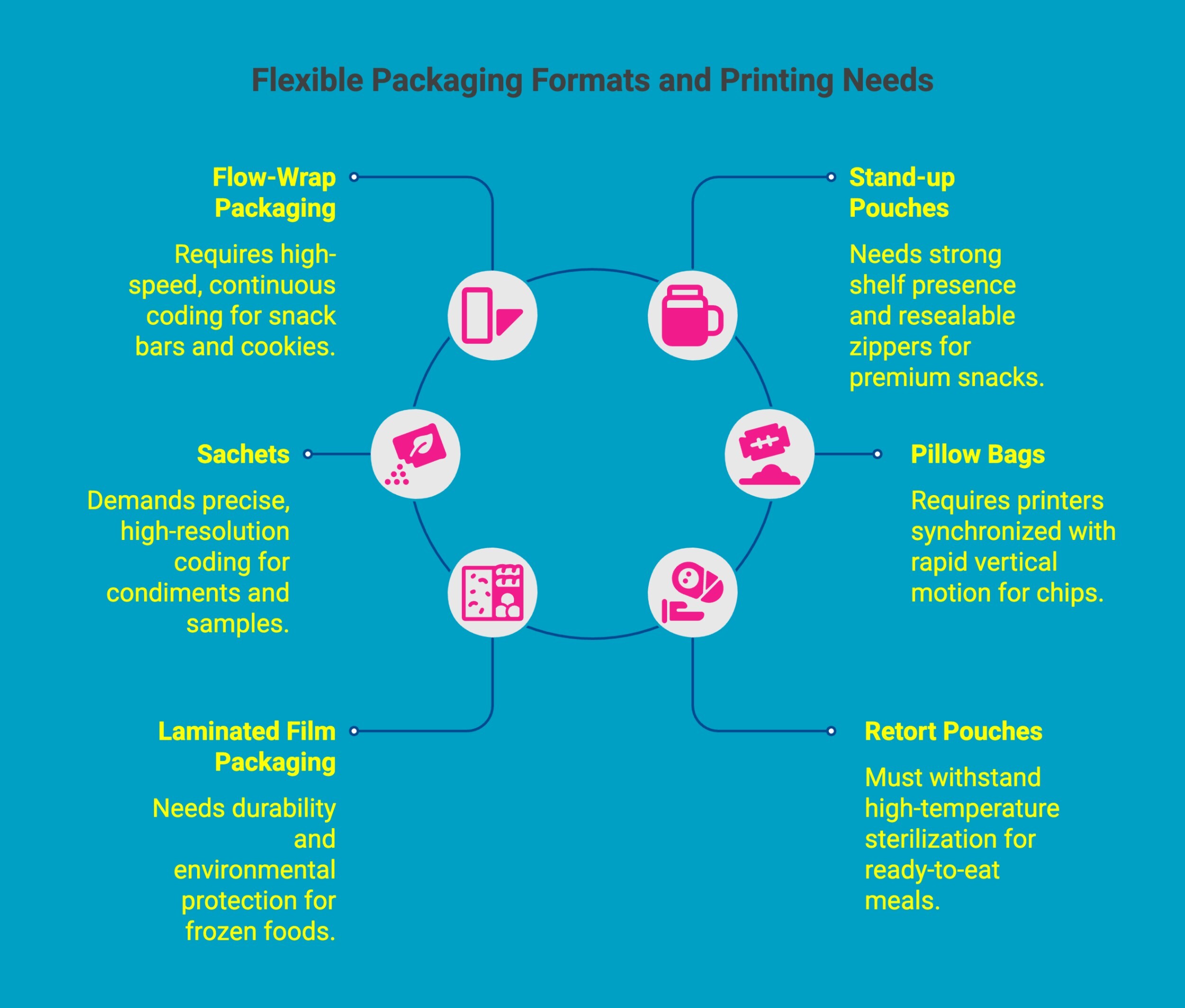
Flexible packaging is engineered to be lightweight, versatile, and highly protective, which makes it the standard for everything from grab-and-go snacks to frozen meals. However, because these materials, ranging from thin polypropylene to complex multi-layer laminates, are sensitive to heat and friction, they require specialized coding solutions to ensure that printed data remains clear and durable without compromising the package integrity.
The most common formats found in production lines today include:
-
Flow-Wrap Packaging: Widely used for snack bars, cookies, and baked goods. This format requires high-speed, continuous coding as the film moves rapidly through the wrapper.
Typical film substrate: BOPP (Biaxially Oriented Polypropylene), metallized BOPP, or laminated OPP structures designed for fast horizontal wrapping. -
Stand-up Pouches: Popular for premium snacks, coffee, nuts, and pet food. These packages provide strong shelf presence and often include resealable zippers.
Typical film substrate: PET/PE laminates, metallized PET, or multilayer barrier films that provide strong oxygen and moisture protection. -
Sachets: Common for condiments, seasoning packets, and single-use samples. The limited print area requires precise, high-resolution coding for readability.
Typical film substrate: PET/PE laminates, aluminum foil laminates, or multilayer barrier films for extended shelf life. -
Pillow Bags: Frequently used for chips, popcorn, and extruded snacks. These bags are produced on vertical form-fill-seal (VFFS) lines and require printers that can synchronize with rapid vertical motion.
Typical film substrate: OPP, BOPP, or metallized OPP laminates that provide lightweight barrier protection. -
Laminated Film Packaging: Often used for frozen foods, ready meals, and moisture-sensitive products. These films contain multiple layers designed for durability and environmental protection.
Typical film substrate: PET/PE laminates, nylon laminates, or multilayer barrier films engineered for temperature stability. -
Retort Pouches: Designed for heat-sterilized foods such as ready-to-eat meals, soups, and sauces. These pouches must withstand high-temperature sterilization processes without compromising the printed code.
Typical film substrate: Multi-layer retort laminates such as PET/Aluminum Foil/CPP or PET/Nylon/CPP structures that tolerate high heat and pressure.
Packaging Format and Film Substrate Quick Reference
The table below provides a quick overview of common packaging formats, their typical film substrates, and the ribbon types best suited for reliable printing.
|
Packaging Format |
Typical Film Substrate |
Recommended Ribbon Type |
|---|---|---|
|
Flow-Wrap Packaging |
BOPP, metallized BOPP |
Near-edge wax/resin ribbon |
|
Stand-up Pouches |
PET/PE laminates, metallized PET |
Near-edge resin ribbon |
|
Sachets |
PET/PE laminates, foil laminates |
Near-edge resin ribbon |
|
Pillow Bags |
OPP, BOPP, metallized OPP |
Near-edge wax/resin ribbon |
|
Laminated Film Packaging |
PET/PE, nylon laminates |
Near-edge resin ribbon |
|
Retort Pouches |
PET/Aluminum/CPP multilayer laminates |
Near-edge high-performance resin ribbon |
The Importance of Substrate-Specific Printing
Each of these formats utilizes a different film structure, meaning the way ink bonds to the surface varies significantly. Using a one-size-fits-all approach to your ribbon selection often leads to poor contrast, premature rubbing off, or costly dead space where codes are unreadable.
To ensure your brand identity and regulatory information remain intact, you need a ribbon formulation that matches the specific thermal requirements and surface texture of your chosen packaging format.
What Printing Methods Are Commonly Used in Flexible Packaging Production?
Selecting the right printing technology depends on the material, the required durability, and the speed of the production line. While each method has specific strengths, identifying the best fit for your application is key to maintaining consistent product identification and compliance.
The most widely used printing and coding technologies include:
-
Thermal Transfer Overprinting (TTO): This method uses a heated printhead to transfer ink from a ribbon directly onto flexible films. It is highly valued for its ability to print high-resolution variable data like expiry dates and barcodes at high speeds.
-
Continuous Inkjet (CIJ): This process involves a pressurized stream of ink directed onto the packaging surface. It is often chosen for its versatility and non-contact nature, making it effective for uneven or curved surfaces.
-
Laser Marking: This technology uses a focused beam of light to remove the surface layer of the packaging material. It provides permanent coding that does not require ink or ribbons, which can be advantageous in specific manufacturing environments.
-
Flexographic Printing: This is a high-volume process that uses flexible relief plates. It is the industry standard for large-scale production of brand graphics and packaging designs rather than variable data coding.
-
Thermal Inkjet (TIJ): Uses disposable ink cartridges with integrated printheads to eject microscopic ink droplets onto the packaging surface, making it suitable for high-resolution coding on cartons, labels, and some treated flexible films.
To better understand how these technologies differ in real production environments, the table below compares their typical applications, speed capabilities, and operational characteristics.
|
Printing Technology |
Best Application |
Typical Speed Capability |
Consumables Required |
Contact with Surface |
|---|---|---|---|---|
|
Thermal Transfer Overprinting (TTO) |
Flexible films on form-fill-seal and flow-wrap packaging lines |
Up to 400–600 mm/sec |
Ribbon |
Yes |
|
Continuous Inkjet (CIJ) |
High-speed production lines, curved or uneven surfaces |
800–1000+ products/min |
Ink and solvent |
No |
|
Laser Marking |
Permanent coding on films, cartons, or labels |
600–900+ products/min depending on power |
None |
No |
|
Flexographic Printing |
Large-scale packaging graphics and branding during film manufacturing |
Very high-volume web printing |
Ink and plates |
Yes |
|
Thermal Inkjet (TIJ) |
High-resolution coding on cartons, labels, and treated films |
Up to 300 m/min |
Ink cartridge |
No |
Why TTO Is the Preferred Choice for Flexible Packaging?
Selecting the right coding technology depends largely on packaging line speed and the type of printer used on the line. For flexible film packaging lines running at 150–400+ packs per minute, Thermal Transfer Overprinter (TTO) printers are typically the most reliable option. Near-edge TTO printers can operate at 400–600 mm/sec or higher, allowing them to synchronize with high-speed form-fill-seal and flow-wrap machines.
Examples of widely used TTO printers on flexible packaging lines include:
-
Videojet DataFlex 6530 / 6330 – Designed for high-throughput flexible packaging applications and capable of printing variable data such as batch codes and expiry dates on films.
-
Markem-Imaje SmartDate X30, X45, and X65 – Industrial TTO printers used for printing high-resolution codes on pouches, wrappers, and other flexible packaging materials.
-
Toshiba near-edge TTO systems – Commonly integrated into flow-wrap and form-fill-seal packaging equipment for high-speed coding.
For slower lines below 150 packs per minute, TIJ printers or CIJ printers may also perform well. However, when production speeds increase and precise variable data must be printed on flexible films, near-edge TTO printers consistently deliver the most stable and durable coding without smudging or ribbon drag.
Learn practical tips for designing effective product labels that improve readability, branding, and overall packaging presentation.
How Does the Flexible Packaging Printing Process Work?
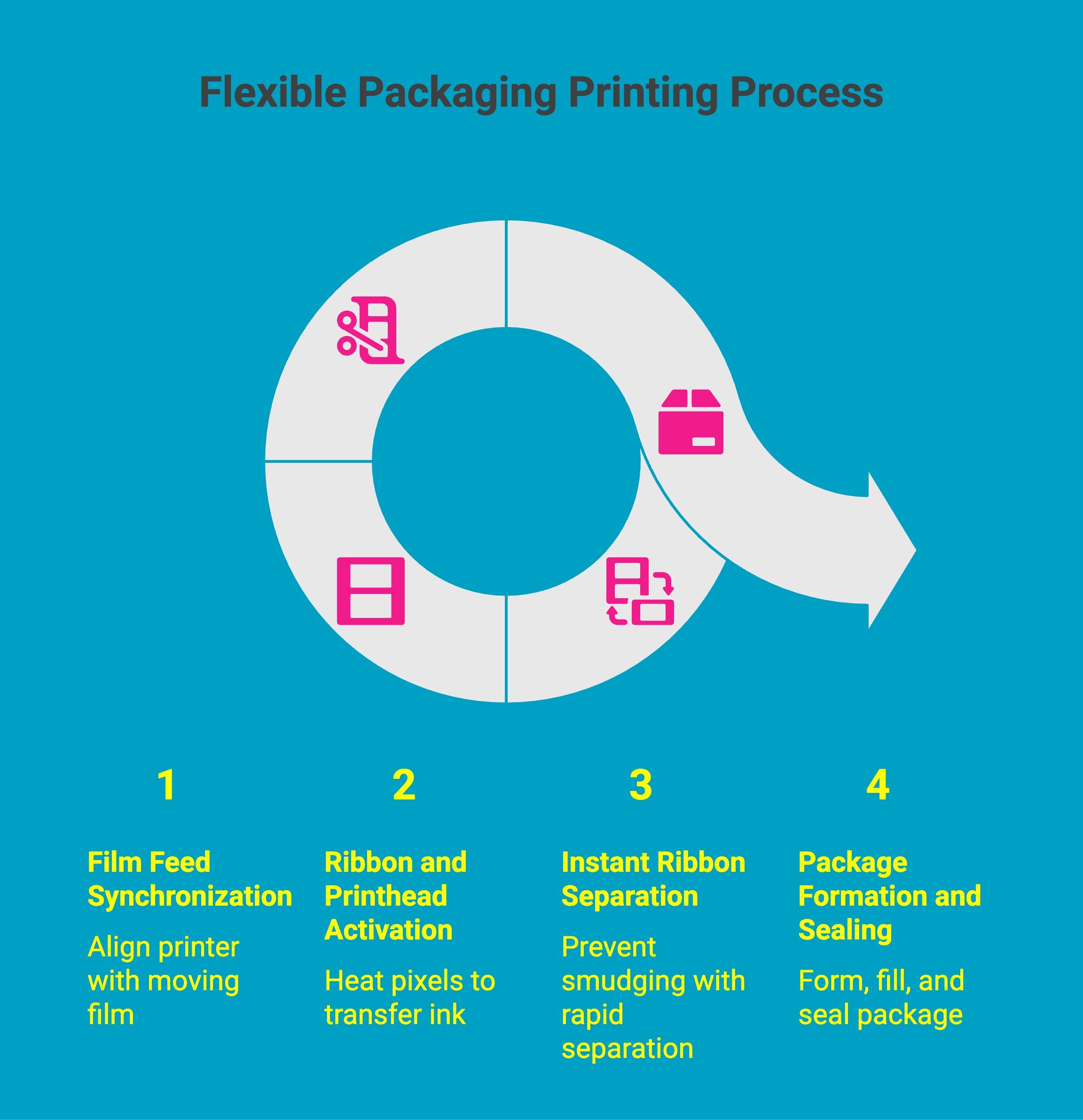
In flexible packaging production, Thermal Transfer Overprinters (TTO) are integrated directly into packaging machines such as VFFS or flow-wrap systems. Instead of printing on stationary labels, the printer must apply variable data while the film is continuously moving at high speed, which requires precise synchronization between the printer, the ribbon, and the packaging machine.
The TTO printing process typically follows these steps:
-
Step 1: Film Feed Synchronization
The packaging film moves through the form-fill-seal or flow-wrap machine at a controlled speed. The TTO printer is electronically synchronized with the film movement so that the print occurs at the correct position on each package. -
Step 2: Ribbon and Printhead Activation
As the film passes the print zone, the near-edge printhead heats specific pixels. This heat transfers ink from the ribbon coating directly onto the packaging film. -
Step 3: Instant Ribbon Separation
Unlike flat-head printers, near-edge systems allow the ribbon to separate from the film almost immediately after ink transfer. This rapid separation prevents smudging and enables consistent printing at speeds up to 400–600 mm/sec. -
Step 4: Package Formation and Sealing
After the code is printed, the film continues through the packaging machine where it is formed into the final package, filled with product, and sealed before moving to downstream inspection or distribution.
Correct encoder calibration is one of the most critical setup steps for a TTO installation. An incorrect encoder pulses-per-millimetre value causes barcodes to print stretched or compressed, which will scan correctly in testing but fail GS1 grade checks downstream.
What Systems and Equipment Are Essential for Flexible Packaging Printing?
To maintain efficiency in high-speed snack and food production, packaging lines must integrate reliable coding solutions directly into the process. By using automated machinery, manufacturers can apply variable information, such as lot codes and expiry dates, without needing to slow down the packaging cycle.
Typical equipment found in these production lines includes:
-
Vertical Form-Fill-Seal (VFFS) Machines: These units form a bag from a film roll, fill it with product, and seal it in one continuous vertical motion.
-
Horizontal Flow Wrappers: Used for items like snack bars or baked goods, these machines wrap product in a steady horizontal stream.
-
Automatic Bagging Machines: These systems are optimized for rapid filling of pre-made pouches or other flexible formats.
-
Coding and Marking Printers: Integrated TTO units that apply essential data directly onto the film surface as it moves through the line.
Supporting Your Printing Systems with High-Performance Ribbons
Because these machines operate at such high speeds, the quality of the thermal transfer ribbon is just as important as the hardware itself. High-performance ribbons are essential to ensure the ink transfers cleanly and resists smudging during transit. We provide specialized ribbon solutions that are fully compatible with industry-leading TTO printers:
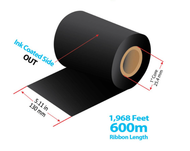
Toshiba Near-Edge Ribbons: Compatible with Toshiba near-edge TTO systems commonly integrated into flow-wrap and form-fill-seal packaging lines. Typical specifications include ribbon widths from ~22–110 mm, lengths up to ~600–900 m, and print speeds up to ~600 mm/sec, making them suitable for high-speed flexible film coding.
View Toshiba-compatible options
Markem-Imaje TTO Ribbons: Designed for Markem-Imaje SmartDate printers such as the X30, X45, and X65. These systems typically support 300 dpi resolution, print speeds up to ~600 mm/sec, and ribbon widths around 20–110 mm, optimized for continuous packaging lines.
View Markem-Imaje-compatible options
Videojet TTO Ribbons: Engineered for Videojet DataFlex series printers such as the 6330 and 6530. These printers typically operate at 300 dpi, support print speeds up to ~700 mm/sec, and use ribbons in the 22–110 mm width range for high-speed flexible packaging applications.
View Videojet-compatible options
These ribbons are specifically engineered for the near-edge printheads found in high-speed packaging environments, providing the precise tension and heat transfer necessary to keep your line running smoothly.
How Do You Choose the Best Printing Solution for Flexible Packaging?
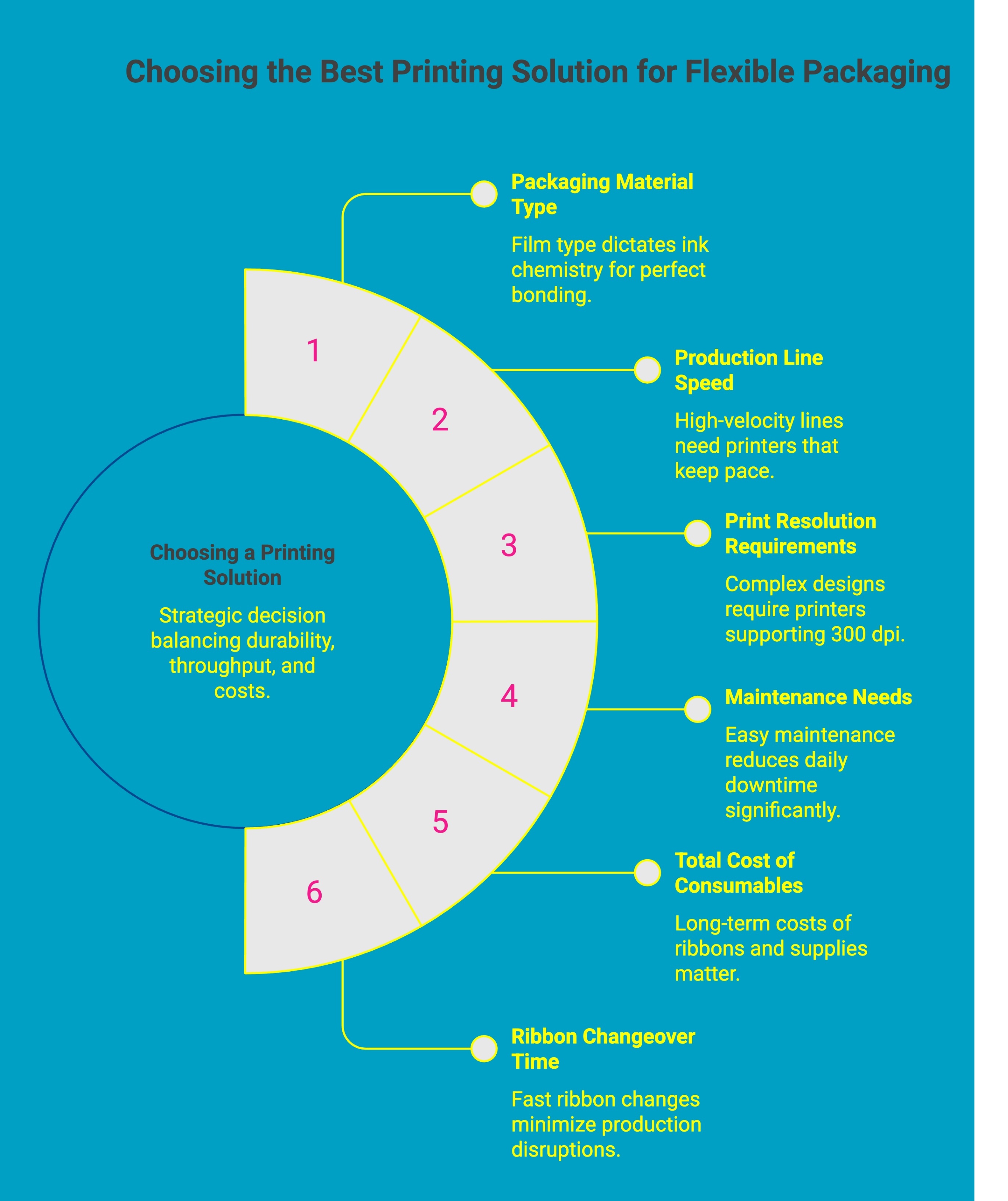
Selecting the right printer is a strategic decision that balances print durability, production throughput, and long-term operating costs. For high-speed lines in the snack industry, manufacturers must carefully weigh several technical and operational variables to ensure the equipment supports rather than bottlenecks their production.
Critical Factors for Production Managers
Before investing in a coding system, consider these five core requirements:
-
Packaging Material Type: Your film (e.g., OPP, metallized laminate, or clear PE) dictates the required ink chemistry. A ribbon that bonds perfectly to one surface may flake off another.
-
Production Line Speed: High-velocity lines require printers that can keep pace without sacrificing resolution. Systems with low latency are essential to prevent printing delays.
-
Print Resolution Requirements: If your packaging includes complex QR codes, fine text, or high-definition logos, ensure the printer supports at least 300 dpi to maintain scanning reliability.
-
Maintenance Needs: Evaluate the ease of printhead replacement and the availability of consumables. Systems with "dead-dot" detection and easy-loading ribbon paths significantly reduce daily downtime.
-
Total Cost of Consumables: Factor in the long-term cost of ribbons and cleaning supplies rather than just the initial price of the hardware.
-
Ribbon Changeover Time: On high-speed packaging lines, frequent ribbon changes can disrupt production. Systems with cassette-style ribbon cartridges often allow changeovers in under 60 seconds, while traditional setups may take 3-5 minutes, which can significantly affect line efficiency over time.
Discover the essentials of flexible packaging and how it supports efficient labeling, product protection, and modern packaging requirements.
What Makes Near-Edge Thermal Printing the Standard for Flexible Packaging?
Near-edge thermal printing addresses the mechanical demands of high-speed production lines. This technology offers distinct advantages like high-speed capabilities, sharp output, material versatility, and reduced smudging for all packaging formats.
-
Angled printheads allow ribbon to separate instantly for cleaner prints on fast lines.
-
High resolution ensures that all barcodes remain scannable for efficient retail supply chains.
-
The technology integrates seamlessly with continuous packaging systems to minimize any production downtime.
-
Immediate ribbon separation prevents ink blurring while the package undergoes high-pressure heat sealing.
What Are the Most Common Printing Challenges When Working with Flexible Materials?
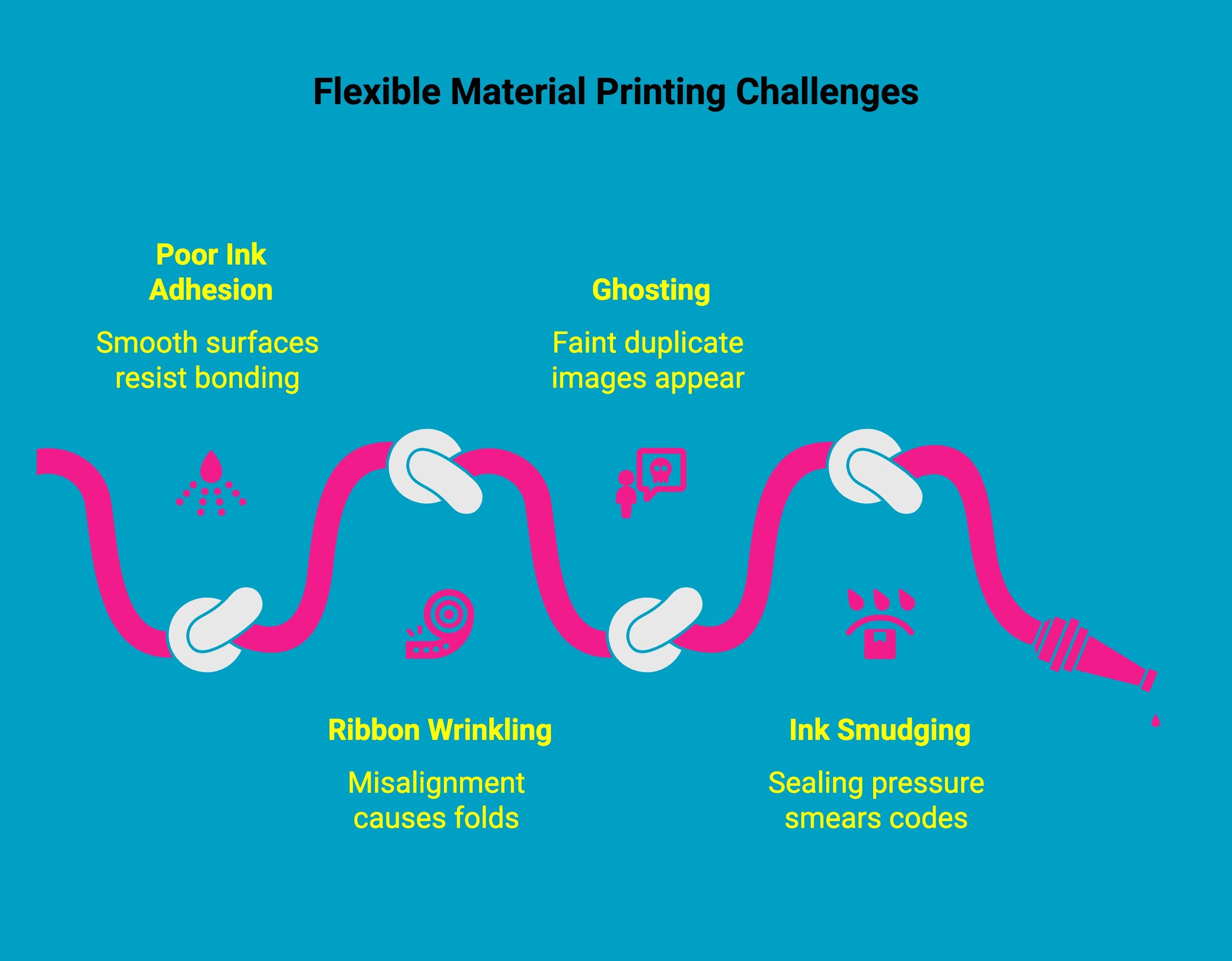
Printing on flexible substrates introduces technical difficulties that require careful configuration. Manufacturers often face hurdles like surface adhesion, high-speed clarity, sealing friction, tracking stability, and barcode readability during daily operations.
1. Poor Ink Adhesion on Slippery Film Surfaces
Flexible packaging films such as BOPP, PET, or metallized laminates often have smooth or coated surfaces that resist ink bonding. Because these materials are non-porous, the ink cannot absorb into the surface like it would on paper. If the ribbon chemistry is not compatible with the film, printed text may appear faded or rub off during handling.
Fix: Use a ribbon specifically formulated for synthetic films, such as a near-edge resin or wax-resin ribbon, and adjust heat settings to ensure proper ink transfer.
2. Ribbon Wrinkling from Tracking or Alignment Issues
Ribbon wrinkles occur when the ribbon does not move smoothly across the printhead. Misaligned ribbon spindles, incorrect tension, or uneven printhead pressure can cause folds in the ribbon, leading to diagonal white streaks or distorted codes on the packaging.
Fix: Reinstall the ribbon carefully, confirm it is centered on both supply and take-up spindles, and adjust printhead pressure and ribbon tension to stabilize tracking.
3. Ghosting During High-Speed Printing
Ghosting happens when faint duplicate images or shadows appear next to printed characters. This usually occurs on high-speed packaging lines when the printer settings are not calibrated for the film speed or when the heat setting is too high.
Fix: Reduce print speed slightly or adjust heat and dwell time settings so the ink transfers cleanly without leaving residual marks.
4. Ink Smudging from Sealing Pressure
In many flexible packaging lines, printing occurs just before the film passes through the sealing jaws. If the ribbon does not release cleanly or if the ink has not fully stabilized, the pressure and heat of the sealing process can smear freshly printed codes.
Fix: Use near-edge TTO ribbons designed for instant release, and position the print zone far enough from the seal bar to allow the ink to stabilize before sealing.
By addressing these common challenges with proper ribbon selection, printer calibration, and line configuration, manufacturers can maintain consistent print quality even in high-speed flexible packaging environments.
Why Choose DuraFast Label Company for Your Packaging Coding Needs?
We know that in the world of snack and food packaging, your production line doesn’t have time for downtime, and neither do you. At DuraFast Label Company, we don't just sell ribbons; we focus on keeping your lines running smoothly, your batch codes sharp, and your maintenance headaches to a minimum.
Here is why our partners choose to work with us:
-
Stop juggling vendors: Whether you’re running Toshiba, Markem-Imaje, Videojet, Zebra, SATO, or GoDex, we’ve got you covered. You can source every TTO consumable for your entire fleet from one place, making your procurement process significantly easier.
-
Try before you commit: We know that a ribbon is only as good as the substrate it’s printing on. That’s why we offer a free sampling program. We’ll send you a ribbon matched specifically to your printer and film so you can test it on your actual production line, no strings attached.
-
Get advice from real experts: Need to know which grade will hold up to your specific line speed or film type? Don't guess. Send us your specs, and our team will identify exactly the right ribbon for the job, ensuring you get the perfect print quality without the trial-and-error.
Ready to eliminate ribbon wrinkles and improve print consistency? Contact us today and request a free ribbon sample to test the right solution for your production line.
Frequently Asked Questions
What is flexible packaging printing used for?
Flexible packaging printing is used across the packaging industry to apply codes, branding, and regulatory details onto films and pouches. It supports traceability, product identification, and marketing while improving shelf appeal and ensuring accurate information during high-speed packaging operations.
How is printing done on flexible packaging?
Printing on flexible materials uses several technologies, including digital printing, flexography, and gravure printing. These systems apply text, barcodes, and graphics directly onto films during the production process, enabling fast, consistent marking for various packaging applications and product lines.
What printers are used for flexible packaging?
Production lines often use Thermal Transfer Overprinters, inkjet coders, and laser marking systems. These technologies deliver consistent image quality and support flexible packaging pouch printing, enabling manufacturers to mark expiry dates, barcodes, and branding details directly on moving packaging films.
Why is near-edge printing common in flexible packaging?
Near-edge printing is widely used because it transfers ink efficiently onto printed flexible packaging film during high-speed production. It supports clear codes and branding while maintaining barrier properties and packaging integrity for products requiring durable, reliable labeling performance.
What challenges are common in flexible packaging printing?
Maintaining clear prints on flexible films can be difficult during sealing and handling. Challenges include smudging, ribbon tracking issues, and barcode accuracy. For a flexible snacks package printer, consistent print quality also helps protect shelf life by supporting proper labeling and traceability.
How can I customize the design of flexible packaging using modern printing technologies?
Modern systems enable customizable flexible packaging solutions using variable content printing, allowing product variations, promotions, and batch details. This helps brand owners create personalized designs for markets such as food packaging and personal care products while improving product differentiation.
How does flexible packaging compare to traditional packaging formats?
Flexible packaging offers lighter materials and efficiency compared to rigid packaging like glass bottles. Across the packaging market, it supports diverse types of flexible packaging, improves visual appeal, and often reduces environmental impact through lower material usage and transportation weight.