Why Do Floor Labels for Warehouse Floors Fail?
22nd Jul 2026
Key Highlights
-
Floor labels for warehouse environments fail mainly due to forklift traffic, abrasion, and harsh cleaning
-
Incorrect material and poor installation shorten the life of warehouse floor location labels
-
Durable labels differ in construction, adhesive strength, and protective surfaces
-
Warehouse floor label protectors shield labels in high-traffic and barcode scanning zones, including areas where pallets are frequently moved.
-
Warehouse floor barcode labels need protection to stay scannable over time
-
A structured process is essential when labeling floors in a warehouse
-
Protective layers improve labeling ROI by reducing reprints, labor, and downtime
If you manage warehouse operations, you already know the frustration. You install floor labels for warehouse locations, everything looks clear and organized, and then within months, the labels start fading, peeling, or becoming unreadable. The floor is one of the harshest surfaces in your facility.
At the same time, your team depends on warehouse floor labeling to keep inventory flowing. When a location code cannot be read or a barcode does not scan, picking slows down, mistakes increase, and labor costs quietly rise. What seems like a small label issue turns into an operational bottleneck.
This guide explains why floor labels for warehouse use fail, how to label floor locations in a warehouse correctly, and how protective systems such as warehouse floor label protectors help extend label life and protect your labeling investment.
What Are Floor Labels for Warehouse Use?
Floor labels sit at the exact point where picks, staging, and scans happen, so when they fail, errors happen where work is done. Unlike overhead signs, they carry operational accuracy at ground level. If they wear out or become unreadable, location control breaks down fast.
Want floor labels built specifically for heavy traffic and industrial floors? Explore durable warehouse floor label options designed to handle forklifts, abrasion, and daily wear.
Why Do Warehouse Floor Labels Wear Out So Fast?
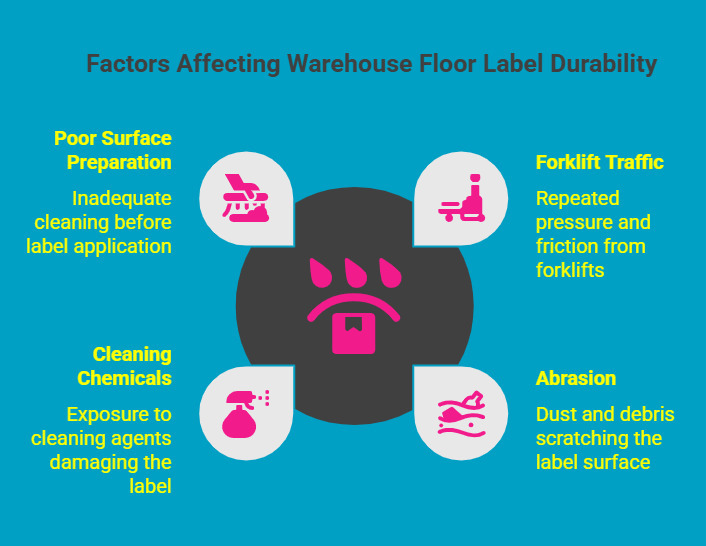
Warehouse floors create one of the harshest environments for identification systems. Unlike rack or wall labels, floor labels sit directly in traffic lanes where pressure, friction, debris, and chemicals combine. Damage is not random. It builds gradually as materials break down under repeated stress.
1. Forklift Traffic Pressure
Forklifts and pallet jacks do more than roll over labels. When turning, braking, or pivoting, wheels apply sideways force that scrapes across the surface. This repeated pressure:
-
Compresses the label against rough concrete
-
These protective surface layers
-
Creates micro-cracks in the print coating
-
Weakens edges where tires drag slightly during turns
Over time, this grinding effect reduces print clarity and causes edges to lift, especially at intersections and high-turn areas.
2. Abrasion From Dust and Debris
Fine dust, sand, and small particles constantly settle on warehouse floors. When traffic passes over them, those particles act like abrasive grit between the floor and the label surface.
This abrasion:
-
Scratches protective coatings
-
Dulls color contrast
-
Breaks down barcode sharpness
-
Reduces scanner readability
Once the top surface wears down, print is exposed directly to friction, and deterioration speeds up.
3. Exposure to Cleaning Chemicals
Degreasers, washdowns, and moisture do not just clean the floor, they attack label materials. Liquids seep into edges and adhesive layers, especially if surfaces are uneven.
As this happens:
-
Adhesives soften or lose grip
-
Air pockets form under the label
-
Corners begin lifting
-
Surface films cloud or fade
Repeated chemical exposure accelerates failure if labels are not designed for industrial cleaning.
4. Poor Surface Preparation
Labels applied over dust, oil, or moisture never fully bond with the concrete. Weak adhesion starts at installation, even if the label looks secure at first.
Under traffic stress, this leads to:
-
Early bubbling
-
Faster edge lifting
-
Dirt working underneath
-
Premature peeling
Without proper preparation, even high-quality warehouse floor labels fail much sooner than expected.
When pressure, abrasion, chemicals, and installation issues combine, floor label damage becomes predictable. Wear develops through continuous micro-damage until readability and adhesion are lost, turning labels into a maintenance issue rather than a long-term solution.
What Design Features Prevent Warehouse Floor Label Failure?
Warehouse floor labels fail when materials cannot withstand pressure, abrasion, and cleaning stress. Durable labels are engineered to resist these forces through layered construction, strong adhesives, and protective surfaces. These design features prevent breakdown, extend lifespan, and keep labels readable in high-traffic environments.
-
Material construction
Thick face stocks and industrial coatings absorb impact from wheels and dragged pallets, reducing tearing, gouging, and surface wear that expose print and shorten label life. -
Adhesive performance
Floor-grade adhesives bond tightly to rough or sealed concrete, preventing edge lifting, bubbling, and early peeling caused by vibration, traffic pressure, and temperature changes. -
Surface resilience
Protective laminates or overlays shield printed areas from friction, debris, and scuffing, helping barcodes and text remain sharp and scannable despite constant mechanical contact.
When these features work together, floor labels resist common failure points, reduce replacement cycles, and maintain reliable identification even in demanding warehouse traffic conditions.
What Are Warehouse Floor Label Protectors?
Even a durable label has a wear limit. That is where warehouse floor label protectors come in. These are clear, heavy-duty layers applied over labels to shield them from the mechanical abuse that destroys unprotected floor markings.
Instead of forklifts and pallet jacks grinding directly against the printed surface, the protector absorbs the stress.
How Floor Label Protectors Work?
Protectors act as a sacrificial barrier. They take the friction, impact, and scraping caused by heavy equipment, preserving the label underneath. In high-stress zones, systems like Label Armor are used to extend the life of floor labels for warehouse operations significantly.
Where Protectors Deliver the Most Value?
Protection matters most where motion and weight are concentrated:
-
Forklift travel lanes and turning points
-
Staging and loading areas
-
Intersections with frequent starts and stops
-
Zones with heavy pallet transfer
Why Protectors Matter for Barcode Labels?
Barcode reliability depends on surface clarity. Scratches and wear distort scans. Protectors keep surfaces smooth so warehouse floor barcode labels remain consistently scannable over time.
|
Factor |
Unprotected Label |
Protected Label |
|---|---|---|
|
Lifespan |
Short |
Long |
|
Barcode readability |
Gradually declines |
Remains stable |
|
Replacement frequency |
High |
Low |
How to Label Floor Locations in a Warehouse Properly?
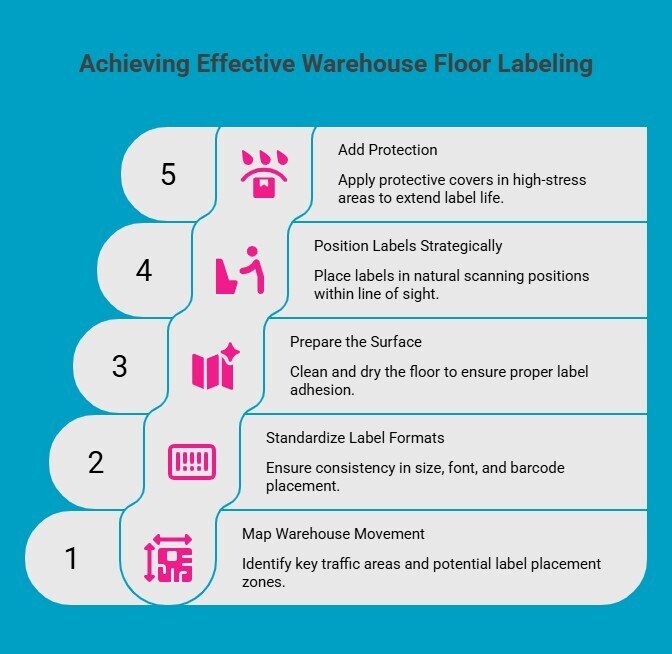
Effective labeling floors in a warehouse starts with how your facility operates, not with the labels themselves. Placement, materials, and protection should match real traffic flow and scanning behavior. A structured approach prevents early failures and constant rework.
Step 1: Map Warehouse Movement
Identify:
-
Forklift travel lanes and turning points
-
Staging and cross-dock zones
-
Pick paths and high foot-traffic areas
This shows where durable warehouse floor labels alone work and where protection is necessary.
Step 2: Standardize Label Formats
Consistency improves speed and accuracy.
-
Use uniform sizes and fonts
-
Keep barcode placement consistent
-
Align numbering with your WMS logic
Step 3: Prepare the Surface Properly
Adhesion depends on floor condition.
-
Remove dust, oil, and debris
-
Ensure the surface is dry and stable
Proper prep helps warehouse adhesive floor labels bond and resist lifting.
Step 4: Position Warehouse Floor Barcode Labels Strategically
Place barcodes where operators naturally scan.
-
Keep labels within the normal line of sight
-
Avoid areas where loads drag
-
Maintain safe scanning positions
Step 5: Add Protection in High-Stress Zones
Do not wait for wear.
-
Apply warehouse floor label protectors in forklift lanes
-
Use them in staging and turning areas
This step significantly extends the life of floor labels for warehouse operations and reduces maintenance.
Why Many Warehouses Choose DuraFast Label Company?
Knowing why warehouse floor labels fail is important, but real results come from using materials built for industrial traffic. DuraFast Label Company focuses on durable identification solutions designed specifically for concrete floors, heavy equipment movement, and barcode-driven warehouse operations.
Facilities choose DuraFast to upgrade to abrasion-resistant floor labels, improve barcode scan reliability, and add protective systems like Label Armor in high-traffic forklift zones. Their approach supports full warehouse floor labelling systems, not just individual labels.
The outcome is longer label life, fewer replacements, and more consistent scanning performance. Instead of constant relabelling, operations teams gain a floor labelling setup that holds up under real warehouse wear and daily traffic conditions.
Tell us about your warehouse layout, traffic levels, and labeling challenges. Contact us, and we will help you choose durable materials and protective solutions that actually last on your floor.
Final Thoughts
Warehouse floor labeling fails when durability and protection are ignored. Floor labels for warehouse environments must be chosen based on traffic, installed correctly, and protected in high-stress areas to avoid continual impact. Without protection, barcode performance and location visibility decline quickly.
Protective systems such as Label Armor add a critical layer of defense, helping warehouse floor barcode labels and location markers last longer. If you want labeling that supports operations instead of creating maintenance work, it is time to rethink how your floors are labeled with the different types of barcode labels and protected.
Frequently Asked Questions
How long do warehouse floor labels last?
Unprotected labels in high traffic areas may last only a few months. With durable materials and bustling warehouse floor label protectors, lifespan can extend significantly, often several times longer depending on traffic volume, floor conditions, and cleaning practices.
Can forklifts damage floor barcode labels?
Forklifts create constant pressure and friction that wear down label surfaces and edges. Without protection, barcodes fade or crack, causing scan failures and delays. Using 50 MIL thick labels improves durability and helps floor labels withstand heavy warehouse traffic.
What is the best material for warehouse floor labeling?
Thick industrial-grade materials with strong adhesives and protective surface layers perform best. The right choice depends on traffic intensity, floor type, temperature conditions, and exposure to cleaning chemicals.
Do label protectors affect barcode scanning?
No, high-quality warehouse floor label protectors are designed to remain clear and scan-friendly, ensuring maximum performance. They preserve surface smoothness, helping scanners read barcodes accurately while shielding the printed label from damage.
Are adhesive labels better than painted markings?
Adhesive labels are faster to install and easier to update, making them ideal for changing layouts. To ensure longevity, consider using clear label protectors. Painted markings are more permanent but lack flexibility when locations shift or barcodes are required.
How often should warehouse floor labels be replaced?
Replacement frequency varies by traffic and environment. Facilities using durable labels with protectors can significantly extend replacement cycles, reducing maintenance time and overall labeling costs.
What types of floor marking shapes are commonly used in warehouses?
Common warehouse floor marking shapes include rectangles for locations, circles for safety zones, arrows for traffic flow, and lines for aisles. These shapes improve visual organization, navigation, and clarity, optimising workflow and making floor labelling easier for pedestrians and equipment operators.