How to Label Electrical Panel Safely and Correctly?
14th Jul 2026
Key Highlights
-
Clear and accurate electrical panel labeling improves safety by preventing incorrect shutoffs, reducing electric shock risk, and supporting faster emergency response.
-
Proper labeling ensures compliance with electrical codes by clearly identifying each circuit’s specific purpose using durable, legible markings.
-
A step-by-step labeling process, from identifying circuits to final verification, eliminates guesswork and creates dependable panel directories.
-
Using the right label types and materials helps labels resist heat, moisture, and wear, keeping panels readable over time.
-
Consistent naming, clear visibility, and complete details make panels easier to maintain, troubleshoot, and update as systems change.
-
Regular inspections and timely updates keep panel information accurate, reducing downtime and long-term maintenance issues.
-
Well-labeled panels remain organized, reliable, and safer for homeowners, electricians, and inspectors throughout their service life.
Unclear or outdated electrical panel labels turn simple tasks into safety risks. When circuits are not properly identified, maintenance becomes slower, emergency shutoffs become uncertain, and the chance of costly or dangerous mistakes increases.
Over time, electrical systems change as new appliances are added, spaces are renovated, or wiring is modified. Without accurate labeling, panels no longer reflect how power is actually distributed, leading to confusion, compliance issues, and unnecessary downtime.
This blog provides a complete, practical guide to electrical panel labeling. It explains why proper labeling matters, how to label panels correctly, which materials and tools work best, and how to keep labels accurate as electrical systems evolve.
Why Is Accurate Electrical Panel Labeling Critical for Safety and Efficiency?
Accurate electrical panel labeling plays a vital role in protecting people, equipment, and operations while keeping systems easy to manage.
Here are the key reasons proper labeling improves safety, compliance, and long-term efficiency across residential, commercial, and industrial electrical environments:
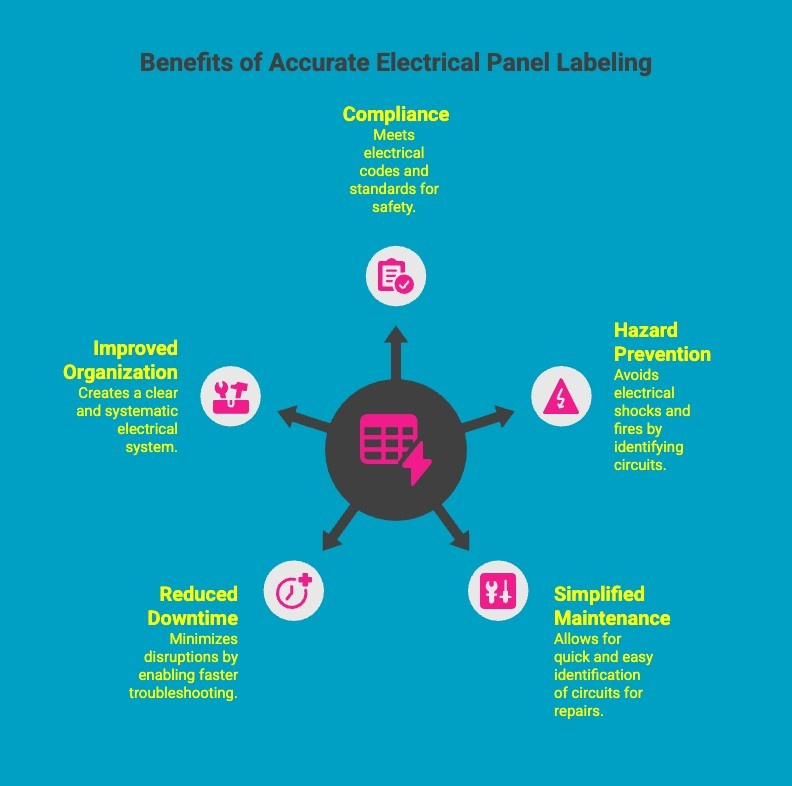
1) Ensures Compliance
Clear and accurate electrical panel labels help meet electrical codes and workplace safety requirements. Proper identification ensures circuits are labeled by their exact function, not vague descriptions. This supports inspections, reduces compliance risks, and demonstrates due diligence. Meeting labeling standards also protects property owners and businesses from penalties, failed inspections, and avoidable liability during audits or safety reviews.
2) Prevents Hazards
Correct labeling reduces the risk of electric shock, arc faults, and accidental power disruptions. When circuits are clearly identified, technicians can safely isolate power before working. This prevents guessing, incorrect shutoffs, and dangerous assumptions. Accurate labels protect electricians, maintenance staff, and occupants by ensuring everyone knows exactly which circuit controls each area or piece of equipment.
3) Simplifies Maintenance
Well-organized panel labels make troubleshooting faster and more accurate. Maintenance teams can immediately locate the correct circuit without testing multiple breakers. This saves time during repairs, upgrades, and inspections. Clear labeling also helps new technicians or contractors understand the system quickly, reducing learning curves and minimizing errors caused by unfamiliar or poorly documented electrical panels.
4) Reduces Downtime
When electrical issues occur, time matters. Accurate panel labeling allows quick isolation of affected circuits, preventing unnecessary shutdowns of unrelated systems. This is critical in offices, factories, and facilities where downtime impacts productivity and revenue. Faster identification leads to faster fixes, helping operations resume smoothly without prolonged disruptions or costly delays.
5) Improves Organization
Consistent, legible labels create a clean and professional electrical panel layout. Organized panels are easier to read, update, and manage over time. This improves long-term system clarity, supports future expansions, and keeps records accurate. A well-labeled panel reflects good workmanship and makes electrical systems more reliable, understandable, and easier to maintain throughout their lifecycle.
Accurate electrical panel labeling is a simple step that delivers lasting safety, efficiency, and peace of mind.
What Should You Include When Labeling an Electrical Panel?
Proper electrical panel labeling is not just about naming breakers. Including the right details improves safety, speeds troubleshooting, and supports compliance.
Here are the essential elements every electrical panel label should clearly and consistently include:
-
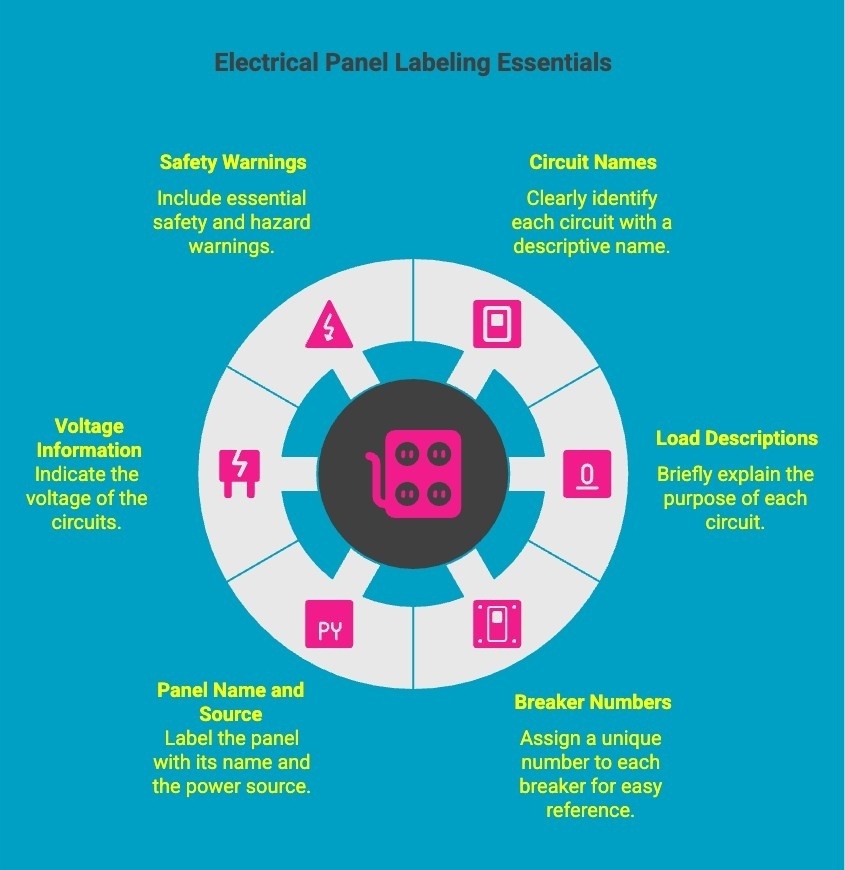
Circuit Names: Use clear, specific names that identify exactly what each circuit controls. Room names, equipment identifiers, or dedicated loads prevent confusion and eliminate guesswork during maintenance or emergency shutoffs.
-
Load Descriptions: Describe the type of load on each circuit, such as lighting, receptacles, HVAC, or machinery. Load descriptions help technicians understand usage, balance loads correctly, and avoid accidental overloads.
-
Breaker Numbers: Include breaker numbers that match the panel layout. Numbered references make it easier to locate circuits quickly, especially in larger panels, and support accurate documentation, inspections, and future updates.
-
Panel Name and Source: Label the panel with its designated name and power source. This is critical in buildings with multiple panels, subpanels, or generators, ensuring correct identification during troubleshooting or shutdowns.
-
Voltage Information: Clearly note the panel voltage, such as 120/240 V or 480 V. Voltage details alert workers to potential risks and ensure proper tools, PPE, and procedures are used before servicing.
-
Safety and Hazard Warnings: Include warnings for high voltage, critical loads, or emergency circuits. Safety notices help prevent accidental shutoffs and remind users to follow proper lockout and safety procedures.
Including these details turns an electrical panel into a clear, safe, and dependable reference.
How Do You Label an Electrical Panel? (Step by Step)
Labeling an electrical panel correctly improves safety, speeds up maintenance, and prevents costly mistakes. If you are learning how to mark electrical panel circuits properly, accuracy matters more than speed. Below are the essential step-by-step actions that ensure your panel labels stay clear, reliable, and easy to understand over time.
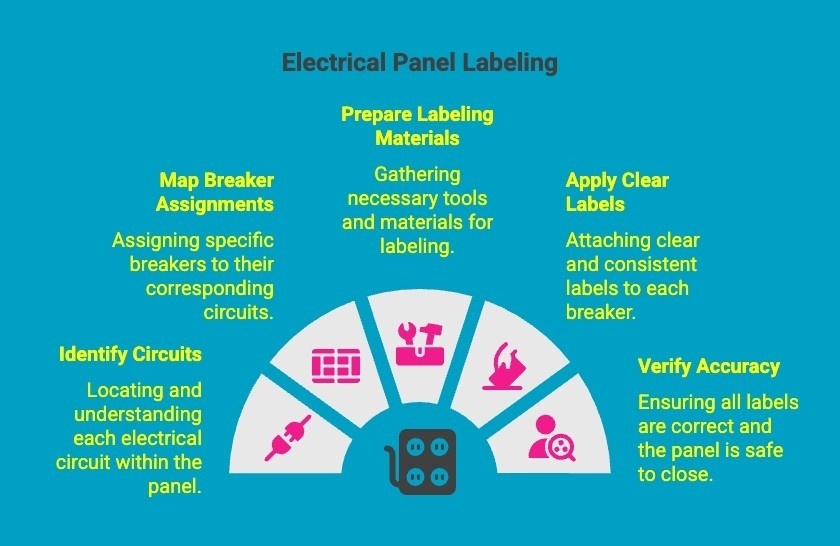
1) Identify Circuits
Begin by turning on lights, outlets, and fixed equipment one circuit at a time to see what each breaker controls. This first step removes guesswork and prevents assumptions. Accurate identification is essential when learning how to mark paneling for electrical outlets, especially in areas where multiple rooms or devices share similar electrical loads.
2) Map Breaker Assignments
After identifying circuits, write down each breaker’s exact function in a temporary list or diagram. Include room names, outlet groups, or dedicated appliances. Mapping assignments creates a reliable reference before labeling. This step supports the best way to mark electrical boxes for paneling by ensuring each outlet or junction box matches the correct breaker clearly.
3) Prepare Labeling Materials
Select labeling materials designed for electrical environments, where heat, dust, and moisture are common. Labels should be durable, legible, and resistant to fading. Consistent font size and spacing improve readability inside the panel. Preparing materials in advance prevents rushed decisions and ensures labels remain readable and intact during routine maintenance and future inspections.
4) Apply Clear and Consistent Labels
Apply labels neatly next to each breaker using consistent wording and formatting throughout the panel. Avoid vague terms or unclear abbreviations that could confuse others later. Each label should describe the circuit’s purpose at a glance. Consistency improves organization, helps electricians work faster, and makes the panel safer and easier to understand for anyone accessing it.
5) Verify Accuracy Before Closing Panel
Once labels are applied, test every breaker again to confirm accuracy. Turn breakers off and on to verify the label matches the circuit it controls. This final verification step prevents dangerous mistakes and future confusion. Confirming accuracy ensures the panel directory is dependable, supporting safe operation, troubleshooting, and maintenance long after the panel is closed.
A careful step-by-step labeling process turns an electrical panel into a clear, safe, and dependable reference.
What Are the Different Types of Labels Used for Electrical Panels?
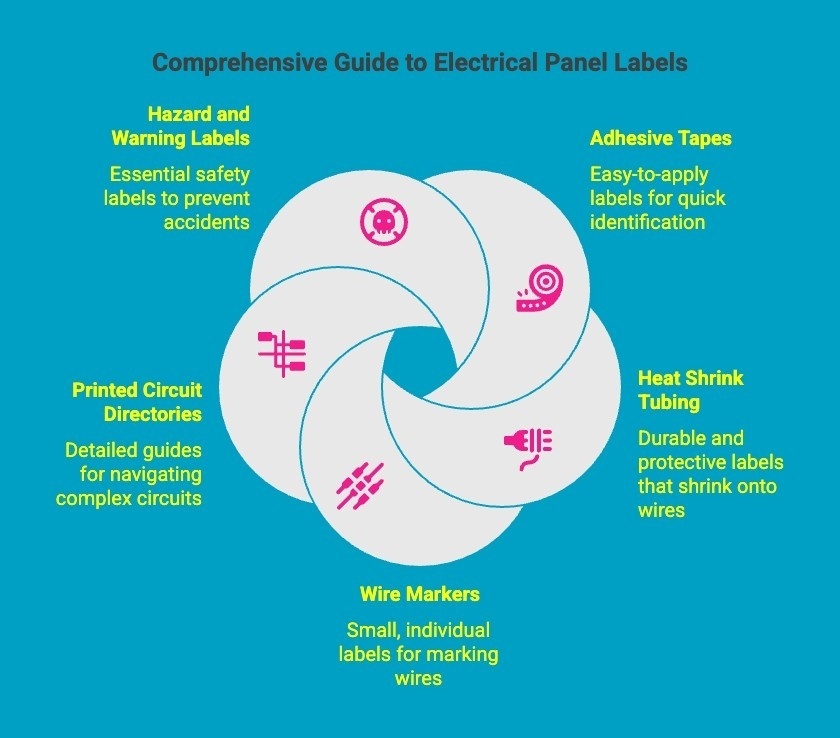
Electrical panels rely on different label types to stay readable, durable, and safe in demanding environments. Choosing the right labels for electrical panel applications depends on where the label is placed and what conditions it must withstand. Understanding these options is also part of the best way to label electrical panel systems clearly and reliably.
Here are the most common types of labels used for electrical panels:
-
Adhesive Tapes: Adhesive label tapes are widely used for breaker identification and flat panel surfaces. They provide clear text, strong adhesion, and resistance to heat, moisture, and fading. These labels for electrical panel use are ideal for long-term identification in residential, commercial, and industrial breaker panels.
-
Heat Shrink Tubing: Heat shrink tubing is commonly used for labeling individual wires inside panels. When heated, it shrinks tightly around conductors, creating permanent, smudge-resistant identification. This method is often considered the best way to label electrical panel wiring where durability and vibration resistance are critical.
-
Wire Markers: Wire markers include preprinted sleeves, wrap-around labels, or clip-on identifiers used to mark conductors. They allow technicians to trace circuits quickly, reduce errors, and maintain clarity inside crowded panels where multiple wires run close together.
-
Printed Circuit Directories: Printed circuit directories list all breaker assignments in one central location, usually inside of the panel door. They provide a clear overview of the system, support inspections, and reduce time spent searching for the correct breaker during maintenance or emergencies.
-
Hazard and Warning Labels: Hazard and warning labels identify risks such as high voltage, arc flash potential, or critical circuits. These labels improve safety by alerting anyone opening the panel to potential dangers and reinforcing proper procedures before servicing electrical equipment.
Using the right combination of label types is the best way to label electrical panel systems so they remain organized, safe, and easy to manage over time.
What are the Regulatory Requirements for Electrical Panel Labels?
Regulatory requirements for electrical panel labels focus on clarity, accuracy, and permanence to protect people and property. In the United States, the National Electrical Code sets the baseline rules for panel labeling, including the requirement that every circuit be identified by its specific purpose, not vague descriptions. Labels must be legible, durable, and clearly positioned. The Occupational Safety and Health Administration reinforces these requirements through workplace safety standards that mandate proper identification of electrical disconnects to reduce hazards.
Guidance from the National Fire Protection Association further supports accurate labeling to minimize fire risks and improve emergency response. Together, these official standards ensure electrical panels remain safe, compliant, and reliable throughout their service life.
How to Label Electrical Panels Safely and in Compliance With Industry Standards?
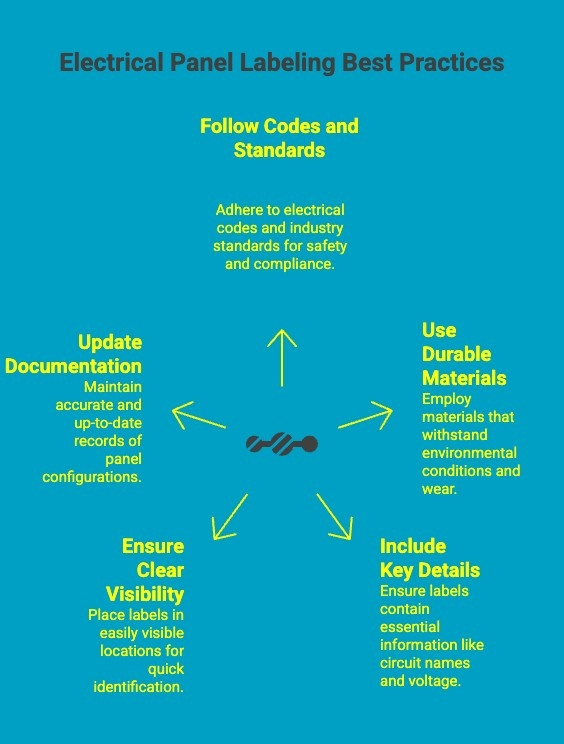
Safe and compliant electrical panel labeling protects people, equipment, and operations while supporting inspections and maintenance. Doing it correctly requires consistency and the right materials.
Here are the best practices to label electrical panels safely and in line with industry standards:
-
Follow Codes and Standards: Always label panels according to applicable electrical and workplace safety codes. Circuit identification must be specific, accurate, and permanently marked. Following standards reduces compliance risks, supports inspections, and ensures anyone working on the panel can identify circuits safely and without confusion.
-
Use Durable Materials: Select labels designed for electrical environments where heat, moisture, and dust are common. Durable materials prevent peeling, fading, or loss of information. Long-lasting labels reduce rework, maintain legibility over time, and ensure safety information remains intact throughout the panel’s service life.
-
Include Key Details: Labels should clearly state circuit purpose, breaker numbers, panel name, voltage, and any critical loads. Including complete information improves clarity, speeds troubleshooting, and prevents unsafe assumptions. Detailed labeling turns the panel into a dependable reference rather than a source of guesswork.
-
Ensure Clear Visibility: Place labels where they are easy to see and read without obstruction. Use clear fonts, adequate spacing, and strong contrast. Good visibility reduces errors, improves response time during emergencies, and makes the panel usable for electricians, inspectors, and facility staff.
-
Update Documentation: Whenever circuits are added, removed, or modified, update panel labels and directories immediately. Outdated documentation creates safety risks and delays maintenance. Keeping labels current ensures the panel always reflects the actual electrical system configuration.
Safe, compliant labeling turns an electrical panel into a clear, trusted tool for everyday operation and emergencies.
What Common Mistakes Should You Avoid When Labeling Panels?
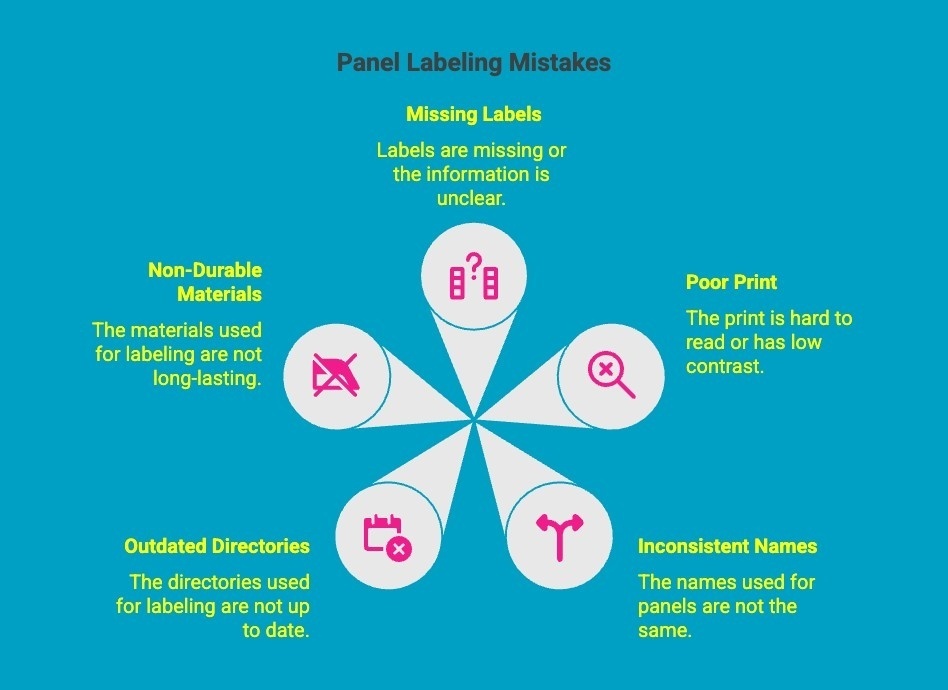
Even with good intentions, panel labeling often goes wrong in small but risky ways. These mistakes reduce clarity, slow maintenance, and increase safety risks.
Here are the most common labeling errors to avoid when organizing electrical panels properly:
1) Missing or Vague Labeling
Leaving breakers unlabeled or using vague terms like “lights” or “outlets” creates confusion and danger. Without clear identification, technicians must guess or test circuits, increasing the risk of electric shock or incorrect shutoffs. Every breaker should be labeled with a specific purpose so the panel serves as a reliable and safe reference during maintenance or emergencies.
2) Illegible or Low-Contrast Print
Labels that are too small, faded, handwritten poorly, or printed with low contrast are difficult to read inside a panel. Poor legibility slows response time and leads to mistakes, especially in low-light conditions. Clear fonts, adequate sizing, and high-contrast text ensure labels remain readable for electricians, inspectors, and property owners over time.
3) Inconsistent Naming
Using different naming styles across the same panel causes confusion. Mixing room names, breaker numbers, and vague descriptions makes the directory harder to follow. Consistent wording and formatting help users quickly understand the system. Standardized naming improves clarity, reduces interpretation errors, and ensures the panel remains intuitive even for someone unfamiliar with the building.
4) Outdated Directories
Electrical systems change as renovations, new equipment, or rewiring occur. Failing to update panel labels after changes makes directories inaccurate and unsafe. Outdated labels mislead technicians and delay repairs. Keeping the directory current ensures it reflects the actual electrical layout, supporting faster troubleshooting and safer work during future maintenance or inspections.
5) Using Non-Durable Materials
Paper labels, cheap adhesives, or ink not designed for electrical environments can peel, fade, or fall off. Heat, humidity, and dust inside panels accelerate deterioration. Non-durable materials turn clear labels into unreadable clutter. Using purpose-built, durable labeling materials ensures long-term legibility and prevents the need for frequent relabeling.
Avoiding these common mistakes keeps electrical panels clear, safe, and dependable for years to come.
How Do You Choose the Right Tools for Electrical Panel Labeling?
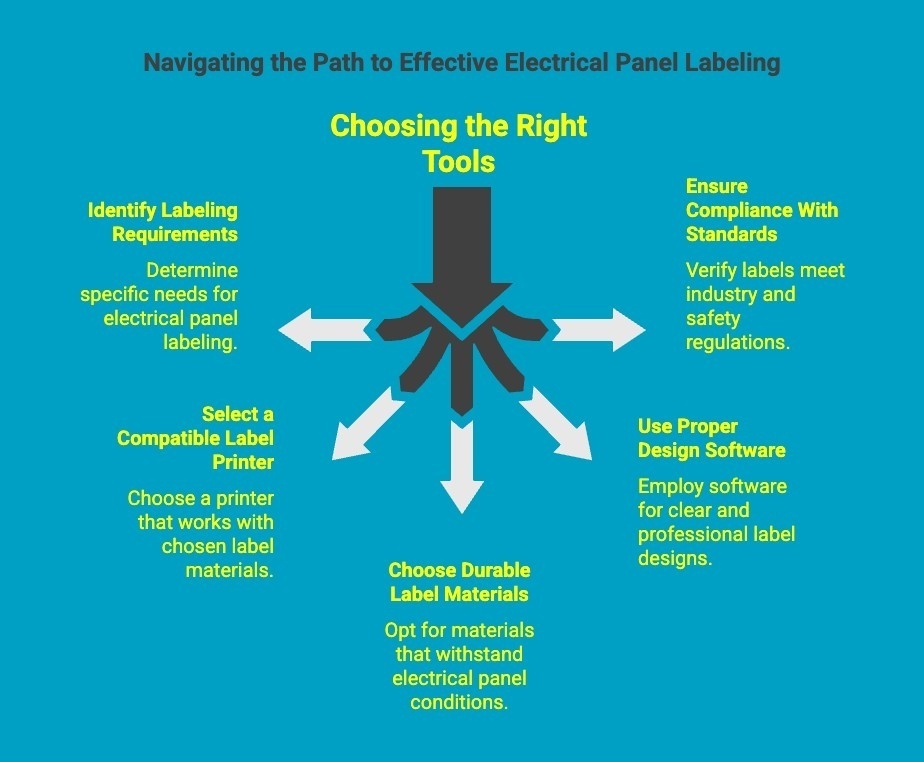
Choosing the right tools for electrical panel labeling improves accuracy, durability, and compliance while reducing rework. The correct setup depends on environment, workload, and standards. Selecting proper electrical service panel labels is just as important as the tools used to create them.
Here are the key factors to consider when selecting labeling tools:
-
Identify Labeling Requirements: Start by defining where labels will be used and what they must withstand. Panel interiors, wires, and directories face different conditions. Knowing temperature exposure, moisture, and space constraints helps narrow down the right tools and materials from the start.
-
Select a Compatible Label Printer: Choose a label printer designed for electrical and industrial applications. It should support required label sizes, materials, and print resolution. A compatible printer ensures clean text, consistent output, and reliable performance during frequent or high-volume labeling tasks.
-
Choose Durable Label Materials: Match label materials to the environment. Electrical service panel labels must resist heat, abrasion, and fading. Durable materials maintain legibility over time and reduce the risk of peeling or loss, which can compromise safety and compliance.
-
Use Proper Design Software: Label design software helps standardize text, spacing, and formatting. Templates reduce errors and improve consistency across panels. Software also makes updates easier, ensuring labels stay accurate as circuits change or systems expand.
-
Ensure Compliance With Standards: Tools should support code-compliant labeling practices, including clear text, permanent markings, and proper placement. Choosing compliant tools helps meet inspection requirements and ensures labels communicate critical information safely and effectively.
The right labeling tools create clear, durable, and compliant electrical panels you can rely on.
Why is the MAX LETATWIN LM-550A3BH the Best Electrical Panel Label Printer?
The MAX LETATWIN LM-550A3BH is widely regarded as the best electrical panel label printer because it is purpose-built for high accuracy, long-term durability, and professional electrical workflows. It excels at producing consistent wire markers, panel labels, and circuit identification with precise alignment, which is critical for safety and compliance. Its automated wire marking capabilities reduce manual errors, speed up large projects, and ensure every label remains legible for years.
For professionals sourcing this printer, DuraFast Label Company is a trusted partner. They provide authorized MAX LETATWIN printers, expert guidance, and access to compatible consumables, ensuring the LM-550A3BH performs reliably in real-world electrical environments. Their industry-focused support helps electricians and contractors choose the right setup without costly trial and error.
Contact DuraFast Label Company today to get expert advice and the right labeling solution for your electrical panel projects.
How Do You Maintain and Update Electrical Panel Labels Over Time?
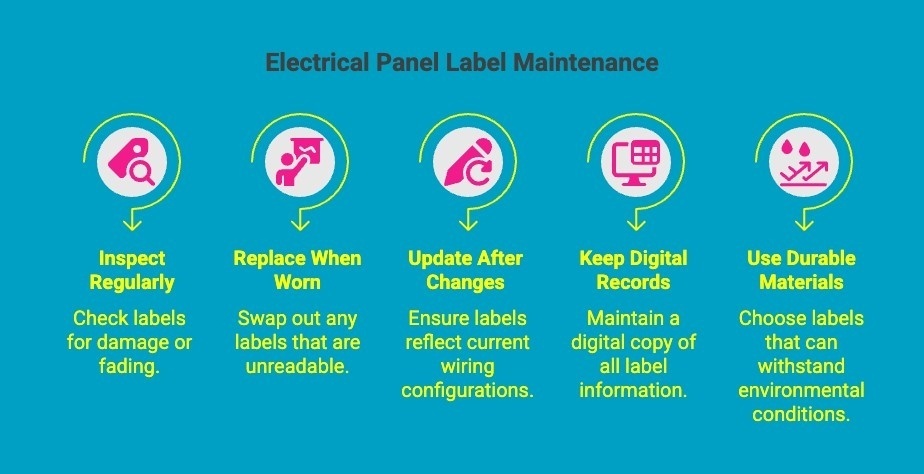
Electrical panel labels are only effective if they stay accurate and readable over time. Ongoing maintenance prevents safety risks and confusion.
Here are the best practices to keep electrical panel labels reliable, compliant, and up to date:
-
Inspect Regularly: Check panel labels during routine inspections or maintenance visits. Look for fading, peeling, missing information, or mismatched descriptions. Regular inspections help catch issues early before labels become unreadable or misleading during repairs, emergencies, or inspections.
-
Replace When Worn: Any label that is damaged, faded, or difficult to read should be replaced immediately. Worn labels increase the risk of incorrect shutoffs and slow troubleshooting. Prompt replacement ensures the panel remains clear, safe, and easy to use for everyone.
-
Update After Changes: Whenever circuits are added, removed, or reassigned, update the panel labels and directory at once. Delayed updates create inaccurate references that lead to mistakes. Keeping labels current ensures the panel always reflects the actual electrical system layout.
-
Keep Digital Records: Maintain a digital copy of panel directories and circuit assignments. Digital records make updates faster, support audits, and provide a backup if physical labels are damaged. This also helps standardize labeling across multiple panels or facilities.
-
Use Durable Materials: Durable label materials last longer and reduce maintenance frequency. Labels designed to resist heat, moisture, and wear remain legible over time, helping panels stay organized and compliant with less effort.
Consistent maintenance keeps electrical panel labels accurate, safe, and dependable year after year.
Conclusion
Accurate electrical panel labeling is not just a finishing step. It is a core safety, compliance, and efficiency requirement. Clear labels inside of the panel door allow quick identification of each circuit breaker during maintenance or emergencies. This is especially important in older homes, where breaker box layouts are often unclear or outdated.
Proper labeling helps safely isolate electrical power to critical loads like overhead lights or a water heater without guesswork. When panels are labeled correctly and kept up to date, they reduce errors, improve response time, and support safer, more reliable electrical systems throughout their service life.
Frequently Asked Questions
Are there official standards for electrical panel markings?
Yes. The National Electrical Code requires circuits to be clearly and legibly marked by specific purpose. While OSHA and ANSI apply in workplaces, NEC compliance is the primary residential standard for safe, clear panel labeling.
How often should I update my electrical panel labels?
Update labels immediately after renovations, new appliances, or wiring changes. Reviewing the breaker directory annually is also recommended to confirm labels remain accurate, readable, and securely attached, especially if circuits trip or loads change.
What materials will make my labels last longer?
Durable labels come from quality label makers using strong adhesive tape and fade-resistant ink. These materials withstand heat and wear better than handwriting, which should only be a temporary option protected with clear tape.
What types of labels and materials should I use for electrical panels?
Electronic label makers provide the clearest, most durable results for panels. Printed directories on quality sticker paper also work. Handwritten sticky notes are the least reliable and often fade, peel, or become unreadable over time.
What are the OSHA requirements for labeling electrical panels?
OSHA focuses on workplace safety and requires clear identification of electrical disconnects. For homes, the National Electrical Code is the primary standard. Following NEC guidelines aligns with OSHA safety principles and reduces electrical hazards.
How Can You Re-Label a Breaker Panel Cleanly?
Relabel by mapping circuits on paper or digitally while testing each breaker. Print new uniform labels, remove old ones, clean residue from the panel, and apply fresh labels neatly for a clear, professional finish.
What tools do I need to label my electrical panel?
You need a notepad, pen, flashlight, and a label maker or quality labels. A plug-in tester or nightlight helps identify circuits, and having a helper makes the process faster, safer, and more accurate.