Thermal Transfer Ribbon Wax vs Resin: Which One Should You Use?
29th Jul 2026
Key Highlights
-
The difference between wax and resin ribbons depends on label material, durability needs, and printing environment. Resin ribbons perform better in harsh conditions such as chemicals, abrasion, and outdoor exposure.
-
Wax ribbons are commonly used with paper labels, such as shipping labels, retail tags, and warehouse labels, where good print quality is needed at a lower cost.
-
Resin ribbons are designed for synthetic label surfaces like polypropylene, polyester, and vinyl, offering superior durability for harsh environments.
-
Wax-resin ribbons provide a balanced option between wax and resin, offering moderate durability for product labeling and logistics applications.
Thermal transfer printing is widely used for barcode labels, product identification, and packaging applications. However, selecting the correct ribbon type is essential for achieving the right balance of print quality, durability, and cost.
Many businesses struggle to decide between wax and resin thermal transfer ribbons because both are designed for different label materials and environments. Choosing the wrong ribbon can lead to smudged barcodes, reduced print durability, and increased printer maintenance.
This guide explains the differences between wax vs. resin thermal transfer ribbons, how they work with different label materials, and how to select the best option for your labeling applications.
What Is a Wax Thermal Transfer Ribbon?
A wax thermal transfer ribbon is a type of thermal transfer ribbon designed primarily for printing on paper-based labels. The ribbon contains wax-based ink that melts easily when heat from the thermal printhead is applied during the printing process. Because wax ink melts at lower temperatures, wax ribbons support print speeds of up to 10 to 12 inches per second, making them the fastest ribbon type for high-volume label printing. For a primer on how thermal transfer printing works, see our thermal printing guide.
As the printhead heats specific areas of the ribbon, the wax ink transfers onto the label surface to create text, graphics, and barcodes. Because wax melts at lower temperatures, it allows fast printing speeds and reduces wear on the printer’s printhead.
Wax ribbons are commonly used for shipping labels, retail labels, inventory tags, and warehouse barcode labels. They are best suited for indoor environments where labels are not exposed to moisture, chemicals, or heavy abrasion.
Not suitable for: labels exposed to moisture, friction, chemicals, or outdoor conditions. For these environments, wax resin or full resin ribbons are required.
What Is a Resin Thermal Transfer Ribbon?
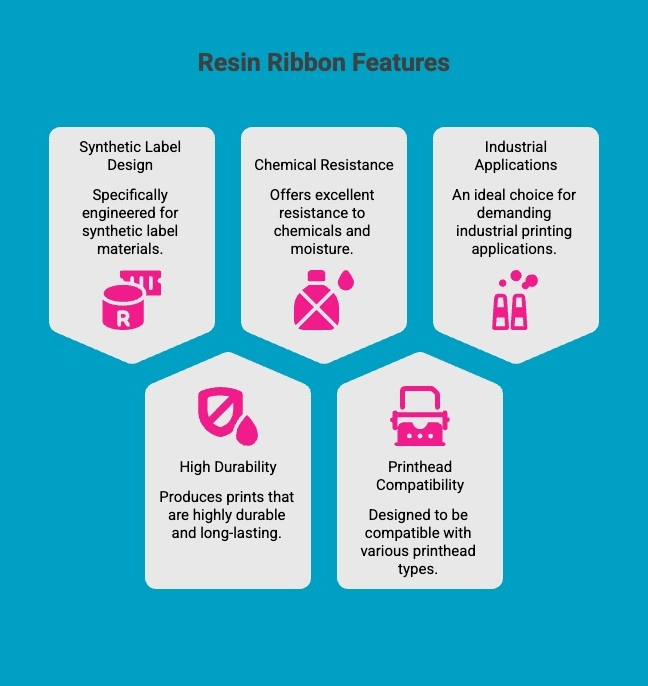
A resin thermal transfer ribbon is designed for printing durable labels that must withstand harsh environments. Unlike wax ribbons, resin ribbons use a harder polymer-based ink formulation that bonds strongly to synthetic label materials and creates highly durable prints.
Below are the key characteristics of resin thermal transfer ribbons:
-
Designed for Synthetic Label Materials: Synthetic materials such as polypropylene, polyester, vinyl, and valeron have smooth, nonporous surfaces that wax ink cannot bond to reliably. Resin ribbons use harder polymer ink that adheres effectively to these surfaces, ensuring durable and consistent prints.
-
High Durability Printing: Resin ribbons produce prints that resist scratching, abrasion, and fading, making them suitable for demanding labeling environments.
-
Resistance to Chemicals and Moisture: Labels printed with resin ribbons can withstand exposure to chemicals, cleaning agents, oils, and moisture without losing print clarity.
-
Printhead Compatibility: Resin ribbons typically require higher printhead temperatures to transfer the harder ink formulation. They are compatible with most industrial thermal transfer printers but must be matched with the correct label material and printer settings to prevent excessive printhead wear.
-
Ideal for Industrial Applications: These ribbons are widely used for asset tracking, compliance labels, laboratory labeling, chemical labeling, and industrial identification.
Resin ribbons are the preferred choice for applications requiring long-lasting and highly durable label printing.
What Are the Key Differences Between Wax and Resin Thermal Transfer Ribbons?
Wax and resin thermal transfer ribbons are designed for different label materials and durability requirements. Understanding their differences helps businesses select the correct ribbon for barcode labels, packaging labels, and industrial identification applications.
Below is a comparison highlighting the key differences between wax and resin thermal transfer ribbons:
|
Feature |
Wax Thermal Transfer Ribbon |
Resin Thermal Transfer Ribbon |
|---|---|---|
|
Label Compatibility |
Best for paper based thermal transfer labels |
Best for synthetic labels such as polypropylene, polyester, vinyl, and valeron |
|
Durability |
Moderate durability |
High durability and long lasting print |
|
Resistance |
Limited resistance to abrasion and moisture |
Strong resistance to chemicals, abrasion, and moisture |
|
Printing Cost |
Lower cost option |
Higher cost due to stronger formulation |
|
Typical Applications |
Shipping labels, retail labels, warehouse labels |
Asset labels, chemical labels, industrial identification |
|
Max Print Speed |
Up to 10 to 12 inches per second |
Typically slower due to higher heat requirements |
|
Typical Heat Setting |
Lower heat settings required |
Higher heat settings required for proper ink transfer |
Note: Durability ratings assume correct ribbon to label material matching. A wax ribbon used on its intended paper substrate will often outlast a resin ribbon used on an incompatible material.
Understanding these differences helps ensure businesses choose the right ribbon for their label material, durability requirements, and production environment.
What Are Application-Based Use Cases for Wax vs. Resin Ribbons?
Wax and resin thermal transfer ribbons are used in different labeling environments depending on durability requirements, label materials, and operational conditions. Understanding where each ribbon performs best helps businesses select the most reliable option for their labeling applications.
Below are common application-based use cases for wax and resin thermal transfer ribbons:
|
Application |
Wax Ribbon |
Resin Ribbon |
Recommended Label Material |
|---|---|---|---|
|
Shipping and Logistics Labels |
Commonly used for paper shipping labels and carton labels |
Less common unless synthetic labels are required |
Paper thermal transfer labels |
|
Retail Product Labels |
Ideal for price tags and product identification labels |
Used when labels require higher durability |
Paper or coated paper labels |
|
Warehouse Inventory Labels |
Suitable for paper barcode labels used indoors |
Used for synthetic labels exposed to frequent handling |
Paper labels for indoor use, synthetic labels for high handling |
|
Industrial Identification |
Not recommended — ink may scratch or smear on equipment surfaces and during handling in industrial settings |
Ideal for equipment labels and asset tracking |
Polyester, polypropylene, or vinyl labels |
|
Chemical or Outdoor Labels |
Not recommended |
Designed for environments with moisture, chemicals, or abrasion |
Durable synthetic labels such as polyester or vinyl |
Selecting the correct ribbon type based on the application ensures labels remain readable, durable, and suitable for their intended environment.
Want to improve label visibility and organization? Color-coded thermal transfer labels help businesses quickly identify products, simplify inventory management, and reduce labeling errors across packaging, logistics, and warehouse operations.
Resin vs Wax Ribbon: Which One Lasts Longer?
Durability differences between wax and resin thermal transfer ribbons mainly depend on the environment where the label will be used and the type of label material. While both ribbons produce clear prints, their resistance to handling, moisture, and chemicals varies significantly.
Below is a simplified comparison of how wax and resin ribbons perform under different durability conditions:
|
Durability Factor |
Wax Ribbon |
Resin Ribbon |
|---|---|---|
|
Abrasion Resistance |
Moderate resistance. Prints may scratch or fade with frequent handling. |
High resistance to abrasion and surface wear. |
|
Moisture Exposure |
Limited resistance. Moisture can cause smudging on paper labels. |
Strong resistance to moisture and humidity. |
|
Chemical Exposure |
Not recommended for environments involving solvents or cleaning agents. |
Highly resistant to many chemicals and industrial solvents. |
|
Handling and Friction |
Suitable for labels with light handling such as shipping or retail labels. |
Designed for labels exposed to heavy handling, equipment contact, or industrial use. |
|
Typical Use Environment |
Indoor environments with minimal exposure to harsh conditions. |
Industrial, laboratory, outdoor, or compliance labeling environments. |
In general, resin ribbons offer significantly higher durability than wax ribbons. However, durability also depends on matching the ribbon with the correct label material and using appropriate printer settings.
When Should You Consider Wax Resin Instead?
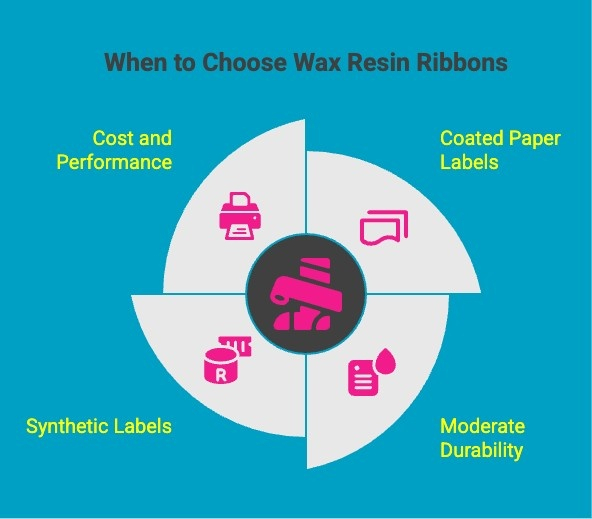
Wax-resin ribbons provide a balance between the affordability of wax ribbons and the durability of resin ribbons. They are often used when labels require stronger resistance than wax can provide but do not need the extreme durability of full resin ribbons.
Below are common situations where wax-resin ribbons are a good choice:
-
Printing on Coated Paper Labels: Wax-resin ribbons work well on coated paper labels where better durability and smudge resistance are needed compared to standard wax ribbons.
-
Moderate Durability Applications: These ribbons are suitable for labels that experience handling, friction, or transportation but do not face extreme environmental exposure.
-
Use with Some Synthetic Labels: Wax-resin ribbons can print effectively on certain synthetic materials such as polypropylene or polyester used in logistics and packaging.
-
Cost and Performance Balance: They provide improved durability without the higher cost typically associated with full resin ribbons.
Wax-resin ribbons are ideal when applications require stronger performance than wax ribbons while maintaining reasonable printing costs.
How Do You Choose Between Wax and Resin Thermal Transfer Ribbons?
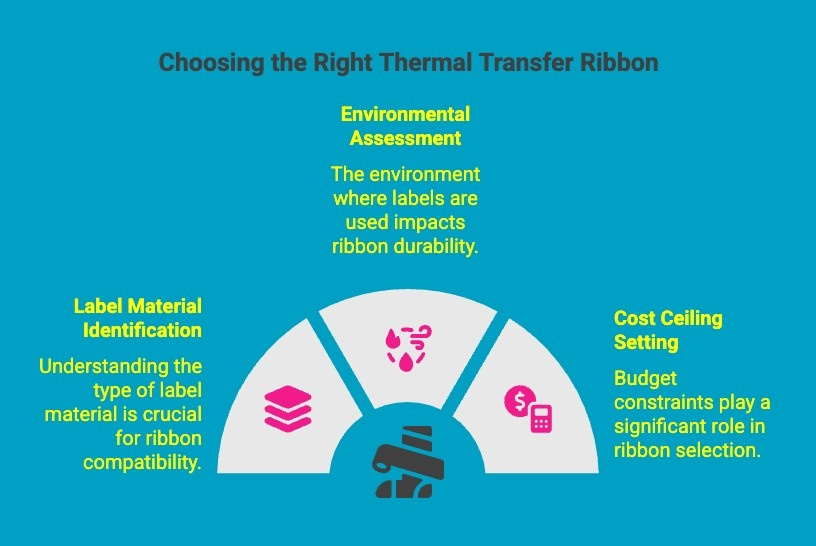
Selecting the right thermal transfer ribbon depends on label material, durability needs, and operating conditions. Instead of evaluating multiple factors separately, businesses can follow a simple three-step decision process.
Step 1: Identify Your Label Material
Start by determining the type of label you are printing on. Paper-based thermal transfer labels typically work best with wax ribbons. Synthetic materials such as polypropylene, polyester, vinyl, or valeron usually require wax resin or full resin ribbons for proper ink adhesion.
Step 2: Assess Your Environment
Next, consider where the label will be used. Indoor applications with minimal handling often work well with wax ribbons. Environments with moderate handling may benefit from wax resin ribbons. Outdoor, chemical, or industrial environments usually require resin ribbons for durability.
Step 3: Set Your Cost Ceiling
Finally, balance durability needs with printing cost. Wax ribbons are generally the most cost-effective option for high-volume paper label printing. Resin ribbons provide the highest durability but come at a higher cost, while wax resin ribbons offer a middle ground between cost and performance.
Before finalizing your ribbon choice, consider the full cost of using the wrong ribbon, including reprints, printhead wear, and line stoppages. See the comparison below.
Why Does Understanding Ribbon Differences Save Cost and Downtime?
Selecting the correct thermal transfer ribbon is essential for maintaining efficient labeling operations. When the wrong ribbon type is used, businesses may experience printing errors, damaged labels, and increased printer maintenance.
Below is a comparison showing how understanding ribbon differences can help reduce operational costs and downtime:
|
Operational Factor |
Using the Wrong Ribbon |
Using the Correct Ribbon |
|---|---|---|
|
Print Quality |
Smudged barcodes or unclear text |
Clear and consistent label printing |
|
Label Durability |
Labels may fade or scratch easily |
Labels remain readable during handling |
|
Printer Maintenance |
Increased wear on the printhead |
Reduced printer maintenance |
|
Printhead Warranty Risk |
Incorrect ribbon and heat settings can accelerate printhead damage and may affect warranty coverage |
Proper ribbon compatibility helps maintain safe operating conditions for the printhead |
|
Label Waste |
Higher number of reprints and wasted labels |
Lower material waste |
|
Production Efficiency |
Possible delays due to printing issues |
Smooth and reliable printing workflow |
Industrial printhead replacement costs typically range from $200 to $500 depending on printer model. Using the correct ribbon formulation for your label material is one of the most cost-effective forms of printer maintenance.
Understanding ribbon compatibility helps businesses maintain consistent printing performance while minimizing printing errors and operational disruptions.
Looking to improve label quality without increasing costs? Upgrading your labeling setup with the right printers, ribbons, and supplies can improve print durability, reduce errors, and keep your labeling operations efficient.
Where Can You Buy Thermal Transfer Ribbons?
Businesses looking for reliable ribbon supplies can find a wide range of options from specialized labeling suppliers that support different printer models and applications. Choosing the right supplier helps ensure ribbon compatibility, consistent print quality, and dependable delivery.
DuraFast Label Company offers a broad selection of Zebra-compatible thermal transfer ribbons designed for desktop and industrial printers used in barcode labeling, packaging, and product identification.
Available options include:
These ribbon options support a variety of Zebra desktop and industrial printers used in labeling, logistics, manufacturing, and packaging environments.
Ready to buy thermal transfer ribbons?
Explore DuraFast Label Company’s full range of compatible ribbons to find the right formulation, width, and length for your printer and labeling application. Contact a DuraFast label specialist for product recommendations and availability.
Frequently Asked Questions
What is the main difference between wax and resin thermal transfer ribbons?
The difference between wax and resin ribbon mainly involves durability and label compatibility. In wax ribbon vs. resin ribbon comparisons, wax ribbons are ideal for paper labels like retail tags, while resin ribbons bond to synthetic label surfaces and provide superior durability for demanding applications.
Is wax ribbon or resin ribbon better for barcodes?
Both ribbon types can produce good print quality for barcodes using a thermal transfer printer. However, resin ribbons are preferred when printed labels must withstand harsh conditions, outdoor exposure, or chemicals during inventory management and industrial product labeling applications.
Can resin ribbons be used on paper labels?
Resin ribbons can sometimes print on coated paper labels, but they are primarily designed for synthetic label surfaces made from materials like polyester or polypropylene. These ribbons deliver robust resistance and superior durability when labels face harsh chemicals or environmental exposure.
What happens if I use the wrong ribbon type?
Using the wrong type of ribbon can reduce desired print quality and damage printed labels. For example, wax ribbons may be less durable in extreme conditions, while resin ribbons may not transfer properly on incompatible materials in certain thermal printing applications.
Is wax-resin a good alternative to pure wax or resin ribbons?
Yes. A wax resin ribbon offers a balanced option among types of thermal transfer ribbons. It works well for different applications where durability is important but full resin performance is unnecessary, delivering reliable printing for product labeling and warehouse operations.
Do wax and resin ribbons require different storage or handling methods?
Yes. Thermal ribbons should be stored in perfect condition away from high temperatures, low temperatures, or UV rays. Proper storage helps maintain ribbon performance for an extended period and ensures consistent printing results across various labeling environments.
Are there specific printer settings needed for wax versus resin ribbons?
Yes. Different types of thermal transfer ribbons require different heat settings in a thermal transfer printer. Resin ribbons typically require higher heat for proper ink transfer, while wax ribbons print efficiently at lower temperatures and support high speeds in many printing needs.