What Types of Tape Are Best for Industrial Labeling?
14th Jul 2026
Key Highlights
-
Polyester adhesive tapes offer exceptional durability and resistance to chemicals, heat, and moisture.
-
These tapes ensure strong adhesion, making them ideal for industrial labeling applications.
-
They provide a long-lasting solution for labeling equipment, cables, and machinery.
-
Polyester tapes are designed to withstand tough environments, ensuring visibility and reliability.
-
Ideal for use in industries where labels must endure demanding conditions.
-
They help improve organization and compliance in industrial settings.
-
Perfect for applications requiring high resistance to harsh environmental factors.
-
Polyester adhesive tapes enhance the efficiency and performance of labeling systems.
Choosing the right tape for industrial labeling can be a challenge, especially when you need one that withstands extreme conditions. Without the proper tape, labels can peel, fade, or fail, causing costly disruptions and safety issues.
Industrial environments demand durability, especially for labeling equipment and machinery. Factors like chemicals, heat, moisture, and rough handling can cause labels to degrade quickly, compromising safety and organization. Among common types of tape, it’s crucial to choose one that’s designed for resilience in tough settings.
This blog aims to explore the benefits of polyester adhesive tapes in industrial labeling. We’ll discuss why they’re the ideal choice for environments that require long-lasting, reliable labels capable of withstanding tough conditions.
What Should You Know About Industrial Labeling Tapes?
Industrial labeling tapes are essential tools for ensuring safety, organization, and compliance in industrial environments. These tapes come in various materials, such as polyester, vinyl, and polyimide, each designed to withstand specific environmental conditions like high temperatures, moisture, chemicals, and abrasion.
They are used for labeling wires, cables, machinery, and electrical panels, providing clear identification and reducing the risk of accidents. Industrial tapes often feature strong adhesives, ensuring they stay intact even in harsh conditions. The use of color-coded tapes can also aid in quick identification, improving efficiency and workflow. Moreover, these tapes are designed to meet regulatory standards such as OSHA and IEC, making them critical for safety and legal compliance.
When choosing the right tape, it’s essential to consider factors like adhesive strength, durability, and resistance to external elements to ensure optimal performance in your specific industry.
Learn more about the benefits of printing your own industrial labels for valuable insights!
What Benefits Do High-Quality Industrial Tapes Provide?
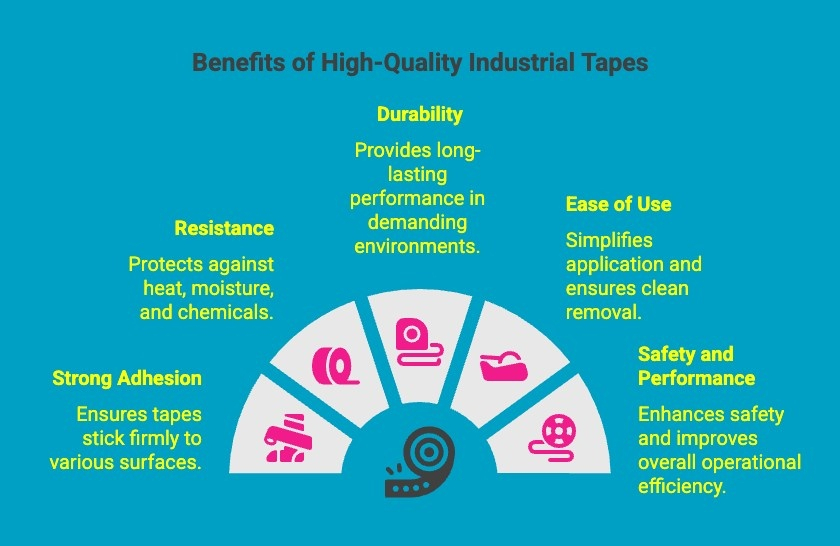
When it comes to industrial labeling, high-quality tapes are an essential component for improving safety, efficiency, and compliance. These tapes offer numerous benefits that make them ideal for various demanding environments. Below are the key advantages of using high-quality industrial tapes.
1) Strong and Reliable Adhesion
High-quality industrial tapes are designed with strong adhesives that ensure they stay securely in place under challenging conditions. Whether exposed to extreme temperatures or vibrations, these tapes provide lasting adhesion, reducing the need for frequent replacements. Their superior bonding strength ensures the labels remain intact, even in high-traffic areas or harsh industrial settings. This reliability prevents accidents and misidentifications, making it easier for workers to quickly identify equipment and components.
2) Resistance to Heat, Moisture, and Chemicals
One of the standout features of high-quality industrial tapes is their ability to withstand extreme conditions, including heat, moisture, and exposure to harsh chemicals. This resistance ensures that the labels remain legible and intact even in environments prone to fluctuating temperatures or exposure to corrosive substances. For industries such as manufacturing, construction, and electronics, these durable tapes offer optimal performance, ensuring that labels don’t fade or peel over time.
3) Long-Lasting Durability
Industrial tapes made from premium materials are built to endure long-term use, withstanding wear and tear in tough environments. Their durability is key to ensuring that labels stay in place, providing continuous and clear identification of cables, wires, and machinery for an extended period. This longevity reduces the need for constant maintenance and re-labeling, saving time and resources while maintaining workplace safety and compliance.
4) Easy Application and Clean Removal
High-quality industrial tapes are designed for easy application, with features like smooth, bubble-free adhesion and straightforward cutting for a precise fit. Additionally, these tapes offer the advantage of clean removal without leaving sticky residues, ensuring a hassle-free experience when adjustments or updates are required. This ease of use simplifies the labeling process and minimizes disruptions in high-efficiency industrial operations.
5) Enhanced Safety and Performance
Using the right industrial tapes enhances overall workplace safety by providing clear, visible labels that reduce the risk of accidents. Color-coded and durable tapes help workers quickly identify hazardous areas, equipment, and wires, streamlining operations and improving compliance with safety regulations. Enhanced performance through the use of high-quality tapes ensures that systems run smoothly, reducing downtime and improving the overall efficiency of industrial environments.
High-quality industrial tapes enhance safety, efficiency, and reliability. They ensure accurate labeling, reduce maintenance costs, and create safer work environments. Choosing the right tape optimizes workflows and helps maintain compliance across industries.
What Types of Labeling Tapes Are Commonly Used?
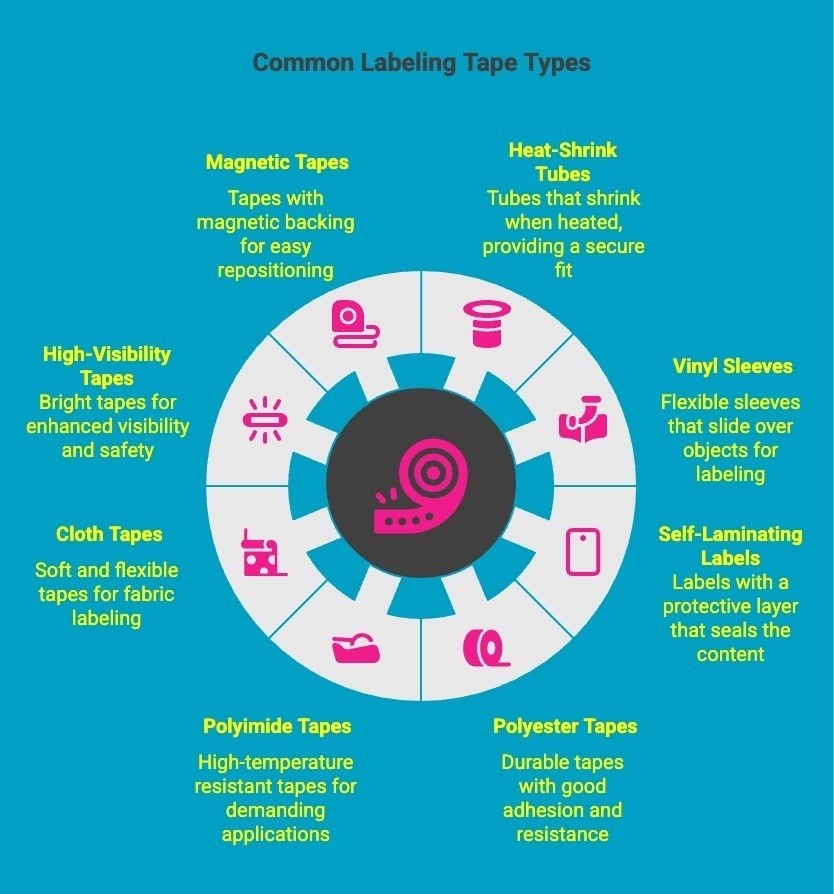
When selecting the right labeling tape for industrial use, it's important to choose the one that best suits the specific environment and requirements.
Below are some of the most commonly used labeling tapes, including various types of electrical tape, each offering distinct advantages for different applications:
1) Heat-Shrink Tubes
Heat-shrink tubes are ideal for labeling wires, cables, and components in environments where moisture, heat, and abrasion may be present. These tubes shrink when exposed to heat, providing a tight, durable seal. They offer excellent protection while keeping labels visible and legible. Widely used in electrical applications, they are perfect for creating long-lasting, protective labels that won’t wear out quickly.
2) Vinyl (PVC) Sleeves
Vinyl sleeves are known for their flexibility and durability, making them ideal for labeling wires and cables in both indoor and outdoor environments. They are resistant to environmental factors such as moisture, chemicals, and UV light. These sleeves are easy to apply and remove, and they provide clear, long-lasting labels. Available in various sizes and colors, they help maintain organized, easy-to-read labeling systems.
3) Self-Laminating Adhesive Labels
Self-laminating labels combine an adhesive backing with a clear protective layer, which helps shield the printed text from wear, moisture, and chemicals. These labels are ideal for labeling cables, wires, and electrical components in harsh industrial conditions. They provide an easy and efficient way to label items that need to remain durable and legible over time, even in extreme environments.
4) Polyester Adhesive Tapes
Polyester adhesive tapes are highly durable and resistant to chemicals, heat, and moisture. They offer strong adhesion and are perfect for industrial labeling applications that require labels to withstand demanding conditions. These tapes provide a long-lasting solution for labeling equipment, cables, and machinery in tough environments, ensuring both reliability and visibility. Among adhesive tape types, polyester stands out for its resilience in harsh environments.
5) Polyimide (Kapton) Tapes
Polyimide (Kapton) tapes are designed for use in high-temperature applications, capable of withstanding extreme heat without losing their integrity. These tapes are commonly used in industries like aerospace, electronics, and electrical, where heat resistance is critical. They offer excellent electrical insulation properties, making them a reliable choice for labeling in environments with high thermal demands.
6) Cloth/Fabric Labeling Tapes
Cloth or fabric labeling tapes are often used in industries where flexibility and durability are necessary, such as automotive and manufacturing. These tapes are resistant to abrasion and provide strong adhesion, even under tough conditions. They are ideal for labeling equipment or machinery that undergoes frequent movement or stress, offering both visibility and longevity.
7) High-Visibility/Fluorescent Tapes
High-visibility or fluorescent tapes are designed to stand out in low-light conditions, making them ideal for safety-related applications. These tapes are commonly used for marking hazardous areas, emergency exits, or machinery in environments where visibility is critical. With their bright, reflective properties, they help ensure safety and prevent accidents by improving the visibility of important markings.
8) Magnetic or Reusable Labeling Tapes
Magnetic labeling tapes are a versatile option for environments where frequent label changes are required. These tapes adhere easily to metal surfaces and can be repositioned without leaving adhesive residue. Ideal for temporary labeling or areas requiring constant updates, magnetic tapes offer flexibility and ease of use, making them a practical choice for dynamic work environments.
Each of all types of tape serves a unique purpose to ensure durability, safety, and efficiency. Selecting the right tape, such as types of electrical tape, enhances organization, compliance, and performance, ensuring smooth operations even in the toughest environments.
When Should You Use Each Type of Labeling Tape?
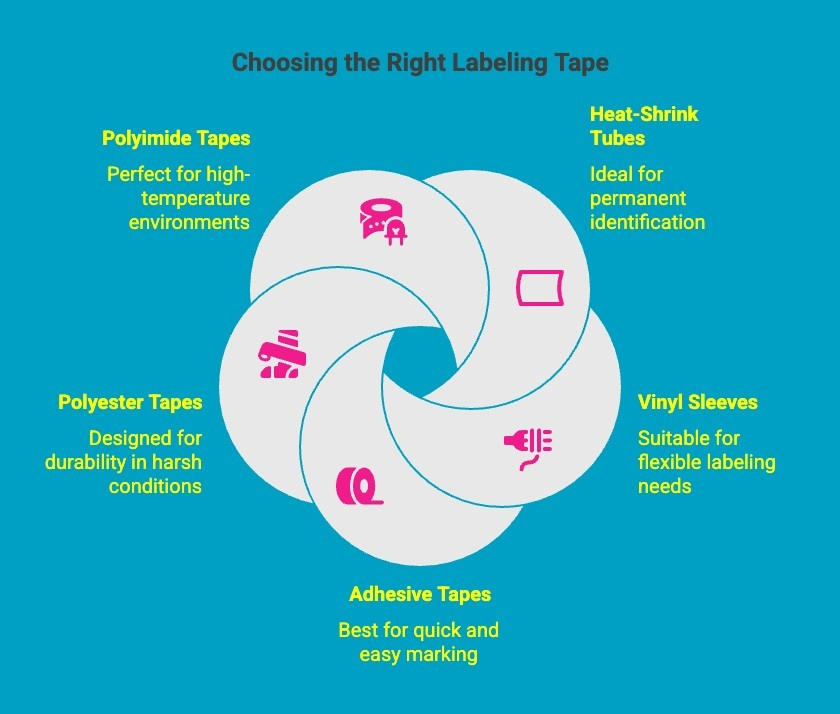
Choosing the right labeling tape for different applications depends on factors like durability, environmental conditions, and the need for flexibility.
Below are some guidelines to help determine when to use each type of labeling tape based on your specific needs:
-
Use Heat-Shrink Tubes for Permanent IDs: Heat-shrink tubes are perfect for situations where permanent identification is required. They provide long-lasting, secure marking for cables, wires, and components, offering a tight, protective seal that ensures durability.
-
Choose Vinyl Sleeves for Flexible Labeling: Vinyl sleeves are ideal when flexibility is needed for labeling. These are commonly used for wire and cable identification, offering strong adhesive properties while being easy to read and durable in both indoor and outdoor environments.
-
Opt for Adhesive Tapes for Quick Marking: Adhesive tapes are best for quick, temporary markings or fast labeling. They are easy to apply and remove, making them ideal for environments that require frequent updates or changes to labels.
-
Select Polyester Tapes for Harsh Conditions: Polyester tapes are designed to withstand chemicals, moisture, and high temperatures, making them perfect for industrial applications. They provide durable and long-lasting labels for equipment, machinery, or cables in tough environments.
-
Pick Polyimide Tapes for High-Heat Environments: Polyimide (Kapton) tapes are essential for high-heat environments, providing reliable insulation and protection. They are ideal for labeling components exposed to extreme temperatures, commonly used in electronics, aerospace, and electrical applications.
Each tape type serves a unique purpose, ensuring better labeling accuracy, safety, and efficiency across various industrial environments.
How Do You Choose the Right Tape for Your Application?
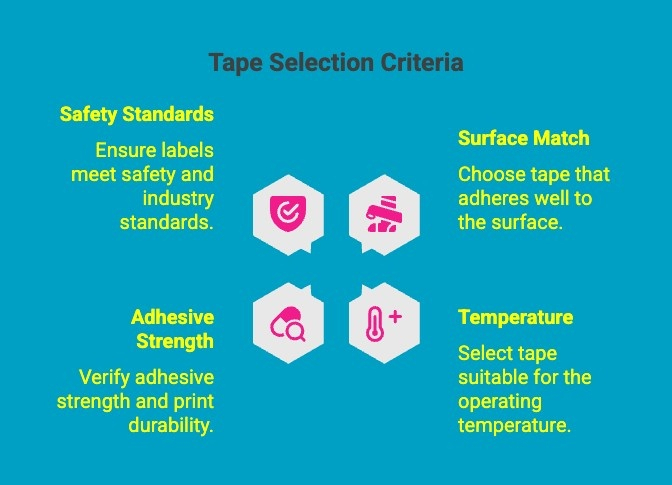
Choosing the right tape for your application is crucial to ensure long-lasting, clear, and reliable labeling. Here are some key factors to consider when selecting the best tape for your needs:
-
Match the Tape to Your Surface: Different tapes are designed for specific surfaces. Ensure the tape you choose adheres well to the material you’re labeling, whether it's metal, plastic, fabric, or another surface. Some tapes work better on smooth surfaces, while others are designed for rough or uneven surfaces.
-
Consider Temperature and Exposure: Temperature and exposure to environmental factors such as moisture, chemicals, or UV light should be considered when choosing your tape. If your application involves high heat or outdoor exposure, select a tape designed to withstand these conditions without degrading or peeling over time.
-
Check Adhesive Strength and Print Durability: Adhesive strength is crucial to ensure your labels stay in place, even under tough conditions. Look for tapes with strong adhesion properties that are resistant to moisture, oils, and abrasion. Additionally, ensure the printed text is durable enough to remain legible despite wear and environmental exposure.
-
Ensure Labels Meet Safety and Industry Standards: If your application requires compliance with safety regulations or industry standards (e.g., OSHA, IEC), make sure the tape you select meets the necessary criteria. Compliance ensures that your labeling system is not only effective but also legally compliant, enhancing safety and reducing risks.
Choosing the right tape is crucial for achieving clear, durable, and compliant labels in any industrial or commercial setting. To make an informed decision, explore our comprehensive guide on selecting the perfect label for your specific industry needs.
Read more on how to choose the right label for your industry for expert insights and tips!
Why MAX Letatwin Tubes and Tapes Are Ideal for Professional Wire and Cable Identification?
MAX Letatwin tubes and tapes are ideal for professional wire and cable identification due to their durability, versatility, and high-performance features. These tubes and tapes offer clear, legible labels that can withstand harsh environments, including exposure to heat, moisture, and chemicals.
Designed for quick and efficient labeling, they provide excellent adhesion and long-lasting durability, ensuring labels remain intact even in demanding conditions. The wide range of materials, including heat-shrink tubes and adhesive tapes, allows for a customized solution based on specific requirements. Their easy application process and compatibility with various cable types make them a top choice for industries requiring reliable and efficient wire and cable identification. MAX Letatwin products are designed to improve organization, safety, and operational efficiency.
For a complete labeling solution, trust DuraFast Label Company to provide the best labeling products for your needs. Contact Us today for more information on how we can help with your wire and cable identification requirements.
Conclusion
MAX Letatwin tubes and tapes provide exceptional durability, versatility, and performance for wire and cable identification. With their ability to withstand harsh environments, these tapes offer clear, long-lasting labels that maintain their integrity in demanding conditions.
MAX Letatwin offers different types of tape, including duct tape, electrical tape, foam tape, masking tape, and acrylic foam, ensuring professionals have customized solutions for various applications. These tapes are ideal for marking, insulation, and protection, providing both flexibility and strength in tough environments. Enhancing safety and improving organization, MAX Letatwin products boost operational efficiency across multiple industries.
Frequently Asked Questions
Are there specific storage requirements for maintaining tape quality before use?
Yes, store tapes in a cool, dry place, away from sunlight and extreme temperatures to preserve the adhesive strength and backing material, ensuring the tape performs as expected.
Which types of tape are best for crafting projects?
Washi tape, paper tape, and adhesive transfer tape are ideal for crafting. Washi offers decorative designs, paper tape is perfect for paper crafts, and adhesive transfer tape provides precise adhesion for intricate projects.
What types of tape are waterproof or weather resistant?
Duct tape, aluminum foil tape, and acrylic tape are weather-resistant. These tapes can withstand moisture, temperature changes, and harsh environments, making them perfect for outdoor use.
Which tapes are recommended for securing cables or wires?
Electrical insulation tape, cloth tape, and acrylic adhesives are commonly used. Electrical tape provides insulation, cloth tape offers durability, and acrylic adhesives provide strong bonding on different surfaces.
What are the main types of adhesive tape and their common uses?
Duct tape is for repairs, masking tape for painting projects, and electrical insulation tape for wiring. Each type has unique properties like adhesion strength, flexibility, and weather resistance.
What is the difference between masking tape and painter’s tape?
Masking tape offers low tack for temporary fixes, while painter’s tape has a stronger adhesive to prevent paint bleed, making it ideal for painting projects with clean edges.
Are there specific tapes used for temporary versus permanent fixes?
Temporary fixes use low-tack tapes like masking tape, while permanent fixes require tapes like electrical insulation tape, which provides strong adhesion and durability for electrical repairs.
Can you explain the various cassette tape types and their purposes?
Type I is for basic audio, Type II offers better sound quality, and Type IV provides high-fidelity recordings with reduced distortion, suitable for sensitive applications.