
What Are the Best Warehouse Labeling Ideas for Durability?
23rd Jul 2026
Key Highlights
-
Warehouse labeling ideas work best when floor, rack, shelf, and bin labels follow one consistent system for quick access and easy navigation.
-
Floor labels face the highest wear, making durability and protection critical for safety, visibility, and long-term performance.
-
Standard rack labeling and clear shelf labels help warehouse staff reduce unnecessary steps and locate the right products faster.
-
Bin labeling with unique identifiers improves accuracy in dense storage and supports efficient picking of specific products.
-
Durable labeling reduces maintenance costs, downtime, and frequent replacements across high-traffic areas.
-
Using the right types of labels ensures accurate inventory control and smoother order fulfillment for customer orders.
Warehouses rely on labels to guide movement, support inventory control, and ensure the right products reach the right locations. When labeling is unclear or wears out too quickly, it creates unnecessary steps, slows picking, and increases errors across daily operations.
These challenges become more noticeable in busy environments with high traffic, dense storage, and frequent customer orders. Without durable and well-structured labeling, warehouse staff spend more time searching, correcting mistakes, and replacing worn labels instead of focusing on efficiency.
This blog explores practical warehouse labeling ideas that improve navigation, accuracy, and durability. It explains how floor, rack, shelf, and bin labels work together as one system, and why protecting high-wear labels is an effective way to support long-term warehouse performance.
Why Do Warehouse Labeling Ideas Need to Consider Durability?
Warehouse labeling ideas must consider durability because labels are exposed to constant wear in active environments. Forklifts, pallet movement, foot traffic, and routine cleaning place repeated stress on labels, especially those applied to floors.
When labels fade, peel, or become unreadable, they create safety risks and slow down daily operations. Poor visibility can also lead to picking errors and confusion across work zones.
Frequent label replacement increases maintenance costs and causes avoidable downtime. Durable labeling helps ensure that location markers, safety warnings, and traffic guidance remain clear over time, supporting safer movement, better accuracy, and more efficient warehouse operations.
What Are the Most Effective Warehouse Floor Labeling Ideas?
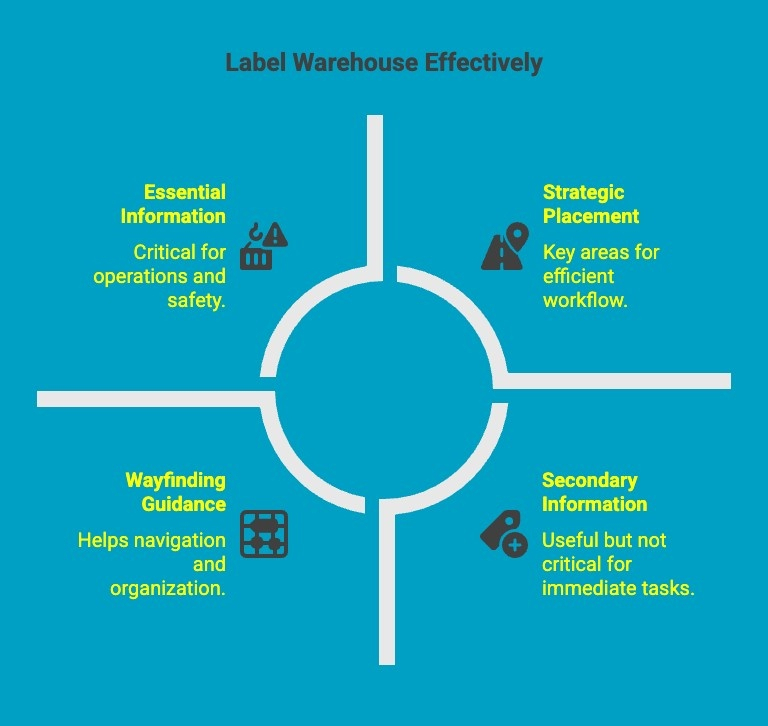
Clear and durable floor labels help warehouses control movement, improve safety, and organize space efficiently. Because floor labels guide both people and equipment, their placement and visibility directly affect daily operations.
Below are the most effective warehouse floor labeling ideas used in active facilities:
-
Aisle and Walkway Markings: Clearly define pedestrian paths and forklift routes to reduce collisions and confusion.
-
Pallet Staging and Storage Zones: Mark designated pallet positions to improve space control and inventory flow.
-
Safety and Hazard Indicators: Highlight crossings, restricted areas, and warning zones to support compliance.
-
Directional and Wayfinding Labels: Guide operators through large or complex layouts efficiently.
When applied strategically, these floor labeling ideas create safer movement, clearer navigation, and more organized warehouse operations.
How Can Warehouse Floor Labels Be Protected for Longer Lifespan?
Floor labels fail early when abrasion and impact are not addressed at the surface level. Protection focuses on reducing wear without replacing the label itself.
Here are practical ways warehouses protect floor labels in high-traffic areas:
-
Protective Overlays: Clear protective layers shield printed labels from forklift abrasion, foot traffic, and debris.
-
Edge Sealing and Surface Coverage: Protection prevents edge lifting and adhesive breakdown over time.
-
High Impact Zones First: Focus protection on intersections, turning points, and staging areas.
-
Label Protection Systems: Solutions like Label Armor are designed to extend floor label life without affecting readability.
Protecting floor labels improves durability, reduces replacements, and keeps warehouse markings clear for longer.
How Different Warehouse Labels Work Together As One System
Warehouse labeling works best when it functions as one coordinated system, not separate parts. Floor, rack, shelf, and bin labels each play a distinct role, but they must follow the same location logic to reduce errors and improve speed.
1) Floor Labels – Movement and Zone Control
Floor labels guide movement across aisles, staging areas, and picking zones. They control traffic flow, define storage zones, and support safety compliance.
Effective floor labeling focuses on:
-
Clear aisle and zone identification
-
High visibility numbering
-
Durable materials suited for forklift traffic
-
Protective overlays to reduce wear in high traffic areas
Because floor labels face constant abrasion from equipment and foot traffic, durability and protective coverings are essential for long term readability.
1) Rack Labels – Vertical Location Confirmation
Rack labels confirm the exact vertical storage position within an aisle. While floor labels guide operators to the correct zone, rack labels validate the bay and level.
Strong rack labeling systems include:
-
Consistent aisle, bay, and level numbering
-
Large, readable identifiers for high bay systems
-
Placement at eye level and end of aisles
-
Alignment with floor numbering logic
This vertical confirmation prevents misplacement, especially in tall racking environments where multiple levels share the same footprint.
3) Shelf Labels – Pick Face Accuracy
Shelf labels support accurate item selection at the pick face. Once operators reach the correct rack and level, shelf labels ensure the correct SKU is picked.
Key considerations include:
-
Clear SKU codes or barcodes
-
Logical sequencing from left to right
-
Durable adhesive for frequent handling
-
Easy replacement for changing inventory
Shelf labels reduce picking errors and improve speed in fast moving inventory areas.
4) Bin Labels – Precision in Dense Storage
Bin labels are critical in dense storage systems where multiple small items are stored close together. They provide granular identification beyond aisle and rack numbers.
Best practices for bin labeling include:
-
Unique identifiers for each bin
-
Barcode integration for scanning systems
-
Consistent format across all storage areas
-
Durable materials for high handling environments
In compact storage areas, bin labels are the final confirmation step before a product is picked.
Why These Labels Must Follow One Logic?
Each labeling layer builds on the other. Floor labels guide movement. Rack labels confirm vertical position. Shelf and bin labels ensure item level accuracy.
If numbering logic differs between these layers, confusion increases and errors multiply. When all labels follow the same structured location system, operators move with confidence, onboarding becomes easier, and warehouse accuracy improves across daily operations.
How Do Warehouse Shelf Labeling Ideas Improve Picking Accuracy?
Shelf labels guide pickers directly to the correct item, reducing hesitation and misreads in busy storage areas. When shelf identification is clear and consistent, picking becomes faster and more reliable.
Below are warehouse shelf labeling ideas that improve picking accuracy:
-
Clear Shelf Edge Labels: Large, legible text and strong contrast help pickers confirm SKUs quickly at the pick face.
-
Consistent Shelf Numbering Logic: Standardized shelf codes reduce confusion and prevent selection from incorrect positions.
-
Barcode Labels at Pick Locations: Scannable shelf labels enable quick system verification and error prevention.
-
Proper Spacing in Dense Shelving: Clear separation between labels reduces SKU mix-ups in high-density storage areas.
-
Optimized Label Visibility: Labels positioned for easy viewing minimize bending, reaching, and guesswork.
Effective shelf labeling improves accuracy, speeds up picking, and supports smoother warehouse operations.
How Do Warehouse Bin Labeling Ideas Reduce Errors in Dense Storage?
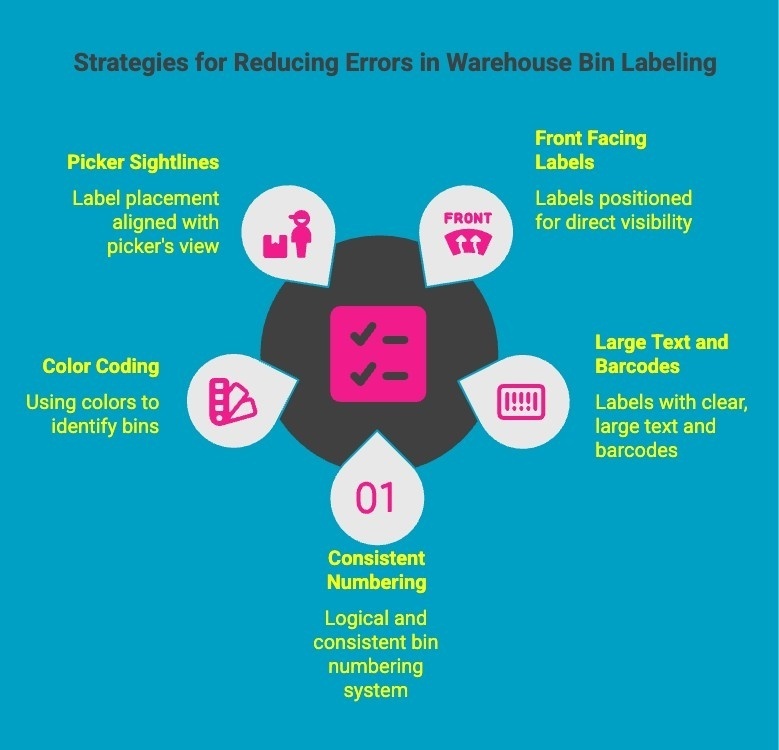
Bin labels are essential in areas where many small items are stored close together and visual confusion is common. Clear bin identification helps pickers confirm the correct item quickly and avoid costly mistakes.
Below are warehouse bin labeling ideas that reduce errors in dense storage:
1) Front-Facing Bin Labels for Direct Visibility
Front-facing bin labels allow pickers to identify the correct bin without lifting or shifting containers. Clear text and scannable codes reduce hesitation during picking and prevent selection from adjacent bins. This approach is especially effective in fast-moving areas where speed and accuracy must work together.
2) Large Text and Barcode Bin Labels
Using large, readable text alongside barcodes gives pickers two ways to verify accuracy. Visual confirmation supports quick picks, while barcode scanning provides system-level validation. This dual method significantly reduces human error in dense storage environments.
3) Consistent Bin Numbering and Location Logic
Standardized bin numbering helps pickers follow a predictable pattern across storage zones. When bin labels align with rack, shelf, and floor references, operators can locate items confidently and reduce mispicks caused by similar-looking containers.
4) Color-Coded Bin Identification
Color coding adds an extra visual layer in crowded storage areas. Assigning colors to zones, product types, or pick paths helps pickers distinguish bins faster, reducing errors caused by close spacing and repetitive layouts.
5) Label Placement That Matches Picker Sightlines
Positioning bin labels where pickers naturally look prevents missed or misread information. Proper placement reduces bending, searching, and guesswork, helping maintain accuracy even during high-volume picking periods.
Well-designed bin labeling improves clarity, reduces picking errors, and keeps dense storage areas organized and efficient.
Why Do Rack and Bin Labels Work Best as Part of One System?
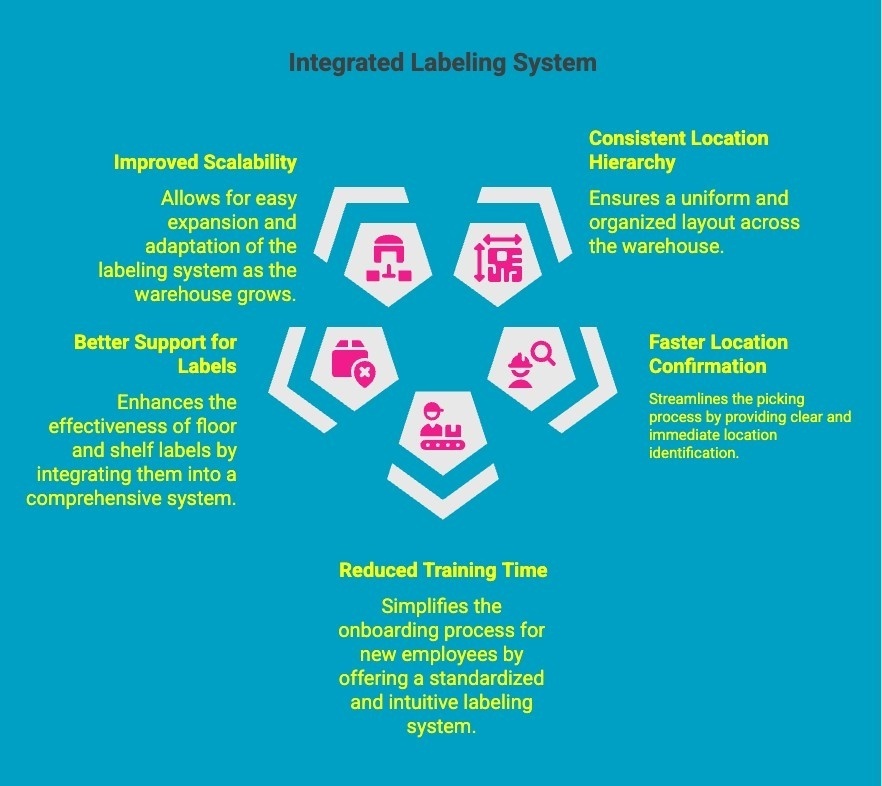
Rack and bin labels are most effective when they follow a shared structure rather than operating independently. Rack and bin labels warehouse labeling ideas focus on creating one clear logic that helps operators move smoothly between locations without second-guessing or backtracking.
Below are reasons rack and bin labels work best as part of one system:
1) Consistent Location Hierarchy Across the Warehouse
When rack and bin labels use the same aisle, bay, and position logic, operators can predict locations easily. This consistency reduces mental load, speeds up navigation, and prevents errors caused by mismatched or overlapping formats across different storage areas.
2) Faster Location Confirmation During Picking
A unified system allows pickers to confirm locations in seconds. Rack labels guide them to the correct structure, while bin labels pinpoint the exact item. This layered confirmation reduces mispicks, especially in dense or high-volume zones.
3) Reduced Training Time for New Staff
New employees learn layouts faster when rack and bin labels follow one clear logic. Predictable patterns reduce onboarding time and lower early-stage picking errors.
4) Better Support for Floor and Shelf Labels
Rack and bin labels reinforce floor and shelf markers. This alignment creates a complete navigation framework across ground and storage levels.
5) Improved Scalability Across Racking Systems
Unified labeling supports growth by making updates easier as inventory expands. This approach aligns well with racking systems warehouse rack labeling ideas, preventing fragmentation over time.
When rack and bin labels operate as one system, warehouses gain clarity, accuracy, and long-term operational stability.
How Should You Choose the Right Warehouse Labeling Ideas?
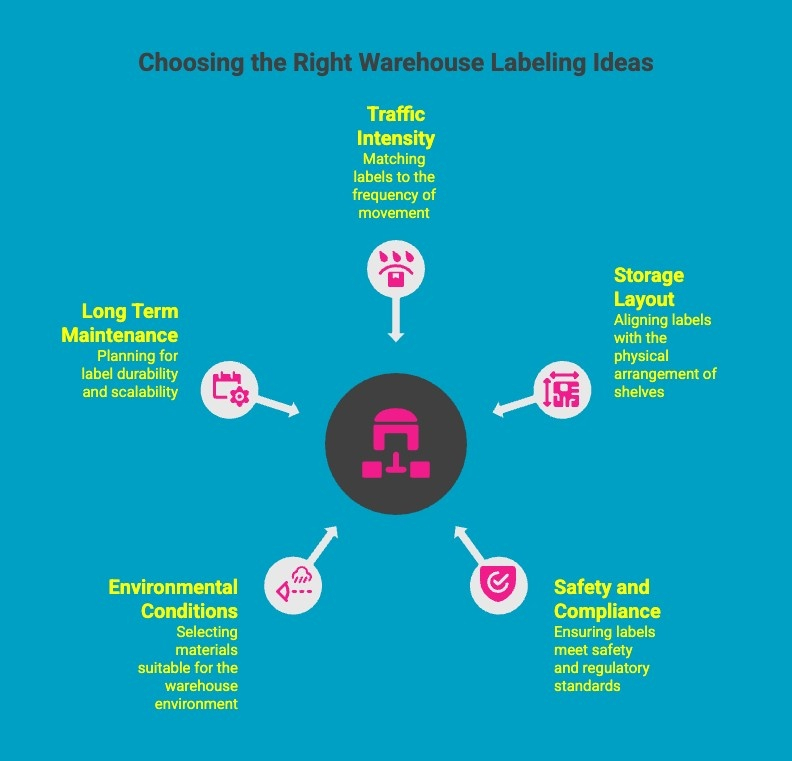
Choosing the right labeling ideas depends on how your warehouse operates, not just how it looks. Traffic flow, storage density, and safety needs all influence what works best.
Below are key factors to consider when selecting warehouse labeling ideas:
1) Match Labels to Traffic Intensity and Movement
Start by assessing where forklifts, pallet jacks, and pedestrians move most often. High-traffic zones require more durable labels and clearer visibility than low-use areas. Choosing labeling ideas based on actual movement patterns helps reduce wear, prevent confusion, and maintain readability in the areas that matter most.
2) Align Labeling With Your Storage Layout
Different storage types need different labeling approaches. Racks, shelves, and bins should follow a consistent logic that reflects how inventory is organized. When labeling mirrors the physical layout, operators can locate items faster, reducing errors and improving overall picking efficiency.
3) Consider Safety and Compliance Requirements
Some labels are critical for safety rather than inventory. Walkways, hazard zones, and restricted areas must remain visible at all times. Choosing labeling ideas that prioritize safety markings ensures compliance is maintained and reduces the risk of accidents caused by faded or unclear floor labels.
4) Select Materials Based on Environmental Conditions
Warehouses face dust, moisture, cleaning chemicals, and temperature changes. Label materials should be chosen based on these conditions, not just cost. Durable materials perform better long-term and reduce the need for frequent replacement in challenging environments.
5) Plan for Long-Term Maintenance and Scalability
Labeling should support future growth, not just current needs. A system that is easy to expand or update prevents fragmentation over time. Choosing scalable labeling ideas helps warehouses maintain consistency as inventory volumes and layouts evolve.
The right warehouse labeling ideas balance durability, clarity, and long-term performance across the entire facility.
Also read: How to choose the right label for your industry and avoid costly labeling mistakes by understanding how materials, environments, and use cases affect label performance in real operations.
Why Do Warehouses Source Floor Label Protection From a Single Supplier?
Warehouses often choose a single supplier for floor label protection to ensure consistency, compatibility, and long-term performance. When labels and protective solutions come from different sources, mismatched materials or adhesives can shorten label lifespan and increase maintenance issues. Working with one supplier simplifies decision-making and reduces trial and error during installation.
Many facilities prefer suppliers like DuraFast Label Company because they provide both warehouse floor labels and protective solutions such as Label Armor. This end-to-end approach ensures that labels and protective layers are designed to work together under real warehouse conditions, including forklift traffic, cleaning routines, and heavy footfall.
Sourcing from a single supplier also streamlines reordering, technical support, and future upgrades. It helps maintenance teams apply consistent standards across all zones while lowering replacement frequency and downtime.
Looking to extend the life of your warehouse floor labels? Contact DuraFast Label Company to discuss the right floor label and protection solution for your facility.
Conclusion
Warehouse labeling ideas work best when durability is treated as a core requirement rather than an afterthought. Floor labels, in particular, carry the greatest operational load and influence how safely and efficiently a warehouse functions. When labels are designed as part of a unified system and protected in high-wear areas, they last longer, stay readable, and reduce ongoing maintenance effort.
Durable labeling supports clearer navigation, better picking accuracy, and safer movement across the facility. By combining smart placement, consistent structure, and protection where it matters most, warehouses can turn labeling into a long-term operational asset rather than a recurring problem.
Frequently Asked Questions
How have others successfully labeled their warehouse for easy navigation?
Many warehouses succeed by following best practices such as clear location labels at eye level, consistent standard labeling, and alignment with a warehouse management system. This improves warehouse organization, helps warehouse staff move confidently, and supports efficient operations.
Which types of warehouse rack labels work best for different storage areas?
The best warehouse labels depend on the type of label and storage zone. Large location labels suit pallet racks, while magnetic labels work well in areas with inventory changes, helping warehouse employees maintain operational efficiency and inventory control.
How can I label bins and rack locations efficiently in a warehouse?
Efficient labeling combines consistent location labels, clear label sizes, and barcode scanners for verification. When bins and racks align with warehouse locations, warehouse management improves, errors drop, and staff members save a lot of time.
What are creative warehouse labeling ideas I can try for better workflow?
Creative ideas include color-coded zones, bold product name labels, and visual cues tied to warehouse management practices. These approaches support warehouse staff, improve workflow, and strengthen overall warehouse organization and operational efficiency.
What is the best way to label plastic storage bins?
Plastic storage bins are best labeled with durable adhesive or magnetic labels sized for visibility. Including product information and location labels helps warehouse employees identify contents quickly and maintain effective labeling in busy storage areas.
What should I do if a label becomes damaged or unreadable?
If a label becomes unreadable, replace it immediately to protect important information. Prompt replacement supports standard labeling, prevents inventory control issues, and ensures warehouse employees can rely on accurate location labels.
What’s the difference between static and dynamic warehouse labeling systems?
Static labeling uses fixed location labels that rarely change, while dynamic systems update labels as inventory changes. Dynamic labeling works closely with a warehouse management system to support efficient operations across the supply chain.