How Do Warehouse Labels Improve Floor Safety and Durability?
22nd Jul 2026
Key Highlights
-
Warehouse labels support identification, inventory accuracy, and safety across racks, shelves, bins, pallets, and floors.
-
Warehouse floor labels experience the highest wear due to forklifts, foot traffic, cleaning, and environmental exposure.
-
Clear floor labels improve safety, compliance, and traffic flow by marking walkways, hazards, zones, and exits.
-
Floor label protection extends label lifespan by reducing abrasion, fading, and adhesive failure in high-traffic areas.
-
Protected floor labels lower maintenance costs and minimize downtime caused by frequent replacements.
-
Proper installation and routine inspection are essential to maintaining long-term label performance.
-
Avoidable mistakes, such as poor surface preparation and lack of protection, shorten floor label effectiveness.
Warehouse labels play a critical role in keeping operations organized, efficient, and safe, yet many facilities struggle with labels that wear out too quickly. Floor labels, in particular, often fail under heavy traffic, leading to confusion, safety risks, and repeated maintenance.
This challenge is not caused by labeling alone but by how labels are selected, installed, and maintained in demanding warehouse environments. Constant forklift movement, foot traffic, cleaning routines, and environmental conditions place far greater stress on floor labels than on other identification systems.
This blog explains how different warehouse labels are used, why floor labels wear out faster, and how protection and best practices help extend their lifespan. The goal is to help warehouses maintain clear, durable labeling that supports safety, compliance, and long-term operational reliability.
What Are Warehouse Labels and Why Are They Important?
Warehouse labels are visual identifiers used to mark locations, products, and movement areas throughout a warehouse. They help teams quickly identify racks, shelves, bins, pallets, and floor zones, reducing confusion during picking, stocking, and replenishment. When warehouse labels are clear and consistent, workers spend less time searching for items and more time completing tasks accurately.
Beyond organization, warehouse labels play a critical role in inventory control and safety. Warehouse inventory labels support accurate tracking and cycle counts, while warehouse identification labels ensure every storage location and pathway is clearly defined. In busy facilities, well-placed labels also guide traffic flow and highlight safety zones. Without reliable warehouse labels, errors increase, productivity drops, and everyday operations become harder to manage.
Also read: How is eCommerce reshaping warehouse performance? Learn how eCommerce is changing warehouse efficiency and why faster picking, clearer labeling, and smoother workflows are becoming essential to keep up with rising fulfillment demands.
What Types of Warehouse Labels Are Commonly Used?
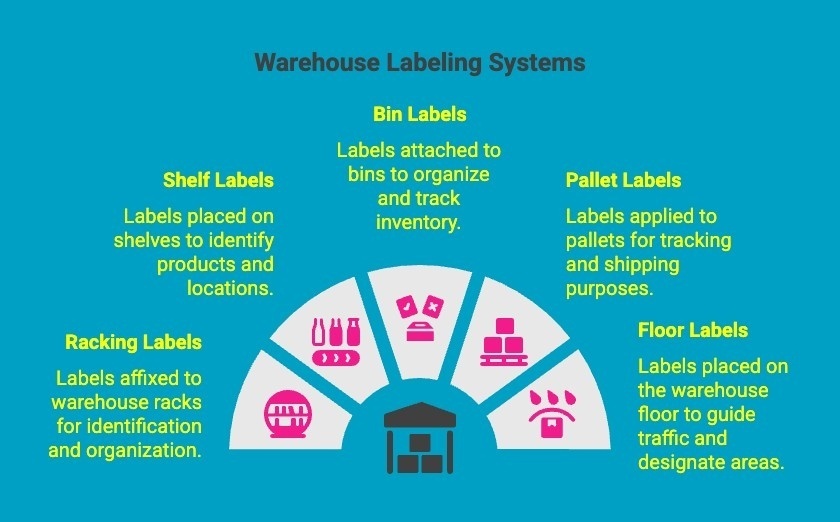
Warehouses rely on different label types to organize storage, guide movement, and reduce errors across daily operations.
Here are the most commonly used warehouse labels, each designed to support specific locations, workflows, and handling requirements within a busy facility:
1) Warehouse Racking Labels
Warehouse racking labels are used to identify aisles, bays, levels, and positions within racking systems. They help forklift operators and pickers quickly locate inventory without hesitation. Clear racking labels improve navigation, reduce mispicks, and support faster putaway and retrieval, especially in high-density storage environments with tall or multi-level racks.
2) Warehouse Shelf Labels
Warehouse shelf labels are commonly applied to shelving units used for case picking or smaller inventory items. These labels display SKU information, product descriptions, or location codes, helping workers confirm they are selecting the correct item. Well-designed shelf labels improve pick accuracy, support faster order fulfillment, and reduce errors during restocking or replenishment tasks.
3) Warehouse Bin Labels
Warehouse bin labels are essential for organizing small parts, components, and loose items stored in bins or totes. They provide clear identification for each bin location, making kitting, assembly, and inventory counts more efficient. Bin labels often include text, barcodes, or QR codes to support scanning and real-time inventory updates within warehouse systems.
4) Warehouse Pallet Labels
Warehouse pallet labels are used to identify palletized goods as they move through receiving, storage, staging, and shipping areas. These labels typically include barcodes, destination details, or shipment references. Pallet labels support traceability, speed up scanning during transfers, and help ensure pallets are routed correctly throughout inbound and outbound logistics processes.
5) Warehouse Floor Labels
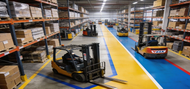
Warehouse floor labels mark walkways, storage zones, staging areas, and safety boundaries directly on the warehouse floor. They guide foot traffic and material handling equipment while reinforcing safety and organization. Because floor labels are exposed to heavy traffic, abrasion, and cleaning, they require durable materials and often benefit from added protection to maintain visibility over time.
Using the right warehouse label types together creates a clearer, safer, and more efficient operating environment.
Why Do Warehouse Floor Labels Wear Out Faster Than Others?
Warehouse floor labels face constant exposure to movement, weight, and environmental stress that other labels rarely encounter.
Here are the main reasons floor labels wear out faster, especially in high-traffic and equipment-heavy warehouse environments:
-
Forklift and Pallet Jack Traffic: Heavy equipment repeatedly rolls over floor labels, causing abrasion, scuffing, and edge lifting that shortens label lifespan.
-
Foot Traffic and Dragging: Daily foot traffic, carts, and dragged pallets gradually wear down printed surfaces and adhesives.
-
Moisture and Cleaning Chemicals: Water, spills, and industrial cleaners can weaken adhesives and fade printed information.
-
Dust, Debris, and Grit: Fine particles act like sandpaper under wheels, accelerating surface damage.
-
Temperature Fluctuations: Hot and cold conditions can cause materials to expand, contract, or crack.
Without added protection, warehouse floor labels degrade quickly, leading to frequent replacements and higher maintenance costs.
Also read: Want to understand how label materials and print methods affect durability? Explore how durable your labels really are and what it takes to create long-lasting labels in demanding warehouse environments.
How Do Warehouse Floor Labels Support Safety and Compliance?
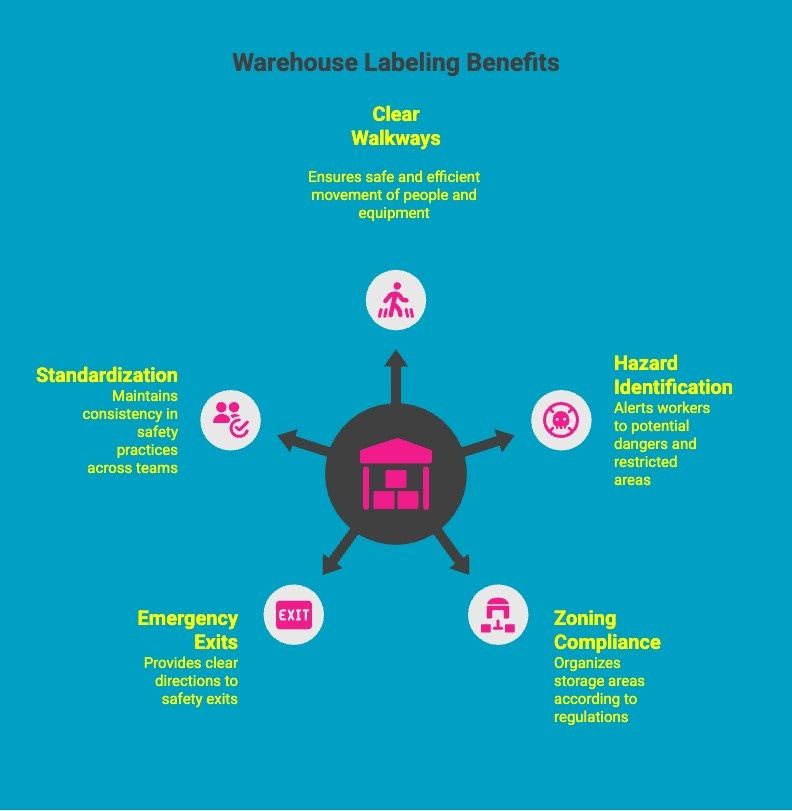
Warehouse floor labels provide clear visual cues that help maintain order, reduce risk, and support regulatory standards in busy facilities.
Here are five key ways warehouse floor labels contribute to safety and compliance across daily operations and inspections:
1) Clear Walkways and Traffic Flow
Warehouse floor labels clearly separate pedestrian walkways from forklift and pallet jack lanes. Directional arrows and pathway markings guide movement and reduce congestion in shared spaces. When traffic flow is visually defined, workers can anticipate movement patterns more easily, lowering the risk of collisions, near misses, and workflow interruptions in high-traffic warehouse areas.
2) Hazard and Restricted Area Identification
Floor labels are used to mark hazardous zones such as loading docks, equipment areas, and low-clearance spaces. High-contrast colors and clear symbols warn workers before they enter potentially dangerous areas. Consistent hazard identification reinforces safety training and helps ensure employees follow established procedures during daily operations and peak activity periods.
3) Zoning and Storage Compliance
Warehouse floor labels define storage zones, staging areas, and no-storage spaces to prevent improper pallet placement. These visual boundaries help keep aisles, exits, and fire lanes clear at all times. Proper zoning supports fire safety requirements, simplifies inspections, and ensures materials are stored in approved locations without blocking critical access points.
4) Emergency Exits and Clearance Markings
Floor labels play an important role in highlighting emergency exits, evacuation routes, and clearance areas around safety equipment. Clearly marked exit paths remain visible even in busy or crowded environments. This visibility helps ensure quick response during emergencies and supports compliance with workplace safety regulations related to evacuation readiness.
5) Standardization Across Shifts and Teams
Consistent floor labeling creates a shared visual language that applies across shifts, teams, and temporary staff. When markings are standardized, workers spend less time asking questions and more time following established safety cues. This consistency reduces errors, supports onboarding, and helps maintain compliance even as personnel or workloads change.
When warehouse floor labels remain clear and intact, they actively support safer behavior, smoother operations, and ongoing compliance.
Why Do Warehouses Choose DuraFast for Warehouse Labeling Solutions?
Warehouses choose DuraFast Label Company because it delivers purpose-built labeling solutions designed for demanding industrial environments. Instead of generic labels, DuraFast focuses on materials, adhesives, and formats that perform reliably under forklift traffic, abrasion, moisture, and daily operational wear. This makes it easier for warehouses to maintain clear identification without constant replacements.
DuraFast also stands out for its end-to-end approach. From warehouse racking labels and shelf labels to pallet and floor labels, solutions are designed to work together as a complete labeling system. This consistency helps warehouses standardize locations, improve accuracy, and support safer workflows across all zones.
In addition, DuraFast enables efficient in-house printing, giving teams control over updates and changes without long lead times. Contact DuraFast Label Company to discuss your warehouse labeling needs and get expert guidance on building a durable, scalable labeling system.
What Is Floor Label Protection and Why Does It Matter?
Floor label protection refers to a clear, durable overlay applied on top of warehouse floor labels to shield them from damage. In high-traffic environments, floor labels are exposed to forklifts, pallet jacks, foot traffic, moisture, and cleaning chemicals. Without protection, labels can scuff, fade, or peel, reducing visibility and increasing the need for frequent replacement.
Using a protective layer helps preserve readability and keeps safety markings, barcodes, and zone identifiers intact for longer periods. Solutions like Label Armor are designed to absorb surface wear while allowing the label underneath to remain clearly visible and scannable. Floor label protection matters because it extends label lifespan, reduces maintenance downtime, and supports consistent safety and compliance across busy warehouse floors.
How Does Label Armor Improve the Performance of Warehouse Floor Labels?
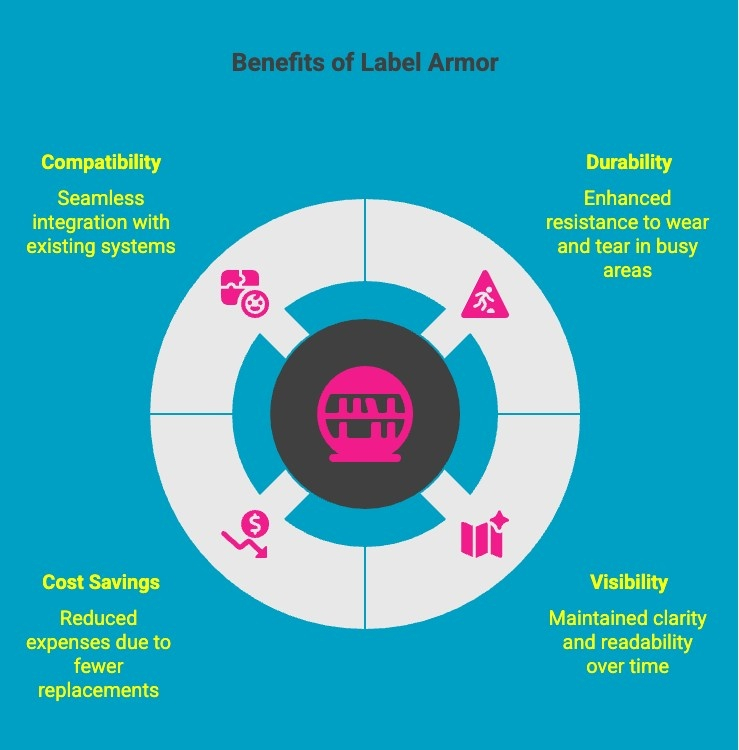
Warehouse floor labels often fail due to constant traffic and surface wear, even when high-quality materials are used.
Here are the key ways a protective layer like Label Armor improves the real-world performance of warehouse floor labels:
1) Increased Durability in High-Traffic Areas
A protective overlay absorbs the impact of forklifts, pallet jacks, carts, and foot traffic that would otherwise damage the label surface. By taking the abrasion and pressure instead of the printed label, protection helps prevent peeling, cracking, and scuffing. This added durability is especially valuable in aisles, intersections, and staging zones with constant movement.
2) Better Visibility Over Time
Unprotected floor labels can fade, scratch, or cloud over time, making text, symbols, or barcodes harder to read. A protective layer helps maintain surface clarity by shielding the label from wear and cleaning chemicals. As a result, markings remain visible and legible for longer, supporting safety cues, navigation, and scanning accuracy throughout daily operations.
3) Lower Maintenance and Replacement Costs
When floor labels last longer, warehouses spend less time and money replacing them. Protection reduces the frequency of relabeling, which minimizes labor costs and avoids disruptions to normal workflows. Over time, this proactive approach helps control maintenance budgets while keeping warehouse floors clearly marked without repeated shutdowns or temporary fixes.
4) Compatibility With Existing Warehouse Floor Labels
Floor label protection is designed to work with existing warehouse floor labels rather than replace them. It can be applied over current labels without changing layouts, designs, or data. This makes it easier for warehouses to upgrade durability without reprinting labels or redesigning floor plans, allowing protection to fit seamlessly into established labeling systems.
By adding protection, warehouses help floor labels stay clear, durable, and effective in the areas where they matter most.
Where Does Floor Label Protection Add the Most Value?
Floor label protection delivers the greatest impact in areas where labels face constant stress and frequent contact.
Here are the warehouse locations where adding protection helps extend label life, maintain visibility, and reduce ongoing maintenance demands:
-
Shipping and Receiving Areas: High forklift traffic, pallet movement, and frequent loading activity quickly wear unprotected floor labels.
-
Pick and Pack Aisles: Continuous foot traffic and cart movement increase abrasion and surface damage over time.
-
High-Traffic Intersections: Cross-traffic zones experience repeated turning, braking, and tire friction that accelerates label wear.
-
Safety Walkways and Pedestrian Zones: Clear, durable markings are critical where people and equipment operate close together.
-
Staging and Temporary Storage Areas: Frequent layout changes and pallet repositioning place added stress on floor markings.
Protecting floor labels in these areas helps maintain clarity, safety, and long-term performance.
How Should Protected Warehouse Floor Labels Be Installed and Maintained?
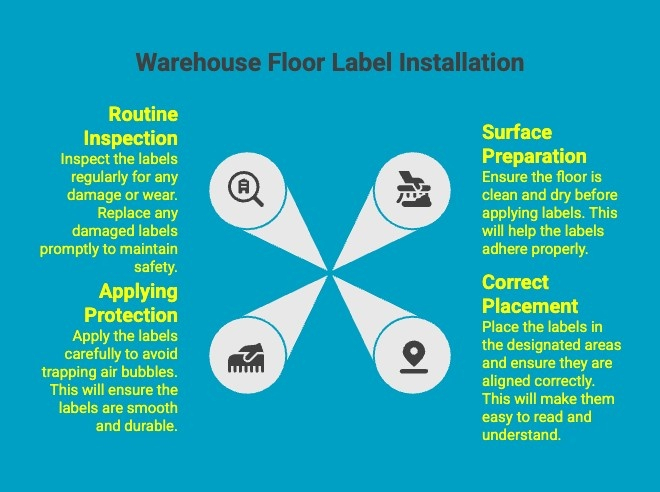
Proper installation and routine care are essential for protected warehouse floor labels to perform as intended.
Here are the key steps warehouses should follow to ensure floor labels remain secure, visible, and durable in high-traffic environments:
1) Surface Preparation Before Installation
The floor surface must be clean, dry, and free from dust, grease, or residue before applying any label or protective layer. Proper cleaning helps adhesives bond correctly and prevents early lifting or bubbling. Skipping surface preparation often leads to premature failure, even when durable materials and protection are used.
2) Correct Placement and Alignment
Protected floor labels should be placed in clearly visible locations that align with traffic flow and safety needs. Avoid uneven surfaces, cracks, or expansion joints where edges may lift over time. Accurate alignment ensures labels remain readable and reduces uneven wear caused by repeated turns or braking from equipment.
3) Applying Protection Without Trapped Air
When installing the protective layer, smooth and even application is critical. Trapped air bubbles or wrinkles can weaken adhesion and affect visibility. Applying steady pressure across the surface helps create a tight seal, allowing the protection to absorb wear while keeping the label beneath fully legible.
4) Routine Inspection and Basic Maintenance
Protected warehouse floor labels should be inspected periodically for edge wear or surface damage. Regular checks allow teams to address minor issues before they become larger problems. Simple cleaning with appropriate products helps maintain clarity without degrading the protective layer or the label underneath.
Correct installation and basic upkeep help protected warehouse floor labels deliver long-lasting performance and consistent visibility.
What Common Mistakes Reduce the Effectiveness of Warehouse Floor Labels?
Warehouse floor labels often fail not because of poor materials, but due to avoidable planning and usage errors.
Here are the most common mistakes that reduce the effectiveness, lifespan, and safety impact of warehouse floor labels:
-
Placing Floor Labels in High-Traffic Areas Without Protection: Unprotected labels wear out quickly under forklifts, pallet jacks, and carts, leading to fading and peeling.
-
Poor Surface Preparation Before Installation: Dust, moisture, or residue prevents proper adhesion and causes early lifting.
-
Using the Wrong Label Material for the Environment: Standard labels may not withstand abrasion, chemicals, or temperature changes.
-
Inconsistent Placement and Design: Lack of standardization creates confusion and reduces visual effectiveness.
-
Delaying Replacement or Maintenance: Worn labels left in place can create safety risks and compliance issues.
Avoiding these mistakes helps warehouse floor labels remain clear, durable, and effective over time.
Conclusion
Warehouse labels are essential for maintaining order, efficiency, and safety, but warehouse floor labels experience the most stress in daily operations. Heavy traffic, equipment movement, and environmental factors can quickly reduce their effectiveness if they are not properly planned and protected.
By selecting the right label types, installing them correctly, and using floor label protection in high-impact areas, warehouses can significantly extend label lifespan. This approach helps maintain clear visual guidance, reduces frequent replacements, and supports safer movement throughout the facility. A well-maintained floor labeling system ultimately contributes to smoother workflows, better compliance, and long-term operational reliability.
Frequently Asked Questions
What features make a warehouse label durable for long-term use?
A durable warehouse label uses strong adhesives and tough materials like polyester or metal to resist tearing, fading, and moisture. In high-traffic environments, added surface protection helps labels withstand abrasion, impacts, and cleaning while remaining readable and scannable.
Can warehouse labels be used for both bins and racks?
Warehouse labels can be used for both bins and racks, but performance improves when labels match the surface and use case. Magnetic warehouse labels work well on metal racks, while bin labels require aggressive adhesives to withstand plastic surfaces and frequent handling.
What is the best way to label warehouse shelving for easy identification?
Warehouse shelving is best labeled using large, clear text and barcodes placed consistently at eye level. Color-coding by zone or product type improves visual recognition, speeds up picking, and helps reduce errors during daily warehouse operations.
How do I choose the right warehouse label for pallet racking?
Choosing the right pallet racking label depends on rack material, viewing distance, and traffic exposure. Durable materials with strong adhesion or magnetic backing work best, while warehouse barcode labels enable fast scanning, clear location identification, and accurate inventory tracking from forklifts and aisles.
Where can I buy warehouse labels online?
Warehouse labels can be purchased online from industrial labeling suppliers that specialize in warehouse environments. Look for vendors offering multiple materials, adhesive strengths, and label formats designed for racking, shelving, bins, pallets, and floors.
Are there warehouse labels specifically designed for inventory tracking?
Yes, many warehouse labels are designed for inventory tracking and include barcodes, QR codes, or serialized data. These labels integrate with warehouse management systems to support accurate scanning, cycle counts, and real-time inventory visibility.