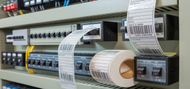
What Is Polyester Tape and Why Does It Outperform Others?
10th Jul 2026
Key Highlights
-
Polyester tape is a high-performance labeling material designed to withstand heat, moisture, chemicals, abrasion, and UV exposure in industrial and electrical environments.
-
It supports thermal transfer printing, ensuring sharp text, symbols, and barcodes with long-term legibility for compliance and asset identification.
-
Common polyester tape uses include wire and cable labeling, electrical panels, industrial equipment, asset tracking, and safety markings.
-
Compared with vinyl, paper, and polyimide tapes, polyester offers the best balance of durability, print quality, and cost for most professional applications.
-
Heat resistant polyester tape and shrink variants perform reliably in high-temperature processes such as curing, baking, and powder coating.
-
Proper surface preparation, adhesive selection, printer compatibility, and application technique are critical to avoid common labeling failures.
-
When paired with the right printers and ribbons, polyester tape delivers dependable, low-maintenance labels where failure is not an option.
Labels that fade, peel, or become unreadable create real problems in electrical panels, industrial equipment, and compliance-critical environments. When identification fails, it increases safety risks, slows maintenance, and leads to costly rework.
Many standard label materials simply cannot handle heat, chemicals, moisture, or constant handling. Paper and vinyl labels often degrade long before the equipment they identify, leaving gaps in documentation and creating avoidable operational issues.
This blog explains what polyester tape is, how it works, where it is used, and why it outperforms other labeling materials. It also covers key comparisons, common mistakes, and best practices to help you choose the right polyester tape for reliable, long-term labeling.
What Is Polyester Tape?
Polyester tape is a durable industrial labeling material made from polyester film, designed for environments where strength and long-term performance matter. As a form of polyester adhesive tape, it resists heat, moisture, chemicals, abrasion, and UV exposure far better than paper or vinyl labels.
Because of this durability, polyester tape is commonly used for asset labels, barcode labels, electrical panel identification, circuit breaker labeling, and compliance markings. Its smooth surface supports thermal transfer printing, allowing text, symbols, and barcodes to remain sharp and legible over time.
Polyester tape also provides strong adhesive bonding on metal, plastic, and painted surfaces, significantly reducing the risk of peeling or fading. This makes it an ideal solution for applications where labels must stay readable, intact, and professional, even in harsh industrial or outdoor conditions.
What Is Polyester Tape Used For?
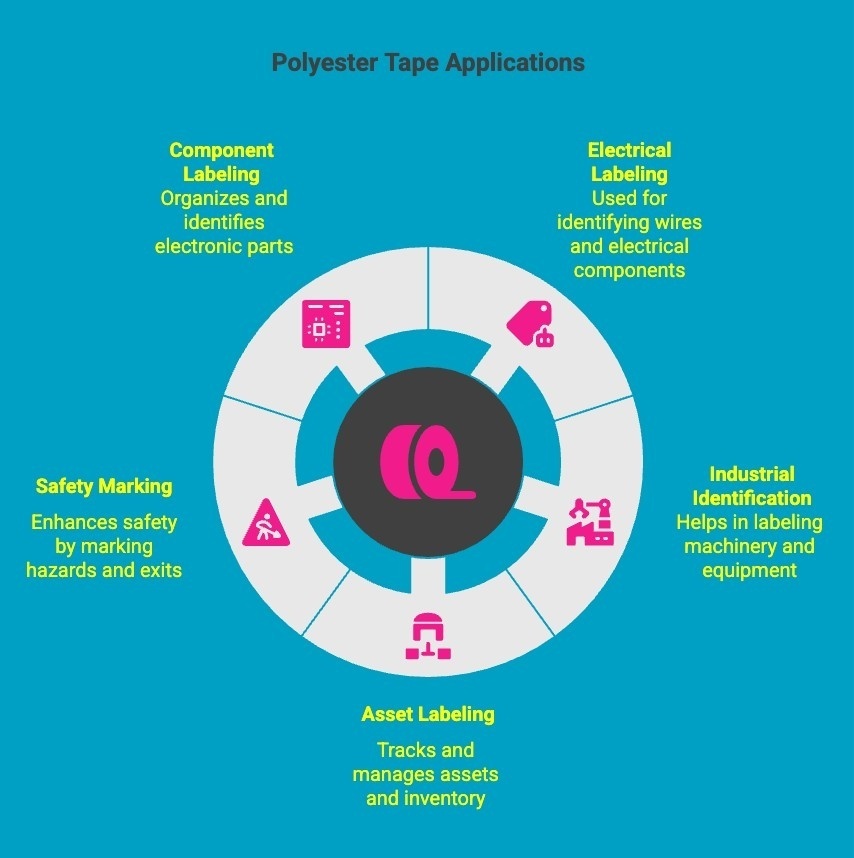
Polyester tape is chosen when labels must stay clear, bonded, and readable in demanding environments. From electrical rooms to factory floors, it supports long-term identification where durability and consistency matter, including applications that require heat resistant polyester tape and polyester ribbon tape compatibility.
Below are the most common applications where polyester tape delivers reliable results:
-
Electrical and Wire Labeling: Used to label wires, cables, and terminations, ensuring identification remains legible despite heat, abrasion, and enclosed electrical spaces.
-
Industrial Equipment Identification: Applied to machinery for serial numbers, ratings, and instructions that must withstand oils, vibration, and regular cleaning.
-
Asset and Inventory Labeling: Ideal for barcode and asset tags that require long-lasting adhesion and reliable scannability on metal or plastic surfaces.
-
Safety and Compliance Marking: Supports warning labels and regulatory markings that resist fading, chemicals, and environmental exposure.
-
Panel, Switch, and Component Labeling: Commonly used inside control panels to clearly identify switches, breakers, and components.
Overall, polyester tape delivers dependable labeling where failure is not an option.
What Makes Polyester Tape Different From Other Labeling Materials?
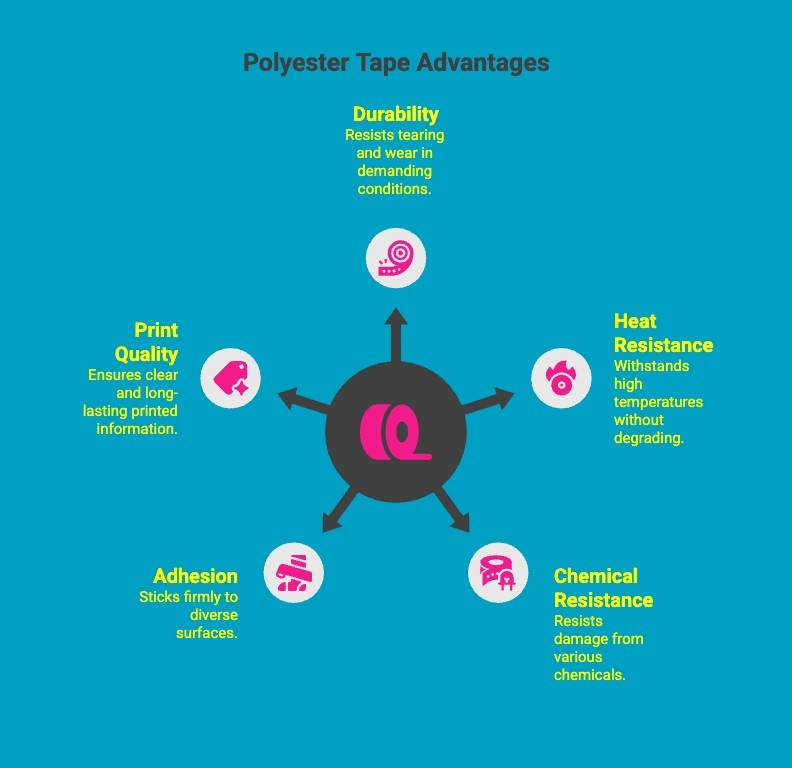
Polyester tape stands apart from standard labelling materials because it is engineered for performance, not convenience. It is built to survive conditions where paper and vinyl fail, making it suitable for demanding polyester tape uses across industrial, electrical, and compliance settings.
Here are the key characteristics that make polyester tape different:
-
High Durability and Tear Resistance: Polyester film resists tearing, stretching, and abrasion, keeping labels intact during installation and daily handling.
-
Excellent Heat and Chemical Resistance: It tolerates high temperatures, oils, solvents, and cleaning chemicals without shrinking or degrading. This also supports specialized options like polyester shrink tape for specific applications.
-
Strong Adhesion on Various Surfaces: Bonds securely to metal, plastic, painted, and textured surfaces, even in harsh industrial environments.
-
Crisp Print Quality and Long-Term Legibility: Supports sharp thermal transfer printing so text, symbols, and barcodes remain readable for years.
-
Ideal for Industrial and Harsh Environments: Designed for factories, electrical panels, and outdoor use where durability is critical.
In short, polyester tape is chosen when label reliability truly matters.
How Does Polyester Tape Compare to Other Label Types?
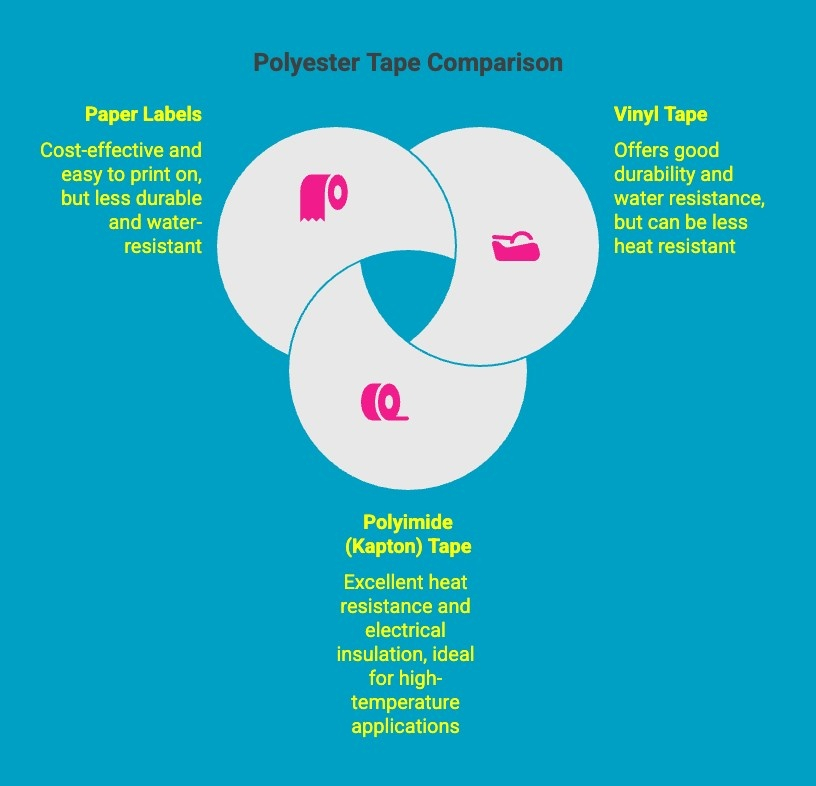
Polyester tape is often compared with other label materials because each serves different durability and cost needs. Choosing the right option depends on environment, lifespan, and performance expectations, including color visibility options such as white polyester tape and yellow polyester tape.
Below are clear comparisons to help guide proper label selection:
1) Polyester Tape vs. Vinyl Tape
Polyester tape offers higher durability than vinyl, especially in industrial settings. It resists tearing, heat, chemicals, and abrasion, maintaining clarity over time. Vinyl label tape is more flexible and conforms well to curved surfaces, but it can stretch or fade in harsh environments. Polyester, including white and yellow polyester tape options, is preferred when long-term stability and consistent legibility are required.
2) Polyester Tape vs. Polyimide (Kapton) Tape
Polyester tape supports long-term identification, while polyimide tape is built for extreme heat processes like soldering. Kapton is more expensive and often unnecessary. Polyester delivers strong adhesion, excellent print clarity, and dependable durability for most electrical and industrial labels.
3) Polyester Tape vs Paper Labels
Paper labels are suitable for short-term indoor use. Polyester tape resists moisture, heat, chemicals, and abrasion, making it the better choice when labels must remain readable for years.
Overall, polyester tape balances durability, print quality, and cost for professional labeling needs.
Why Does Polyester Tape Perform So Well With Thermal-Transfer Printing?
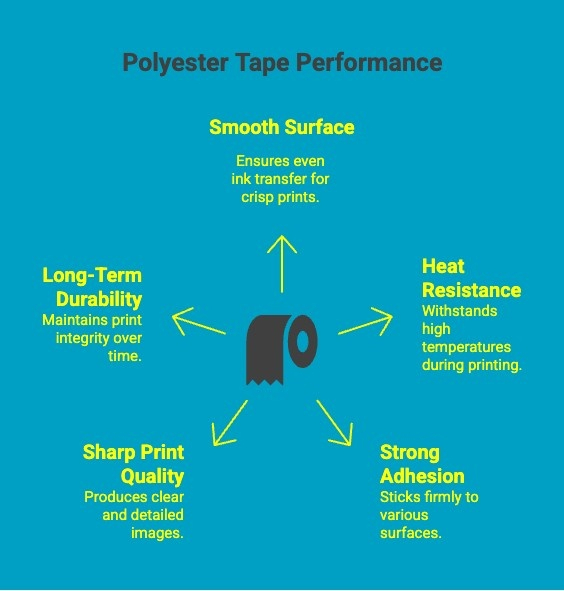
Polyester tape is highly compatible with thermal transfer printing because its material properties support clean ink transfer and long-term performance. It is designed to work with heat-based printing without compromising clarity or adhesion.
Below are the key reasons it performs so well:
-
Smooth Surface: The consistent film surface allows ribbons to transfer ink evenly, producing clean text and precise barcodes.
-
Heat Resistance: Polyester tolerates the heat required for thermal transfer printing without warping, melting, or discoloration.
-
Strong Adhesion: Once applied, labels stay firmly bonded, preventing edge lift that could affect print readability.
-
Sharp Print Quality: Supports high-resolution output, ensuring fine details and small characters remain crisp.
-
Long-Term Durability: Printed information resists fading, smudging, and abrasion over extended periods.
This combination ensures reliable, professional labels in demanding environments. For ribbon selection considerations, see this guide on choosing ribbons for Brother TD4 Titan thermal transfer printers.
What Are Common Mistakes When Using Polyester Tape?
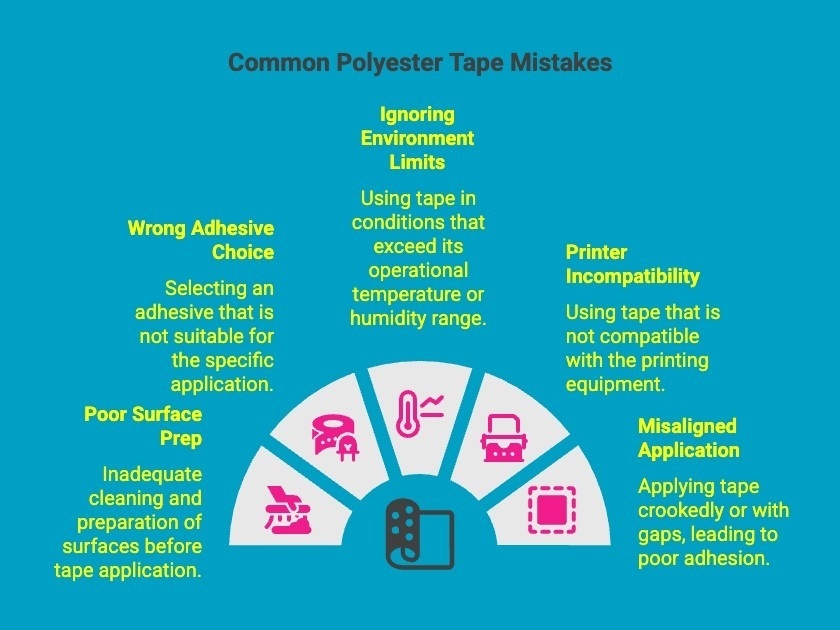
Polyester tape delivers excellent results, but performance can drop when basic setup steps are overlooked. Most issues come from installation or equipment mismatches rather than the material itself.
Here are the most common mistakes to avoid:
-
Poor Surface Prep: Applying labels to dirty, oily, or dusty surfaces weakens adhesion and shortens label life.
-
Wrong Adhesive Choice: Using a standard adhesive instead of one rated for heat, chemicals, or outdoor exposure leads to premature failure.
-
Ignoring Environment Limits: Extreme temperatures, UV exposure, or chemicals beyond the tape’s rating can degrade performance over time.
-
Printer Incompatibility: Using unsupported printers or incorrect ribbon types results in poor print quality or adhesion issues.
-
Misaligned Application: Wrinkles, bubbles, or uneven placement reduce readability and long-term durability.
Avoiding these mistakes helps polyester tape perform as intended in demanding applications.
How Do MAX Letatwin Printers Enhance Polyester Tape Labeling?
MAX Letatwin printers enhance polyester tape labeling by combining precise thermal transfer technology with purpose-built industrial design. These printers are engineered to handle polyester materials consistently, producing sharp, durable text that remains legible even in harsh electrical and industrial environments.
With automatic cutting, dedicated wire and panel templates, and stable heat control, MAX Letatwin printers reduce print errors and ensure uniform label output across large jobs. This is especially valuable for circuit identification, panel directories, and long-term asset labeling, where accuracy and repeatability matter.
When paired with high-quality polyester tape, the result is a professional labeling system that improves safety, compliance, and workflow efficiency. Installers spend less time reprinting or replacing failed labels and more time completing jobs confidently.
For genuine MAX Letatwin printers, compatible polyester tapes, and expert guidance, professionals trust DuraFast Label Company.
Contact us today to get the right MAX Letatwin solution for your labeling needs.
Conclusion
Polyester tape stands out as an ideal choice when reliability and longevity matter. Compared to standard adhesive tape, it is engineered to withstand heat, chemicals, and constant mechanical stress without tearing or fading. This makes it especially effective in electrical, industrial, and compliance applications where labels must stay readable for years. Often referred to as PET tape, polyester tape bonds securely to metal, plastic, and coated surfaces, even in demanding environments. When paired with the right printer and ribbon, it delivers consistent print quality and dependable adhesion. For professionals who value accuracy, safety, and long-term performance, polyester tape remains a proven, practical labeling solution.
Frequently Asked Questions
How does polyester tape perform in high-temperature environments?
Polyester tape performs reliably in high-temperature environments due to strong dimensional stability. It resists shrinking, curling, and adhesive failure, making it suitable for curing, baking, and equipment exposed to sustained heat.
Are there specific electrical insulation uses for polyester tape?
Yes. Polyester tape is commonly used for electrical insulation in coils, transformers, and capacitors. Its dielectric strength and tensile durability help protect components while tolerating moderate operating heat in electrical systems.
What are the differences between single-sided and double-sided polyester tapes?
Single-sided polyester tape has adhesive on one side for masking or surface protection. Double-sided polyester tape has adhesive on both sides and is used for bonding, laminating, mounting, or splicing materials securely.
Is polyester tape suitable for applications requiring resistance to chemicals or moisture?
Absolutely. Polyester tape resists many chemicals, oils, and solvents, while its nonporous backing blocks moisture. This helps maintain adhesion and label integrity in damp, corrosive, or industrial environments over time.
What should I consider when choosing the right type of polyester tape for my project?
Consider temperature exposure, surface material, adhesive type, and removal needs. Tape thickness, width, and environmental conditions also matter. Matching the tape’s specifications to the application ensures reliable performance and longevity.
Is polyester tape electrically insulating?
Yes. Polyester tape provides effective electrical insulation due to its strong dielectric properties. It limits current flow and helps protect wires and components, making it widely used in electrical, electronic, and manufacturing applications.
How do you care for and maintain polyester tape labels?
Apply polyester tape labels to clean, dry surfaces for best adhesion. Once installed, they require minimal care and resist abrasion and moisture. For removal, peel slowly to avoid leaving adhesive residue.
Are there any safety or handling considerations with polyester tape?
Polyester tape is generally safe to handle, but users should follow manufacturer guidelines. Avoid excessive stretching during application, ensure proper ventilation when removing heated tape, and use protective gloves in high-temperature environments.
What types of adhesives are used with polyester tape?
Polyester tape commonly uses silicone adhesive or acrylic adhesive. Silicone adhesive excels in high-temperature masking and clean removal, especially during powder coating applications, while acrylic adhesives provide strong permanent bonding for general industrial labeling needs.
Can you explain the difference between polyester film tape and polyester fiber tape?
Polyester film tape uses a smooth polyester film as the base material, ideal for labeling and masking tape applications. Polyester fiber tape uses woven fibers, offering higher strength but less print clarity and surface smoothness.