DuraFast Matte Chemical Labels: A Practical Selection Guide
1st Oct 2026
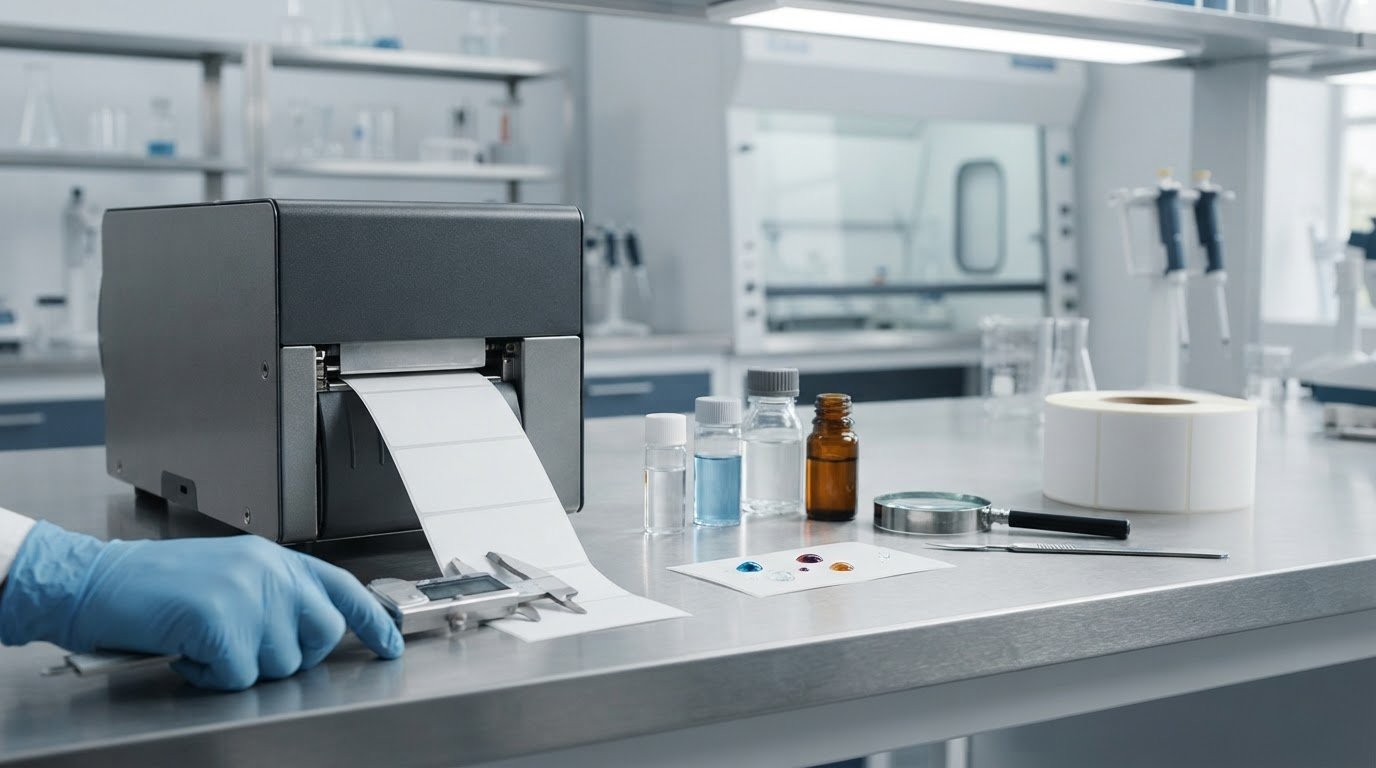
What if a label looks right on the roll but fails to print or hold up in your process? With DuraFast matte chemical labels, the matte finish is only one detail to consider. Your printer, label construction, and actual chemical exposure all matter.
It’s reasonable to want a clear answer before ordering: will the labels work with your existing equipment, and will they remain suitable for the conditions they’ll face? A matte appearance alone doesn’t prove chemical resistance, and compatibility shouldn’t be assumed without checking the specific label and printer.
This guide will help you evaluate the details that affect your choice. You’ll learn what to confirm about the label’s material, adhesive, finish, and available sizes; what printer model, print technology, and ink requirements to check; and how to assess the label in its real operating environment. DuraFast supplies these labels along with label-printing equipment and consumables, so you can use the product and printer details to ask focused questions before you order. The next step is to match your application to documented product information, including any chemical-resistance claims and the test conditions behind them.
Key Takeaways
- Start with the job the label must do, then check whether product documentation addresses your actual chemical exposure.
- For DuraFast matte chemical labels, verify the exact material, adhesive, finish, and available size before ordering.
- Check printer model, print technology, media format, and ink requirements against the specifications for the exact label product.
- Run a practical trial using your printer, ink, container surface, and representative operating conditions, then document what you observe.
- Consider the label a confirmed fit only when its documented properties and printer compatibility align with your application.
What Are DuraFast Matte Chemical Labels, and What Should Buyers Verify?
What must a matte chemical label do in its intended application? It needs to stay attached and readable under the conditions it will face, while working with the selected printer and meeting the label’s information needs. DuraFast Matte Chemical Labels are a confirmed product offering, but their specific material, adhesive, printer compatibility, and resistance properties need confirmation before you rely on them.
Matte describes a finish; durability describes how a label performs; verified chemical resistance requires evidence for the specific exposure. Treat these as separate questions. A label’s appearance alone can’t show whether it will withstand a named substance or remain legible after contact.
Matte finish and chemical resistance are different questions
Begin by identifying the chemicals the label may encounter, their concentration, how long contact may last, and what happens afterward. Consider whether exposure involves direct contact, splashes, cleaning, or repeated handling. Ask for documentation that matches those conditions. A broad “chemical-resistant” claim may not answer whether a label suits your particular substance and use.
For any claim about the finish or construction of this product, verify the exact label details rather than assuming what “matte” means for its surface or performance. For broader context on hazard-label elements, see the Globally Harmonized System (GHS). You can also consult this GHS label printer guide for an overview of printer and compliance considerations.
Start with the label job, not the product description
Describe the real application before comparing product details. Record the container material and shape, storage environment, and how the label will be applied. A curved container, for example, may present different adhesion demands than a flat one. Note whether labels will face splashes, spills, abrasion, moisture, temperature changes, or routine handling.
Then separate required label information from design preferences. Hazard communication may involve elements such as pictograms, signal words, and hazard statements; the GHS overview explains these concepts. Confirm applicable content through your organization’s compliance process. Treat color, branding, and other design choices as separate needs, and make sure they don’t compromise readability.
Finally, match the product details to your printer and use case. DuraFast supplies label-printing equipment and consumables, including the Epson ColorWorks C6000A. Its Epson C6500 label information is an example of printer-specific product information, not proof of compatibility with these chemical labels. Confirm the exact label and printer combination before ordering.
How Do Label Material, Adhesive, Ink, and Exposure Affect Performance?
A chemical label works as a system, not as a finish or material in isolation. The face material provides the surface for printed information and contributes to the label’s physical structure. The adhesive bonds the label to the container, so the container surface and application conditions matter. Ink forms the text, symbols, and other printed elements; its interaction with the label surface can affect whether they remain readable. The finish describes the surface appearance, but doesn’t establish how any of these parts will perform.
Verify the face material, adhesive, ink and printer combination, and actual exposure conditions together. If one part changes, such as the printer or container surface, results from a previous setup may not apply. For DuraFast matte chemical labels, ask for product-specific documentation rather than assuming a material, adhesive, or ink system.
Which exposure conditions should a buyer document?
Write down the chemical identity and concentration, expected contact time, temperature, and application surface. Then note other demands: abrasion during handling, routine cleaning, moisture, and storage conditions. A brief splash that is promptly removed differs from prolonged contact, immersion, or repeated cleaning. Each can place different demands on the printed label and its bond to the container.
Compare your notes with evidence for the exact label product and the conditions represented in its tests. A result for one substance or exposure duration doesn’t automatically establish suitability for another. Until the documentation addresses your intended conditions, treat resistance as unconfirmed. For workplace hazard-label content, refer to OSHA's labeling requirements and follow your organization’s compliance process.
What can a matte surface tell you?
Matte is a description of appearance and surface character, not a standalone durability rating. It doesn’t by itself confirm resistance to chemicals, scuffs, moisture, or cleaning. Nor should you assume it reduces glare or improves adhesion without product-specific evidence. Ask the supplier to confirm the exact finish and whether the selected printer and ink produce clear, readable output on that label.
Keep the printed result in view, too. A label may use the right stock yet fail your needs if critical text or symbols don’t print clearly or remain legible after exposure. That’s why any sample check should use the intended printer, ink, container surface, and representative conditions. DuraFast supplies labels and printing equipment, and you can ask about product-specific label details when comparing your requirements with available information.
How Can You Check Printer Compatibility Before Ordering?
A printer’s brand or ability to feed labels doesn’t confirm that it can print a specific chemical-label product. Check the exact label and printer combination before ordering. The label’s media format, dimensions, feed direction, print technology, and ink requirements all need to match the device. DuraFast supplies label-printing equipment, including the Epson ColorWorks C6000A and Afinia color label printers, but compatibility with a particular label must be verified.
Use a comparison table to separate confirmed details from open questions. “Unconfirmed” is a useful status, not a reason to assume a match.
What printer and media details should you compare?
Record the model exactly as shown on the printer, then compare it with the label product’s specifications. Check whether the printer accepts the label’s roll or sheet format, dimensions, and feed direction. Confirm its print technology and the required ink or other printing supplies. A media listing for one model in a printer family doesn’t necessarily establish a match for another.
| Printer model | Print technology | Media format | Size | Ink | Verified status |
|---|---|---|---|---|---|
| Epson ColorWorks C6000A | Confirm for the exact setup | Confirm roll or sheet format and feed direction | Confirm against label specifications | Confirm required ink | Unconfirmed for this label |
| Afinia L801 | Confirm for the exact setup | Confirm roll or sheet format and feed direction | Confirm against label specifications | Confirm required ink | Unconfirmed for this label |
Use the table as a checklist, not as evidence of compatibility. The Epson C6000 and C6500 label range is a related printer-specific media category. Its existence doesn’t confirm that a particular chemical label will work with your printer. The broader Epson ColorWorks guide can provide printer context, but product-level specifications still need checking.
How should buyers handle unconfirmed printer matches?
Ask DuraFast to confirm the exact label product and printer model before purchase. Share the printer model, intended media dimensions and format, and the ink requirements you’ve identified. Request product documentation that confirms the combination. If the match remains unclear, treat it as unverified rather than relying on a similar product listing.
The Afinia L701, L801, and L901 label category is another example of printer-specific media information. It’s a separate category, not proof that those labels, or DuraFast matte chemical labels, are compatible with a particular printer. Confirm each match against the exact product details before ordering.
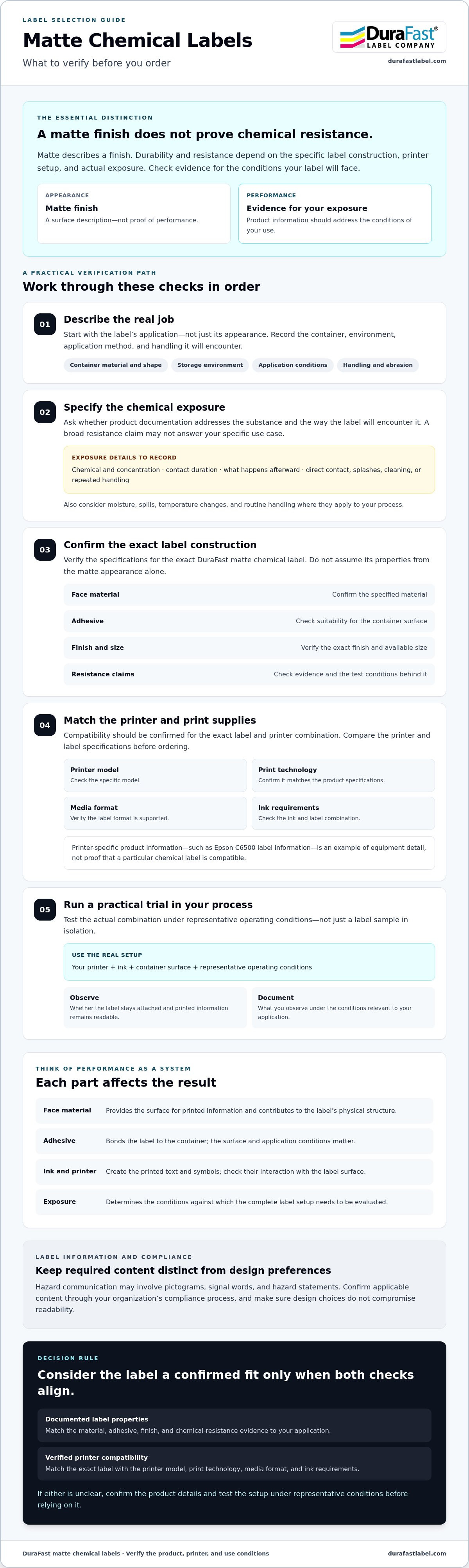
How Should You Run a Practical Matte Chemical Label Trial?
A sample run can reveal issues that a specification sheet won’t, such as poor feeding, unclear print, or lifting edges on your container. Use a controlled trial to check your intended setup, but don’t treat an informal test as regulatory certification or a substitute for product-specific documentation.
Follow a consistent sequence:
- Verify specifications: Confirm the exact label product, printer, ink, and any documented limits for the intended exposure.
- Print samples: Use the printer and settings planned for routine production. Check that required text and symbols are legible.
- Apply labels: Use the actual container surface and normal application method.
- Expose and inspect: Recreate representative operating conditions, then check the print and label bond at planned intervals.
- Document results: Compare observations with acceptance criteria set before the trial.
Define those criteria in advance. They might include readable required information, no unacceptable lifting, and any other application-specific requirements. Follow appropriate safety procedures when handling chemicals, and don’t create exposure conditions beyond your established safe process.
What should a label trial record?
Keep the test repeatable. Log the label product, printer model, ink, container surface, and application date. Record the chemical and exposure conditions, inspection timing, and any observed changes to print or adhesion. Retain labeled samples where appropriate so you can compare them with each other and with documented requirements. A clear record makes it easier to distinguish a one-off result from a consistent pattern.
When should you pause and ask for product guidance?
Pause if the chemical, concentration, container surface, exposure duration, or printer combination isn’t covered by available information. A successful print confirms only that the label passed through that print setup; it doesn’t establish chemical suitability. Keep unresolved points visible in your records, and request product-specific evidence before making operational or compliance claims about DuraFast matte chemical labels.
Share your printer model and intended application when you contact DuraFast about label suitability. Ask which product documentation applies to your exact setup and exposure conditions, then use that information to decide whether further evaluation is needed.
Are DuraFast Matte Chemical Labels Right for Your Application?
DuraFast Matte Chemical Labels are a confirmed product offering, but product identity alone can’t confirm fit for a particular job. Choose them only when the label’s documented properties and printer requirements align with your intended chemical exposure, container, and workflow. Material, adhesive, supported printers, ink requirements, resistance evidence, and any applicable certifications still need product-specific confirmation.
Use this checklist to organize what you know and identify what needs an answer:
- Exposure: List each chemical, its concentration, expected contact duration, and relevant conditions such as temperature, moisture, cleaning, and abrasion.
- Container: Note the surface material and shape, along with how labels are applied and handled.
- Printer setup: Provide the exact printer model, print technology, ink, media format, and desired label dimensions.
- Label needs: Describe required label content and any application-specific expectations for readability and adhesion.
- Evidence: Ask which material, adhesive, resistance, printer compatibility, or certification details are documented for the exact product.
What to send when requesting product guidance
Give DuraFast the intended use and exposure scenario, including the chemical, contact conditions, and container surface. Share the required label content, printer model, ink, label dimensions, and media-handling details, such as roll or sheet format if known. This helps focus the inquiry on the exact application rather than a broad product category.
Ask for clarification on every unresolved specification before placing an order. For example, confirm whether available documentation covers your chemical and exposure conditions, and whether it names your printer and ink combination. If a claim or match isn’t documented, keep it marked as unverified. Don’t treat a matte finish, a successful print, or a general product description as proof of chemical resistance, compliance, or compatibility.
Once you have the checklist details ready, ask DuraFast to help verify your label requirements. A clear description of your use case makes it easier to identify the product information you need to review before deciding whether the labels suit your application.
Make Your Label Choice With Confidence
A matte finish describes appearance, not proven chemical resistance. The right choice depends on whether the specific label’s documented construction and printer requirements match your chemical exposure, container, and production setup. A practical sample trial can help reveal print or application issues, but it doesn’t replace product-specific evidence.
DuraFast matte chemical labels are a confirmed offering, and DuraFast supplies label printers and printing consumables for in-house production. However, details such as material, adhesive, supported printer models, ink requirements, and resistance conditions should be confirmed for the exact product before you order.
Gather your chemical and exposure details, container surface, printer model, ink, and desired label dimensions. Then ask which specifications and test evidence apply to your use case. Contact DuraFast to discuss your label requirements and clarify any open questions before selecting a label. With the right information in hand, you can move forward with a choice grounded in your real application.
Frequently Asked Questions
Are matte chemical labels automatically resistant to chemicals?
No. Matte describes a label’s surface finish, not verified resistance to chemicals. Suitability depends on the specific label construction and exposure. Check product-specific evidence for the named chemical, its concentration, contact duration, and relevant conditions such as temperature or cleaning. Don’t rely on appearance or a general resistance claim alone. If the documentation doesn’t match your intended use, treat performance as unconfirmed.
Can DuraFast Matte Chemical Labels work with any inkjet printer?
There’s no confirmed basis to assume compatibility with every inkjet printer. Check the exact DuraFast Matte Chemical Labels product specifications against your printer model, required ink, media format, and label dimensions. Printer families can have different media requirements, so a match for one model doesn’t establish a match for another. Ask the supplier to confirm the exact combination before ordering.
How do I know whether a chemical label will stay attached to my container?
Confirm that the label’s adhesive and construction are suitable for the container surface and conditions. Surface material, shape, cleanliness, and application method can all affect adhesion, as can chemical contact, moisture, temperature, and handling. Review product-specific documentation, then run a controlled trial on a representative container. A sample result can inform your decision, but it doesn’t guarantee performance in every situation.
What should I test before using matte chemical labels in production?
Print samples with the intended printer and ink, then check print quality and whether required information stays legible. Apply them to the actual container surface and assess adhesion under representative exposure and handling conditions. Set acceptance criteria before testing and record your observations. A practical trial can identify issues in your setup, but it doesn’t establish regulatory certification or replace product-specific documentation.
Do chemical labels need to meet GHS requirements?
Required label content depends on the chemical product and the rules that apply to its use and location. Check current authoritative guidance and consult your organization’s compliance process to determine applicable requirements. Keep content compliance separate from media performance: a label can carry the required information yet still need its printer fit, legibility, adhesion, and exposure suitability verified for the application.
Can I use a matte chemical label on plastic containers?
Possibly, but suitability depends on the specific plastic surface, label adhesive, application method, and operating conditions. Plastic containers can differ in shape and surface characteristics, so don’t assume one result applies to every container. Confirm that product documentation covers the intended surface, then trial the label on a representative container using your actual application process and relevant exposure conditions.
How can I confirm whether DuraFast Matte Chemical Labels fit my printer?
Provide the exact printer model, print technology, ink, media format, feed requirements, and desired label dimensions. Ask DuraFast to confirm these details against the specifications for the exact label product before ordering. A related label category or a printer’s ability to feed similar media doesn’t prove compatibility. Keep any unverified item open until you receive product-specific confirmation.