Barcode Scanner Inventory Management: The 2026 Guide to In-House Efficiency
8th Jul 2026
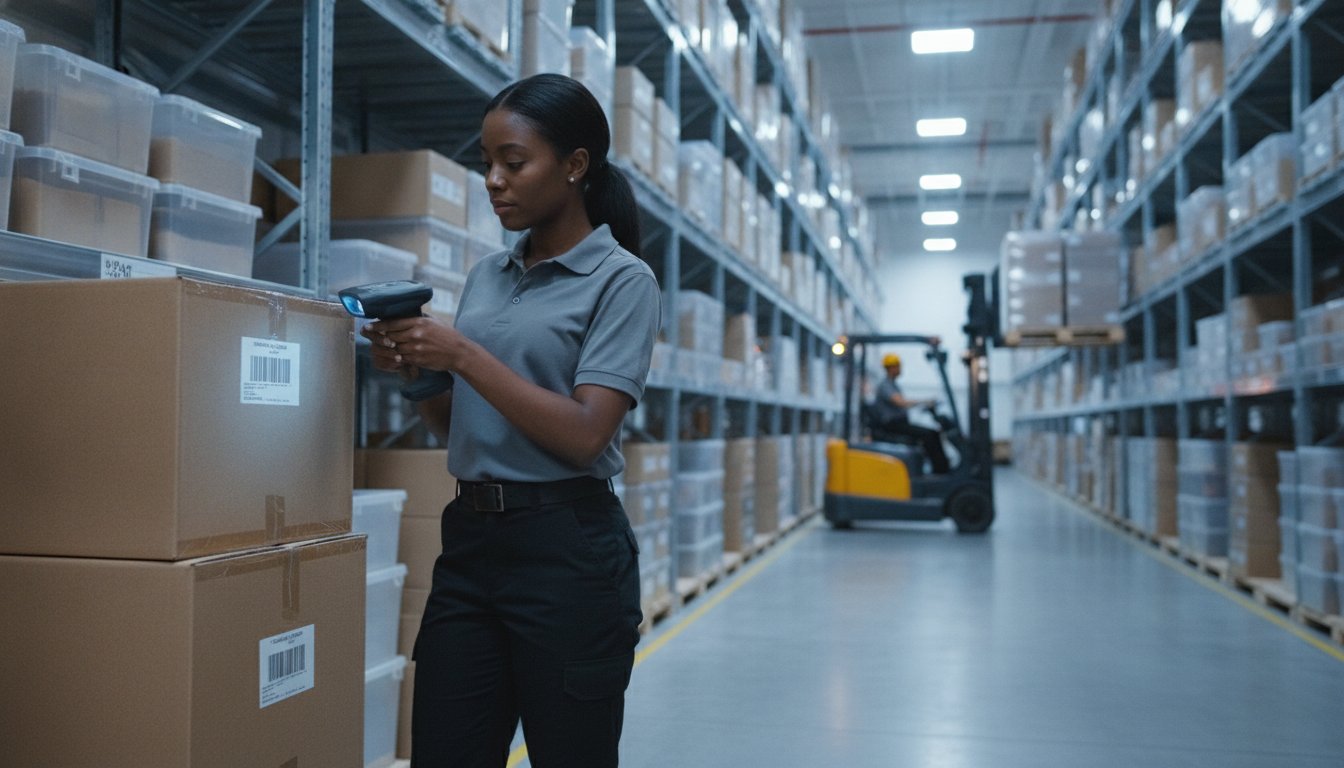
A single manual data entry error can cost your business more than the price of a professional handheld scanner. It's a hard truth many growing brands face when they rely on outdated pen-and-paper methods. If you're struggling with inaccurate stock counts or slow fulfillment, you aren't alone. Moving to a professional barcode scanner inventory management system is the most effective way to regain control over your warehouse and stop the cycle of shipping delays.
It's frustrating to deal with overselling because your digital records don't match your physical shelves. You want a system that grows with you, not one that breaks the moment order volume spikes. This guide will teach you how to build a high-accuracy tracking system from the ground up. You'll learn to combine professional scanners, durable labels, and smart software into a seamless workflow that works for your specific space.
We'll explore how to meet new 2026 standards, such as the GS1 General Specifications Version 26 and upcoming DSCSA traceability requirements. From selecting Datalogic handhelds to choosing the right thermal labels and BarTender software, we've simplified the technical details. You'll gain a clear roadmap to real-time visibility and faster picking times for a more efficient in-house operation.
Key Takeaways
- Learn how to implement a complete barcode scanner inventory management system that eliminates manual data entry errors and prevents overselling.
- Discover why industrial hardware like Datalogic and Zebra scanners provide the reliability and speed needed for professional warehouse environments.
- Understand how to integrate BarTender software with durable thermal transfer labels to maintain perfect stock accuracy and data integrity.
- Explore advanced efficiency strategies, such as using color-coded labels from the Epson C6000A to significantly reduce picking times.
- Follow a clear roadmap for auditing your current stock and establishing a scalable SKU naming convention that grows with your business.
What is Barcode Scanner Inventory Management?
At its core, barcode scanner inventory management is a synchronized ecosystem. It isn't just about the handheld device in your warehouse. It's the seamless integration of hardware, database-driven software, and high-quality labels that track every stock movement in real-time. When a worker scans a product, the system instantly updates your stock levels across every sales channel you operate. This ensures that what you see on your screen matches what is actually sitting on your shelf.
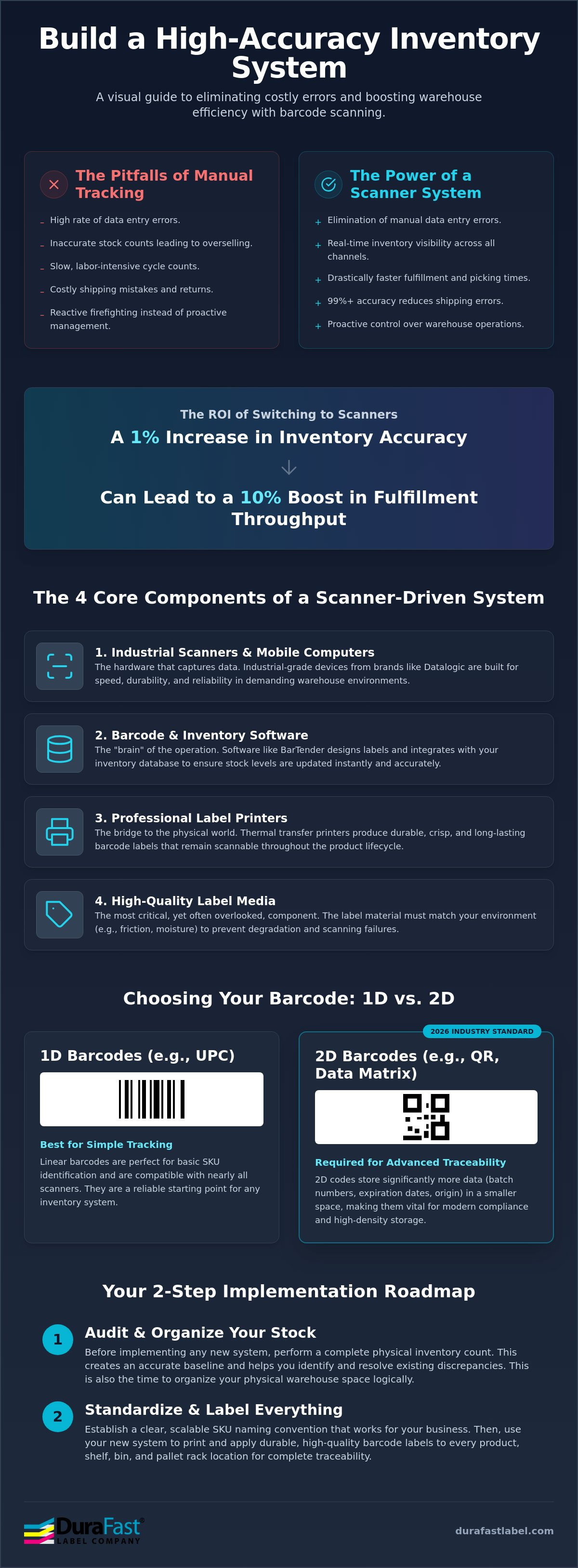
Manual tracking methods simply can't keep up with the demands of 2026 e-commerce. Human error rates in manual data entry are notoriously high, often leading to "ghost inventory" or stockouts that damage your brand's reputation. Modern selling is fast. If you're selling on multiple platforms simultaneously, a five-minute delay in updating stock can result in an oversold item. Switching to a scanner-driven system moves your business from reactive firefighting to proactive management. You stop guessing what you have and start knowing exactly where every unit is located.
The ROI of Switching to Scanners
Investing in professional scanning hardware pays for itself through drastic reductions in labor costs. Manual cycle counts that used to take an entire weekend can often be completed in a few hours with the right equipment. You also eliminate the hidden costs of shipping errors. Every time a wrong item is sent, you pay for the return shipping, the labor to restock it, and the potential loss of a customer. In 2026, a 1% increase in inventory accuracy can lead to a 10% boost in fulfillment throughput. This efficiency allows your existing team to handle higher order volumes without adding more staff.
Common Inventory Barcode Types
Choosing the right Barcode format is essential for warehouse density and data depth. Most businesses start with 1D barcodes, such as UPC or Code 128. These linear stripes are perfect for simple SKU tracking and are easily read by most entry-level scanners. However, 2D barcodes like QR codes and Data Matrix are quickly becoming the 2026 industry standard.
Why the shift? 2D barcodes store significantly more data in a smaller physical footprint. This allows you to track batch numbers, expiration dates, and even country of origin within a single scan. If you're using thermal transfer labels for long-term storage, 2D barcodes offer the durability and data density required for modern traceability regulations. This transition is vital for businesses handling food, pharmaceuticals, or high-density electronics where space on the packaging is at a premium.
Core Components of a Scanner-Driven System
Building a robust barcode scanner inventory management system requires more than just buying a random device online. It's a four-part harmony between your scanner, your software, the printer, and the physical label itself. If one component fails, the entire workflow grinds to a halt. Industrial units from brands like Datalogic outperform consumer mobile devices because they're built for speed and repetition. While a smartphone camera struggles with low light or damaged codes, a dedicated scanner reads them instantly. This reliability is what keeps your fulfillment line moving without interruption.
The printer serves as your bridge to the physical world. Using industrial barcode printers ensures your labels are crisp and readable by any device in the chain. Don't overlook the label media. It's often the most ignored part of the system, but it's arguably the most critical. If you use low-quality paper in a high-friction environment, the barcode will degrade. Once a label becomes unreadable, your expensive hardware becomes useless. Choosing the right material for your specific environment prevents these costly scanning failures.
Handheld Scanners vs. Mobile Computers
Handheld scanners are ideal for fixed workstations where items come to the operator. They're simple, durable, and cost-effective for packing stations. However, if your team needs to update the database while walking through aisles, mobile computers are the better choice. These Android-based units provide real-time access to your inventory records directly on the warehouse floor. You can find more details on comparing 1D, 2D, and mobile solutions to see which technology fits your floor plan. Regardless of the device, you must ensure it supports various Types of Barcodes to maintain compatibility with global retail standards.
The Role of Label Design Software
Software is the brain of the operation. Tools like BarTender Label Software do more than just draw lines on a screen. They automate the process by pulling data directly from your Excel sheets or ERP system. This automation removes the need for manual typing, which is where most errors occur. In 2026, staying GS1 compliant is a requirement for most major retailers. Using professional label design software ensures your barcodes meet these strict global standards every time you hit print. It's a simple way to guarantee your products are ready for the global supply chain.
If you're unsure which combination of hardware and software will solve your specific warehouse bottlenecks, speak with a label specialist to find the right fit for your business.
Selecting the Right Hardware for Your Workflow
Choosing the right hardware is about matching the device to the physical demands of your floor. A barcode inventory system gives you a more reliable way to handle stock, but only if the scanner can survive your daily operations. Datalogic scanners are often considered the gold standard for high-volume retail and logistics. They offer incredible speed and precision for repetitive point-and-scan tasks. If your environment is more intense, Zebra scanners are the top choice for their legendary ruggedness. They're built to withstand the grime, dust, and vibrations of a heavy industrial plant without skipping a beat.
For warehouses with high racking, Honeywell scanners provide the long-range capabilities needed to scan pallets from the seat of a forklift. This saves time and keeps operators safe. Small offices or back-room inventory setups might not need that level of industrial power. In these cases, Adesso scanners offer a cost-effective entry point for businesses just starting their barcode scanner inventory management journey. They're reliable for lower volumes and provide a professional experience without the premium price tag of warehouse-grade units. Selecting the right brand ensures your team has the tools to succeed from day one.
Wired vs. Wireless Scanning Solutions
Wired USB scanners are the workhorses of fixed packing stations. They don't have batteries to charge and offer 100% connection reliability. However, receiving docks and large warehouses require mobility. Bluetooth and Wi-Fi models allow your team to move freely throughout the building. In 2026, many mobile computers have transitioned to Wi-Fi 6E. This connectivity standard significantly reduces interference in crowded warehouse environments. It ensures your scan data hits the database instantly without any frustrating lag or dropped signals.
Durability Ratings: What IP65 Actually Means
Ruggedness isn't just a marketing term; it's a measure of your long-term ROI. An IP65 rating means the device is protected against total dust ingress and low-pressure water jets. If your warehouse is humid, dusty, or prone to spills, this rating is essential. Drop-test ratings are equally vital for your bottom line. A device that can survive multiple six-foot drops onto concrete will last for years. A consumer-grade tablet might shatter on the first day. Always choose your hardware based on environmental factors like chemical exposure or extreme temperatures to protect your business investment.
Implementing Your In-House Barcoding Workflow
Successful barcode scanner inventory management starts with a clean slate. You can't track chaos. Begin by performing a comprehensive audit of your physical stock to ensure your digital records are accurate from day one. While you're at it, define a consistent SKU naming convention. Avoid using special characters or ambiguous letters like "O" and "I" that are easily confused with numbers. Clear, logical SKUs make your database much easier to navigate and reduce the chance of manual entry errors during the transition.
Once your data is clean, select your physical media. For items that sit on shelves for several months or face harsh warehouse lighting, thermal transfer labels are the superior choice. They resist fading and chemical exposure much better than direct thermal options. Use BarTender software to design labels that include both the barcode and human-readable text. This redundancy is a lifesaver if a scanner ever loses power or a label is partially obscured by packaging tape. Printing these labels in-house with a professional thermal label printer gives you total control over your production. You can print one label or a thousand on demand without waiting for a third-party vendor.
Printing Labels That Last
Direct thermal printing is excellent for short-term shipping labels, but it's sensitive to heat and light. For long-term inventory duration, thermal transfer is the industry standard. Success depends on matching your thermal ribbons to your specific label material. For example, a wax ribbon on a synthetic label will smudge instantly. A resin ribbon provides a permanent, scratch-resistant finish. High-contrast printing is vital. If the black bars aren't crisp against the white background, your scanner read rates will plummet and frustrate your staff.
Integrating with Your ERP or WMS
Your scanners need to communicate effectively with your central software. Most modern scanners act as keyboard emulators, simply "typing" the barcode data into whatever field is active on your screen. Advanced setups use direct API inputs for faster, background processing. This integration allows for automated stock alerts. When a scan indicates you've hit a minimum threshold, the system triggers a reorder point automatically. In a 2026 "Just-in-Time" supply chain, this real-time data sync prevents stockouts before they impact your customers. After setting up the software, deploy your scanners and train staff on the scan-to-receive and scan-to-ship workflows to ensure every movement is captured.
Ready to build a more efficient warehouse? Contact our specialists today to find the perfect hardware and label combination for your workflow.
Advanced Inventory Strategies with DuraFast
Your barcode scanner inventory management system should grow at the same pace as your sales. Whether you're managing 100 SKUs or 100,000, the underlying logic stays the same. The real difference lies in the speed and volume your hardware can handle. Scaling up often requires moving from entry-level desktop units to heavy-duty industrial machines. Leveraging a Zebra ZT411 printer allows for high-volume, 24/7 industrial label production. Its all-metal frame and high-speed processing ensure your warehouse never grinds to a halt because of a printing bottleneck. When you reach this level of operation, every second saved during a scan or a print job directly impacts your bottom line.
There's a distinct advantage to purchasing your hardware and consumables from a single North American specialist. You don't have to worry about supply chain delays for your labels, ribbons, or ink cartridges. At DuraFast, we've helped countless businesses move from manual spreadsheets to fully automated systems. We provide a curated selection of vetting products, so you don't have to guess which scanner works best with your specific label material. This partnership ensures long-term reliability and gives you peace of mind as your business complexity increases.
Color-Coding and Visual Management
Color adds a critical layer of safety and speed to your picking process. Using the Epson ColorWorks C6000A, you can print color-on-demand labels that categorize inventory by department, priority, or hazard level. This visual management helps your pickers identify the right zone or product category instantly. When you combine a vibrant color mark with a high-accuracy barcode, you create a "fail-safe" picking system. It significantly reduces the mental load on your staff and virtually eliminates shipping errors. It's an easy upgrade for any warehouse looking to shave seconds off every order. You can explore our range of color label printers to see how they can transform your shelf organization.
Future-Proofing Your System
Investing in professional-grade scanners now saves you money on replacements later. While consumer devices are prone to failure, industrial hardware is designed to stay in service for years. As we move through 2026, many businesses are also preparing for the transition to RFID-enabled inventory management. Professional scanners and printers often have the modularity to support these emerging technologies. By choosing high-quality equipment today, you're building a scalable system that can adapt to new regulations and industry standards. We're here to guide you through every step of that journey. Shop our full range of barcode scanners and inventory solutions today.
Step Into the Future of Inventory Accuracy
Implementing a professional barcode scanner inventory management system is no longer a luxury for growing businesses. It's a necessity for maintaining accuracy in a high-speed market. You've seen how the right combination of Datalogic or Zebra hardware, BarTender software, and high-quality label media can transform your warehouse floor. By moving away from manual entry, you protect your bottom line from costly shipping errors and ghost stock levels. You gain the real-time visibility needed to make smarter purchasing decisions and keep your customers happy.
As an authorized Datalogic and Zebra partner, DuraFast has been serving as in-house label printing experts since 2012. We don't just sell hardware. We provide a full suite of BarTender software and support to ensure your system runs smoothly from day one. Whether you're starting with your first handheld scanner or scaling up to industrial-grade thermal printers, we have the tools to help you succeed. We understand the unique challenges of modern retail and logistics, and we're here to help you solve them.
Ready to eliminate stockout frustrations and speed up your fulfillment? Browse professional barcode scanners and inventory supplies to find the perfect fit for your workflow. Your team deserves a system that works as hard as they do. Let's build a more efficient future for your business together.
Frequently Asked Questions
Can I use my smartphone as a barcode scanner for inventory management?
You can use a smartphone for basic tracking, but it isn't ideal for professional environments. Smartphones use cameras rather than dedicated scan engines, making them significantly slower and less accurate with damaged or low-contrast codes. For a reliable barcode scanner inventory management system, industrial handhelds from Zebra or Datalogic provide the speed and durability required for daily warehouse use.
What is the difference between a 1D and a 2D barcode scanner?
1D scanners read traditional linear barcodes, such as UPC codes, using a laser or a linear imager. 2D scanners use an imaging sensor to read more complex codes like QR codes and Data Matrix. 2D scanners are more versatile because they can read barcodes in any orientation and are capable of scanning both 1D and 2D formats.
Do I need special software to use a Datalogic scanner?
Most Datalogic scanners are "plug-and-play" devices that act as keyboard emulators. This means they'll input data into any active text field without needing custom drivers. However, you'll still need professional software like BarTender to design and print the labels your team will be scanning. This ensures your barcodes meet global standards and remain readable over time.
How much does it cost to set up a basic barcode inventory system?
The total cost depends on your warehouse size and the number of SKUs you track. A standard setup usually includes a handheld scanner, a desktop thermal printer, and a software subscription. Investing in professional-grade equipment upfront prevents the hidden costs of frequent hardware replacements and data errors. We recommend contacting our team for a custom quote based on your specific needs.
What is the best type of label for long-term warehouse storage?
Thermal transfer labels are the industry standard for long-term storage. Unlike direct thermal labels, they don't turn black or fade when exposed to heat, sunlight, or friction. When you pair these labels with a high-quality thermal ribbon, you create a permanent bond that stays crisp and readable for years in a warehouse environment.
Can barcode scanners work with Excel for inventory tracking?
Yes, scanners work seamlessly with Excel for basic inventory tasks. Since the scanner acts like a keyboard, it "types" the barcode data directly into your selected cell. This is a popular way to start barcode scanner inventory management before moving to more advanced warehouse management systems. It's a simple, low-cost way to eliminate manual typing errors.
How do I choose between a wired and a wireless scanner?
Choose a wired USB scanner for fixed workstations like packing benches where the operator doesn't need to move. They're reliable and don't require battery management. Wireless Bluetooth or Wi-Fi scanners are better for receiving docks and picking aisles. They give your team the mobility to scan pallets and large items without being tethered to a computer.
What should I do if my scanner is not reading my barcodes?
Start by checking the print quality of your labels. If the bars are smudged or the contrast is too low, the scanner won't be able to distinguish the pattern. Also, ensure your scanner type matches your barcode; a 1D laser scanner cannot read a 2D QR code. Cleaning the scanner's exit window with a soft cloth often fixes many common reading issues.