Label Printer for Healthcare: The Complete 2026 Guide to Patient Safety and Compliance
25th Jun 2026
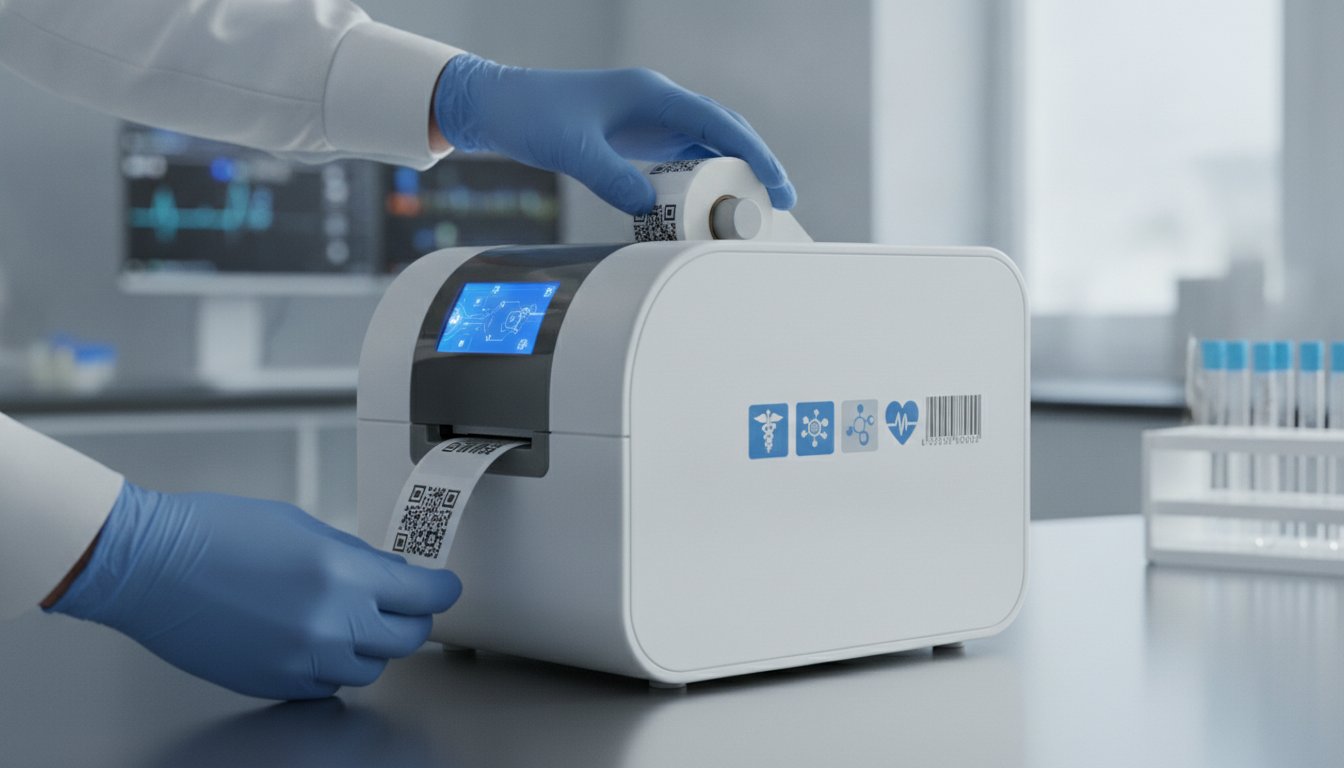
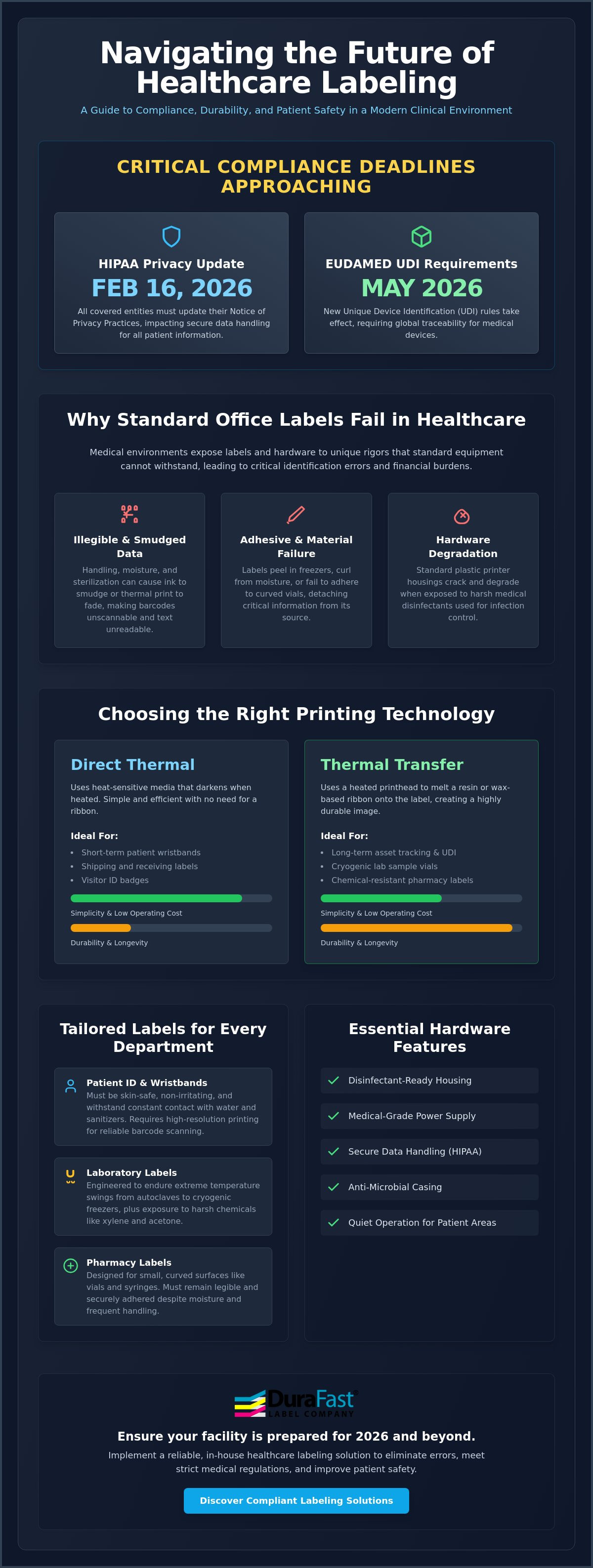
Did you know that all HIPAA-covered entities must update their Notice of Privacy Practices by February 16, 2026? This deadline marks a major shift in patient data privacy, making your choice of a label printer for healthcare more critical than ever. It's no longer just about putting a name on a sticker. It's about ensuring every wristband and specimen vial remains legible through sterilization, cold storage, and heavy handling.
We know the daily hurdles your team faces. It's frustrating to deal with labels that peel in the freezer or printer housings that crack after being wiped down with harsh medical disinfectants. You need tools that work as hard as your clinical staff without adding to their workload. You want zero-error patient identification and a workflow that stays compliant with evolving global standards, such as the EUDAMED UDI requirements arriving in May 2026.
This guide helps you select and implement the right healthcare labeling technology to eliminate errors and meet strict medical regulations. We'll break down the latest trends in RFID tracking, disinfectant-ready hardware, and durable media. You'll discover how the right setup simplifies your path to a safer, more efficient facility.
Key Takeaways
- Learn how to navigate the 2026 HIPAA and EUDAMED deadlines by choosing a compliant label printer for healthcare.
- Identify the specific durability needs for pharmacy and lab labels to ensure they withstand moisture, chemicals, and extreme temperatures.
- Compare direct thermal and thermal transfer technologies to determine which method best serves your bedside patient ID or long-term asset tracking needs.
- Evaluate essential hardware features like disinfectant-ready housing and medical-grade power supplies to maintain a sterile and safe clinical environment.
- Master a facility-wide implementation strategy that starts with a gap audit and ends with a streamlined mix of mobile and industrial printing units.
The Critical Role of Labeling in Modern Healthcare Systems
A label printer for healthcare is a specialized piece of hardware engineered to meet the rigid safety and technical standards of a clinical environment. Unlike standard office equipment, these devices are built to handle high-stakes data while surviving the unique rigors of a hospital ward or laboratory. They ensure that every patient ID, medication vial, and specimen container carries accurate, scan-ready information. It's the backbone of a zero-error identification strategy that keeps patients safe and workflows efficient.
This technology directly impacts the Five Rights of medication administration: the right patient, right drug, right dose, right route, and right time. When clinical staff scan a barcode, they rely on the printer's ability to produce crisp, high-contrast images that don't smudge or fade. Adhering to established drug labeling standards is a foundational step in preventing adverse drug events. Patient tracking has evolved rapidly. We've moved from handwritten charts to sophisticated 2D barcode systems and RFID technology. By 2026, the transition to 2D barcodes allows for more data to be stored in smaller spaces. This is perfect for tiny specimen slides or vials used in modern diagnostics.
Medical errors related to misidentification cause a significant financial burden for North American hospitals each year. These errors can lead to expensive litigation and the need for corrective care. Reliable labeling is a financial necessity as much as a clinical one. Using a dedicated label printer for healthcare helps mitigate these risks by providing consistent, high-quality output that stays legible through every stage of patient care.
Regulatory Compliance: HIPAA, FDA, and Beyond
Modern labeling systems must do more than just print; they must protect. With the February 16, 2026, HIPAA update, secure data handling is paramount. Dedicated healthcare printers often include features that wipe sensitive data from memory after a job is complete. Meeting FDA UDI requirements for medical devices is also essential for global traceability. For clinical trials, 21 CFR Part 11 compliance ensures that electronic records remain secure and auditable throughout the labeling process.
Environmental Challenges in Medical Facilities
Hospital environments are notoriously tough on hardware. Standard plastics often become brittle when exposed to the harsh cleaning chemicals used to prevent infections. Purpose-built thermal label printers feature disinfectant-ready housings that withstand frequent wipes with bleach or hydrogen peroxide. Anti-microbial casings further reduce the risk of cross-contamination at the point of care. These units also prioritize quiet operation to help maintain a peaceful environment in patient recovery areas. High-performance industrial barcode printers located in central labs provide the durability needed for 24/7 operation.
Essential Types of Healthcare Labels and Their Requirements
Labels in a medical facility aren't one-size-fits-all. A label printer for healthcare must handle a diverse range of materials, each designed for a specific departmental need. Broadly, we categorize these into Patient ID, Pharmacy, Laboratory, and Asset Tracking. Each category faces unique environmental threats like moisture, blood, harsh chemicals, or extreme temperature swings. Failure isn't an option when a patient's life or a critical research sample is on the line. Choosing the right combination of printer and media ensures that vital data remains intact from admission to discharge.
Patient Identification and Wristbands
Wristbands are the primary link between the patient and their electronic health records. They require high-resolution printing to ensure barcodes scan correctly the first time, every time. Materials must be skin-safe and non-irritating for long-term wear. While direct thermal labels are popular for their simplicity in short-term admissions, thermal transfer options offer superior durability for extended stays. We're also seeing a rapid shift toward RFID-enabled wristbands. These allow for Real-Time Location Systems (RTLS) to track patient movement and improve safety without requiring manual scans by busy nursing staff.
Laboratory and Specimen Labeling
Laboratory labels face the most aggressive environments in the hospital. They must survive centrifuges, slides, and blood bags while remaining perfectly legible. These labels often encounter alcohol and xylene, which can dissolve standard inks instantly. For samples stored in liquid nitrogen, labels must withstand cryogenic temperatures as low as -196°C without peeling or cracking. Because vials are small, a high-resolution 600 dpi print is often necessary to keep tiny 2D barcodes readable. If you're unsure which adhesive works best for your specific lab environment, feel free to reach out to our experts for a personalized recommendation.
Pharmacy and Medication Labels
In the pharmacy, precision prevents tragedy. Flag labels and syringe wraps must adhere to tightly curved surfaces without "flagging" or popping off. Color plays a vital role here. Using color label printers helps highlight "Look-Alike, Sound-Alike" (LASA) medications. This visual cue significantly reduces dispensing errors by drawing attention to high-alert drugs. Pharmacy teams also use these systems to meet Drug Supply Chain Security Act (DSCSA) requirements. This ensures every dose is traceable from the manufacturer all the way to the patient's bedside, maintaining a secure and transparent supply chain.
Comparing Thermal and Inkjet Technologies for Medical Environments
Selecting the right technology for your facility depends on the specific clinical task. A label printer for healthcare must balance speed, durability, and long-term cost-effectiveness. Direct thermal printing is often the preferred choice for short-term needs. It's ideal for bedside specimen collection or 24-hour patient ID bands because it doesn't require ribbons. However, these labels can fade when exposed to heat or bright light. For labels that must survive sterilization, chemicals, or years of storage, thermal transfer is the industry standard. Recently, high-resolution color inkjet has emerged as a vital tool for pharmacy safety and compliance.
Total Cost of Ownership (TCO) is a critical factor for hospital administrators. Direct thermal printers usually have lower upfront hardware costs, but the specialized heat-sensitive media can be more expensive over time. Thermal transfer systems require ribbons but offer a wider range of durable materials. Inkjet systems allow you to print color on demand. This drastically reduces the need to stock hundreds of different pre-printed label rolls, which streamlines your inventory and cuts down on waste. It's about finding the sweet spot between initial investment and daily operational savings.
When to Choose Thermal Transfer Printers
Central sterile processing departments rely on Zebra industrial printers to handle high-volume demands. These machines produce labels that won't degrade during intense heat or chemical sterilization cycles. The secret lies in the thermal transfer ribbons; they bond ink to the label material for permanent legibility. For decentralized tasks, desktop thermal printers at nursing stations provide a compact, reliable solution for labeling charts and medication bags without taking up valuable workspace.
The Rise of On-Demand Color in Healthcare
On-demand color is a major safety upgrade for modern hospitals. The Epson ColorWorks C6000A is transforming pharmacy workflows by allowing staff to print custom safety warnings and dosage instructions in vibrant color. This eliminates the risk of using the wrong pre-printed roll. When you use pigment-based inkjet labels, the prints resist smudging and chemical exposure. You get the visual clarity of color with the durability of traditional methods. It's a smart way to simplify your supply chain while enhancing patient safety.
Key Features to Evaluate When Selecting a Healthcare Label Printer
Choosing a label printer for healthcare requires looking beyond basic print speeds. You need a device that can survive the rigorous cleaning protocols of a modern hospital. Standard office equipment often uses plastics that become brittle and crack when exposed to strong medical disinfectants like bleach or hydrogen peroxide. A purpose-built unit features "disinfectant-ready" housing designed specifically for these chemicals. It ensures your investment lasts for years despite daily sanitization routines. This specialized casing is a critical requirement for any equipment used at the point of care.
Safety extends to the power cord as well. Medical-grade power supplies must comply with IEC 60601-1 standards. This regulation ensures the printer is safe for use in the "patient vicinity," minimizing the risk of electrical interference or leakage. Connectivity is another major pillar. With the HIPAA updates of 2026, security is non-negotiable. Look for printers that support WPA3 Wi-Fi and secure management protocols. These features prevent unauthorized access to sensitive patient data as it travels across your hospital network. Simple media loading is also a must. Clinical staff shouldn't have to struggle with complex roll changes during a busy shift.
Hardware Durability and Sanitization
There's a massive difference between standard plastic and disinfectant-ready materials. While standard plastic absorbs chemicals and degrades, healthcare-grade materials are non-porous. You should also prioritize models with sealed buttons and interfaces. This prevents cleaning liquids from seeping into the internal electronics, which is a common cause of hardware failure. Don't forget to evaluate printhead longevity. Using high-quality, medical-grade media reduces friction and extends the life of your printhead, saving you money on replacement parts over the life of the device.
Software Integration and Data Security
Your printer must play well with your existing Electronic Health Record (EHR) systems. Leading models offer seamless compatibility with platforms like Epic or Cerner, ensuring that data flows correctly from the patient chart to the final label. Using BarTender Professional Software allows you to design labels that meet every regulatory requirement, from UDI compliance to specific hospital branding. Centralized management is the final piece of the puzzle. It allows your IT team to monitor the health of every label printer for healthcare in the facility from a single dashboard, identifying issues before they disrupt clinical workflows.
Ready to upgrade your facility with the latest in medical printing technology? Contact our specialists today to find the perfect fit for your specific department needs.
Implementing a Reliable In-House Healthcare Labeling Solution
The first step is conducting a facility-wide audit. You need to identify where labels are currently failing or where manual entries still exist. Are laboratory samples being misidentified? Do wristbands become unreadable after a shower? Once you've mapped these error points, you can select the right mix of equipment. Most facilities require a combination of high-speed industrial units for central labs, compact desktops for nursing stations, and mobile printers for bedside care. Choosing certified medical-grade consumables is the next critical step. These materials are designed to survive the specific rigors of your environment without damaging the internal components of your devices.
Standardizing Your Printer Fleet
Managing a diverse range of random devices is an IT nightmare. Standardizing on a single brand simplifies your supply chain and makes maintenance much faster. For instance, Zebra label printers provide a scalable architecture that works across entire hospital networks. You can use the same management tools to monitor a printer in the basement pharmacy and a unit in the intensive care unit. Integrating mobile units for bedside point-of-care labeling further reduces errors. It allows nurses to print and apply labels immediately after collection, ensuring the right sample is always paired with the right patient.
Sourcing Certified Healthcare Supplies
Your choice of media is just as vital as the printer itself. Using non-certified thermal transfer labels in clinical settings is a major risk. These labels might peel or smudge when exposed to cleaning chemicals, leading to dangerous identification errors. For high-speed environments like patient admissions, direct thermal labels are the standard for efficiency and ease of use. If your pharmacy relies on color-coded safety warnings, you must ensure a steady supply of genuine Epson inks. This keeps your warnings vibrant and compliant with all medical regulations, ensuring that high-alert medications are never missed.
Finalize your implementation by training your staff on proper media loading and basic troubleshooting. Establish a clear maintenance schedule to clean printheads and calibrate sensors regularly. This proactive approach prevents unexpected downtime and extends the life of your label printer for healthcare investment. A well-maintained system is your best defense against identification errors and regulatory non-compliance.
Future-Proof Your Healthcare Labeling Strategy
The right label printer for healthcare does more than just produce stickers; it serves as a critical safeguard for patient safety and regulatory compliance. By now, you understand that selecting a device with disinfectant-ready housing and medical-grade power supplies is essential for the modern clinical environment. Whether you're implementing on-demand color inkjet for pharmacy warnings or high-volume thermal transfer for central sterile labs, the goal remains clear: zero-error identification that survives the toughest hospital conditions.
Implementing these solutions doesn't have to be a complex burden for your IT or clinical teams. We are an authorized partner for Epson, Zebra, and Afinia, providing the specialized medical-grade media and pigment inks your facility requires to stay ahead of 2026 mandates. Our team offers expert technical support for healthcare integration, helping you bridge the gap between rigid technical requirements and daily clinical workflows. We've done the heavy lifting of vetting the best technology so you can focus on what matters most.
Ready to enhance your facility's safety standards and streamline your workflow? Browse our full selection of healthcare-ready label printers and supplies and let us help you find the perfect fit. You're just one step away from a more secure, compliant, and efficient labeling system.
Frequently Asked Questions
What makes a label printer "healthcare grade"?
A healthcare-grade device is specifically engineered with disinfectant-ready housing that withstands harsh clinical cleaning chemicals like bleach and hydrogen peroxide. It also features a medical-grade power supply that meets IEC 60601-1 standards for safety in the patient vicinity. These printers often include antimicrobial plastics and sealed buttons to prevent liquid ingress, ensuring the hardware remains sterile and functional in high-stakes environments.
Can I use standard thermal labels for patient wristbands?
No, you should avoid using standard thermal labels for patient wristbands because they aren't designed for skin contact or long-term durability. Specialized healthcare wristbands use soft, non-irritating materials that resist moisture, soaps, and hand sanitizers. Using the wrong media can lead to skin irritation for the patient or faded barcodes that fail to scan during critical medication administration checks.
How do I clean a healthcare label printer without damaging it?
You can safely clean the exterior housing of a healthcare-ready unit using common hospital disinfectants such as 70% isopropyl alcohol or bleach-based wipes. Always apply the cleaner to a cloth first rather than spraying the device directly to prevent liquid from entering the internal electronics. For the printhead, use a specialized cleaning pen or a lint-free swab with electronic-grade alcohol to remove residue.
Do healthcare label printers support HIPAA compliance?
Yes, a modern label printer for healthcare supports HIPAA compliance through advanced security protocols like WPA3 Wi-Fi and secure management features. Some models are designed to automatically wipe sensitive patient data from internal memory after a print job is finished. This prevents unauthorized access to Protected Health Information (PHI) and ensures your facility meets the latest 2026 data privacy standards.
What is the best printer for laboratory specimen tubes?
The best solution for laboratory specimen tubes is a high-resolution thermal transfer printer, often with 600 dpi capability to handle tiny 2D barcodes. Industrial or specialized desktop units are ideal when paired with chemical-resistant ribbons. These systems ensure that labels remain legible even when exposed to centrifuges, alcohol, xylene, or cryogenic storage temperatures as low as -196°C during diagnostic testing.
Why is color printing becoming more common in pharmacies?
Color printing is gaining popularity in pharmacies because it significantly reduces dispensing errors by highlighting "Look-Alike, Sound-Alike" (LASA) medications. Using on-demand color allows staff to print vibrant safety warnings and dosage instructions that grab attention more effectively than black-and-white text. This visual differentiation is a key safety strategy that helps clinicians identify high-alert drugs quickly and accurately before administration.
What resolution (DPI) is required for medical barcodes?
While 203 dpi is sufficient for large shipping labels, most healthcare applications require at least 300 dpi for crisp, scannable patient wristbands. For laboratory settings where labels are applied to tiny specimen slides or vials, a 600 dpi resolution is the standard. High-resolution printing ensures that complex 2D barcodes remain readable even when scaled down to fit on very small curved surfaces.
Can these printers integrate with my existing hospital management software?
Yes, leading label printer for healthcare models are designed to integrate seamlessly with major Electronic Health Record (EHR) systems like Epic, Cerner, and MEDITECH. They support standard printer languages and drivers, making it easy for IT teams to deploy them across the network. When paired with professional design software, these devices can pull real-time data directly from your database to ensure every label is accurate.