Matte Chemical Labels: The 2026 Guide to GHS and BS 5609 Compliance
22nd Jun 2026
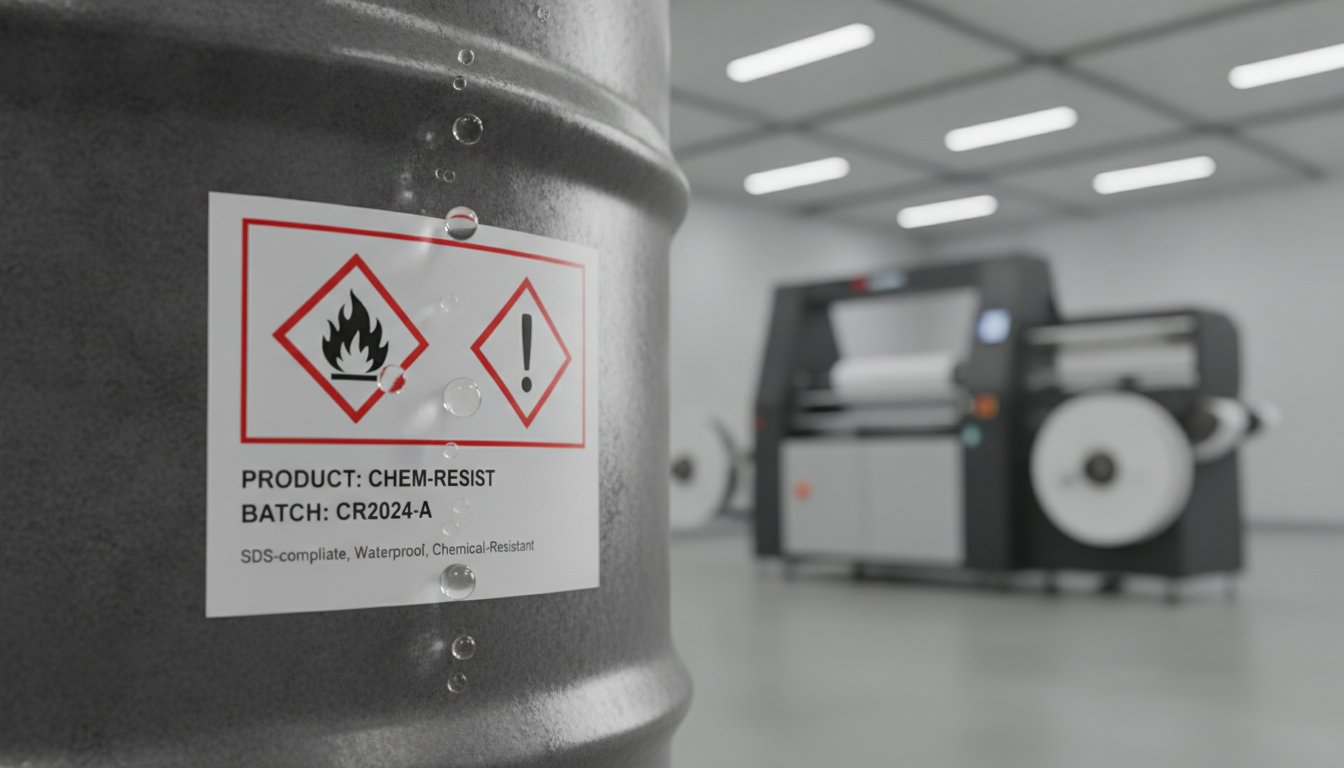
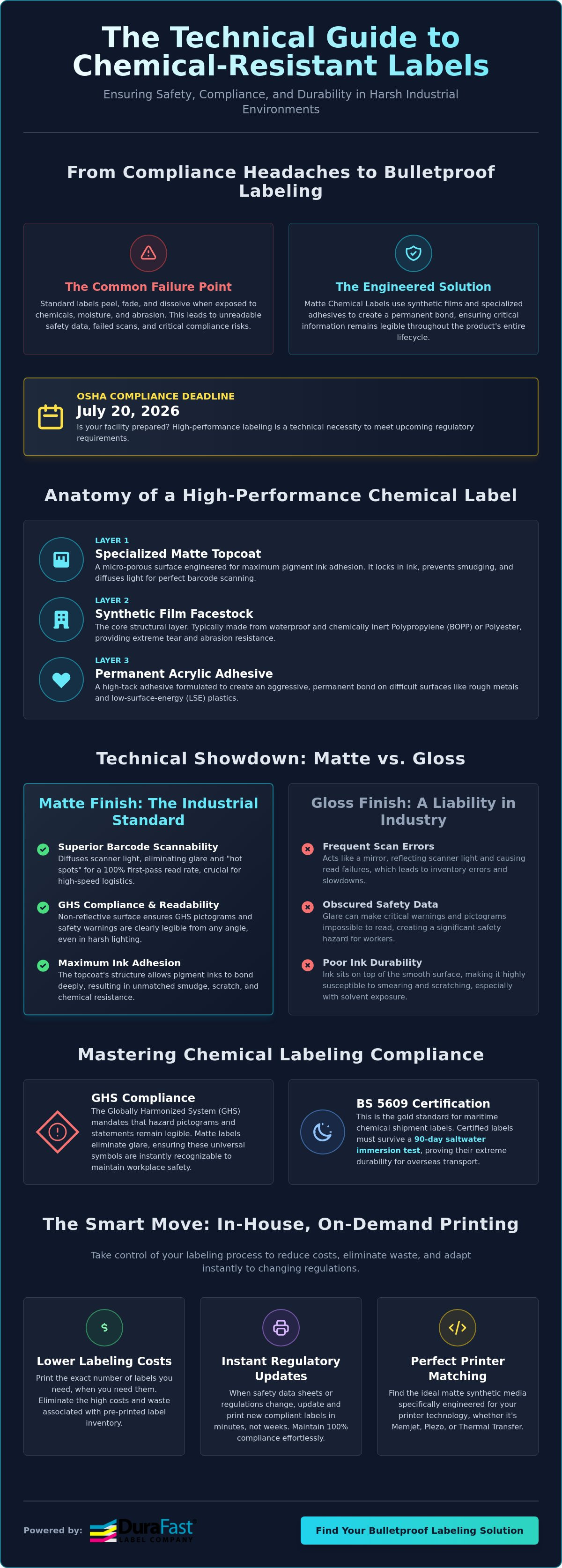
Is your facility ready for the July 20, 2026, OSHA deadline, or are you still struggling with labels that peel the moment they touch a solvent? It's a common headache for many manufacturers. You follow every regulation, yet your labels still fade or fail during the product lifecycle. We understand that managing GHS and BS 5609 requirements feels like a moving target. High-quality matte chemical labels are no longer just an option; they are a technical necessity for any business handling hazardous materials.
You deserve a labeling process that is both simple and bulletproof. This guide helps you master the complex technical requirements for chemical labeling. We'll show you why matte synthetic media is the industry standard for durability and how it ensures your print stays legible in the harshest environments. We will also explore how to achieve 100% compliance and reduce your overhead by moving to an efficient in-house printing setup. From understanding the new BS 5609:2024 standards to selecting the right pigment inks, we have done the heavy lifting to simplify your decision-making process.
Key Takeaways
- Understand how matte chemical labels combine synthetic film and permanent adhesives to withstand extreme chemical exposure.
- Explore the technical reasons why matte topcoats offer better light refraction for barcode scanning and stronger ink bonding.
- Navigate the complexities of BS 5609 certification and the 90-day saltwater immersion test to guarantee 100% GHS compliance.
- Learn how to implement an on-demand printing strategy to lower your labeling costs and respond instantly to regulatory updates.
- Find the perfect media match for your specific printer technology, whether you use Memjet, Piezo, or thermal transfer systems.
What are Matte Chemical Labels?
Most people assume "matte" refers only to the look of the label. In the chemical industry, it's a functional specification. Matte chemical labels are specialized synthetic media engineered to survive environments that would destroy standard paper. These labels serve as the front line of safety for drum labeling, pails, and hazardous waste containers. They don't just sit on a bottle; they protect critical safety data from moisture, abrasion, and aggressive solvents.
The construction of these labels is what sets them apart. A high-quality matte label consists of three primary layers. First, a specialized matte topcoat ensures that pigment inks bond deeply into the surface. This prevents smearing during handling. Second, the film facestock, typically made from Polypropylene or Polyester, provides the structural integrity needed to resist tearing. Finally, a permanent acrylic adhesive ensures the label stays put. This adhesive is specifically designed to bite into low-surface-energy plastics and rough metal surfaces common in industrial storage.
Why is matte the industry standard over high-gloss options? It's about reliability. High-gloss labels often reflect light in ways that make barcodes unreadable for industrial scanners. Matte surfaces diffuse light, providing the high contrast necessary for 100% scan rates. When you're managing thousands of containers, you can't afford a scanning failure. Choosing inkjet labels with a matte finish ensures your tracking system works every time.
The Role of Matte Labels in GHS Compliance
Compliance isn't just about having the right words on a container. It's about visibility. The Globally Harmonized System (GHS) requires pictograms and hazard statements to remain legible under all conditions. Matte finishes are preferred because they reduce glare on GHS pictograms, making them instantly recognizable even in harshly lit warehouses. Many safety regulations specifically mandate non-reflective surfaces to ensure that multi-language hazard statements are easy to read from various angles. If a worker can't read a warning because of a reflection, the label has failed its primary job.
Synthetic vs. Paper: Why Chemicals Demand Film
Paper labels are a liability in chemical environments. They absorb oils, rot when exposed to moisture, and peel away when they encounter solvents. Synthetic materials like Polypropylene, Polyester, and Polyethylene are the only logical choice for hazardous materials. These films are waterproof and chemically inert, meaning they won't react with the substances inside the container. Biaxially Oriented Polypropylene (BOPP) provides exceptional resistance to moisture and most industrial solvents, making it a staple for chemical storage. Using DuraFast Matte Chemical Labels built on these synthetic bases ensures your compliance remains intact for the entire product lifecycle.
Matte vs. Gloss: The Technical Advantage for Chemical Safety
High-gloss finishes are excellent for high-end retail packaging, but they often become a liability in industrial environments. Choosing matte chemical labels is a decision based on technical performance rather than visual preference. In a chemical warehouse, the priority is clarity and reliability. While a glossy label might look vibrant on a store shelf, it can fail the moment it enters a high-speed industrial workflow.
The primary difference lies in how these surfaces interact with light and ink. Glossy surfaces act like mirrors. When a scanner's laser hits a glossy label, it creates "hot spots" of reflected light. These reflections blind both 1D and 2D scanners, leading to frustrating scan errors. Matte surfaces solve this by diffusing light across the entire label. This ensures high-speed warehouse sorting systems can read every barcode on the first pass. This level of reliability is essential for meeting OSHA's Hazard Communication Standard, where critical safety information must be accessible at all times.
Barcode Scannability and Light Diffusion
Scan errors do more than just slow down your team. They can lead to inventory mismatches and safety risks. In poorly lit chemical storage facilities, the light diffusion properties of matte media are even more critical. By eliminating the glare that gloss finishes produce, matte labels ensure that scanners can distinguish between the bars and spaces of a code without interference. This is particularly important for 2D Data Matrix codes, which carry more data in a smaller footprint and are highly sensitive to surface reflections.
Pigment Ink Adhesion and Smudge Resistance
The microscopic structure of a matte topcoat is designed to "lock in" ink. Unlike gloss surfaces where ink might sit on top and remain vulnerable to smearing, matte media is highly receptive to pigment-based inks. This is why matte media is the preferred choice for the Epson ColorWorks C6000A. When you print on matte synthetic media, the ink bonds almost instantly. You can test for smudge resistance immediately after the label exits the printer. This quick-dry capability is vital for on-demand printing where labels are applied to containers seconds after being produced.
Beyond the technical specs, matte labels offer a tactile advantage. Chemical containers are often handled by workers wearing gloves, and surfaces can become slippery if oils or liquids are present. The slight texture of a matte finish provides a better grip than a slick gloss surface. Visually, matte labels project a professional, industrial aesthetic that signals safety and compliance. If you're unsure which finish is right for your specific chemical containers, talk to our labeling experts for a technical recommendation.
Understanding BS 5609 and Chemical Resistance Standards
Compliance isn't just about the ink; it's about the entire label construction. BS 5609 is the British Standard for pressure-sensitive adhesive labels used in marine environments. If your containers travel by sea, this certification is mandatory. It ensures that if a drum falls overboard, the label remains attached and legible for at least three months. This level of durability is a key pillar of the OSHA Hazard Communication Standard, which requires that safety data stays visible through the harshest conditions.
High-quality matte chemical labels must do more than just resist water. They face a daily barrage of aggressive substances like alcohols, fuels, acids, and bases. A standard label would dissolve or peel under these conditions. The permanent acrylic adhesive used in these specialized labels is engineered to maintain its bond even during extreme temperature fluctuations. Whether your containers sit in a freezing shipping yard or a sweltering warehouse, the adhesive stays stable and refuses to budge.
Section 2: The Marine Immersion Test for Adhesives
Section 2 of the BS 5609 standard focuses on the durability of the unprinted label material. During this phase, testers evaluate the bond between the label and the container after 90 days in saltwater. It isn't just about staying stuck; the material must also show exceptional dimensional stability. This means the label cannot shrink, curl, or blister when exposed to the elements. Passing the Section 2 "weathering" phase proves that the base material and adhesive are tough enough for international transit.
Section 3: The Synergy of Ink and Media
While Section 2 tests the material, Section 3 tests the print. A label is only considered fully compliant when it's paired with specific, tested inks, such as Epson inks. This stage involves rigorous abrasion resistance testing. The goal is to ensure the hazard symbols and text stay on the label even after being rubbed with sand and soaked in salt spray. If the print wears off, the certification is void.
Pigment-based inks are essential for this level of performance. Unlike dye-based inks that sit on the surface, pigment inks contain solid particles that "lock" into the matte topcoat. This creates a chemical bond that resists smudging and fading. When you use premium matte chemical labels, you aren't just buying a sticker; you're investing in a certified safety system that protects your business from liability and ensures your workers stay informed throughout the product lifecycle.
Choosing the Right Matte Label for Your Printer
Not all matte chemical labels work in every printer. You must match the media to your specific printhead technology to avoid smearing or wasted stock. Piezo technology, used in Epson printers, uses mechanical pressure to eject ink. Memjet technology, found in Afinia printers, uses heat and thousands of tiny nozzles. Because these methods differ, the topcoats on your labels must be engineered to handle the specific volume and velocity of the ink. Using generic inkjet labels that aren't optimized for your hardware is a recipe for compliance failure.
Physical specifications are just as important as the chemical ones. Industrial printers typically require a 3-inch core and specific outer roll diameters to fit internal spindles. If the roll is too large, it won't spin freely; if the core is the wrong size, you'll face constant tracking errors. Always verify your printer's maximum roll capacity before ordering. This prevents unnecessary downtime and ensures your labeling line keeps moving efficiently.
Achieving the perfect GHS red is a common challenge on matte surfaces. Because matte media diffuses light, colors can sometimes look muted compared to gloss. You should adjust your saturation levels in your printer driver or labeling software. Most industrial printers allow you to create custom media profiles. This ensures your red diamonds are vibrant enough to meet regulatory visibility standards without wasting excessive ink.
Optimizing for Epson ColorWorks Series
The Epson ColorWorks series, specifically the C6000A and C7500, are workhorses for chemical labeling. For these models, choose matte synthetic media with a heavy-duty permanent adhesive. If you're using the C6000A's auto-cutter, ensure your labels have a synthetic liner. Paper liners can create "paper dust" that clogs the cutting mechanism over time. Adjusting the saturation for chemical-resistant topcoats helps the pigment ink penetrate deep into the fibers for maximum durability.
Matte Solutions for Afinia and Memjet Printers
High-speed printers like the Afinia L801 require quick-dry matte media. The L801 can produce labels at up to 60 feet per minute, meaning the ink has only a fraction of a second to set before the label hits the rewinder. Using the correct media ensures that Afinia inks achieve their full resistance potential. Keep your maintenance schedule tight when running high volumes of synthetic stock. Synthetic materials can be more demanding on service stations, so regular cleaning is essential for long-term reliability.
Need help finding the exact roll size or media type for your industrial setup? Contact our technical support team for a media compatibility check today.
Implementing In-House Printing with DuraFast Matte Labels
Moving your labeling operation in-house is a strategic shift that pays for itself quickly. When you rely on external vendors, you're often stuck with high minimum orders and rigid lead times. If a regulation changes or you update a chemical mixture, those pre-printed rolls become expensive scrap. Using matte chemical labels on-demand allows you to stay lean. You reduce inventory waste by printing exactly what's required for your current production run. This flexibility isn't just about saving money; it's about staying agile in a highly regulated market.
The transition to in-house printing also simplifies your quality control. You no longer have to worry about color shifts or adhesive failures from a distant supplier. By managing the process yourself, you ensure that every label meets your internal standards before it ever touches a container. This direct oversight is especially valuable for firms managing multiple product lines with varying compliance needs across different regions.
The Workflow Advantage of On-Demand Labeling
The integration of BarTender Professional Software transforms your workflow into a real-time safety system. You can connect your label designs directly to your central database, ensuring that every GHS pictogram and hazard statement is pulled from the most current Safety Data Sheets (SDS). If an SDS update occurs at noon, your labels can be compliant by 12:01. There's no need to wait for a third-party print shop to process a new order or ship a batch across the country. You gain total control over your compliance timeline and eliminate the risk of shipping products with outdated safety information.
DuraFast Quality Assurance
At DuraFast Label Company, we understand that industrial labeling isn't a one-size-fits-all process. Our matte chemical labels are the choice for Fortune 500 chemical firms because they provide consistent performance in the most demanding environments. We support national operations across North America with fast shipping and expert technical guidance. If your containers have unique profiles or low-surface-energy plastics, we can provide custom sizes and shapes tailored to your specific application. We've already done the heavy lifting of vetting these materials so you can focus on your core business. We invite you to request a sample roll of our matte synthetic media to test in your specific environment and see the durability for yourself.
Take Control of Your Chemical Compliance
Managing hazardous materials is complex; your labeling process shouldn't be. You now understand that high-performance matte chemical labels are the foundation of a reliable safety system. By combining BS 5609 certified materials with the right pigment ink technology, you ensure your containers remain compliant from the warehouse to the open sea. Moving your production on-demand doesn't just reduce inventory waste; it gives you the agility to respond to regulatory updates in real time. This shift transforms a technical requirement into a streamlined business advantage.
We're here to help you navigate the technical details of GHS requirements and printer compatibility. Our team provides expert technical support to ensure your setup is optimized for maximum durability. With fast national shipping across North America, you can get the supplies you need without the long wait times of third-party print shops. Ready to upgrade your facility's safety standards? Shop our full selection of DuraFast Matte Chemical Labels and secure your product lifecycle today. You've got the knowledge; now it's time to put it into action.
Frequently Asked Questions
What is the technical difference between matte and gloss chemical labels?
Matte surfaces diffuse light to eliminate glare, while gloss surfaces reflect light like a mirror. This makes matte the superior choice for industrial barcode scanning and GHS pictogram visibility. Beyond the look, matte topcoats are specifically engineered to absorb pigment inks more deeply than gloss finishes. This results in a more durable bond that resists smudging and chemical degradation in harsh warehouse environments.
Are matte chemical labels BS 5609 compliant?
Yes, matte chemical labels are compliant if they are constructed with specific synthetic films and marine-grade adhesives. Compliance is a system-wide certification that requires the label stock, the printer, and the ink to work together. DuraFast materials are tested to survive 90 days of saltwater immersion. This ensures your hazard warnings remain attached and legible even if a container is lost at sea.
Can I print these labels on a standard office inkjet printer?
No, you shouldn't use a standard office printer for hazardous material labeling. Office printers typically use dye-based inks that smear or fade when they touch moisture or chemicals. You need an industrial pigment inkjet printer to achieve GHS compliance. Standard office hardware also lacks the specialized sensors and heavy-duty motors required to handle thick, synthetic label rolls without causing frequent jams.
What specific chemicals are these labels resistant to?
These labels are engineered to resist aggressive substances including alcohols, fuels, oils, and various acids or bases. The combination of a synthetic facestock and pigment-based ink creates a chemically inert surface. This prevents the safety data from dissolving or becoming unreadable during accidental spills. We recommend testing a sample roll with your specific chemical mixtures to ensure the highest level of performance.
Do I need a specific type of ink for matte chemical labels?
You must use pigment-based ink to ensure your labels meet safety standards. Dye-based inks stay on the surface and will wash away when exposed to solvents or water. Pigment inks contain solid particles that lock into the specialized topcoat of matte chemical labels. This creates the permanent, smudge-proof bond required for BS 5609 Section 3 certification and long-term industrial use.
How long do matte synthetic labels last in outdoor environments?
Matte synthetic labels typically remain legible for 12 to 24 months outdoors depending on the intensity of UV exposure. Unlike paper, synthetic materials like Polypropylene won't rot or degrade when exposed to rain and humidity. Using high-quality pigment inks further protects the print from fading. This makes them ideal for chemical drums stored in outdoor yards or shipping containers traveling through various climates.
What is the best printer for GHS compliance?
The Afinia L502 and Epson ColorWorks C6000A are two of the best options for GHS labeling. These printers are specifically designed to use pigment inks and handle durable synthetic media. The Afinia L502 is particularly versatile because it can switch between dye and pigment ink sets. Both models provide the high-resolution color printing needed for vibrant GHS red diamonds and crisp, small-font hazard statements.
Can these labels be used on small or curved chemical bottles?
Yes, but you must select a flexible material like Polypropylene or Polyethylene for tight curves. Rigid materials like thick Polyester can "flag," which means the edges may lift away from a small-diameter bottle. Using a high-tack permanent acrylic adhesive ensures the label stays securely wrapped around the container. This prevents the label from peeling off during handling or when the bottle is stored in a tight rack.