Print Labels on Demand: The 2026 Strategy for In-House Agility
6th Jul 2026
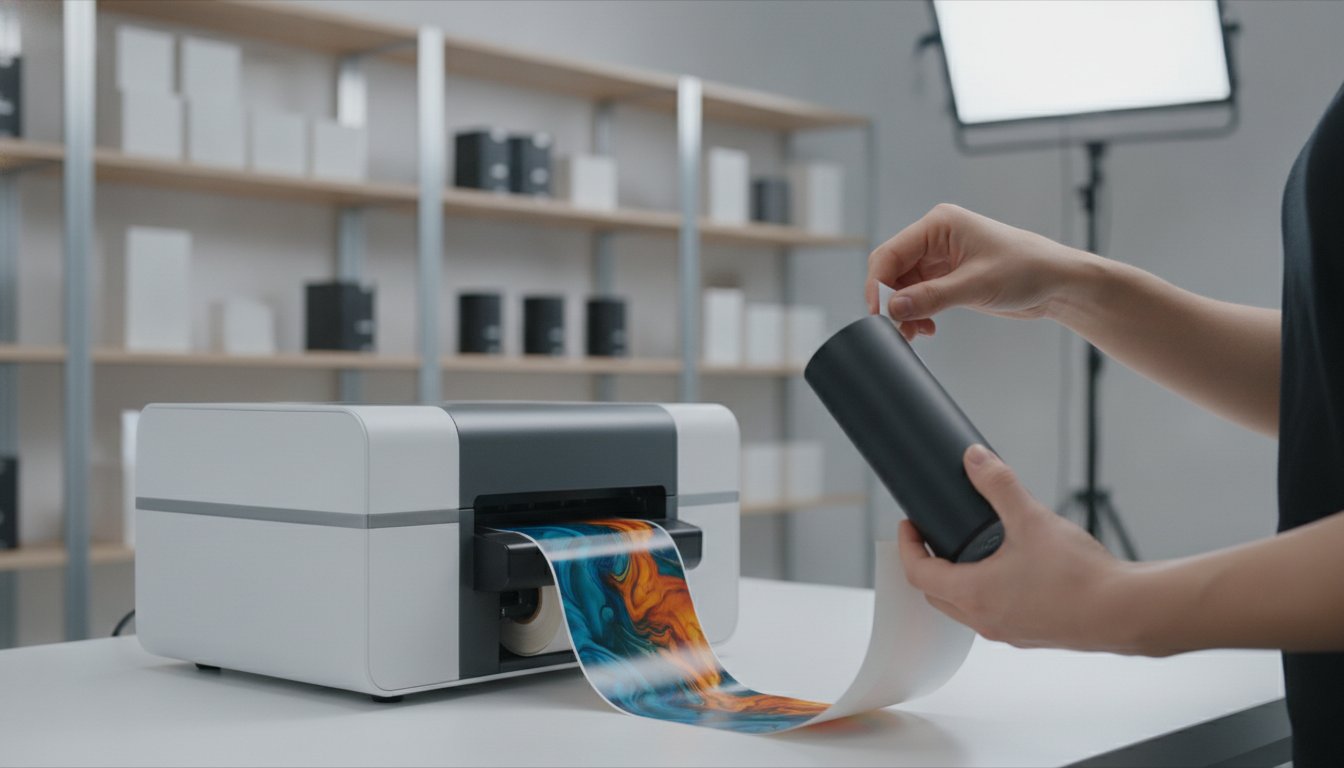
In 2026, the most successful brands don't just order labels; they print them. It's frustrating to wait three weeks for a shipment only to realize a sudden SKU change has made half your inventory obsolete. You shouldn't have to pay for thousands of labels when you only need fifty for a small batch or a seasonal test run. We know that relying on external print shops often feels like a bottleneck that slows your growth and drains your budget.
This article shows you how to print labels on demand to eliminate lead times and stop wasting money on unused stock. Mastering this shift allows you to take total control over your production timelines and update your designs the moment a regulation changes. We'll preview the essential hardware and software strategies you need to reduce per-label costs and maintain agility. You'll learn how to stay ahead of 2026 requirements, from retail barcode quiet zones to updated shipping standards, all while keeping your operations lean and responsive.
Key Takeaways
- Learn how switching from traditional flexo to digital technology allows you to produce exact quantities in real-time.
- Discover how to print labels on demand using color inkjet or thermal transfer systems to eliminate the need for expensive printing plates.
- Compare the total cost of ownership between in-house and outsourced models to uncover hidden expenses like shipping fees and minimum order premiums.
- Follow a practical two-step audit to identify high-waste SKUs and choose hardware based on your specific durability and color needs.
- Explore how on-demand printing supports 2026 sustainability goals by reducing carbon footprints and enabling hyper-personalized packaging.
What Does it Mean to Print Labels on Demand?
At its core, the ability to print labels on demand refers to producing the exact number of labels you need in real-time. It's a shift away from the traditional manufacturing mindset where you'd order massive quantities and wait weeks for delivery. Instead of being a passive buyer, you become the producer. This model allows you to hit "print" for ten labels as easily as you would for ten thousand. It's about agility, precision, and having the right label ready the moment a product is boxed for shipment.
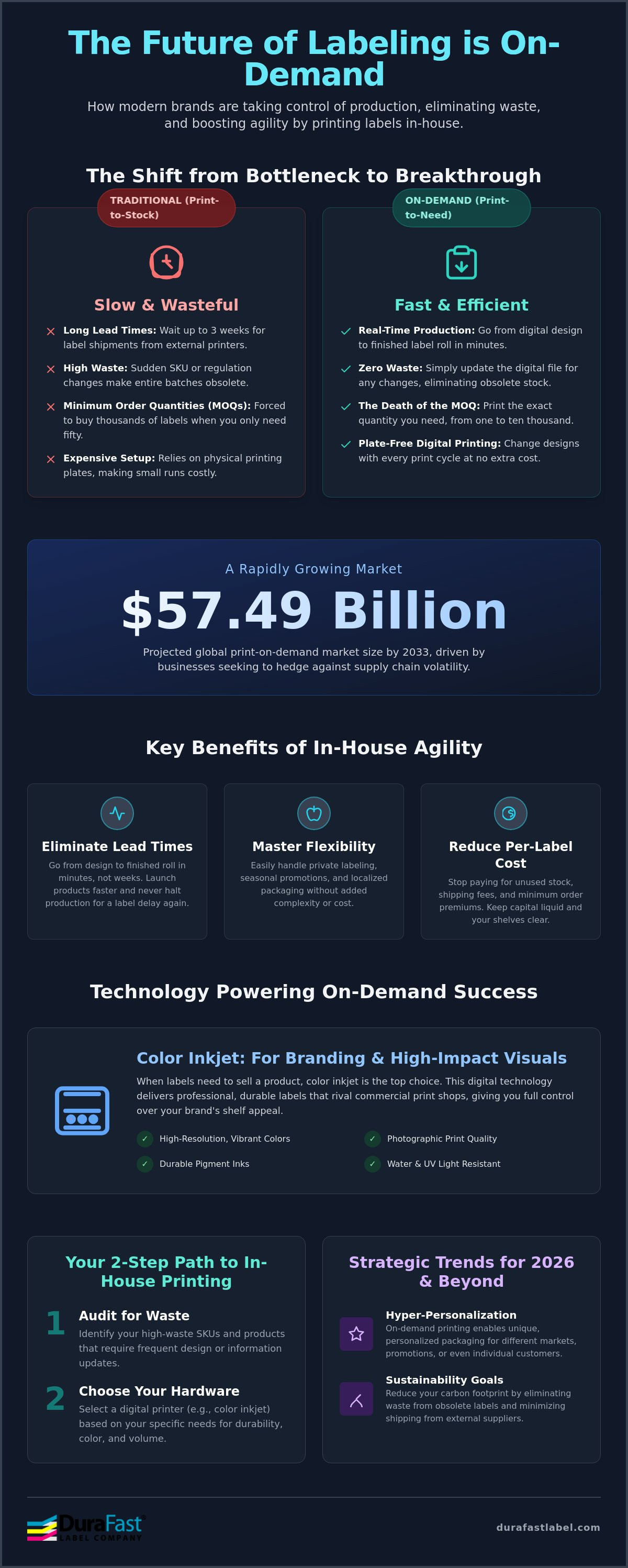
This transition is made possible by a move from traditional flexographic printing to modern digital printing technology. Flexo printing requires physical plates, specialized ink mixing, and long setup times. These factors make short runs expensive and slow. Digital systems skip these steps entirely. Your design goes straight from your computer to the printer. Because there are no plates to manufacture, you can change your design every single time the printer cycles. This technology has effectively caused the "death of the MOQ" (Minimum Order Quantity) in modern manufacturing. You're no longer forced to buy inventory you don't need just to get a decent price per label.
The contrast between the old "Print-to-Stock" and the new "Print-to-Need" models is stark. Under the old model, you'd store thousands of pre-printed labels in a warehouse, hoping the information wouldn't change before you used them. Under the new model, you maintain a small stock of blank inkjet labels or thermal rolls. You only apply ink when a specific order is ready. This keeps your capital liquid and your shelves clear of potentially obsolete materials.
The Core Benefits of On-Demand Production
Speed is the most immediate advantage. You can go from a design tweak in your software to a finished roll in minutes. This eliminates the lead times that often stall product launches. It also ends the cycle of inventory waste. If a regulation changes or you decide to update a logo, you won't have to throw away boxes of old stock. You simply update the digital file. This flexibility makes it easy to handle private labeling, seasonal promotions, or localized packaging without added complexity or cost.
Why 2026 is the Year of In-House Agility
By 2026, the global print-on-demand market is projected to reach a massive scale, hitting an estimated $57.49 billion by 2033. This growth is fueled by businesses realizing that relying on external vendors is a significant risk. Supply chain volatility can turn a simple label delay into a total production halt. Advances in pigment ink technology found in modern color label printers have also closed the quality gap. You can now produce professional, durable labels in-house that look identical to those from a commercial shop. On-demand printing is the ultimate hedge against market fluctuations and sudden regulatory changes.
The Technology Powering On-Demand Success
To print labels on demand effectively, you need to understand the hardware that makes it possible. Traditional printing relies on physical plates for every design change. Digital technology removes this barrier entirely. By sending data directly to the printhead, you eliminate the cost and time associated with manufacturing plates. This is the secret to short-run efficiency. It allows you to switch from one SKU to another in seconds without stopping the production line. You gain the freedom to iterate on designs without financial penalties.
Success depends on matching the right technology to your specific application. Most businesses choose between color inkjet and thermal transfer systems. Both offer unique strengths for different environments. High-quality results also require the right consumables. Pigment inks, for example, provide excellent resistance to water and UV light. You must also consider media compatibility. Choosing between matte and gloss finishes can change the entire look and feel of your brand. If you aren't sure which media fits your environment, you can always speak with our team for a professional recommendation.
Color Inkjet: For Branding and High-Impact Visuals
When your labels need to sell a product, color inkjet is the top choice. This technology delivers high resolution and vibrant colors that rival commercial print shops. It's perfect for gourmet foods, cosmetics, or any product where shelf appeal is critical. Industrial-grade models like the Epson ColorWorks C6000A are designed for this exact purpose. They handle large rolls and print at speeds that keep up with busy production schedules while maintaining photographic quality.
Cost management is simpler with inkjet than many people realize. Most modern printers use individual ink cartridges for each color. This means you only replace the specific color you use most. If your brand uses a lot of cyan, you don't have to throw away a whole tri-color tank when it runs out. This efficiency is vital when you print labels on demand across multiple product lines with varying color needs. It keeps your per-label costs low even for very small batches.
Thermal Transfer: For Logistics and Durability
Not every label needs full-color photography. For shipping, warehousing, and harsh industrial environments, thermal transfer is the global standard. This technology uses a heated printhead to melt a ribbon onto the label surface. The Zebra ZT411 is a proven workhorse in this category. It's built for 24/7 operation and produces crisp, high-contrast barcodes that scanners read reliably every time. This prevents costly shipping errors and chargebacks.
Durability is the biggest selling point here. High-quality thermal transfer ribbons create images that resist chemicals, extreme temperatures, and heavy abrasion. Whether you're tagging outdoor equipment or chemical drums, these labels stay legible for the life of the product. They provide the rugged reliability required for global supply chains and strict compliance standards. You get total peace of mind knowing your data remains intact throughout the entire shipping journey.
In-House vs. Outsourced On-Demand Printing
Many third-party services claim to offer "on-demand" printing. In reality, they're often just offering low-minimum digital orders with a significant markup. True agility comes from owning the equipment. When you print labels on demand in-house, you eliminate the friction of external vendors. You don't have to wait for a shipping carrier or pay a premium just because you only need a small batch. The total cost of ownership for an in-house system includes hardware and consumables, but it removes the recurring service fees that drain your budget over time.
Outsourcing often carries hidden costs that aren't on the initial quote. Shipping fees for frequent, small orders add up quickly. You also face the "opportunity cost" of wait times. If a production line stops because you're waiting for a label delivery, that's lost revenue. Quality control is another major factor. Who catches an error faster, you or a third party? If you find a typo on an outsourced batch, you're stuck waiting for a reprint. If you catch it in-house, you fix the digital file and have a corrected label in thirty seconds. This level of control is impossible when you're just another ticket in a print shop's queue.
When to Keep Printing In-House
In-house production is the best fit for brands with high SKU counts but low individual volumes. This "Long Tail" of products is where outsourcing becomes most expensive per unit. It's also vital for industries facing frequent regulatory shifts. If the FDA or GHS updates a requirement, you can't afford to wait for an external shop to update their schedule. For a deeper dive into the math, check out our guide on Calculating the Cost of Printing Labels In-House.
The ROI of In-House Capabilities
The financial benefits of print labels on demand strategies are easy to track. Saving just 10 cents per label might seem small. However, over a run of 50,000 units, that's $5,000 back in your pocket. Beyond the per-unit savings, consider the value of "time-to-market." Launching a new product version today instead of next month can lead to significant market share gains. In-house printing often pays for itself within the first year for active brands. You're investing in a business asset rather than paying for a recurring service that you don't control.
How to Implement an On-Demand Labeling System
Setting up your own system is simpler than most people think. You don't need a massive warehouse or a team of technicians to get started. Success begins with a clear plan and the right components. If you follow a methodical approach, you can transition your production line in a matter of days and begin seeing immediate returns on your investment.
- Step 1: Audit your current usage. Review your historical orders to identify which SKUs are frequently tossed due to design updates. These high-waste items are the perfect starting point to print labels on demand.
- Step 2: Define your technical needs. Decide between the vibrant marketing power of color or the rugged simplicity of thermal transfer. Consider your environment; factors like chemical exposure or moisture will dictate your hardware choice.
- Step 3: Source reliable media. Your printer's performance depends on the quality of the material it feeds. Always use premium blank inkjet labels or thermal rolls that are engineered for your specific print technology.
- Step 4: Connect your data. Use professional software to link your product database directly to your print queue. This eliminates manual typing and ensures every batch is accurate when you print labels on demand.
Are you ready to build your custom setup? You can contact our experts today to help you select the perfect hardware and media combination for your specific facility needs.
Selecting the Right Software for Flexibility
The brain of your on-demand system is the design software. We recommend BarTender Professional for its ability to automate complex labeling tasks. It allows for "variable data printing," which is essential for modern compliance. This means you can print unique serial numbers, batch codes, or expiration dates on every single label without manual entry. You can easily import data from CSV or Excel files to populate your label fields instantly, reducing human error and speeding up your entire workflow.
Matching Media to the Application
Choosing the wrong media can lead to poor print quality or even damage your equipment. High-end inkjet printers require "inkjet-receptive" coatings to lock the ink in place. Without this coating, the ink will smudge or run. For industrial safety and GHS compliance, specialized options like DuraFast Matte Chemical Labels are necessary. These are tested for extreme durability. If you're using thermal transfer, high-quality thermal ribbons ensure your barcodes remain crisp and scan-accurate for the life of the product.
Strategic Trends: The Future of On-Demand in 2026
The move toward brand autonomy is the defining shift of 2026. As the global print-on-demand market accelerates toward a projected $57.49 billion by 2033, businesses are realizing that waiting for a vendor is no longer a viable option. This growth, driven by a compound annual growth rate of 23.6% starting this year, shows that in-house agility is the new industry standard. By taking control of your production, you transition from "vendor reliance" to complete "brand autonomy." You gain the power to pivot your strategy in minutes rather than months.
Hyper-personalization is another trend reshaping the market. Modern consumers expect packaging that feels localized or even customer-specific. Digital technology makes this affordable by allowing you to change graphics or text on every single label. This capability is also vital for managing real-time inventory through IoT integration. When your label software connects directly to your warehouse management system, you can print labels on demand that reflect live data, such as batch-specific tracking or localized regulatory symbols. This level of integration prevents shipping errors and keeps your brand compliant across different regions.
Sustainable Labeling Practices
Sustainability is no longer optional; it's a core business requirement. Traditional plate-making processes involve harsh chemicals and significant material waste during setup. Digital in-house systems eliminate these issues entirely. They support "Lean Manufacturing" by ensuring you don't overproduce inventory that might eventually end up in a landfill. Printing the exact number of labels you need for a specific run is the greenest labeling strategy available today. It reduces your carbon footprint by eliminating the need to ship heavy rolls of pre-printed labels across the country multiple times per year.
Final Steps Toward Autonomy
If you're ready to break free from the traditional print shop model, start with a small pilot program. Choose your most problematic SKU, perhaps one with frequent design changes or high waste, and print labels on demand for that product first. You should also consult with a specialist to verify hardware and media compatibility for your specific environment. This ensures your labels will withstand whatever conditions they face, from freezer storage to chemical exposure. For a complete roadmap to getting started, read our parent pillar: How to Print Your Own Product Labels: A 2026 Guide. Taking this first step today will ensure your brand remains agile, sustainable, and competitive throughout 2026 and beyond.
Master Your Production Future
The shift toward in-house production is the most effective way to protect your brand from supply chain volatility. By choosing to print labels on demand, you eliminate the high costs of minimum orders and the frustration of long lead times. You've seen how digital technology and professional software can transform your workflow into a lean, sustainable operation. This transition doesn't just save money; it gives you the creative freedom to update designs instantly and respond to market changes in real-time. Owning your production means you're no longer at the mercy of an external print shop's schedule.
We're here to make this transition simple and stress-free. As an authorized Epson and Zebra partner, we provide the reliable hardware and specialized DuraFast chemical-resistant media your business needs to succeed. Our team offers expert North American support to ensure you find the perfect fit for your specific facility requirements. Don't let outdated printing models slow your growth when the tools for autonomy are within reach.
Are you ready to take full control of your labeling process? Explore On-Demand Labeling Solutions at DuraFast Label Company and start building your agile future today.
Frequently Asked Questions
Is it cheaper to print labels on demand or buy them in bulk?
Printing on demand is often more cost-effective for small to medium runs because it eliminates waste from obsolete inventory. While buying in bulk offers a lower per-unit price, you often end up throwing away labels when SKUs or regulations change. By producing only what you need, you avoid minimum order premiums and shipping costs for heavy rolls. It's the best way to keep your capital fluid and your warehouse clear.
What is the best printer for on-demand color product labels?
The Epson ColorWorks C6000A is a top choice for industrial-grade color labels due to its reliability and high resolution. For businesses needing extreme speed, the Afinia L801 uses Memjet technology to produce vibrant labels at 60 feet per minute. Both models allow you to print labels on demand with professional results that rival commercial print shops. Your choice depends on your specific daily volume and required print speed.
Can I print on demand for waterproof or chemical-resistant applications?
Yes, you can produce highly durable labels for harsh environments using pigment-based inkjet printers. When you pair a printer like the Epson C6000 with DuraFast Matte Chemical Labels, the results are resistant to water, oils, and chemicals. This setup is ideal for GHS compliance and outdoor tagging. It ensures your labels stay legible and attached even in the most demanding industrial conditions or extreme weather.
Do I need special software to print labels on demand?
You need professional label design software like BarTender to manage variable data and ensure barcode accuracy. While basic design tools work for simple graphics, specialized software connects directly to your databases or Excel sheets. This automation is what makes it possible to print labels on demand without manual typing errors. It ensures that every batch meets industry standards for GS1 or GHS compliance automatically and efficiently.
How much space does an in-house on-demand labeling setup require?
A standard in-house setup requires very little space, typically fitting on a single sturdy workbench or desk. Most industrial color and thermal printers have a compact footprint similar to a standard office laser printer. You'll also need a small area for your blank media rolls and ink or ribbon supplies. This small footprint makes it easy to integrate labeling directly into your existing production or shipping line without major renovations.
What is the difference between direct thermal and thermal transfer for on-demand use?
Direct thermal printing uses heat-sensitive paper and doesn't require ink or ribbons, making it ideal for short-term items like shipping labels. Thermal transfer uses a ribbon to melt an image onto the label, providing much higher durability and resistance to heat or chemicals. For long-term product identification or harsh environments, thermal transfer is the superior choice. Direct thermal is simpler but prone to fading over time when exposed to light.
Can I print barcodes on demand with an inkjet printer?
Yes, modern inkjet printers produce high-resolution barcodes that are extremely easy for scanners to read. You just need to ensure your design software maintains the 2026 retail mandate of a 0.25-inch "Quiet Zone" on either side of the barcode. High-quality pigment inks prevent the bleeding or smudging that can cause scanning failures. This allows you to combine beautiful brand graphics and functional logistics data on a single, high-impact label.