The 2026 Guide to Thermal Transfer Labels: Choosing for Durability and Speed
14th Jun 2026
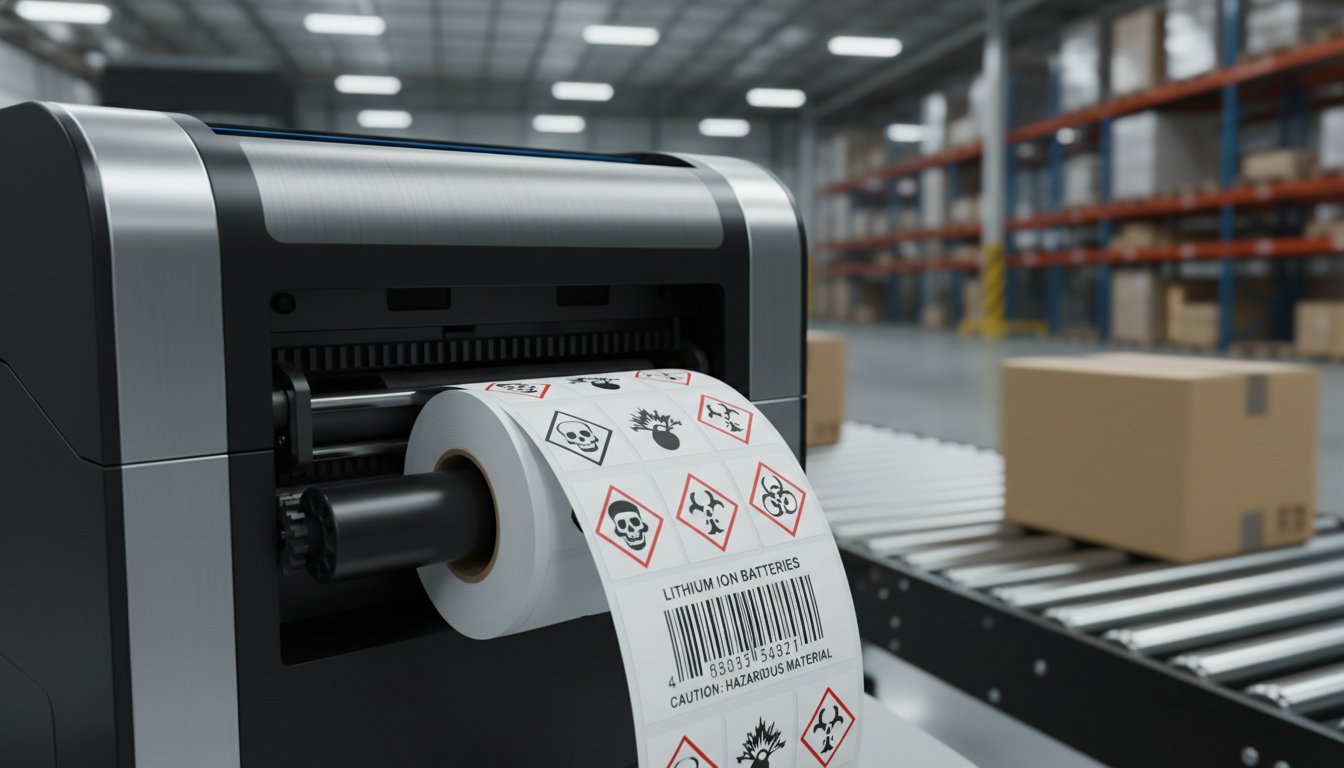
A smudged barcode is no longer just a minor warehouse annoyance; in 2026, it's an expensive compliance failure. With the March 31, 2026, Amazon FBA deadline requiring unique barcodes for every unit and new OSHA GHS Revision 7 standards now in effect, your choice of thermal transfer labels determines whether your inventory moves or sits in a penalty bin. If you've struggled with labels peeling in cold storage or ribbons that don't match your printer settings, you know that the wrong combination costs more than just the price of the roll.
It's frustrating when technical terms like "resin chemistry" make a functional business purchase feel like a science project. We agree that your labeling should be reliable and straightforward. This guide will show you how to master the triad of labels, ribbons, and printers to keep your in-house labeling cost-effective and industrial-grade. We'll break down the specific combinations of DuraFast ribbons and Zebra or Epson hardware needed to produce crisp, scannable barcodes that survive the toughest shipping environments.
Key Takeaways
- Learn how to sync your printer, ribbon, and substrate to eliminate common issues like barcode smudging and label peeling.
- Discover the best material for your environment by comparing the durability of paper substrates against rugged synthetic options.
- Master the chemistry of matching specific ribbons to thermal transfer labels to ensure every scan is crisp and accurate.
- Stay ahead of 2026 compliance requirements by understanding the standards for GHS and BS5609 industrial labeling.
- Optimize your production speed and cost by using high-grade North American media designed for industrial printers like the Zebra ZT411.
Table of Contents
Understanding the Thermal Transfer Label Triad
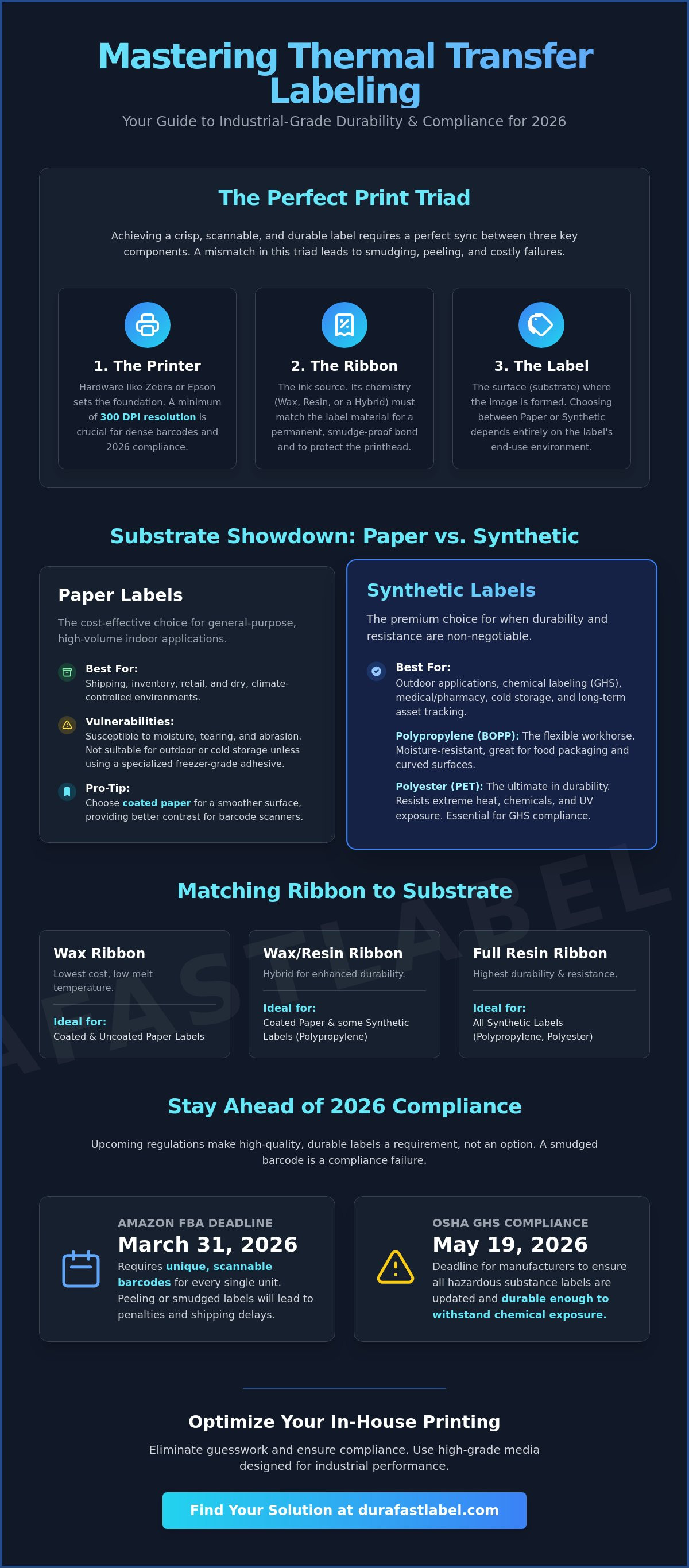
Achieving a perfect print isn't just about buying a roll of stickers. It's about balancing a technical triad: your printer , your ribbon , and your label substrate . If one of these components is out of sync, you'll face smudged barcodes and wasted media. In 2026, where logistics and healthcare tracking require absolute precision, understanding Thermal-transfer printing is the first step toward industrial-grade results. This system ensures that your thermal transfer labels remain readable through years of handling and environmental stress.
The choice between direct thermal and thermal transfer often confuses new users. While direct thermal is convenient for temporary labels, it relies on heat-sensitive paper that fades over time. Thermal transfer wins for professional applications because it uses a permanent ink bond. Whether you're using a Zebra ZT411 or an industrial Epson model, the triad approach ensures your labels survive long-term storage and chemical exposure without losing clarity.
How the Thermal Transfer Process Works
The process starts with a specialized ribbon. This ribbon features a thin polyester carrier film coated with wax, resin, or a hybrid of both. As the label and ribbon pass under the printhead, digital signals trigger tiny heating elements. For retail compliance in 2026, a minimum resolution of 300 DPI is recommended to avoid "picket-fencing" on dense GS1-128 barcodes. The printhead melts the ink coating, transferring it precisely onto the substrate. Once the ink moves past the printhead, it enters a rapid cooling phase. This quick temperature drop allows the ink to bond permanently to the label surface, creating a crisp image that won't smudge during high-speed shipping.
Why Thermal Transfer is the Professional Choice
Durability is the primary reason businesses choose this method. Unlike other technologies, these labels offer superior resistance to heat, UV light, and moisture. This is essential for thermal transfer labels used in outdoor environments or cold storage. Beyond the label quality, using a ribbon actually protects your hardware. The ribbon acts as a lubricant, reducing friction between the printhead and the label material. This extends the life of your expensive printhead, saving you money on maintenance. When you match a high-quality DuraFast ribbon with the correct substrate, you create archival-quality labels that remain scannable for 10 years or more. This reliability is why industrial leaders don't settle for anything less than a complete thermal transfer system.
Choosing the Right Substrate: Paper vs. Synthetic Labels
Selecting the right material for your thermal transfer labels is about understanding the label's journey. Will it sit on a shelf in a climate-controlled warehouse, or will it endure a cross-country trek on the back of a flatbed truck? Environmental factors like moisture, UV exposure, and abrasion risks dictate whether you can save money with paper or if you must invest in synthetic films. If you choose a material that can't handle the environment, your barcodes will fail long before they reach their destination.
In 2026, the stakes for material choice are higher than ever. For instance, the March 31, 2026, Amazon FBA deadline requires unique barcodes for every unit. If those barcodes smudge or peel because you chose the wrong substrate, you face shipping delays and potential penalties. Matching the substrate to the application ensures your operation remains efficient and compliant without unnecessary waste.
Thermal Transfer Paper Labels
Paper labels are the most cost-effective choice for high-volume shipping and indoor inventory. You can choose between coated and uncoated options. Coated paper is generally preferred because it provides a smoother surface and better contrast for scanners. This is vital for meeting the 300 DPI resolution standards recommended for retail compliance this year. While paper is affordable, it's vulnerable to moisture and tearing. If you're labeling products for the cold chain, make sure to use freezer-grade adhesives that won't lose their grip at sub-zero temperatures.
Synthetic Labels: Polypropylene and Polyester
When durability is non-negotiable, synthetic labels are the answer. Polypropylene (BOPP) is the "workhorse" of the industry. It's moisture-resistant and flexible, making it ideal for food packaging or pharmacy bottles. For more extreme conditions, Polyester (PET) offers incredible resistance to heat and chemicals. This is particularly important for meeting GHS labeling requirements. By the May 19, 2026, OSHA deadline, manufacturers must ensure all hazardous substance labels are updated and durable enough to withstand chemical exposure. If you're dealing with curved surfaces or industrial drums, specialized DuraFast Matte Chemical Labels provide the necessary flexibility and adhesion to stay put.
Specialty films like vinyl are also available for niche applications. These are often used for outdoor equipment or assets that face years of UV exposure. Regardless of your choice, ensure the substrate matches your ribbon chemistry to prevent the smudging and peeling issues that plague lower-quality setups. Choosing the right film now prevents a costly re-labeling project later.
Matching Ribbons to Labels for Maximum Performance
Matching your ribbon chemistry to your label surface is the secret to industrial-grade results. Think of it as a technical handshake; if the materials don't agree, the ink simply won't stay put. When you use high-quality thermal transfer labels, you need a ribbon that can melt into the fibers or film to create a permanent mark. If you ignore this chemistry, you'll likely deal with barcodes that flake off or smudge at the slightest touch, leading to scanning errors and warehouse delays.
The goal is to create a bond that survives the intended life of the label. For short-term shipping, a basic bond is fine. For chemical storage or outdoor assets, that bond must be nearly indestructible. By selecting the correct ribbon from the start, you avoid the hidden costs of re-printing and the frustration of failed compliance audits.
The Wax Ribbon: Best for Logistics
Wax ribbons are the most economical choice for standard paper substrates. They are perfect for high-volume e-commerce shipping where labels only need to remain readable for the duration of the delivery. Because wax has a lower melting point, these ribbons require the lowest heat settings on your Zebra ZT411 or other industrial printers. This lower temperature reduces thermal stress on the printhead, which helps you get more miles out of your hardware before needing a replacement.
While cost-effective, wax ribbons have limitations. They are susceptible to smudging and scratching if packages are handled roughly or stacked tightly in a truck. A cost-benefit analysis for high-volume shippers usually favors wax for indoor, short-term use. However, if your labels face moisture or heavy friction, the savings on the ribbon might be offset by the cost of lost packages due to unreadable addresses.
Resin and Wax-Resin: For the Industrial Floor
When your labels move to the industrial floor, durability requirements increase significantly. Wax-resin hybrids provide a strategic middle ground. These ribbons offer superior smudge resistance on polypropylene and semi-gloss paper. They are ideal for warehouse racks, pharmacy bottles, or retail items that endure frequent handling by customers and staff. The hybrid chemistry ensures the ink grips the synthetic surface better than pure wax ever could.
For the toughest jobs, full resin ribbons are the only choice. They are designed for harsh environments and offer maximum chemical resistance. Resin ribbons are mandatory for applications like chemical drum labeling or outdoor asset tracking where labels must withstand UV exposure and rain. Because resin is a much harder substance than wax, resin ribbons require higher printhead heat for a permanent bond. By pairing DuraFast Thermal Transfer Ribbons with synthetic substrates like polyester, you ensure your labels remain readable through chemical baths and extreme abrasion. This combination provides the archival quality needed for long-term industrial compliance.
Specialized Applications: GHS and Industrial Compliance
Compliance labeling in 2026 is a race against the clock. By May 19, 2026, chemical manufacturers and distributors must complete the re-classification of substances and update all product labels to align with OSHA GHS Revision 7. This regulatory shift makes the durability of thermal transfer labels a top priority for safety managers. If a hazard warning smudges or peels off a drum, your facility is no longer compliant. Using a resin-based thermal system ensures that critical safety information remains legible even if the container is exposed to leaking chemicals or harsh weather.
Marine shipping adds another layer of complexity. If you transport chemicals by sea, your labels must meet BS5609 standards for salt-water immersion. This isn't just about the ink; it's about the technical synergy between the adhesive and the substrate. A label that falls off in the ocean is a liability. By combining the right synthetic film with high-performance ribbons, you create a permanent mark that survives the most punishing maritime environments. This level of reliability is also essential for asset tracking, where serial numbers must stay attached to equipment for its entire operational life.
Chemical and Laboratory Labeling
Laboratory environments are notoriously brutal on standard adhesives. Solvents like acetone, ethanol, or xylene can dissolve a printed barcode in seconds if you use the wrong ribbon. This is why full resin ribbons are mandatory for lab samples and chemical vials. We often recommend matte finishes over gloss for these applications. Glossy surfaces can create distracting glare under bright industrial lighting, which makes it difficult for Datalogic Barcode Scanners to capture data quickly. For specialized medical research, thermal transfer technology also supports cryogenic labeling. These labels maintain their bond and legibility at ultra-low temperatures, ensuring that vital samples are never lost due to a failed sticker.
Compliance for Manufacturing and Automotive
Manufacturing labels face constant exposure to heat, oil, and abrasion. In the automotive sector, under-the-hood labels must resist grease and high engine temperatures without curling. Many engineers are now replacing traditional riveted metal rating plates with durable thermal synthetics. These labels are easier to print on demand and offer comparable longevity at a lower weight. If you're in electronics or appliance manufacturing, using UL-recognized label components is vital. These materials are tested for heat resistance and flame retardancy, ensuring your product meets all safety certifications. Matching your Zebra ZT411 with the right media makes this high-stakes compliance simple and repeatable.
Ready to upgrade your industrial labeling? View our specialized DuraFast Matte Chemical Labels designed for maximum compliance and durability.
Optimizing Your In-House Printing with DuraFast
Choosing high-grade North American media is the final step in securing your supply chain. At DuraFast, we source only premium materials to ensure your thermal transfer labels don't jam your equipment or deliver inconsistent results. Low-quality imports often have uneven thicknesses that can damage your printhead or cause ink to flake. By sticking with vetted, industrial-grade rolls, you ensure your Zebra ZT411 or Afinia L801 runs at peak efficiency without constant recalibration. This consistency is what keeps your warehouse moving during peak seasons.
Switching to on-demand thermal printing also drastically reduces waste. Instead of managing a massive inventory of pre-printed labels that might become obsolete when regulations change, you print exactly what you need. This agility is vital for businesses adapting to the 2026 packaging standards. You can update your data in real time, ensuring every barcode is current and every safety warning is visible. This shift from bulk ordering to on-demand precision saves money and storage space.
Hardware Synergy: Zebra and Beyond
Your Zebra ZT411 is a workhorse, but it requires the right settings to produce crisp 2D barcodes. For dense GS1-128 codes, ensure your darkness and speed settings are balanced to prevent ink bleeding. If your team is always on the move, portable printers offer the same thermal transfer reliability in a mobile format. These are perfect for labeling pallets right at the dock. Don't forget basic maintenance; cleaning your printhead with every ribbon change is the easiest way to prevent void spots. A clean printhead ensures the heat transfers evenly across the entire label surface, protecting your investment for years.
Software and Support for 2026 Workflows
Software is the brain of your labeling operation. BarTender Professional Software allows you to design compliant barcodes in seconds, pulling data directly from your spreadsheets to eliminate manual entry errors. This automation is a game-changer for high-volume warehouses that need to stay compliant with Amazon and OSHA standards. It strips away the complexity of formatting, letting you focus on fulfillment. If you're still unsure about which ribbon matches your specific substrate, our team is here to help. We've already done the heavy lifting of vetting these products so you can shop with confidence. We'll help you find the right ribbon-label triad for your specific printer and environment.
Find the perfect thermal transfer labels for your printer at DuraFast.
Future-Proof Your Labeling Strategy
Mastering the technical triad of hardware, ribbons, and substrates transforms your labeling from a potential bottleneck into a high-speed fulfillment engine. By matching your substrate to your specific environment and syncing your ribbon chemistry, you ensure every barcode remains scannable from the warehouse dock to the final destination. This level of precision is no longer optional in 2026. It's the baseline for staying compliant with GHS regulations and retail requirements. High-quality thermal transfer labels provide the durability your business needs to avoid penalties and protect your professional reputation.
As an authorized Zebra and Epson partner, we understand the nuances of industrial printing. Our team specializes in GHS and chemical labeling, ensuring your facility meets all safety standards with ease. We even offer free ribbon compatibility consultations to help you find the perfect match for your equipment. Shop our complete selection of high-performance thermal transfer labels and ribbons to secure your supply chain today. Your industrial labeling should be the most reliable part of your operation, and we're here to make sure it is.
Frequently Asked Questions
What is the difference between thermal transfer and direct thermal labels?
Thermal transfer printing uses a heated ribbon to create a permanent image, while direct thermal printing applies heat directly to chemically treated paper. Direct thermal is ideal for short-term uses like shipping labels that only need to last a few days. In contrast, thermal transfer labels are designed for long-term durability. They won't fade when exposed to light or heat, making them the standard choice for inventory and asset tracking.
Do I always need a ribbon for thermal transfer labels?
Yes, you always need a ribbon to print on thermal transfer media. The process works by using the printer's head to melt the ribbon's ink onto the label surface. If you try to print without a ribbon, you'll get a blank label and potentially damage your printhead. The ribbon also acts as a protective lubricant, so running the printer "dry" causes unnecessary wear on your hardware.
How do I know which ribbon size to buy for my label roll?
Your ribbon should always be slightly wider than the label liner to protect the printhead. For example, if you're using a 4-inch wide label roll, a 4.33-inch ribbon is a standard choice. This overlap prevents the abrasive edges of the label from rubbing directly against the printhead. Always check your Zebra ZT411 manual to ensure the ribbon's length and core size are compatible with your specific model.
Can I use thermal transfer labels in a direct thermal printer?
No, you cannot use standard thermal transfer labels in a direct thermal printer . Direct thermal printers require special heat-activated paper to create an image. Since thermal transfer media doesn't have this chemical coating, the printer's heat won't produce any marks. If you need to switch between technologies, ensure your printer supports both modes and that you have the correct media for each.
Why are my thermal transfer labels smudging?
Smudging is typically caused by a mismatch between your ribbon type and the label material. If you use a wax ribbon on a glossy synthetic label, the ink won't bond properly. You might also need to adjust the darkness settings on your printer. If the heat is too low, the ink doesn't melt fully; if it's too high, the image can bleed and smear during the printing process.
What is the best thermal transfer label for outdoor use?
Polyester (PET) labels paired with a full resin ribbon offer the best performance for outdoor applications. This combination is engineered to withstand constant UV exposure, heavy rain, and fluctuating temperatures without peeling or fading. While polypropylene is moisture-resistant, polyester provides the extra structural integrity needed for long-term exposure. Always ensure your adhesive is also rated for outdoor use to prevent the label from falling off.
Are thermal transfer labels waterproof?
Many thermal transfer labels are waterproof, but this depends entirely on the substrate. Synthetic materials like polypropylene (BOPP) and polyester are naturally water-resistant and won't degrade when wet. However, standard paper labels will absorb moisture and eventually fall apart. For chemical or marine environments, you must use synthetic labels that meet BS5609 standards to ensure the adhesive and ink remain intact during water immersion.
How long do thermal transfer labels last compared to inkjet labels?
Thermal transfer labels can last over 10 years in indoor environments, significantly outlasting most inkjet alternatives. While inkjet printers are excellent for high-resolution color, the ink can sometimes smudge or fade if not protected. Thermal transfer technology creates a physical bond between the resin and the substrate, making it the superior choice for archival tracking. It's the most reliable method for labels that must remain readable for the life of a product.