Thermal Transfer Ribbon: The 2026 Professional Guide to Selection and Performance
9th Jul 2026
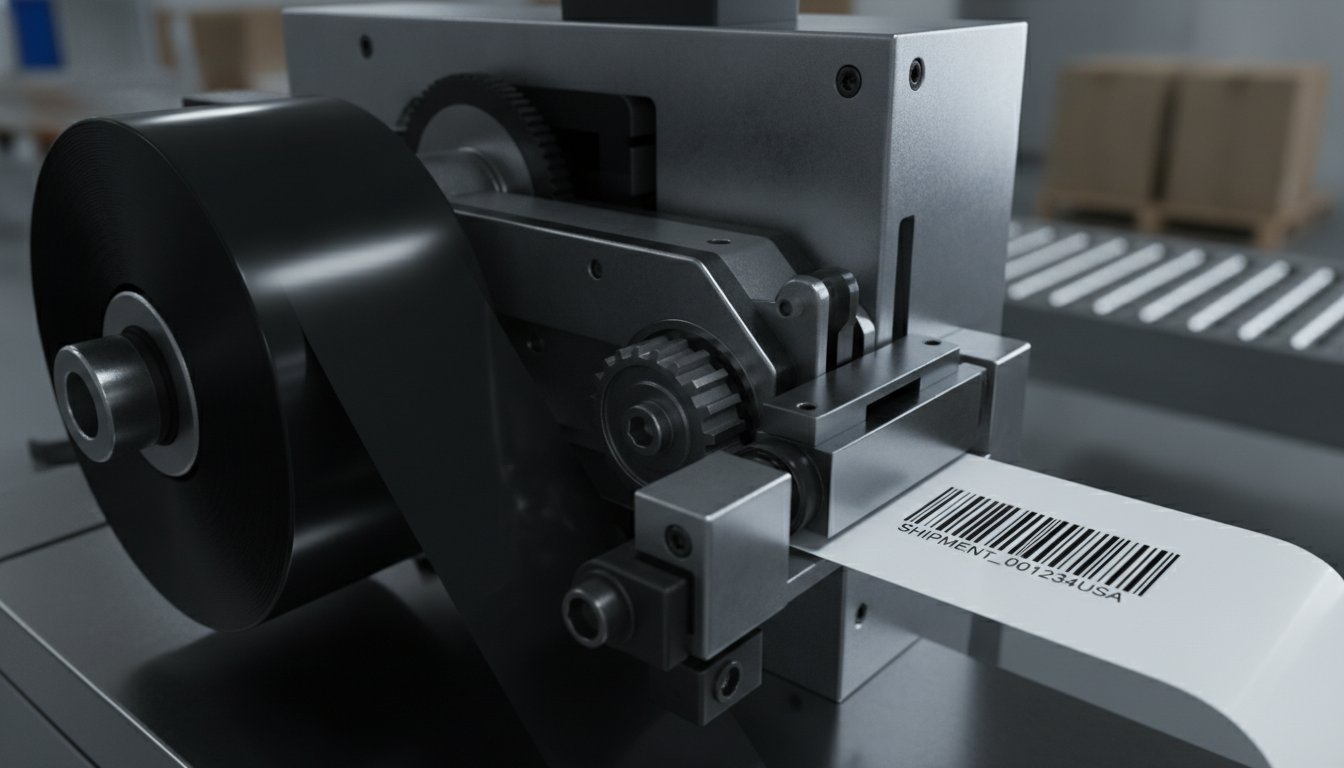
With thermal transfer ribbon prices jumping 22% in June 2026 due to global PETG substrate shortages, the margin for error in your labeling process has never been thinner. You’ve likely dealt with the frustration of barcodes that smudge at a touch or ribbons that snap just as your high-speed print run hits its stride. It’s a common headache, and the technical jargon surrounding wax and resin formulations often makes the solution feel unnecessarily complex.
We understand that your goal is simple: you need crisp, scannable labels that don't fail in harsh environments. Choosing the right supplies shouldn't be a guessing game that ends in expensive printhead repairs or wasted stock. This guide will help you master ribbon science to ensure durable results while significantly reducing your long-term printing costs through better supply matching.
We’ll walk you through the specific differences between wax, wax-resin, and full resin options. You will learn how to match your ribbon to your label material perfectly, ensuring your hardware stays protected and your barcodes stay sharp through every stage of the supply chain.
Key Takeaways
- Learn how a high-quality back-coating acts as a protective shield to extend printhead life and minimize friction.
- Master the differences between wax, resin, and wax-resin to select the ideal thermal transfer ribbon for your specific label stock.
- Identify which formulations provide the best resistance against harsh environmental factors like moisture, UV light, and chemicals.
- Discover why matching ink melting points to your printer settings is the secret to achieving crisp, scannable barcodes.
- Understand the performance benefits of using ribbons engineered specifically for North American hardware and industrial environments.
Understanding Thermal Transfer Ribbon Technology
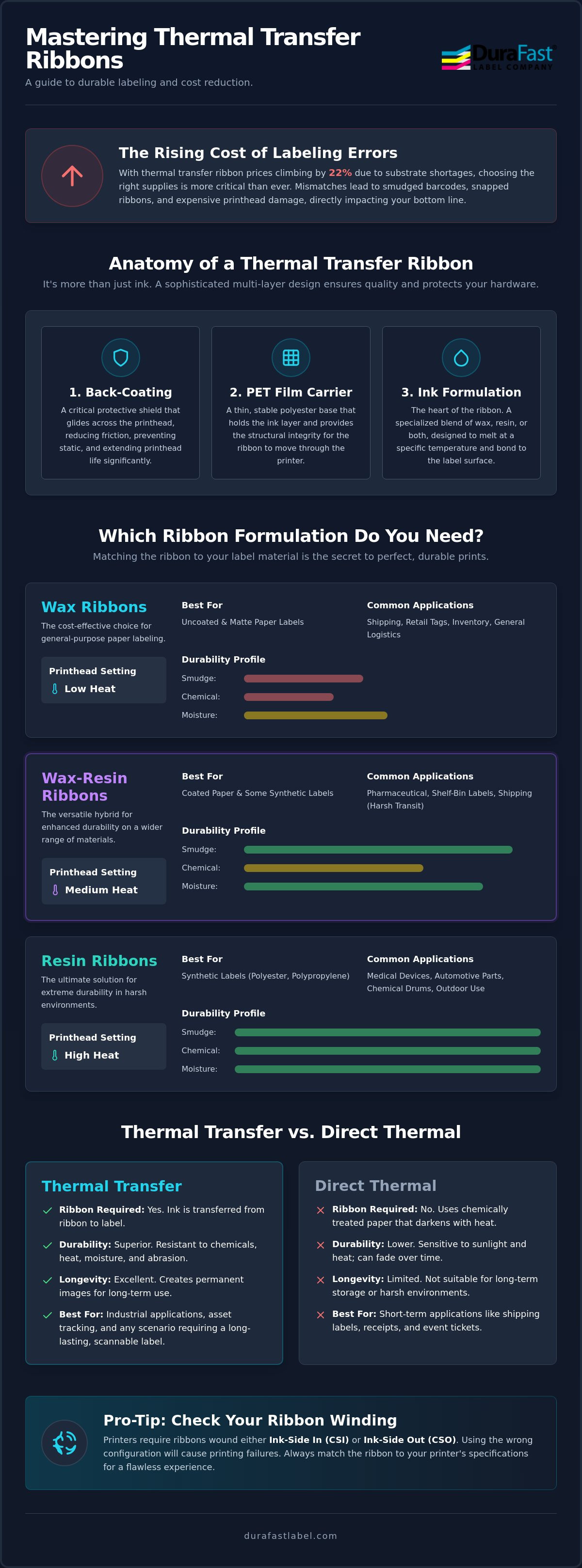
A thermal transfer ribbon is much more than a roll of ink. It's a sophisticated three-layer consumable designed to move ink from a carrier film to a label surface using heat. At its core, the ribbon consists of a thin polyester film. One side is coated with a specific ink formulation, while the other side features a specialized back-coating. This back-coating is essential because it allows the ribbon to glide smoothly across the printhead. Without it, the friction would quickly wear down the delicate heating elements, leading to expensive hardware failures and downtime.
During the printing process, the printer's thermal head applies pinpointed heat to the ribbon. This melts the ink, transferring it onto the label stock. In the fast-paced world of 2026 logistics, where global shipping volumes continue to rise, the quality of this transfer is critical. High-performance ribbons ensure that barcodes remain sharp and scannable even after being handled in a warehouse. If the ink doesn't melt consistently or bond correctly, you end up with "ghosting" or voids that can cause scanning errors at retail kiosks or shipping hubs. Reliability starts with the ribbon.
Do you know which way your ribbon is wound? Printers are designed for one of two configurations: Ink-side In (CSI) or Ink-side Out (CSO). This refers to which side of the polyester film holds the ink. Using the wrong configuration can result in ink sticking to your printhead rather than the label. It’s a simple detail, but getting it right is the first step toward a stress-free printing experience. Always check your printer's specifications to ensure a perfect match.
The Thermal Transfer Process
The physics behind Thermal-transfer printing technology relies on precise temperature control. The printhead elements must reach the exact melting point of the ink formulation almost instantly. As the ribbon moves, the ink releases from the carrier film and bonds with the substrate. Once the heat is removed, the ink cools and solidifies nearly as fast as it melted. This rapid cooling creates a permanent image that is far more durable than standard inkjet or toner-based printing.
Thermal Transfer vs. Direct Thermal Printing
Why choose this method over others? The primary difference is the use of a ribbon. While you can find direct thermal labels that don't require a ribbon, they are chemically sensitive to heat and sunlight. Thermal transfer printing offers superior longevity. Because the ink is physically bonded to the material, these labels survive harsh environments, chemicals, and long-term storage without fading. It's the dependable choice for industrial applications where durability is your top priority.
Wax, Resin, and Wax-Resin: Which Formulation Do You Need?
Choosing a thermal transfer ribbon is a strategic decision that affects both label quality and printer longevity. The formulation you select dictates the temperature your printhead must reach and how well the ink bonds to your specific material. Understanding the physics of "ink-to-substrate" bonding is the secret to avoiding failed barcodes and wasted supplies. Each category offers a different balance of durability, speed, and cost.
Wax Ribbons: Cost-Effective Paper Labeling
Wax ribbons are the industry standard for high-volume shipping and warehouse applications. They work best on uncoated or matte paper surfaces, making them the preferred choice for standard 4x6 shipping labels. Because wax has a lower melting point, your printer runs at a lower heat setting. This helps extend the life of your printhead by reducing thermal stress. However, wax is relatively soft. It can smudge if handled roughly and isn't designed to survive heavy moisture or chemical exposure. Use wax for retail tags, inventory tracking, and general logistics where the label's life cycle is short.
Resin Ribbons: Extreme Durability for Synthetics
Resin ribbons provide the ultimate solution for high-stakes environments. They are engineered to bond with synthetic substrates like polyester and polypropylene. This creates a nearly indestructible image. Scientific research into High Resolution Thermal Transfer Technology highlights how precise heat control is vital for these high-durability formulations. Resin resists solvents, oils, and extreme industrial temperatures. If you need to match these to specific materials, you can find more details in our guide on thermal transfer labels.
Wax-Resin Ribbons: The Versatile Middle Ground
Wax-Resin ribbons offer a sophisticated blend of both materials. This combination allows the ribbon to handle semi-gloss paper and certain synthetic labels with ease. They provide significantly better scratch and smear resistance than pure wax. These ribbons are the "go-to" for professional product packaging because they withstand the friction of high-speed sorting belts. They also perform exceptionally well in refrigerated or damp environments. If you're unsure which formulation fits your current project, you can always speak with our experts for a tailored recommendation.
Your substrate choice is the primary driver for selection. A resin ribbon won't work on a rough paper label because the ink cannot find a smooth enough surface to bond. Conversely, a wax ribbon will simply wipe off a polyester label. Matching these components ensures your barcodes remain scannable through every stage of the supply chain while keeping your printing costs predictable.
Selecting the Right Ribbon for Your Industry and Environment
Your application environment is the ultimate judge of your label's success. A label sitting in a dark, climate-controlled warehouse faces different challenges than a chemical drum stored outdoors in the sun. You need to account for UV light exposure, high moisture levels, and constant physical friction. Healthcare providers require labels that survive harsh sterilization processes. Automotive manufacturers need resistance to grease, oil, and extreme engine heat. Choosing the correct thermal transfer ribbon ensures your barcodes remain scannable regardless of these external pressures.
Managing the data for these specialized labels shouldn't be a chore. BarTender Professional software helps you organize complex compliance data and industrial barcodes with ease. It simplifies the task of printing variable data across thousands of labels. However, software can't overcome a physical mismatch. Always verify your printer's core size requirements before placing an order. Desktop printers typically use a 0.5-inch core, while larger industrial machines use a 1-inch core. Checking this detail first prevents the headache of incompatible supplies and wasted shipping costs.
Chemical and Heat Resistance Requirements
GHS compliance demands a specific synergy between your ribbon and your label material. This usually requires pairing high-durability resin with specialized matte chemical labels. This combination ensures that critical safety information and warning symbols remain legible even after exposure to corrosive substances. We suggest performing a simple rub resistance test. This involves applying pressure to the printed surface to verify how your labels handle physical abrasion. You can find the right formulation for your specific industry by exploring our thermal transfer ribbons collection.
Matching Ribbon Width to Your Printer
Protecting your printhead is a matter of simple geometry. Your ribbon must be slightly wider than the label and its backing liner. If the edges of the label material come into direct contact with the printhead, they can cause permanent scoring or scratches. This abrasive wear is a common reason for premature hardware failure and inconsistent print quality. Even robust industrial models like the Zebra ZT411 require this protective barrier to maintain peak performance. Using a wider ribbon allows the specialized back-coating to shield the printhead from the sharp edges of the paper or synthetic stock, significantly extending the life of your equipment.
Optimising Performance and Extending Printhead Life
Your thermal transfer ribbon does more than just carry ink; it acts as a protective buffer for your hardware. A high-quality back-coating is essential for reducing static buildup and friction. Without this layer, the ribbon can cling to the printhead, leading to premature wear and inconsistent print quality. Many businesses make the mistake of choosing "bargain" ribbons. These often have inconsistent ink melting points. This inconsistency forces you to constantly adjust your printer settings, leading to unnecessary downtime and frustrated operators.
Always aim for the lowest effective heat level. High heat settings might produce darker images, but they also accelerate printhead degradation. If you notice thin white lines or blurred edges, your printhead might be failing or simply dirty. We recommend cleaning the printhead with a specialized swab every single time you swap out your ribbon rolls. This 30-second habit can save you hundreds of dollars in replacement parts over the life of your printer.
Common Printing Problems and Ribbon Solutions
Fixing ribbon wrinkling is usually a matter of adjusting the spindle tension or checking the alignment of the media. If you see voids or "dead spots" in your barcodes, it often indicates a mismatch between your ribbon formulation and your label material. In high-speed industrial environments, static can cause labels to jam or stick. Using ribbons with superior anti-static properties resolves this issue immediately. Proper alignment ensures that the ink transfers evenly across the entire width of the label.
The True Cost of Low-Quality Ribbons
When calculating your ROI, look beyond the initial purchase price. A low-quality ribbon can lead to more frequent printhead replacements. These parts are expensive and often represent a significant portion of the cost of new thermal transfer printers. High-quality ribbons offer consistent formulations that prevent the need for daily recalibration. This reliability keeps your production line moving and reduces long-term maintenance costs. If you need help troubleshooting a specific print failure, contact our support team for a technical consultation.
Identifying the signs of wear early is key to maintaining peak performance. Look for "dropout" areas where the ink fails to transfer at all. This usually means a heating element in the printhead has burnt out. By matching your ribbon quality to your production speed and environment, you ensure a professional result every time you hit print.
Sourcing High-Performance Ribbons in North America
Reliable sourcing has become a critical competitive advantage in the 2026 labeling market. With thermal transfer ribbon prices increasing by 22% in June 2026 and lead times stretching up to 18 weeks, businesses can't afford supply chain interruptions. Choosing a North American partner like DuraFast ensures you have access to ribbons engineered specifically for regional hardware and industrial standards. Our in-house expertise removes the guesswork, allowing you to focus on production rather than troubleshooting incompatible supplies.
Navigating the current polymer substrate shortages requires a proactive strategy. By partnering with a specialized provider, you gain more than just a product; you gain a dedicated resource for technical support and inventory management. Our commitment to transparency helps you maintain consistent label production even when global supply chains face unexpected pressure. We've done the heavy lifting of vetting formulations so you can enjoy a stress-free procurement experience.
DuraFast Thermal Transfer Ribbons
We offer a curated selection of wax, resin, and wax-resin formulations designed for every possible application. Whether you're running high-speed industrial units or compact desktop thermal printers, our ribbons provide the consistent quality needed to prevent expensive printhead damage. By maintaining strict control over our ink formulations, we help you avoid the daily recalibration downtime that often plagues users of generic alternatives. Every roll is vetted to ensure it meets the durability requirements discussed in our 2026 Professional Guide to Thermal Label Printers.
Brand-Specific Solutions: Zebra, Godex, and Beyond
Finding the perfect match for your specific hardware is the key to equipment longevity. We provide guaranteed performance for major brands, including specialized Zebra ribbons that are tested for thermal compatibility. Our team also excels at supporting multi-printer fleets that may include Godex, Brother, or even discontinued models. If you're working with older hardware, our specialists can identify the modern ribbon equivalent to keep your operations running smoothly. This brand-specific approach simplifies the reordering process and ensures that every printer in your facility produces crisp, scannable results without compromise. Don't let market volatility dictate your labeling success; we're here to provide the specialized guidance your business deserves.
Future-Proof Your Labeling Operations
Mastering the science of ribbon selection is the most effective way to protect your hardware investment and ensure supply chain compliance. By matching the right formulation to your specific label material, you eliminate the risk of smudged barcodes and failed scans. High-quality supplies do more than just print; they use advanced back-coating technology to shield your printhead from abrasive wear. This proactive approach keeps your production line moving and your maintenance costs low.
As the 2026 market continues to shift, having a dependable partner for your thermal transfer ribbon needs is essential. We offer specialized North American support to help you find the perfect fit for your Zebra, Godex, or Brother printers. Don't let technical jargon or supply chain volatility slow you down. Our team has already done the heavy lifting to ensure your labels survive even the harshest environments.
Ready to optimize your printing performance? Shop DuraFast Thermal Transfer Ribbons for Professional Quality. We're here to make your labeling process simple, reliable, and cost-effective.
Frequently Asked Questions
What is the difference between wax and resin thermal ribbons?
Wax ribbons are the standard choice for paper labels and shipping tasks where cost is a primary factor. Resin ribbons are engineered for synthetic materials like polyester, providing maximum resistance to chemicals and extreme weather. While wax is softer and prone to smudging under heavy handling, resin creates a permanent bond that survives industrial cleaning and outdoor exposure. Choosing the right one depends entirely on your label material and its environment.
How do I know if my thermal printer uses ink-in or ink-out ribbons?
You can determine the winding direction by performing a simple tape test on the outer layer of the roll. Apply a piece of adhesive tape to the outside of the ribbon; if ink pulls off onto the tape, it's an ink-out (CSO) ribbon. If the ink is on the inside, it's ink-in (CSI). Most Zebra industrial printers use ink-out, but always check your spindle rotation to be certain before ordering.
Can I use any thermal transfer ribbon in my Zebra printer?
No, you must ensure the thermal transfer ribbon matches your specific Zebra model's core size and winding requirements. Most desktop Zebra units require a 0.5-inch core, while industrial models like the ZT411 use a 1-inch core. Using an incompatible ribbon can lead to mechanical jams or poor print quality. It's best to use ribbons specifically vetted for your printer's technical specifications to avoid hardware issues.
Why is my thermal transfer ribbon wrinkling during printing?
Ribbon wrinkling usually occurs due to uneven tension across the printhead or a misaligned supply spindle. If the ribbon isn't tracking straight, it can fold over itself, causing diagonal white lines across your barcodes. You can often fix this by adjusting the ribbon supply tension or cleaning the rollers to remove adhesive buildup. Ensure your ribbon is slightly wider than your label stock to provide a smooth, even surface for the printhead.
How much does a thermal transfer ribbon affect printhead life?
The quality of your ribbon is a major factor in determining the lifespan of your printhead. High-quality ribbons feature a specialized back-coating that minimizes friction and dissipates static electricity. Without this protection, the printhead elements are exposed to abrasive label edges and heat spikes. This leads to premature failure and expensive repairs that far outweigh the minor savings of using unvetted or bargain consumables.
Do I need a ribbon for direct thermal labels?
You don't need a ribbon when using direct thermal labels because the material itself contains a heat-sensitive chemical layer. When the printhead applies heat, the label turns black to create the image. This is ideal for short-term tasks like visitor badges or deli labels. However, for any application requiring long-term durability or resistance to sunlight, switching to a thermal transfer setup with a ribbon is a much more reliable choice.
What ribbon is best for outdoor or chemical-resistant labels?
A full resin ribbon is the best choice for labels exposed to chemicals, oils, or harsh outdoor elements. Resin formulations bond permanently with synthetic substrates, making them nearly impossible to smudge or scratch. This is essential for GHS compliance in chemical labeling or for tracking assets stored in outdoor yards. For less extreme needs, a high-grade wax-resin blend may provide a sufficient balance of durability and cost.
How do I determine the correct ribbon width for my labels?
Your ribbon should always be approximately 2mm to 4mm wider than the label and its backing liner combined. This ensures the ribbon's protective back-coating covers the entire width of the printhead, preventing the label edges from causing physical scratches. If you use a ribbon that is too narrow, the exposed printhead elements will wear down unevenly. Always measure your total liner width before selecting your ribbon size.